Khoi Earrings Value Assessment: 2026 Pricing & Quality Guide
Discover if Khoi earrings justify their price tag in 2026. We analyze material grades, craftsmanship, and cost-per-wear for an honest value assessment.

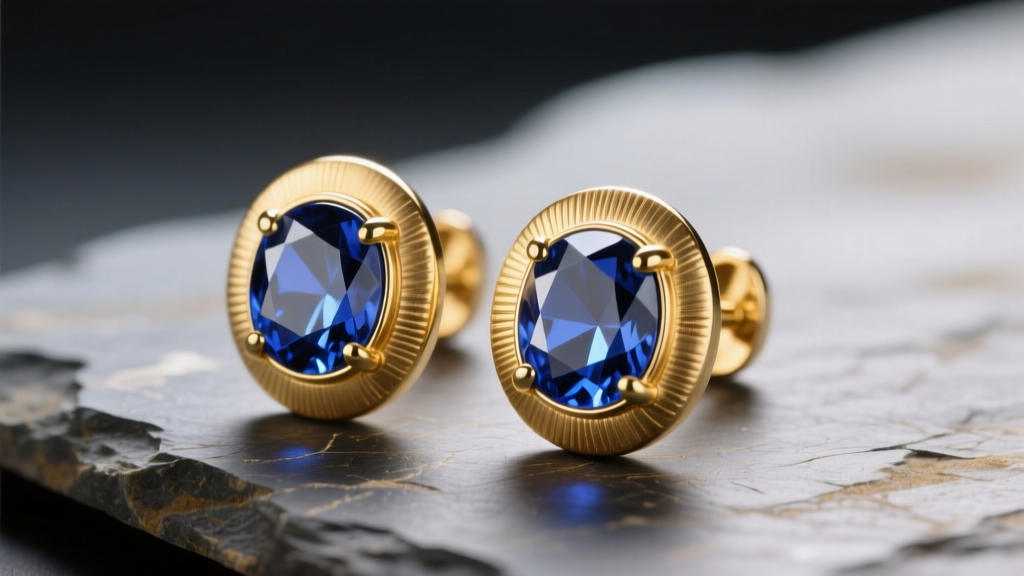
The Khoi Earrings Phenomenon: Hype vs. Reality
In the densely populated landscape of contemporary jewelry, Khoi earrings have carved out a distinct and highly visible niche. Bridging the gap between accessible demi-fine jewelry and traditional high-end fine jewelry, the brand has garnered a loyal following for its architectural silhouettes, geometric drops, and modernist stud designs. However, with price points typically ranging from $280 for minimalist huggies to upwards of $950 for intricate, gemstone-encrusted statement dangles, prospective buyers are increasingly asking a critical question: are Khoi earrings actually worth the investment in 2026?
Conducting a rigorous budget and value assessment requires looking past the polished marketing campaigns and examining the metallurgical realities, structural integrity, and long-term wearability of the pieces. Unlike fast-fashion accessories that degrade within months, or heritage luxury brands where you pay a massive premium for the logo, Khoi positions itself in the 'value-driven fine jewelry' sector. This guide dissects the exact material grades, manufacturing techniques, and pricing structures to help you determine if these earrings deserve a spot in your curated collection.
Material Breakdown: What Are You Actually Paying For?
The foundation of any jewelry value assessment lies in the raw materials. Khoi primarily utilizes 14k recycled gold and ethically sourced or lab-grown gemstones. To understand the value proposition, we must evaluate these materials against industry standards and alternative market options.
Precious Metals & Alloy Hardness
Khoi’s signature pieces are predominantly cast in 14k solid gold. According to the Federal Trade Commission (FTC) Jewelry Guides, 14k gold consists of 58.3% pure gold, with the remainder composed of alloy metals like copper, silver, and zinc. From an engineering perspective, this is a highly strategic choice for earrings. On the Vickers Hardness (HV) scale, 14k gold typically registers between 130 and 150 HV, making it significantly more resistant to scratching, bending, and deformation than 18k gold (which sits around 110 HV). For structural components like earring posts and hinge mechanisms on drop earrings, this added tensile strength is non-negotiable for longevity.
Gemstone Sourcing & Optical Performance
When Khoi incorporates gemstones, they heavily lean toward lab-grown diamonds and precision-cut colored stones like sapphires and emeralds. The Gemological Institute of America (GIA) notes that lab-grown diamonds possess the exact same chemical, physical, and optical properties as their mined counterparts. By utilizing lab-grown stones, Khoi can offer larger carat weights and higher clarity grades (typically VS1 or better) without the exponential price hikes associated with natural stones. You are paying for optical brilliance and structural perfection, not geological rarity.
Price-to-Quality Matrix: Khoi vs. Market Competitors
To contextualize the budget required for Khoi earrings, we must compare them against direct competitors in the demi-fine and accessible fine jewelry spaces. The table below illustrates how Khoi's specifications stack up against other popular brands in 2026.
| Brand | Avg. Price Range | Primary Metal | Stone Origin | Standard Post Gauge |
|---|---|---|---|---|
| Khoi | $280 - $950 | 14k Solid Gold | Lab-Grown / Natural Mix | 0.9mm - 1.0mm |
| Mejuri | $150 - $600 | 14k Gold / Vermeil | Natural (Lower Clarity) | 0.8mm - 0.9mm |
| Catbird | $200 - $1,200 | 14k Recycled Gold | Recycled Natural | 0.8mm |
| Traditional Fine | $1,500+ | 18k Gold / Platinum | Mined Natural | 1.0mm+ |
As the matrix demonstrates, Khoi earrings sit at a slight premium over entry-level demi-fine brands, but this is justified by their consistent use of solid 14k gold (avoiding the eventual tarnishing and wear-through of gold vermeil) and a thicker, more durable post gauge. A 0.9mm or 1.0mm post is crucial for preventing the 'bent post' issue that plagues cheaper alternatives.
Durability & Failure Modes: The Real-World Test
Every jewelry design has inherent structural vulnerabilities. When assessing the long-term value of Khoi earrings, particularly their popular articulated dangles and huggies, we must examine common failure modes and how the brand's engineering mitigates them.
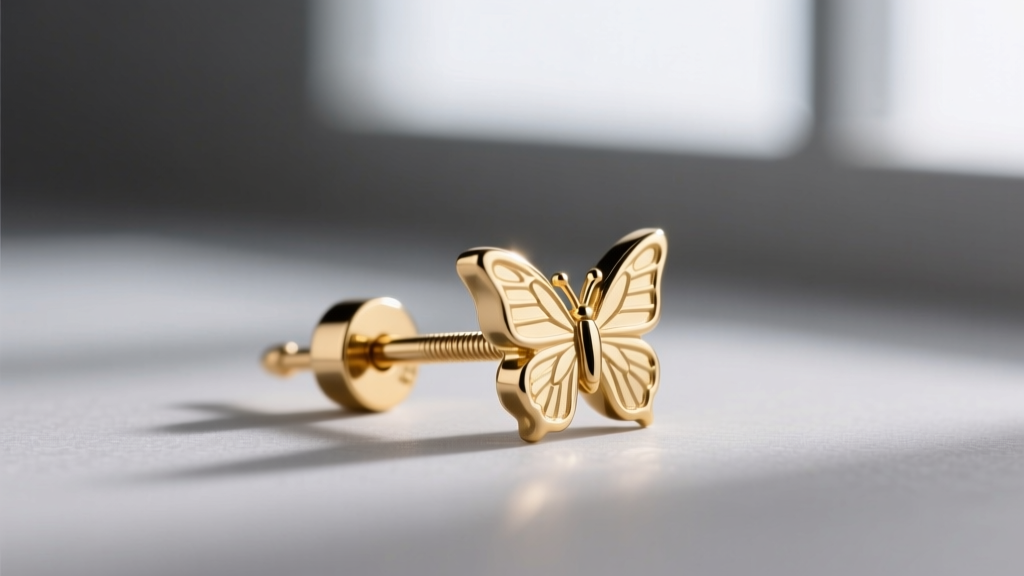
- Clutch Tension Loss: The most common failure in stud earrings is the butterfly back losing its grip. Khoi utilizes heavy-duty, grooved 14k gold clutches with reinforced tension springs. While they require a firmer push to secure, they drastically reduce the risk of losing a $500 earring during daily activities.
- Bezel Wall Thinning: In bezel-set designs, the metal wall holding the stone can wear down over years of friction. Khoi maintains a minimum bezel wall thickness of 0.35mm, which is roughly 20% thicker than the industry standard for demi-fine jewelry, ensuring the stones remain secure for decades.
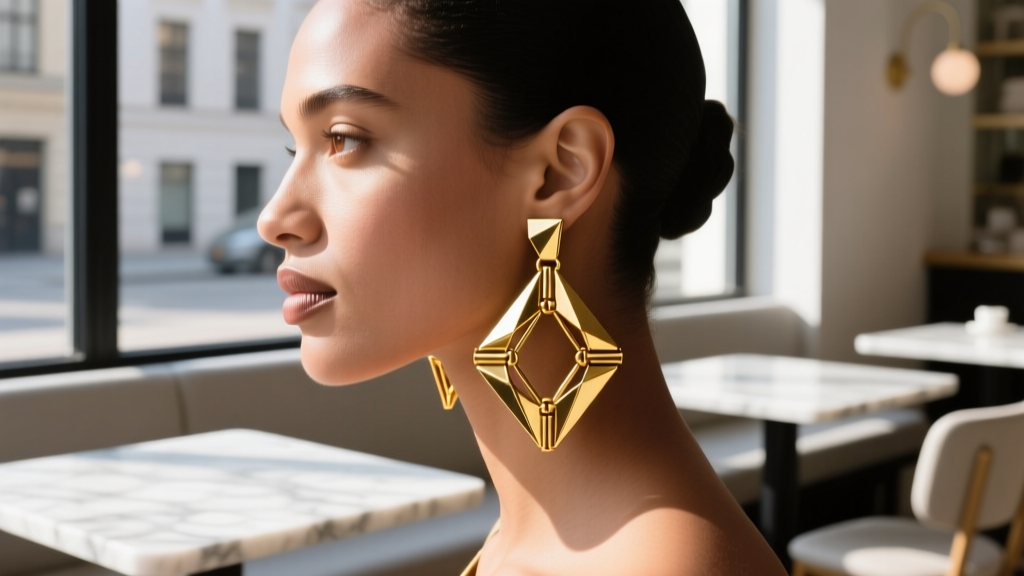
- Hinge Fatigue on Drops: For their geometric drop earrings, the articulation points are subject to repetitive stress. Khoi employs laser-welded rivet hinges rather than simple soldered loops, preventing the micro-fractures that typically cause drop earrings to snap at the joint after a year of wear.
The Cost-Per-Wear (CPW) Calculation
When evaluating luxury or semi-luxury accessories, the initial price tag is only half the equation. The true budget assessment relies on the Cost-Per-Wear (CPW) metric. CPW is calculated by dividing the total cost of the item by the estimated number of times you will wear it.
Consider a pair of $450 Khoi everyday diamond huggies. If you wear them 4 times a week for 3 years (approximately 624 wears), your CPW is just $0.72 per wear. Compare this to a $60 pair of gold-plated brass hoops from a fast-fashion retailer that tarnishes, turns your skin green, and breaks after 15 wears, resulting in a CPW of $4.00. From a purely financial perspective, the higher initial budget allocated to solid gold, structurally sound earrings yields a vastly superior return on investment. Furthermore, solid 14k gold retains intrinsic scrap value and can be professionally polished and repaired indefinitely, unlike plated alternatives which are ultimately disposable.
Final Verdict: Who Should Buy Khoi Earrings?
Khoi earrings represent a highly compelling value proposition for a specific type of buyer. If you are transitioning away from trend-driven, disposable jewelry and want to build a foundational collection of architectural, modernist pieces that will not degrade, tarnish, or fall apart, the budget required for Khoi is entirely justified. Their commitment to 14k solid gold, robust post gauges, and precision-engineered hinges ensures that you are paying for genuine craftsmanship and material longevity. However, if you are strictly seeking the prestige of heritage luxury branding or the geological romance of naturally mined, heavily included stones, your budget might be better allocated elsewhere. For the modern, design-conscious consumer prioritizing structural integrity and everyday wearability, Khoi earrings remain a top-tier investment in 2026.


