Where Did Kim K Lose Her Earring? Material Density & Security
Discover the science behind Kim K's lost ocean earring. We compare metal density, prong hardness, and secure backings to prevent loss.

The Anatomy of a High-Profile Jewelry Loss
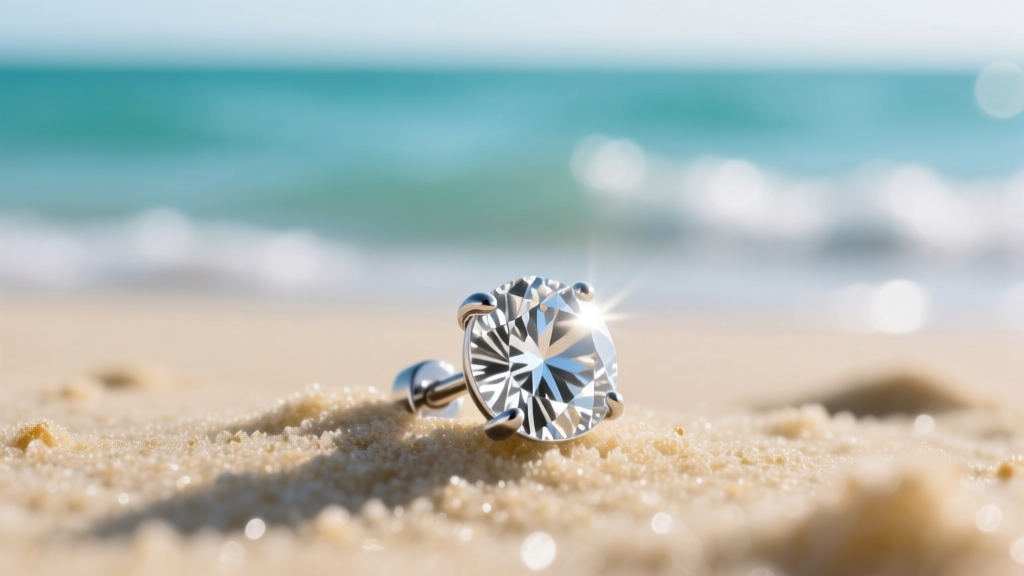
When pop culture enthusiasts ask where did kim k lose her earring, they are typically looking for the tabloid answer: the turquoise waters of Turks and Caicos during a 2021 family vacation. The reality star dropped a $75,000 Lorraine Schwartz diamond stud into the ocean, sparking a massive, high-stakes search that miraculously ended in recovery. However, from the perspective of a master jeweler and materials scientist, this incident is far more than celebrity gossip. It is a masterclass in the physics of earring security, material density, and the catastrophic failure of standard fastening mechanisms under extreme conditions.
As we move through 2026, high-value earring designs have evolved, yet the fundamental metallurgical rules governing how jewelry interacts with the human body and the environment remain unchanged. To truly understand why heavy, precious earrings fail, we must look past the glamour and examine the specific gravity, tensile strength, and environmental vulnerabilities of the materials holding these stones in place.
The Physics of Earring Loss: Density and Lobe Biomechanics
The primary culprit in the loss of heavy stud earrings is not necessarily a defective backing, but rather the specific gravity (density) of the metal used in the setting. The human earlobe is composed of soft tissue, fat, and skin, lacking the structural cartilage found in the upper ear. When a dense metal is paired with a large carat-weight diamond, the resulting mass exerts a continuous downward gravitational pull.
This constant tension causes micro-stretching of the piercing fistula over time. As the hole elongates, the angle of the earring post shifts. A standard friction backing relies on a precise 90-degree perpendicular angle to maintain tension against the ear. Once the lobe stretches and the earring tilts forward even slightly, the mechanical advantage of the friction clutch is compromised, allowing the heavy earring to slide out under its own weight.
Specific Gravity of Common Earring Metals
To understand the burden placed on the earlobe, we must compare the specific gravity (g/cm³) of standard jewelry alloys:
- Platinum (950 alloy): 20.2 g/cm³ (Extremely dense, highest risk for lobe droop)
- 18k Yellow Gold: 15.5 g/cm³ (Heavy, requires robust backings)
- 14k White Gold: 13.8 g/cm³ (Moderate density, industry standard)
- Titanium (Grade 23): 4.4 g/cm³ (Ultra-lightweight, ideal for large volume pieces)
While platinum is the premier choice for securing high-value diamonds due to its prong durability, its immense density makes it a liability for earlobe comfort and backing security if the design is not properly counterbalanced.
Prong Security: Hardness vs. Tensile Strength
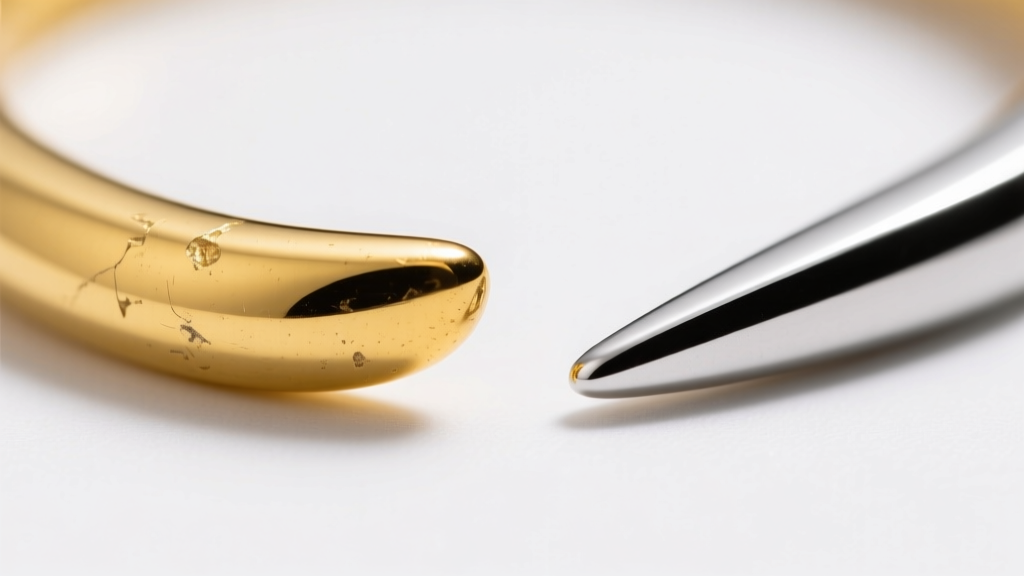
Beyond the earring slipping out of the ear, the loss of a stone from its setting is a critical failure mode. The Kim Kardashian incident involved the entire earring falling out, but stone loss is equally devastating. When evaluating materials for high-value studs, jewelers must balance hardness (resistance to surface scratching) with tensile strength (resistance to breaking or bending).
According to data from the Gemological Institute of America (GIA), platinum is softer on the Vickers hardness scale than 14k gold, meaning it scratches more easily. However, platinum possesses vastly superior tensile strength and malleability. When a platinum prong is struck or snagged, it bends and displaces metal rather than snapping or wearing away. Conversely, gold alloys can suffer from 'prong fatigue' and microscopic fracturing over years of wear, eventually leading to the stone falling out.
Material Comparison Matrix for High-Value Studs
| Metal Alloy | Vickers Hardness (HV) | Tensile Strength | Prong Wear Behavior | Security Rating |
|---|---|---|---|---|
| 950 Platinum / 5% Ruthenium | 135 HV | Very High | Displaces metal; does not lose mass | Excellent |
| 18k Yellow Gold | 140 HV | Moderate | Abrades and loses mass over time | Good (Requires maintenance) |
| 14k White Gold (Nickel-free) | 165 HV | High | Resists bending but can snap under torque | Very Good |
| Palladium (950) | 110 HV | Moderate | Similar to platinum but lighter | Good |
For stones valued over $20,000, the Hoover & Strong metallurgical guidelines strongly recommend platinum or palladium settings to ensure the prongs act as a permanent, shock-absorbing cradle for the gemstone.
The Weak Link: Fastening Mechanisms and Material Weight
The most secure setting in the world is useless if the post-and-clutch system fails. The standard 'butterfly' friction back relies on a small spring-loaded tube that grips the notched post. This mechanism is highly susceptible to failure when subjected to the drag of water, the friction of hair, or the sheer weight of a dense metal setting.
Upgrading to Mechanical Security
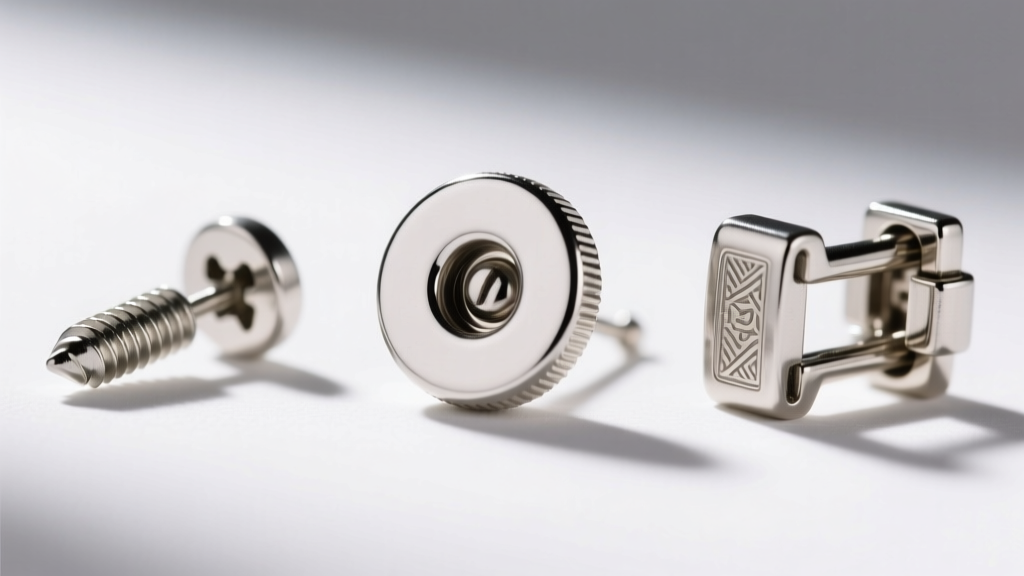
To prevent an ocean-bound disaster, high-density earrings must be fitted with mechanical locking systems that do not rely solely on spring tension:
- Screw Backs: The post is threaded, and the backing screws on. This completely eliminates the risk of the backing sliding off due to lobe stretching or water drag. The drawback is the time required to thread them and the potential for cross-threading if manufactured poorly.
- La Pousette Clutches: A premium locking mechanism featuring twin spring-loaded triggers that snap securely behind a grooved post. Originally designed for high-end pearl and diamond studs, these offer the ease of a friction back with the security of a mechanical lock.
- Omega Clips with Posts: Often used for heavy drop earrings, the hinged omega back clips against the earlobe, distributing the weight across a wider surface area of the ear rather than relying entirely on the pierced fistula.
Environmental Degradation: Sand, Salt, and Water
The environment where the earring was lost—the ocean—presents unique hazards to jewelry materials. Saltwater is highly corrosive to certain alloy mixtures, particularly those containing copper or nickel. While pure gold and platinum are largely immune to saltwater corrosion, the solder points used to attach the earring post to the setting base can be vulnerable if lower-karat solders were used during manufacturing.
Furthermore, beach sand is primarily composed of quartz, which ranks at a 7 on the Mohs scale of hardness. Gold alloys rank between 2.5 and 3. When an earring drops into the sand, or when sand gets trapped between the earlobe and the backing, it acts as a micro-abrasive. Over time, this sand friction can literally sand down the notches on a friction post, rendering the backing useless and guaranteeing that the earring will eventually fall out and be lost to the elements.
2026 Actionable Framework: Securing Your High-Value Studs
Whether you are wearing a $75,000 diamond or a $500 lab-grown sapphire, the physics of loss remain identical. Use this decision framework to ensure your earrings stay securely in your ears, regardless of your environment.
- Audit the Post Thickness: For heavy stones, ensure the post is at least 18-gauge (1.02mm) or 16-gauge (1.29mm). Flimsy 20-gauge posts will bend under the weight of dense metals, altering the backing angle.
- Demand Mechanical Backings: If the total weight of the earring exceeds 4 grams, refuse standard friction backs. Insist on screw-backs or La Pousette locking clutches from the jeweler.
- Match the Metal to the Lifestyle: If you frequently swim, exercise, or visit the beach, avoid high-copper 18k rose gold alloys, which can oxidize and weaken at the solder joints. Opt for 950 Platinum or 14k White Gold.
- Annual Prong and Post Checks: Have a jeweler inspect the earring under 10x magnification annually to check for post notch wear and prong displacement.
The story of a lost celebrity earring in the ocean serves as a highly public reminder that fine jewelry is subject to the unforgiving laws of physics. By understanding material density, respecting tensile strength, and investing in mechanical security, you can ensure your most precious pieces remain exactly where they belong.


