2026 Party Earrings: The Rise of Kinetic Drops & Cuffs
Discover the 2026 party earrings trend: kinetic drops and modular cuffs. Expert analysis on materials, weight limits, and lighting.

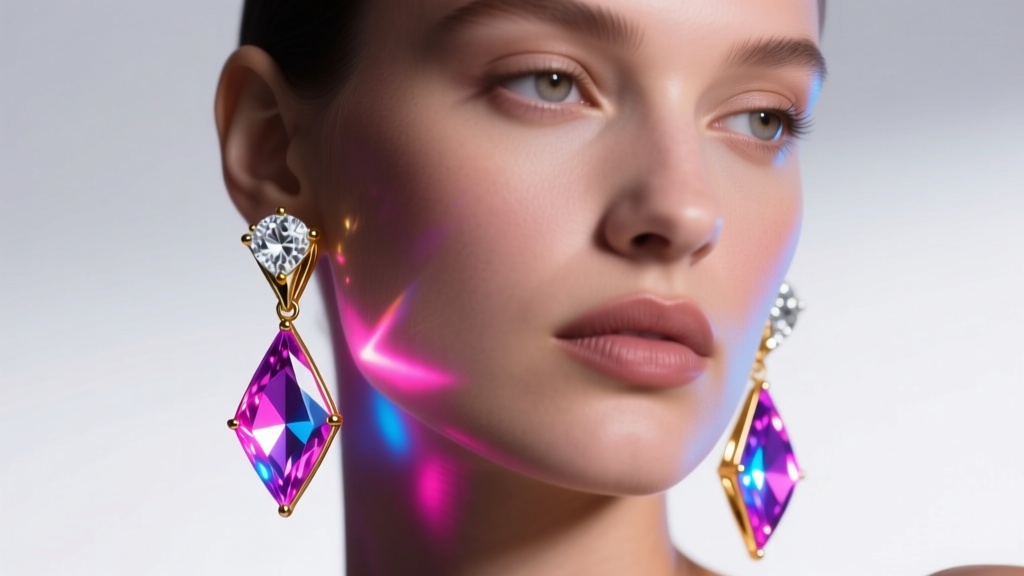
The 2026 Shift: Why Heavy Statement Pieces Are Out
The landscape of evening and event jewelry has undergone a radical transformation. If you are still relying on the heavy, static chandelier styles of the early 2020s, you are likely experiencing lobe fatigue before the main course is even served. In 2026, the defining characteristic of premium party earrings is not sheer mass, but kinetic movement and modular adaptability. Modern jewelry designers have recognized a fundamental biomechanical constraint: the human earlobe's comfort threshold for sustained wear maxes out at approximately 12 grams per earring over a four-hour period. Beyond this weight, the risk of micro-tears and the dreaded 'cheese-cutter effect' increases exponentially, especially when dancing or moving vigorously.
Consequently, this year's trend analysis reveals a massive pivot toward articulated components, ultra-lightweight aerospace alloys, and tension-based cartilage cuffs. The goal is to maximize light refraction and visual impact without compromising structural integrity or wearer comfort. Let us break down the engineering and styling mechanics behind the year's most sought-after evening earwear.
Kinetic Drops: The Physics of Dance-Floor Brilliance
Kinetic drop earrings have dominated the red carpet and high-end club scenes this season. Unlike traditional drop earrings that hang as a single rigid unit, kinetic designs utilize micro-hinges, articulated jump rings, and ball-bearing swivels. This engineering allows the earring to move independently of the wearer's head, catching ambient light from multiple angles with every step.
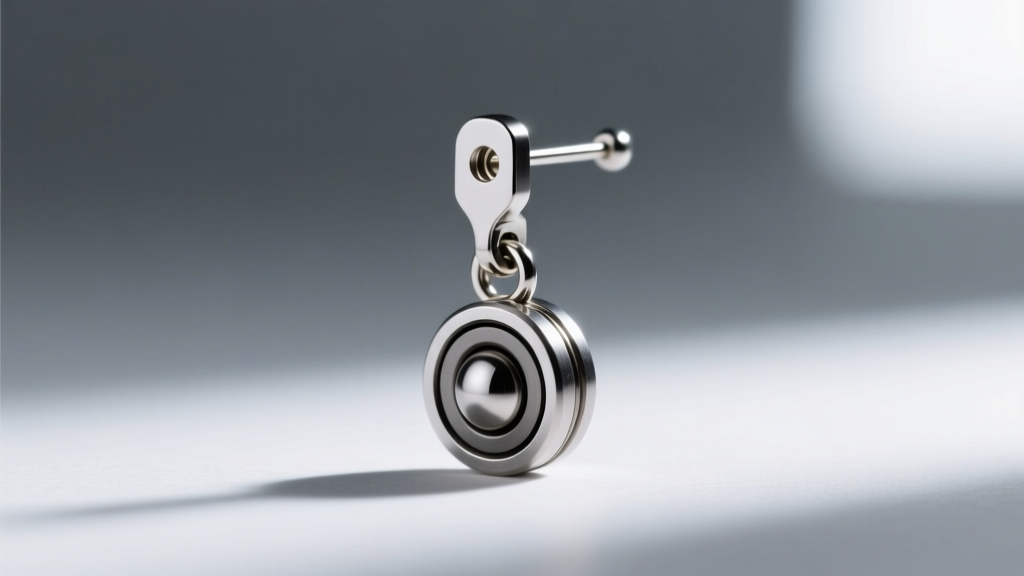
The secret to the success of kinetic party earrings lies in the material science of the hinges. High-end manufacturers are now using Grade 23 Titanium (Ti-6Al-4V ELI) for the internal articulation points. Titanium offers a Vickers hardness (HV) of roughly 334, which is essential for preventing the hinge pins from warping under the repetitive stress of a night out. Furthermore, because titanium is incredibly lightweight (4.43 g/cm³ compared to gold's 19.3 g/cm³), designers can create visually massive, three-tiered geometric drops that weigh less than 6 grams in total.
Gauge Sizing for Kinetic Drops
- 20-Gauge (0.81mm): Standard for lightweight kinetic studs and tops. Ideal for standard lobe piercings but requires a friction-back or secure screw-back to handle the swinging momentum.
- 18-Gauge (1.02mm): The recommended minimum for the primary wire of drops exceeding 4cm in length. This prevents the wire from bending if the earring catches on hair or clothing.
- Threadless Push-Pin Ends: The 2026 standard for securing heavy kinetic tops, utilizing a bent pin inside a 16G or 14G hollow post for absolute security during high-movement activities.
The Modular Ear Cuff: No-Piercing Party Solutions
For those looking to build a curated 'ear party' without committing to new cartilage piercings, the modular ear cuff has evolved from a cheap costume accessory into a piece of precision-engineered jewelry. Early iterations relied on simple, easily bent C-channels that would slip off the ear after an hour. Today's market is defined by memory-metal tension springs and adjustable set-screws.
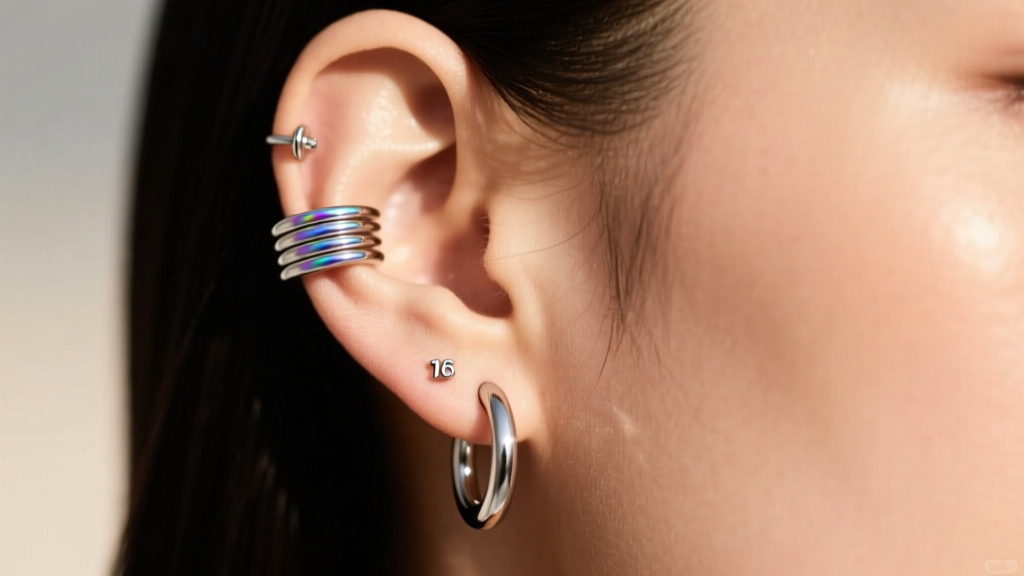
Niobium has emerged as the hero material for high-end ear cuffs. According to metallurgical experts at Rio Grande, niobium is highly malleable yet possesses excellent 'spring-back' memory, allowing cuffs to maintain their tension grip on the helix or tragus without permanently deforming. Additionally, niobium can be anodized using varying voltages to produce vibrant, iridescent colors—such as electric blues and deep purples—without the use of surface plating that could chip or cause contact dermatitis. Expect to pay between $85 and $180 for a precision-milled, anodized niobium tension cuff from boutique designers.
Material & Gauge Matrix for Sensitive Party-Goers
Evening environments often involve sweat, perfumes, and elevated body temperatures, creating a corrosive environment for reactive metals. If you have sensitive ears, selecting the correct alloy for your party earrings is non-negotiable. Below is a comparative matrix of the top materials used in 2026 evening jewelry.
| Material | Vickers Hardness (HV) | Optimal Gauge | Weight (g/cm³) | Price Range (Per Pair) | Hypoallergenic Rating |
|---|---|---|---|---|---|
| Grade 23 Titanium | 334 | 18G - 14G | 4.43 | $60 - $250 | Excellent (10/10) |
| Niobium | 132 | 16G (Cuffs/Wire) | 8.57 | $85 - $180 | Excellent (10/10) |
| 18K Yellow Gold | 125 | 20G - 18G | 15.6 | $400 - $1,200+ | Very Good (8/10) |
| Platinum 950 | 110 | 18G - 16G | 21.45 | $800 - $3,000+ | Excellent (10/10) |
| Brass/Bronze | 60-150 | 20G | 8.4 - 8.8 | $15 - $45 | Poor (2/10) |
Styling Framework: Mapping Earrings to Venue Lighting
A common mistake in evening styling is ignoring the optical properties of gemstones in relation to the venue's lighting design. The Gemological Institute of America (GIA) extensively documents how different stones handle light dispersion and refraction. To maximize the impact of your party earrings, apply this lighting framework:
1. The Neon & LED Club Environment
The Strategy: High dispersion and sharp scintillation.
The Stone: Moissanite or precision-cut Cubic Zirconia (CZ). Moissanite possesses a dispersion value of 0.104, more than double that of a natural diamond. In environments with sharp, multi-colored LED lighting and strobes, moissanite will throw aggressive 'fire' (rainbow flashes). Pair these with high-polish rhodium-plated white gold or platinum settings to bounce ambient neon light back into the stone.
2. The Warm Candlelight Dinner or Gala
The Strategy: Deep color saturation and soft luster.
The Stone: Champagne CZ, natural rutile quartz, or rose-cut sapphires. Rose cuts lack a pavilion (the bottom point of a faceted stone), meaning they rely on broad, flat facets that glow softly under warm, low-lumen lighting rather than sparkling aggressively. Set these in 18K rose or yellow gold to amplify the warm tones of the environment.
3. The Flash-Photography Heavy Event
The Strategy: Mirrored surfaces and high contrast.
The Stone: Black onyx, lapis lazuli, or high-polish enamel. When camera flashes are a primary light source, highly reflective, opaque materials create striking, graphic silhouettes in photographs. A geometric drop featuring polished black onyx framed in white gold will yield incredibly sharp, editorial-style photos without the 'blown-out' light flares that transparent diamonds often cause under direct flash.
Care & Maintenance for High-Impact Evening Wear
Kinetic and modular party earrings require specific maintenance protocols to ensure their mechanical parts do not fail mid-event. Hinge friction is the enemy of articulation.
- Ultrasonic Cleaning Caution: Never place articulated kinetic earrings in an ultrasonic cleaner. The high-frequency vibrations can loosen the micro-screws or dislodge the tension pins holding the hinges together. Instead, use a soft-bristled brush and a mild, ammonia-free jewelry soap.
- Lubricating Micro-Hinges: If a kinetic drop begins to feel stiff or squeaks, apply a microscopic drop of synthetic watch oil (like Moebius 9010) to the hinge pin using a fine needle. Wipe away all excess to prevent oil transfer to the skin or hair.
- Cuff Tension Resetting: For niobium or gold ear cuffs, the tension will naturally relax slightly over months of wear. To reset the grip, gently squeeze the cuff closed using nylon-jaw pliers to avoid marring the metal surface, then test the spring-back on your cartilage before the event.
By understanding the intersection of material science, optical physics, and biomechanics, you can curate a collection of evening earwear that not only defines the 2026 aesthetic but also performs flawlessly from the cocktail hour to the after-party.


