The Complete Buying Guide for Ladies Long Earrings
Discover how to choose ladies long earrings with our expert buying guide. Learn about weight limits, clasp types, materials, and face shape mapping.

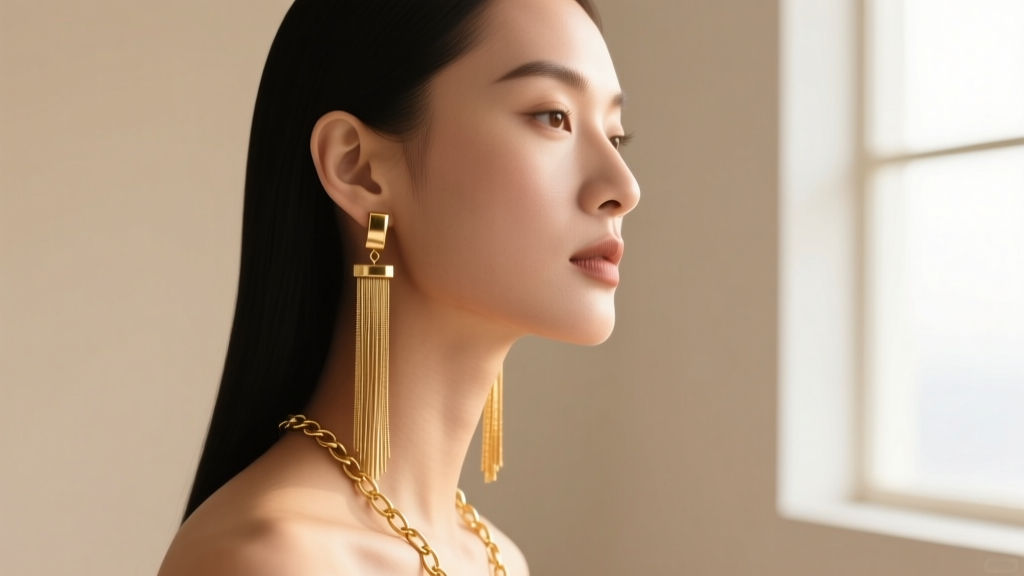
Ladies long earrings—from sweeping chandeliers to minimalist threader chains—command attention and frame the face beautifully. However, the elegance of a dramatic drop earring is quickly ruined by a stretched earlobe, a lost piece, or contact dermatitis. When shopping for ladies long earrings, you are not just buying jewelry; you are managing physics, anatomy, and metallurgy. This comprehensive buying guide cuts through the marketing fluff to give you exact specifications on weight tolerances, clasp mechanics, and material grades, ensuring your next purchase is as comfortable as it is stunning.
The Physics of Dangle: Weight Limits and Gauge Sizing
The average human earlobe can comfortably support 10 to 15 grams of weight for an extended period without stress. Once a long earring exceeds 20 grams, the downward force creates continuous torque on the piercing fistula (the healed skin tunnel). Over time, this leads to irreversible lobe stretching, thinning of the tissue, or the dreaded "cheese-cutter" tearing effect. When evaluating ladies long earrings, always check the gram weight. If a piece is 25 grams or heavier, it must feature a specialized support mechanism, such as a wide silicone backing or an omega clasp.
Furthermore, pay close attention to the wire gauge. Standard fashion earrings typically use 20-gauge (0.81mm) wire. For long, swinging dangles that catch on hair and scarves, insist on 18-gauge (1.02mm) or even 16-gauge (1.29mm) wire at the post. Thicker wire provides the structural integrity needed to resist bending and warping over time, maintaining the earring's original silhouette.
Clasp Mechanics: Securing Heavy Statement Pieces
The clasp is the most critical failure point on any dangle earring. A beautiful 3-inch drop is useless if it falls off during a dinner date. The swinging motion of long earrings puts unique lateral stress on the closure mechanism. Here is how different clasp types handle the demands of elongated styles:
| Clasp Type | Max Weight Capacity | Security Level | Best For |
|---|---|---|---|
| French Wire (Fishhook) | Under 12g | Low | Lightweight threaders and delicate chain drops |
| Leverback | 12g - 25g | High | Medium-weight dangles and gemstone drops |
| Omega Back | 25g - 40g+ | Very High | Heavy chandeliers and wide architectural pieces |
| Threader (Friction) | Under 8g | Medium | Minimalist chain styles that weave through the lobe |
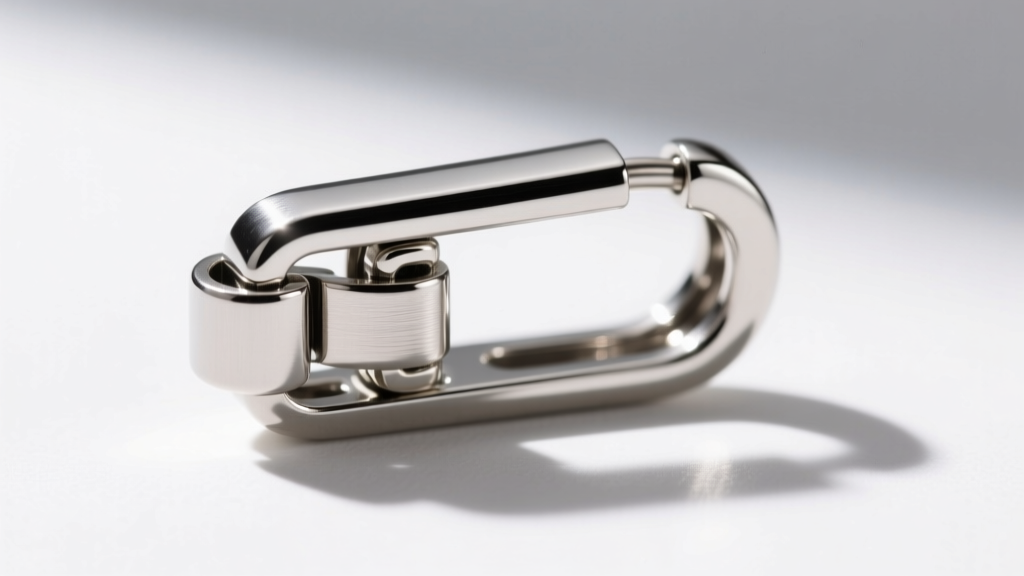
Material Science: Durability vs. Weight in Long Silhouettes
Long earrings are high-friction items. They swing against your neck, tangle in your hair, and absorb oils from your skin. This makes material selection paramount. According to the Association of Professional Piercers (APP), implant-grade titanium is the gold standard for sensitive ears, but its benefits extend to long earrings as well. Titanium Grade 23 (Ti-6Al-4V ELI) is exceptionally strong yet roughly 45% lighter than stainless steel. This allows designers to create voluminous, oversized long earrings that remain under the critical 15-gram comfort threshold.
If you prefer the look of gold, avoid cheap electroplated brass. The friction of a long earring swinging against the collarbone will wear off thin gold plating in a matter of weeks, exposing the base metal. Instead, look for PVD (Physical Vapor Deposition) coated stainless steel, which offers a gold hue that is highly resistant to friction and sweat. For solid gold lovers, the Gemological Institute of America (GIA) notes that 14k or 18k gold provides the necessary alloy hardness for earring posts, as pure 24k gold is too soft and will bend under the leverage of a heavy dangle.
Additionally, be highly cautious of nickel. The Mayo Clinic's guidelines on contact dermatitis highlight that nickel allergies can develop at any age. Because long earrings create micro-friction in the fistula, nickel-heavy base metals can trigger severe localized reactions. Always verify that the post material is explicitly labeled as nickel-free or hypoallergenic.
Face Shape Mapping for Elongated Silhouettes
The primary function of ladies long earrings is to manipulate visual proportions. Choosing the right length and geometry for your face shape is the difference between a harmonious look and an unbalanced one.
- Round Faces: Avoid circular hoops and wide, clustered chandeliers that mimic the face's natural curvature. Opt for linear, geometric drops (like long rectangles or thin bar pendants) measuring 2.5 to 3.5 inches. This creates a vertical line that visually elongates the face.
- Square Faces: The goal is to soften a strong, angular jawline. Avoid harsh, straight-edged geometric drops. Instead, choose long earrings with curved silhouettes, such as elongated teardrops, oval chains, or fluid, organic shapes that end just below the jaw.
- Oval Faces: This balanced face shape can carry almost any long earring style. However, avoid extreme lengths that extend past the collarbone, as this can over-elongate the profile and distort your natural proportions.
- Heart-Shaped Faces: Characterized by a wider forehead and a narrow, pointed chin. Look for chandeliers or teardrops that are wider at the bottom than at the top. This adds visual weight to the lower half of the face, balancing the narrow chin.
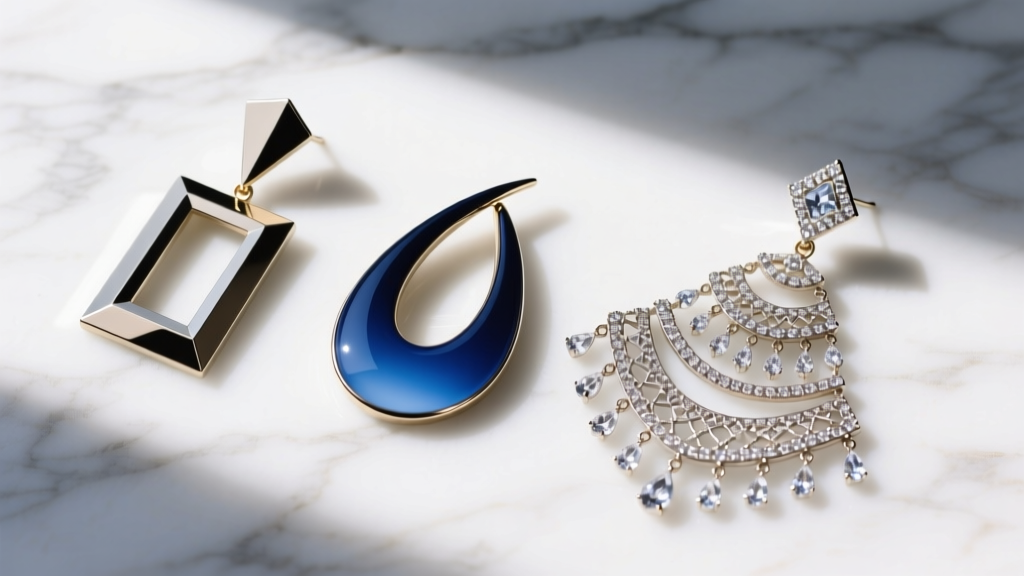
Troubleshooting Common Long Earring Failures
Even well-made long earrings can present mechanical challenges. Here is how to troubleshoot the two most common complaints:
The "Forward Flop" Phenomenon
The Problem: The earring constantly tilts forward, showing the post or wire instead of the decorative front.
The Cause: A poorly balanced center of gravity. The decorative element is too heavy relative to the backing.
The Solution: Swap the standard metal butterfly clutch for a wide silicone disc back or a specialized earring support patch (like Bling Guards). This increases the surface area anchoring the back of the earlobe, counteracting the forward torque.
Earlobe Tenderness and Micro-Tears
The Problem: Sharp pain or tenderness after wearing long earrings for just a few hours.
The Cause: The earring post has microscopic burrs from poor manufacturing, or the gauge is too thick for your specific piercing fistula, causing friction.
The Solution: Inspect the post under a magnifying glass. If burrs are present, gently buff them with a jeweler's cloth or return the piece. If the fistula is tight, apply a tiny amount of sterile jojoba oil to the post before insertion to reduce friction.
Final Purchasing Checklist
Before checking out with your next pair of ladies long earrings, run through this quick expert checklist:
- Weight Check: Is it under 20g? If over, does it have an omega back or wide support clutch?
- Gauge Verification: Is the post at least 18-gauge (1.02mm) to prevent bending?
- Material Safety: Is the post explicitly nickel-free, preferably implant-grade titanium, surgical steel, or solid 14k/18k gold?
- Clasp Security: Does the clasp type match the weight and swing-factor of the design?
- Proportion Check: Does the geometry of the drop complement your specific face shape?
By prioritizing structural integrity and anatomical comfort alongside aesthetics, you can confidently invest in long earrings that remain staple pieces in your wardrobe for years to come.


