The Lady With Pearl Earring Painting: A Gemological Deep Dive
Explore the gemology and technical jewelry specs behind the lady with pearl earring painting, from pearl grading to modern lobe-safe recreations.

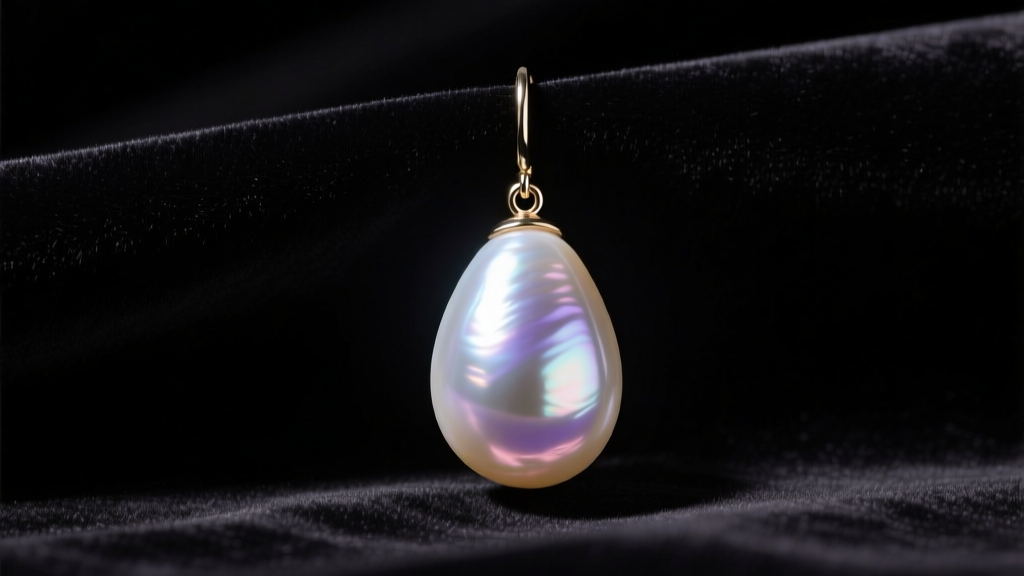
Johannes Vermeer’s masterpiece, painted around 1665, is a cornerstone of Dutch Golden Age art. While art historians and the Mauritshuis museum officially title it Girl with a Pearl Earring, the massive global search volume for the "lady with pearl earring painting" reveals how deeply embedded this specific jewelry aesthetic is in the public consciousness. Beyond its enigmatic subject and masterful use of light, the painting presents a fascinating gemological and biomechanical puzzle. The earring itself—a massive, luminous teardrop—defies the natural limitations of 17th-century pearl harvesting and modern earlobe biomechanics. In this expert deep dive, we deconstruct the technical specifications of Vermeer’s iconic pearl, analyze its gemological feasibility, and provide a precise blueprint for modern jewelers and collectors looking to recreate this historic drop earring safely.
The Gemological Impossibility of Vermeer’s Pearl
To understand the technical anomaly of the earring depicted in the lady with pearl earring painting, we must first scale the gemstone relative to the subject's anatomy. The subject's head is estimated to be roughly 20 centimeters in height. The pearl, painted at approximately one-tenth the height of the face, implies a staggering diameter of 20mm to 25mm. Furthermore, the distinct teardrop (pendant) shape and the sharp, impasto highlight suggest a highly polished, flawless surface with exceptional orient and luster.
In the 1660s, pearls were harvested exclusively through natural diving methods in the Persian Gulf, the Red Sea, and the waters off Ceylon (Sri Lanka). Natural saltwater pearls of this magnitude are statistically near-impossible. According to the Gemological Institute of America (GIA), natural pearls rarely exceed 8mm to 10mm. A 25mm natural saltwater pearl with a perfect teardrop symmetry would have been a singular, globally recognized royal treasure, far beyond the means of a Delft painter or his patrons.
Gemologist's Note: The sharp, concentrated white highlight Vermeer painted on the upper left quadrant of the pearl is characteristic of glass or lead crystal, which possesses a higher refractive index (1.5 - 1.7) than aragonite nacre (1.53 - 1.68). It is highly probable that the 'lady' was actually wearing a sophisticated Venetian glass imitation, a common accessory in the Dutch Republic.
Sourcing and Grading Modern Equivalents
For modern collectors and bespoke jewelers attempting to recreate the exact dimensions and visual weight of the painting's earring, we must look to contemporary pearl cultivation. Achieving a 20mm+ teardrop requires specific nucleation techniques. Below is a technical comparison of the three primary materials used to replicate the Vermeer aesthetic today.
| Material / Pearl Type | Size Range | Nacre Thickness | Luster Grade | Approx. Market Price (Per Pearl) |
|---|---|---|---|---|
| White South Sea (Saltwater) | 15mm - 22mm | 0.8mm - 4.0mm | AAA to Gem | $4,500 - $18,000+ |
| Edison Pearl (Freshwater) | 14mm - 19mm | 1.5mm - 3.0mm | AAA (Metallic) | $250 - $900 |
| Majorica (Simulated Glass) | 18mm - 24mm | N/A (Coating) | Excellent (Mirror) | $120 - $280 |
The Edison Pearl Alternative
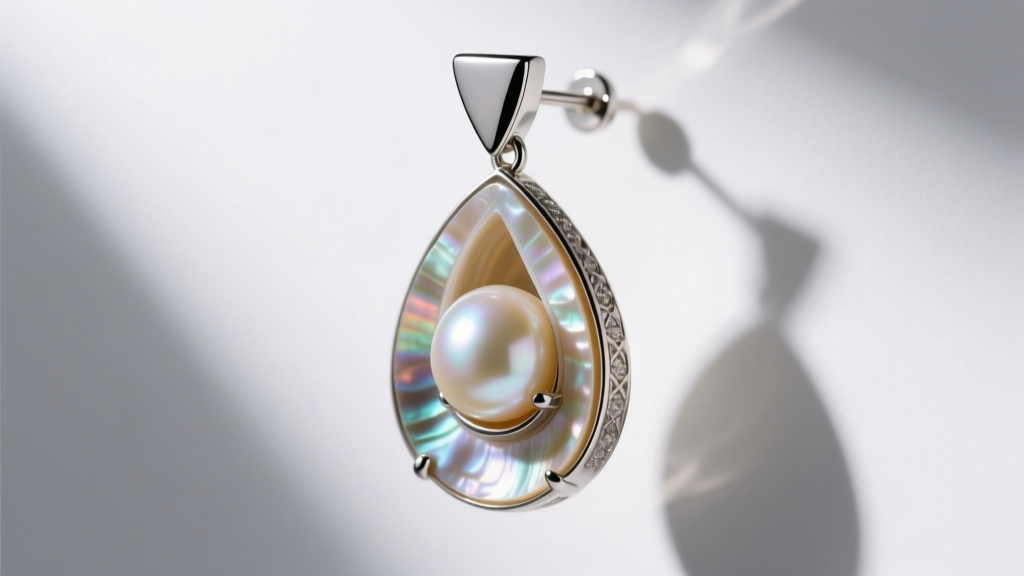
For those seeking a genuine nacre pearl without the South Sea premium, the Edison pearl is the optimal technical choice. Cultivated in freshwater mussels using spherical bead nucleation (similar to Akoya and South Sea methods), Edison pearls can achieve massive sizes and exhibit a metallic luster that mimics the sharp highlights seen in 17th-century oil paintings. However, finding a perfect teardrop shape in this size requires sorting through thousands of baroque and semi-baroque harvests.
The Biomechanics of Heavy Drop Earrings
Recreating the lady with pearl earring painting is not merely an aesthetic challenge; it is a structural engineering problem. A solid nacre pearl with a 22mm diameter has a volume of roughly 5.57 cm³. Given that the specific gravity of pearl nacre is approximately 2.7 g/cm³, the pearl alone will weigh around 15 grams (0.53 oz). Add the metal cap, wire, and backing, and the total dynamic load on the earlobe approaches 18 grams.
The average human earlobe will begin to experience micro-tearing and permanent elongation (ptosis) when subjected to a continuous static load greater than 7 to 10 grams. To safely wear a Vermeer-scale earring, the following biomechanical adjustments are mandatory:
- Wire Gauge Thickness: Standard earring wires are 20-gauge (0.81mm) or 22-gauge (0.64mm). Under a 15g dynamic load (caused by walking or turning the head), a 20-gauge sterling silver wire will permanently deform and bend. You must use an 18-gauge (1.02mm) or 16-gauge (1.29mm) wire forged from hardened 14k/18k gold or platinum.
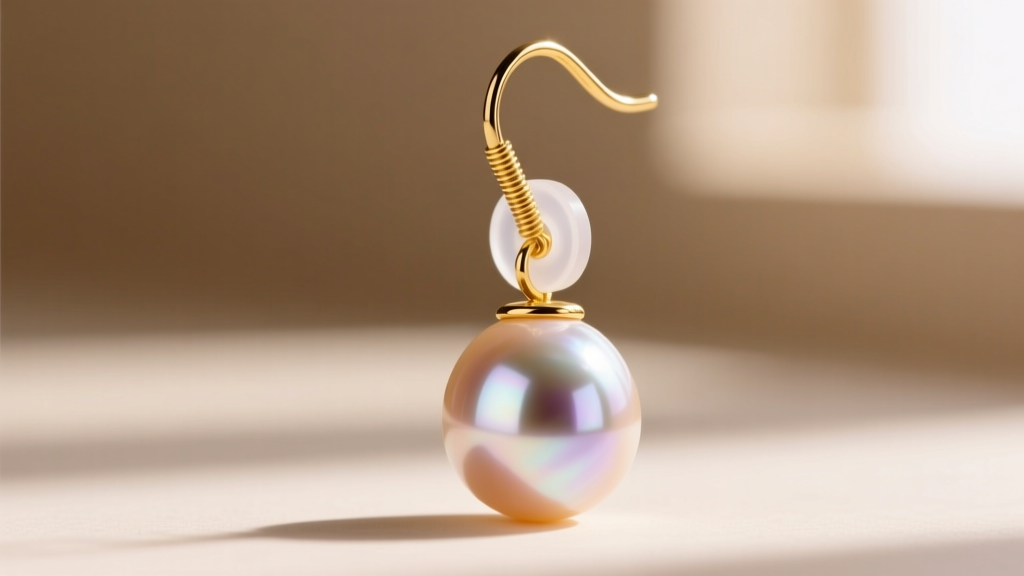
- Weight Distribution Backings: Standard butterfly friction backs are entirely insufficient and will cause the earring to droop forward, pulling on the piercing tract. You must utilize La Pousette backs (which lock via a spring mechanism and feature a wide, flat disc) or heavy-duty silicone support o-rings that rest flush against the back of the earlobe to distribute the 15g load across a wider surface area.
- Front-Facing Support Discs: For pierced lobes that have already experienced stretching, a clear or gold-toned silicone earlobe support patch should be applied to the front of the lobe to prevent the wire from slicing through the tissue.
Recreating the Painting: A Jeweler’s Blueprint
If you are commissioning a custom jeweler to build this exact piece, providing them with a precise technical blueprint ensures the structural integrity of the final piece. Do not rely on standard drop-earring templates; the sheer mass of a 20mm+ pearl requires specialized mounting.
1. The Peg and Cup Assembly
A simple glue-on peg will fail under the torque of a 22mm teardrop pearl. The jeweler must drill the pearl using a 0.9mm diamond-core bit to a depth of exactly 4mm. The mounting cup should not be a flat disc; it must be a bezel-style concave cup that matches the curvature of the pearl's top hemisphere, providing lateral support against side-impact torque.
2. Adhesive Selection
Standard cyanoacrylate (Super Glue) or G-S Hypo Cement will degrade and shatter under the shear stress of a heavy swinging drop. The assembly must be bonded using a two-part thixotropic jeweler's epoxy, such as Devcon 5-Minute Steel Epoxy or a specialized flexible resin that can absorb kinetic shock without losing adhesion to the aragonite layers.
3. The Bail and Wire Integration
Rather than drilling a hole through the top of the pearl (which risks catastrophic cracking in large, solid-nacre gems), the pearl should be mounted on a heavy-gauge vertical peg that extends upward into a solid cast bail. The 18-gauge French wire should be soldered to a reinforced jump ring attached to this bail, ensuring the pearl hangs perfectly plumb, catching the light exactly as Vermeer intended.
Conclusion
The enduring fascination with the lady with pearl earring painting bridges the gap between classical art history and modern materials science. While Vermeer likely utilized a glass prop to capture that iconic, luminous teardrop, today's advancements in freshwater nucleation and biomechanical jewelry design allow us to wear genuine, massive pearls safely. By respecting the specific gravity of nacre, upgrading wire gauges, and utilizing proper weight-distribution mechanics, modern jewelry enthusiasts can bring a masterpiece out of the museum and into reality—without sacrificing their earlobes to the weight of art history.


