Lapis Lazuli and Gold Earrings: A Material & Durability Guide
Discover how lapis lazuli and gold earrings compare in durability, karat pairings, and setting styles. Expert tips on care, porosity, and authenticity.

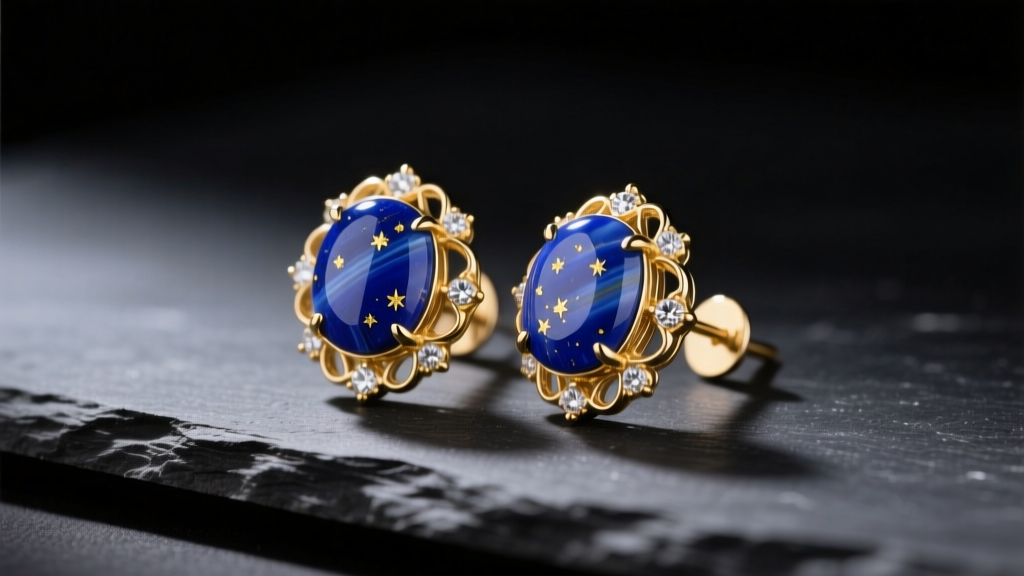
When evaluating fine jewelry, the intersection of organic porosity and metallic malleability presents unique engineering challenges. This is especially true when designing lapis lazuli and gold earrings. Lapis lazuli is not a single mineral, but rather a complex metamorphic rock composed primarily of lazurite, calcite, and pyrite. When paired with gold—a highly malleable precious metal—the resulting jewelry requires a deep understanding of material science to ensure longevity, structural integrity, and aesthetic brilliance. In this comprehensive guide, we explore the mineralogical properties of lapis, the metallurgical nuances of gold karats, and the precise setting mechanics required to craft heirloom-quality earrings in 2026 and beyond.
The Mineralogy and Structural Vulnerabilities of Lapis
To understand how lapis lazuli behaves in earring form, we must first examine its physical properties. According to the Gemological Institute of America (GIA), lapis lazuli ranks between 5 and 5.5 on the Mohs hardness scale. This makes it significantly softer than diamonds (10) or sapphires (9), and slightly softer than quartz (7). While earrings are generally subjected to less direct impact than rings or bracelets, the 5.5 hardness rating means that lapis can be easily scratched by everyday objects, including hairbrushes, zippers, and even dust particles containing quartz.
Furthermore, lapis lazuli has a specific gravity (SG) ranging from 2.7 to 2.9. This relatively high density means that large cabochons or teardrop cuts carry substantial weight. When designing drop earrings, jewelers must account for this mass to prevent the earring from pulling uncomfortably on the earlobe or causing the post to bend over time. The presence of calcite (the white streaks) and pyrite (the metallic gold flecks) also introduces structural fault lines. Calcite is even softer (Mohs 3) and highly reactive to acids, while pyrite inclusions can occasionally oxidize if exposed to prolonged moisture, making the stone's matrix a critical factor in long-term durability.
Gold Karat Alloys: Finding the Right Metallurgical Match
Gold is prized for its luster and resistance to tarnish, but pure 24k gold is far too soft to securely hold a heavy, semi-precious stone like lapis lazuli. The alloy metals mixed with gold—typically copper, silver, zinc, and sometimes palladium—dictate both the color and the tensile strength of the earring's setting. Yellow gold is the traditional and most aesthetically pleasing pairing for lapis, as the warm metallic tones perfectly complement the natural pyrite flecks within the stone.
| Gold Karat | Purity & Composition | Tensile Strength | Best Earring Application |
|---|---|---|---|
| 14k Gold | 58.5% Gold, 41.5% Alloys | High (Excellent durability) | Everyday studs, huggies, and cartilage hoops requiring secure prong or bezel tension. |
| 18k Gold | 75.0% Gold, 25.0% Alloys | Medium (Rich color, moderate wear) | Statement drop earrings and occasion wear where deep yellow color enhances the lapis. |
| 22k Gold | 91.6% Gold, 8.4% Alloys | Low (Highly malleable) | Artisan dangles and low-impact designs; requires thick bezels to prevent metal warping. |
For daily wear, 14k gold is the superior choice for the structural components of the earring, such as the post, clutch, and bezel wall. However, many high-end jewelers utilize 18k gold for the visible decorative elements to achieve a richer color contrast against the deep ultramarine blue of top-tier Afghan lapis.
Setting Mechanics: Protecting a Porous Stone
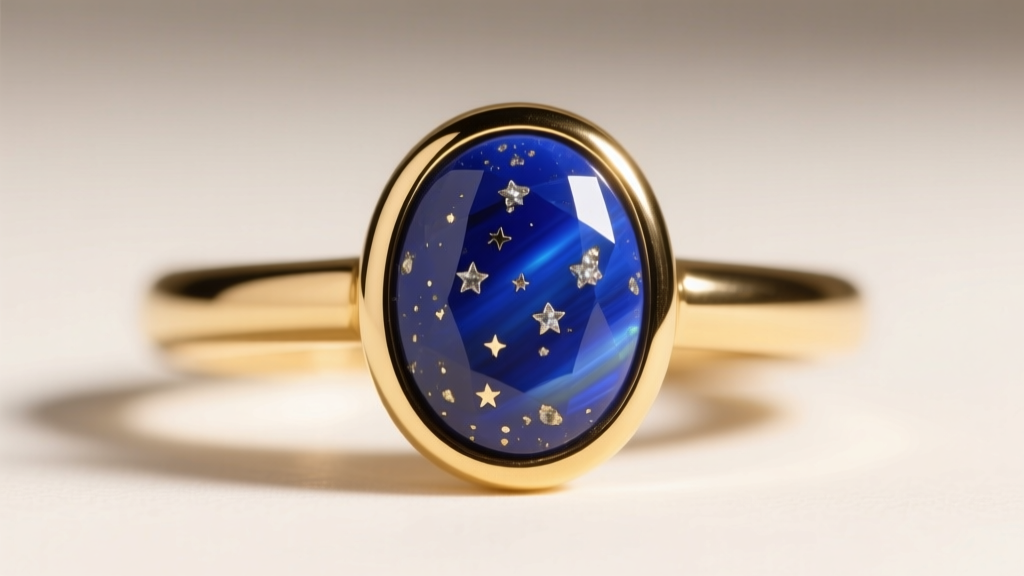
The setting style is the single most critical factor in the survival of lapis lazuli and gold earrings. Because lapis is a porous rock with a conchoidal to uneven fracture pattern, it is highly susceptible to chipping at the girdle (the outer edge). Prong settings, while popular for faceted diamonds, are generally ill-advised for lapis lazuli. Prongs leave the edges of the stone exposed and require the stone to be notched, which can cause micro-fractures in the calcite matrix.
The bezel setting is the undisputed standard for lapis earrings. A well-crafted bezel involves a continuous rim of gold that is burnished tightly over the edge of the cabochon. This not only protects the vulnerable perimeter from impacts but also seals the porous edge of the stone against the intrusion of cosmetics, perfumes, and skin oils. For heavier drop earrings, jewelers often employ a 'half-bezel' or 'V-bezel' at the pointed tips of teardrop cuts, combining the security of a bezel with the light-catching openness of a prong at the stone's thickest point.
Authenticity, Dyeing, and Impregnation Treatments
As the demand for vivid, uniform blue jewelry has surged, the market has seen an influx of treated lapis lazuli. Lower-grade material with excessive white calcite is frequently dyed to mimic the highly prized 'Royal Blue' or 'Persian Blue' varieties. According to mineralogical databases like Mindat.org, the porous nature of the calcite matrix makes it an excellent sponge for synthetic dyes.
"A reliable field test for dyed lapis involves applying a small drop of acetone or rubbing alcohol to an inconspicuous area or a cotton swab. If the swab picks up blue pigment, the stone has been artificially dyed. Natural lazurite is completely colorfast to standard solvents."
In addition to dyeing, many commercial lapis earrings are impregnated with colorless wax or resin to improve polish and stability. While waxing is an accepted industry practice, it drastically alters the care requirements of the earrings, as exposure to heat or ultrasonic cleaners will melt the wax, leaving the stone dull and vulnerable.
Earring Styles: Lobe vs. Cartilage Considerations
The anatomical placement of the earring dictates the necessary gauge (thickness) of the gold post or wire. Standard lobe earrings typically utilize a 20-gauge (0.81mm) or 18-gauge (1.02mm) post. However, because lapis lazuli is dense, large lapis studs require a thicker 18-gauge or even 16-gauge (1.29mm) post to prevent the gold from bending under the stone's weight. If a heavy 10mm lapis cabochon is mounted on a flimsy 22-gauge wire, the earring will droop forward, causing discomfort and increasing the risk of the post snapping.
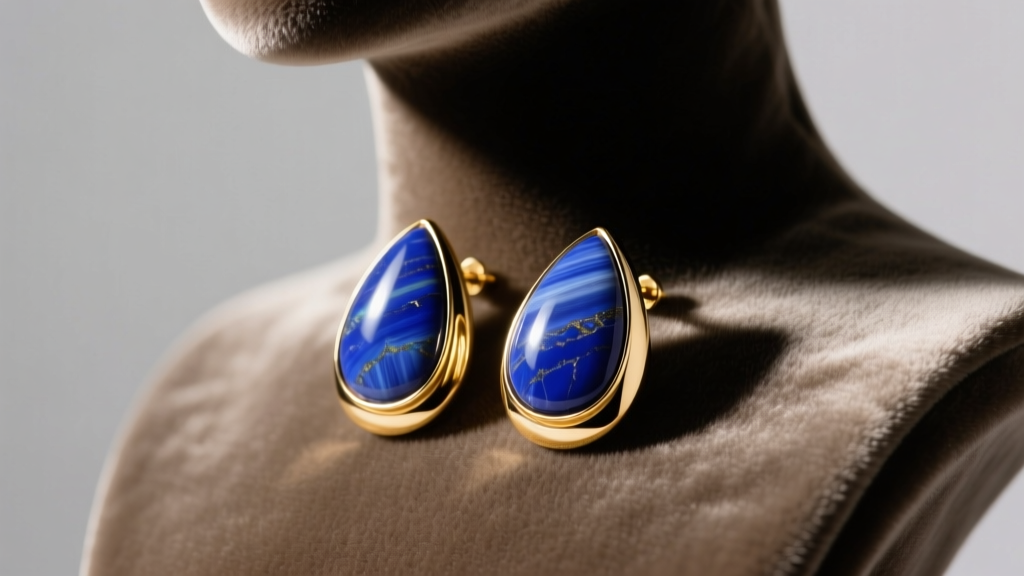
For cartilage piercings (such as the helix or tragus), huggies and small hoops featuring lapis inlays are highly popular. Cartilage tissue is less forgiving and more prone to irritation than the earlobe. Therefore, the gold used in cartilage jewelry must be highly biocompatible. 14k or 18k nickel-free yellow gold is essential, as the copper and zinc alloys used in lower-karat golds can sometimes cause contact dermatitis in sensitive cartilage piercings. Furthermore, the lapis inlays in cartilage hoops must be perfectly flush with the gold channel to prevent hair from snagging on the stone's natural pits.
Long-Term Care and Chemical Sensitivities
Maintaining the brilliance of lapis lazuli and gold earrings requires a strict departure from standard jewelry cleaning routines. The most common mistake consumers make is placing lapis earrings into an ultrasonic cleaner. The high-frequency vibrations can easily shatter the stone along its natural calcite fault lines, while the heat of the cleaning solution will strip away any protective wax treatments.
Similarly, chemical dips and silver polishes are strictly prohibited. The acidic nature of many commercial jewelry cleaners will etch the calcite inclusions, leaving permanent white, chalky spots on the surface of the stone. The only safe method for cleaning lapis and gold earrings is to use a soft, untreated microfiber cloth for the gold, and a barely damp cloth with mild, pH-neutral soap for the lapis. After wiping, the stone must be dried immediately to prevent water from seeping into the microscopic pores. By respecting the unique material properties of both the ancient blue stone and the precious metal, collectors can ensure their earrings remain vibrant and structurally sound for generations.


