Large Hoop Earrings With Diamonds: 2026 Trend & Style Analysis
Discover the 2026 trends for large hoop earrings with diamonds. Expert styling tips, carat weight guides, and metal pairings for maximum impact.

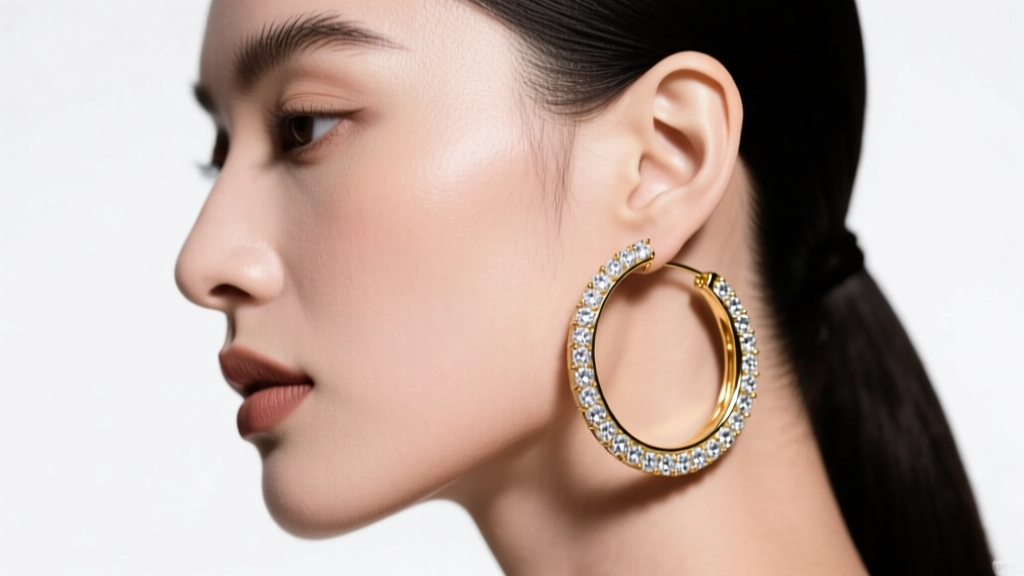
The Evolution of the Statement Hoop in 2026
As we navigate the jewelry landscape of 2026, the ultra-minimalist micro-huggie has taken a definitive backseat to unapologetic maximalism. At the absolute forefront of this cultural and sartorial shift are large hoop earrings with diamonds. No longer reserved exclusively for red carpets or evening galas, oversized diamond hoops have been re-engineered for daytime luxury, hybrid work environments, and high-impact street style. This year’s trends emphasize architectural silhouettes, mixed-metal inlays, and a heavy reliance on lab-grown diamond melee to achieve massive carat weights without the traditional financial barrier.
However, scaling up a hoop earring introduces complex structural challenges. A 50mm hoop encrusted with 4.00 carats of diamonds carries significant physical weight, demanding a deep understanding of metallurgy, gauge thickness, and lobe health. This comprehensive style and trend analysis breaks down the exact specifications, pricing matrices, and styling frameworks you need to master the large diamond hoop trend this year.
Anatomy of a High-Impact Diamond Hoop
Gauge Thickness and Structural Integrity
The most common failure mode in large, heavy earrings is the "cheese-cutter effect," where a thin wire slowly slices through the earlobe tissue due to the downward pull of gravity. Standard fashion earrings are typically crafted in 20-gauge (0.81mm) or 18-gauge (1.02mm) wire. For large hoop earrings with diamonds weighing more than 12 grams per pair, these gauges are structurally insufficient.
In 2026, premium jewelers are defaulting to 14-gauge (1.6mm) or even 12-gauge (2.0mm) posts for oversized hoops. When shopping, always verify the post thickness. If you have pre-existing lobe stretching from past heavy wear, you may require custom-fitted 10-gauge (2.5mm) posts or specialized silicone lobe-support patches (often called "lobe wonders") to distribute the weight across a wider surface area of the cartilage and tissue.
Diamond Melee and Visual Spread
When evaluating large hoops, Total Carat Weight (TCW) is only half the story; the physical diameter of the melee diamonds dictates the "visual spread." A 3.00 TCW hoop set with 0.8mm melee diamonds will require hundreds of individual stones, creating a dense, highly reflective surface but increasing the risk of stone loss if the prongs fail. Conversely, using 1.5mm to 2.0mm melee stones yields a bolder, more geometric light return. According to the Forbes Jewelry Guide, because melee stones are too small to be individually graded by major labs, buyers should insist on a manufacturer guarantee of VS1-VS2 clarity and G-H color to ensure the hoop doesn't appear cloudy or yellowish in natural sunlight.
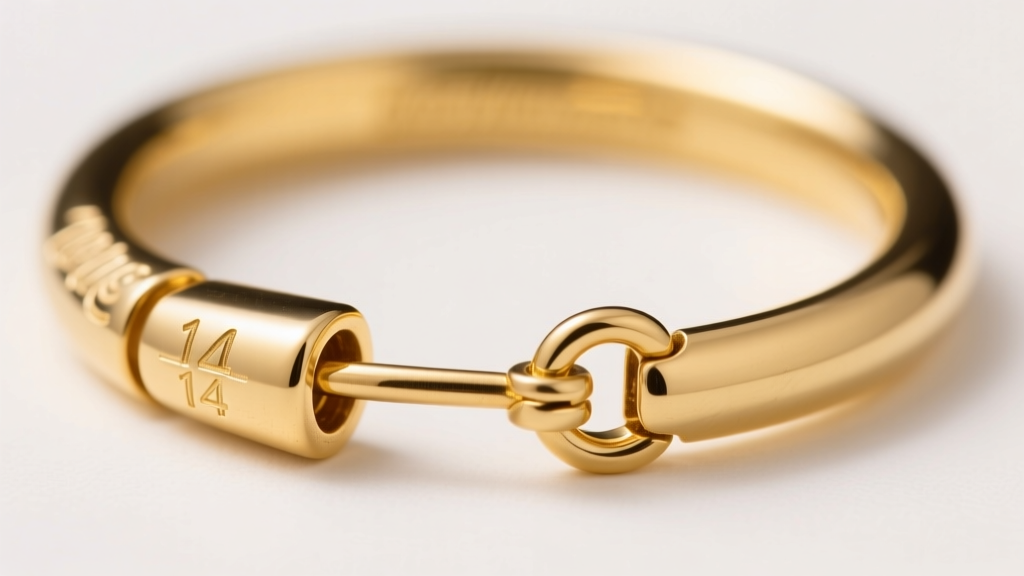
Hinge Mechanics and Clasp Security
Large hoops require specialized hinge mechanisms to prevent loss and maintain the perfect circular silhouette. The traditional "clicker" hinge, while popular for huggies, often fails under the torque of a 60mm hoop. The 2026 standard for luxury oversized hoops includes:
- Saddle Back Clasps: A curved wire that snaps securely into a grooved saddle, distributing tension evenly and preventing the hoop from pulling open if snagged on clothing.
- Omega Clip Hybrids: Combining a standard post with an internal spring-loaded omega clip that grips the back of the earlobe, providing secondary security for hoops exceeding 50mm in diameter.
- Bayonet Fittings: A push-and-twist mechanism borrowed from luxury watchmaking, offering the highest level of security for heavy, investment-grade diamond hoops.
2026 Trend Matrix: Settings and Silhouettes
The way diamonds are secured to the metal framework drastically alters the aesthetic and durability of the earring. Below is a comparative analysis of the dominant setting styles seen in this year's collections.
| Setting Style | Visual Impact | Durability (1-10) | Price Premium | Best Use Case |
|---|---|---|---|---|
| Micro-Pavé | Continuous, liquid-like sparkle | 5 | High (Labor intensive) | Evening wear, editorial styling |
| Bezel Set | Modern, geometric, sleek edges | 9 | Very High (Extra metal) | Daily wear, active lifestyles |
| Channel Set | Vintage, Art Deco, structured | 8 | Medium | Professional settings, retro glam |
| Prong (Shared) | Maximum light entry, classic | 6 | Standard | Versatile, transitional day-to-night |
Face Shape & Proportion Mechanics
Styling large hoop earrings with diamonds requires an understanding of facial geometry. A hoop that flatters a heart-shaped face might overwhelm a petite, round face. Here is the 2026 proportion framework:
- Round Faces: Avoid perfect circles, which echo and exaggerate facial roundness. Opt for elongated oval hoops (e.g., 50mm x 35mm) or teardrop silhouettes. The vertical draw elongates the neck and jawline.
- Square Faces: Soften a strong, angular jawline with large, perfectly circular hoops (50mm to 65mm diameter) featuring rounded bezel settings. Avoid sharp, geometric square hoops.
- Heart Faces: Choose hoops that are wider at the bottom than the top, or classic circles that sit just below the chin line to add visual weight to the lower half of the face.
- Oval Faces: The universal canvas. Oval faces can carry extreme maximalism, including 70mm+ oversized architectural hoops and asymmetrical diamond placements.

Investment & Pricing Tiers: Lab-Grown vs. Natural
The proliferation of high-quality lab-grown diamonds has completely disrupted the pricing matrix for large diamond hoops. Because a 50mm pavé hoop can easily require 5.00 to 8.00 TCW, natural earth-mined diamonds push these pieces into the realm of high jewelry, often exceeding $30,000. The Gemological Institute of America (GIA) notes that lab-grown diamonds possess the exact same optical and chemical properties as mined stones, making them the dominant choice for trend-driven, high-carat fashion jewelry in 2026.
Pricing Breakdown (50mm Hoops, 4.00 TCW, 14k Gold)
- Lab-Grown (VS/G-H): $2,800 – $4,500
- Lab-Grown (VVS/D-E): $4,500 – $6,500
- Natural Mined (VS/G-H): $14,000 – $22,000
- Natural Mined (VVS/D-E): $28,000+
Pro-Tip: For large hoops, prioritize cut quality and color over clarity. Inclusions in VS2 or SI1 melee diamonds are entirely invisible to the naked eye in a pavé setting, allowing you to allocate your budget toward a larger diameter or a higher gold weight for better structural integrity.
Care, Maintenance, and Lobe Health
Maintaining the brilliance of large diamond hoops requires a disciplined cleaning regimen, but you must be cautious with automated cleaners. While ultrasonic jewelry cleaners are excellent for removing sebum and lotion buildup from diamond facets, the high-frequency vibrations can loosen the micro-prongs in a pavé setting, especially on older or frequently worn hoops.
"For heavy pavé diamond hoops, abandon the ultrasonic machine. Instead, use a soft-bristled baby toothbrush, warm water, and a drop of degreasing dish soap. Gently scrub the gallery (the underside of the setting) where skin oils accumulate and block light return."
Finally, practice "lobe rotation." If you wear heavy, large diamond hoops daily, the constant gravitational pull will permanently stretch the piercing channel. Alternate your heavy hoops with lightweight 18-gauge titanium studs or sleep in no earrings at all to allow the tissue to recover and maintain its elasticity. By treating your large hoop earrings with diamonds as both a structural engineering marvel and a delicate textile, you ensure they remain a staple of your wardrobe for decades to come.


