Authentic Gold Earrings From Mexico: 2026 Buying Guide
Discover how to buy authentic gold earrings from Mexico. Learn about regional styles, karat hallmarks, filigree craftsmanship, and 2026 pricing.

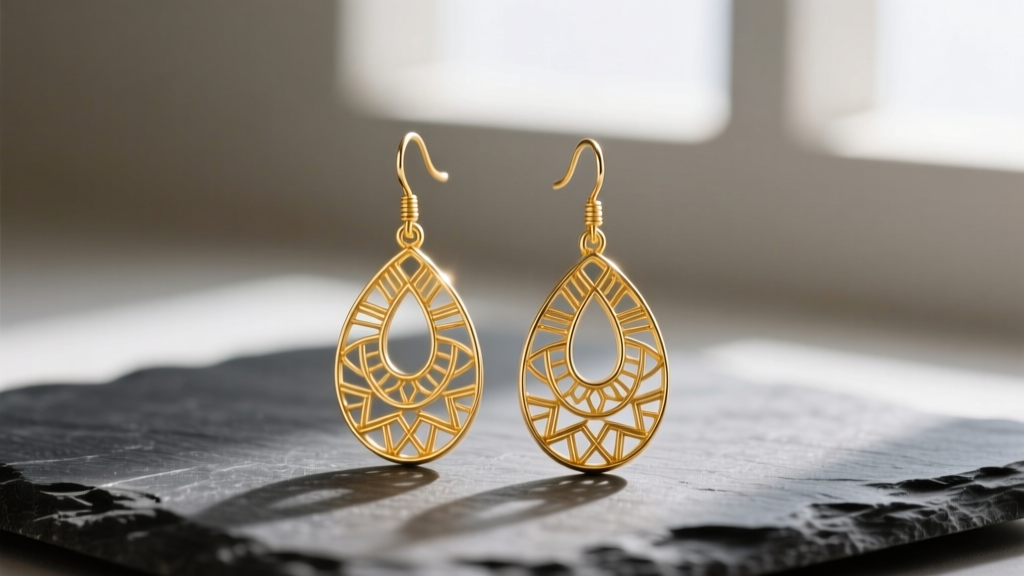
When collectors and jewelry enthusiasts think of Mexican metalwork, the legendary silver of Taxco usually dominates the conversation. However, the heritage of gold earrings from Mexico represents an equally rich, yet frequently overlooked, pillar of Latin American artisanship. From the intricate filigrana of the Yucatán Peninsula to the bold, pre-Columbian-inspired hoops of Guadalajara, Mexican goldsmithing offers a masterclass in cultural storytelling and metallurgical skill.
As cross-border e-commerce and artisan tourism continue to evolve in 2026, acquiring authentic Mexican gold jewelry has never been more accessible—or more fraught with counterfeit risks. This comprehensive buying guide will equip you with the exact specifications, hallmarking knowledge, and regional insights required to invest in genuine, high-quality Mexican gold earrings.
Decoding Karats: The Mexican Gold Standard
Unlike the United States or Europe, where 14k and 18k gold dominate the fine jewelry market, Mexico has a unique karat ecosystem driven by both historical preferences and modern economic factors. Understanding these distinctions is critical when evaluating gold purity standards and pricing.
| Karatage | Gold Purity | Common Use in Mexico | Durability & Color |
|---|---|---|---|
| 10K (41.7%) | 41.7% | Everyday studs, mass-market hoops, affordable tourist pieces. | Highly durable, pale yellow hue, prone to tarnishing if alloyed with high copper. |
| 14K (58.5%) | 58.5% | Standard fine jewelry, intricate filigree, mid-weight arracadas. | Excellent balance of strength and rich color; the benchmark for artisan exports. |
| 18K (75.0%) | 75.0% | High-end bespoke pieces, indigenous ceremonial jewelry, heavy castings. | Deep, saturated yellow; softer metal requiring careful wear and storage. |
Expert Insight: When buying vintage or antique Mexican gold, you may encounter pieces marked as 'Oro Nacional.' Historically, domestic gold alloys sometimes incorporated silver and copper in ratios that yielded a slightly rosier or greener tint than standard US alloys. Always request a spectrometer test or acid test verification if purchasing high-value 18k vintage pieces from independent market vendors.
Regional Masterpieces: What to Look For
Mexico is not a monolith; its jewelry styles are deeply tied to specific states and indigenous traditions. Knowing the regional hallmarks of design will help you identify authentic craftsmanship versus factory-made imitations.
Yucatán Filigree (Filigrana Yucateca)
Originating in Mérida and surrounding Maya communities, Yucatecan filigree is a painstaking process where artisans twist and flatten fine gold wires into lace-like patterns, soldering them within a structural frame. Authentic filigree earrings are incredibly lightweight despite their large surface area. Look for the 'gota' (teardrop) motif, which remains the most iconic design in the region.
Jalisco and Guadalajara Arracadas
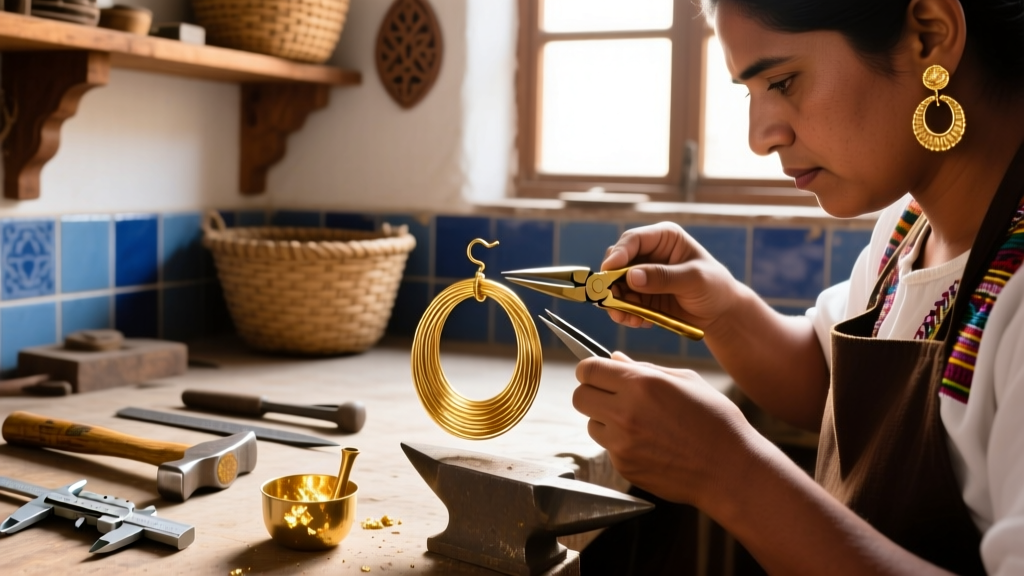
The arracada (a large, often crescent-shaped or circular hoop) is a staple of Mexican gold jewelry. In Guadalajara, artisans specialize in hollow-tube gold hoops and wire-wrapped designs that provide massive visual impact without the prohibitive weight of solid gold. A genuine artisan-crafted arracada will feature seamless solder joints at the clasp and a perfectly balanced center of gravity so the earring hangs flush against the lobe.
Oaxacan and Pre-Columbian Motifs
Goldsmiths in Oaxaca and Mexico City frequently draw upon Zapotec, Mixtec, and Aztec iconography. Expect to see intricate lost-wax castings featuring the Aztec calendar stone, Quetzalcoatl (the feathered serpent), and stepped fret patterns (grecas). These pieces are typically cast in 14k or 18k gold and possess a substantial, heavy feel.
Gauge Sizes and Wearability: A Crucial Warning
One of the most common mistakes international buyers make when purchasing traditional Mexican gold earrings is ignoring the wire gauge. Standard US and European stud posts and shepherd hooks are typically 20-gauge (0.81mm) or 18-gauge (1.02mm).
However, traditional Mexican ganchos (shepherd hooks) used for heavy filigree drops or solid gold arracadas are frequently forged at 16-gauge (1.29mm) or even 14-gauge (1.63mm) to support the weight of the earring without bending.
Fitter's Note: If your lobes are accustomed to standard 20g wires, forcing a 16g Mexican hook through your piercing will cause micro-tearing and stretching. Always ask the artisan or retailer to swap the hook for a lighter 18g or 20g wire, or use a professional jeweler to carefully taper the post before wearing.
The Hallmark Test: Verifying Authenticity
To protect consumers and regulate exports, the Mexican government, through the Secretaría de Economía, mandates specific hallmarking for precious metals. When inspecting gold earrings from Mexico, you should look for a combination of the following stamps, usually located on the earring post, the back of the clutch, or the inner curve of a hoop.
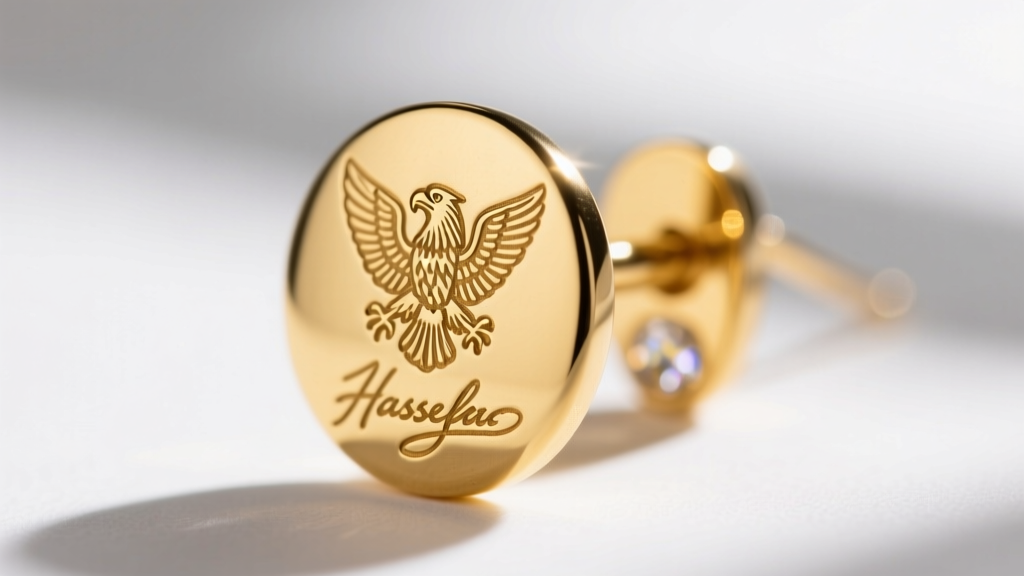
- The Karat Stamp: Clearly marked as 10K, 14K, or 18K. Sometimes accompanied by the fineness number (e.g., 585 for 14k).
- The Maker's Mark: A registered symbol, initials, or logo of the artisan or workshop. In recognized artisan guilds, this is registered with local authorities.
- The Eagle Mark (El Águila): While historically famous as the assay mark for Mexican silver (introduced in the 1940s), variations of the eagle stamp or specific numeric assay codes are sometimes used by larger, state-regulated gold foundries to denote domestic origin and tax compliance.
For a deeper understanding of international precious metal marking laws and how they intersect with US import regulations, refer to the FTC Jewelry Guides, which dictate how foreign-hallmarked gold must be represented when sold in the United States.
2026 Pricing Guide: What Should You Pay?
Pricing for Mexican gold earrings fluctuates based on the global spot price of gold, but artisan labor costs in regions like Mérida and Taxco remain relatively stable. Below is a realistic pricing framework for 2026, assuming direct purchases from reputable workshops or verified export jewelers.
| Earring Style | Karat / Weight | Estimated Price Range (USD) | Value Driver |
|---|---|---|---|
| Simple 10K Studs (Cast) | 10K / 1.5g | $45 - $85 | Material weight; low labor cost. |
| Yucatán Filigree Drops | 14K / 3.0g - 5.0g | $180 - $350 | High labor intensity; specialized wirework. |
| Guadalajara Arracadas (Hollow) | 14K / 6.0g - 10.0g | $400 - $750 | Technical hollow-tube construction; size. |
| Oaxacan Lost-Wax Cast Dangles | 18K / 8.0g+ | $800 - $1,500+ | High gold purity; sculptural artistry. |
Where to Buy Safely and Avoid Counterfeits
The rise of online marketplaces has led to an influx of gold-plated brass earrings falsely marketed as 'Mexican Gold.' To ensure authenticity, adhere to these purchasing protocols:
- Buy Direct from Artisan Cooperatives: Organizations like Fomento Cultural Banamex or verified regional guilds in Mérida often have online storefronts or authorized international distributors.
- Demand a Certificate of Origin: Reputable Mexican jewelers exporting internationally will provide a commercial invoice detailing the exact gram weight, karatage, and workshop origin.
- The Magnet and Weight Test: Gold is diamagnetic. If a vendor's 'heavy' gold hoop earrings are attracted to a strong neodymium magnet, the core is likely steel or iron. Furthermore, gold is exceptionally dense; a piece that looks large but feels suspiciously light is likely gold-plated aluminum or resin.
Final Thoughts on Collecting Mexican Gold
Investing in gold earrings from Mexico is about more than acquiring a beautiful accessory; it is an act of preserving indigenous and colonial-era metallurgical traditions. By understanding the nuances of regional styles, respecting the structural requirements of heavier gauge wires, and rigorously verifying hallmarks, you can build a collection that honors the true legacy of Mexican goldsmithing. Whether you choose the delicate lace of Yucatecan filigree or the bold geometry of an Aztec-inspired casting, authentic Mexican gold offers a timeless, culturally rich addition to any jewelry wardrobe.


