Gold Hoop Earrings Large: 2026 Style & Trend Guide
Discover 2026 trends for gold hoop earrings large. Expert styling tips, weight guidelines, karat comparisons, and face-shape matching for bold hoops.


The 2026 Shift: Maximalism and Architectural Gold
The jewelry landscape in 2026 has decisively pivoted away from the ultra-dainty, minimalist aesthetics of the early 2020s. Today, the focal point of ear styling is volume, presence, and structural integrity. When stylists and collectors search for gold hoop earrings large enough to command attention, they are no longer looking for simple, thin wire circles. The modern large hoop—typically defined as anything exceeding 50mm in diameter—is an architectural statement piece. Runways and street style icons alike are embracing hoops in the 60mm to 90mm range, utilizing advanced metalworking techniques to keep these dramatic pieces wearable without sacrificing lobe health.
This comprehensive guide breaks down the engineering, styling, and anatomical considerations of wearing oversized gold hoops this year, ensuring your investment is both visually striking and physically sustainable.
Engineering the Perfect Large Hoop: Weight and Tensile Strength
The primary challenge with large gold hoops is gravity. Pure gold (24k) is notoriously soft, meaning a solid 70mm hoop made of high-karat gold will quickly warp, sag, and pull uncomfortably on the piercing. According to metallurgical standards outlined by the Gemological Institute of America (GIA), alloying gold with metals like copper, silver, and zinc not only changes the color but drastically increases tensile strength. This is why 14k gold (58.5% pure gold) remains the industry gold standard for large, structural hoops.
Solid Wire vs. Hollow Tubing vs. Electroforming
To achieve the look of a massive, chunky hoop without the crippling weight of solid metal, jewelers rely on three distinct manufacturing methods:
- Solid Wire: Best for hoops up to 40mm. Beyond this, the weight exceeds 15 grams per pair, causing lobe fatigue.
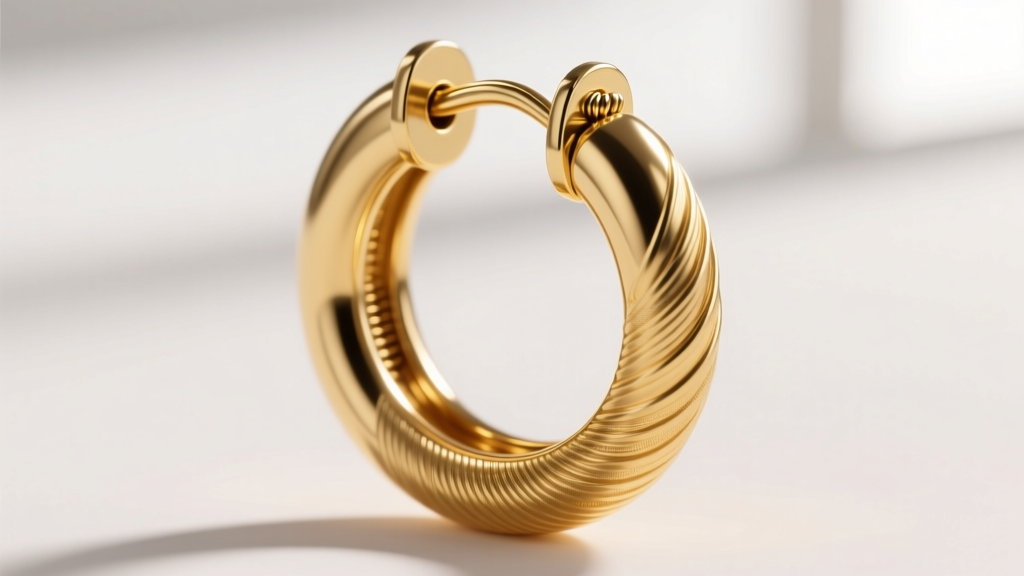
- Hollow Tubing: The 2026 standard for 50mm-80mm hoops. A sheet of 14k or 18k gold is drawn into a tube, creating a wide surface area (often 3mm to 5mm thick) that looks substantial but weighs less than 8 grams per pair.
- Electroforming: An advanced process where gold is deposited over a wax or resin mold, which is later melted away. This creates ultra-lightweight, highly sculptural, and textured large hoops that feel virtually weightless.
| Diameter | Tube Width | Avg. Weight (Pair) | Recommended Clasp |
|---|---|---|---|
| 40mm - 50mm | 2.0mm Solid | 8 - 12g | Hinged Snap-Back |
| 50mm - 70mm | 3.5mm Hollow | 6 - 10g | Latch-Back / Saddle |
| 70mm - 90mm | 5.0mm Electroformed | 4 - 8g | Omega-Back / French Wire |
Proportions and Face Shapes: A Geometric Approach
Styling gold hoop earrings large enough to frame the face requires an understanding of facial geometry and negative space. The goal in 2026 is not to "hide" features, but to create deliberate contrast and balance.
The Diamond and Heart Face Shapes
For faces with wider cheekbones and narrower chins (heart) or narrow foreheads and jawlines with wide cheekbones (diamond), massive circular hoops (70mm+) can exaggerate cheek width. Instead, opt for oval or teardrop large hoops. The elongated vertical axis draws the eye downward, balancing the upper-face width while maintaining the maximalist volume trend.
Square and Round Face Shapes
If your jawline is angular or your face has soft, circular proportions, perfectly round, thin-wire large hoops can create a repetitive visual loop. The 2026 trend solution is the architectural hoop—think hexagonal shapes, squared-off bottoms, or hoops with asymmetrical hammered textures. These introduce contrasting angles that sharpen soft features or soften angular ones through deliberate geometric disruption.
The Neck-to-Shoulder Ratio
A frequently overlooked metric in earring styling is neck length. If you have a shorter neck, hoops larger than 60mm may rest directly on your clavicle or collar, causing the metal to clink against your skin and tangle in your hair. For shorter necks, stick to 50mm hoops with a wider tube profile to maximize visual impact without encroaching on the shoulder line.
Lobe Health and Piercing Mechanics
Wearing oversized jewelry is a biomechanical load on the earlobe. The Association of Professional Piercers (APP) frequently warns against the long-term effects of heavy jewelry, which can cause migration, stretching, and eventual tearing of the fistula (the piercing hole).
Gauge Thickness Matters
Standard fashion earrings are typically 20-gauge (0.81mm) or 18-gauge (1.02mm). When dealing with the pendulum effect of a 70mm hoop, a thin wire acts like a cheese cutter against the delicate tissue of the earlobe. When shopping for large hoops, inspect the post or wire thickness. You want a minimum of 16-gauge (1.29mm) for hoops over 50mm, and ideally 14-gauge (1.63mm) for anything approaching 80mm. The thicker wire distributes the kinetic energy and weight across a wider surface area of the lobe.
Friction and Clasp Security
Large hoops catch on hair, scarves, and high-collared garments. A standard friction push-back (butterfly clutch) is entirely insufficient and dangerous for large hoops, as the leverage of the hoop will easily pull the post out of the backing. Always demand hinged snap-backs, secure latch-backs, or omega-backs (which use a tensioned wire that hugs the back of the ear) to ensure the earring stays anchored during movement.

2026 Styling Frameworks: Desk to Evening
The versatility of the large gold hoop lies in how it interacts with your hair and wardrobe. This year's styling frameworks emphasize intentionality over casual wear.
"In 2026, the large gold hoop is no longer just an accessory; it is the anchor of the silhouette. We are seeing a massive return to the 'tuck-and-reveal' technique, where hair is deliberately swept behind the ear to showcase the hardware of the clasp and the thickness of the gold tubing." — Elara Vance, Senior Editorial Stylist
The Asymmetrical Stack
Instead of wearing two identical 80mm hoops, the prevailing trend is asymmetrical balancing. Wear a single, massive 80mm hollow-tube hoop in one ear, and balance it with a tight, 12mm diamond or sapphire huggie in the opposite ear. This creates a high-fashion editorial look that prevents the face from being overwhelmed by symmetrical volume.
Metal Mixing and Textural Contrast
While yellow gold remains the dominant metal for large hoops, 2026 has introduced the "two-tone extrusion" trend. Designers are fusing 14k yellow gold with rhodium-plated white gold in a single continuous tube, creating a striking visual divide. Alternatively, pairing a high-polish large gold hoop with a matte, brushed-finish gold ear cuff on the upper cartilage creates a sophisticated textural dialogue.
Sourcing and Price Benchmarks
Understanding the pricing architecture of large gold hoops prevents overpaying for inferior construction. Here is what you should expect to pay in the current market:
- Gold Vermeil (Sterling Silver Base, 2.5+ Microns of Gold): $90 - $180. Excellent for trend-testing, but the silver core can bend under the weight of large diameters.
- Solid 14k Gold (Hollow Tubing): $450 - $1,200. The sweet spot for everyday luxury, offering the perfect balance of structural integrity, skin safety, and intrinsic value.
- Designer / High Jewelry (Solid or Sculptural Electroformed): $2,500 - $6,000+. Brands like Anita Ko or Jennifer Fisher charge a premium for proprietary clasp mechanisms and patented sculptural silhouettes.
When investing in gold hoop earrings large enough to become a signature piece of your wardrobe, prioritize the clasp mechanism and the wire gauge over pure karat weight. A well-engineered 14k hollow hoop will outlast and outperform a flimsy 18k solid wire every time, keeping your lobes healthy and your style impeccably sharp.


