Material Guide for Large Hoop Diamond Earrings: Platinum vs Gold
Compare platinum, 18k white gold, and rose gold for large hoop diamond earrings. Expert analysis on durability, weight, and setting security.

The Structural Demands of Large Hoop Diamond Earrings
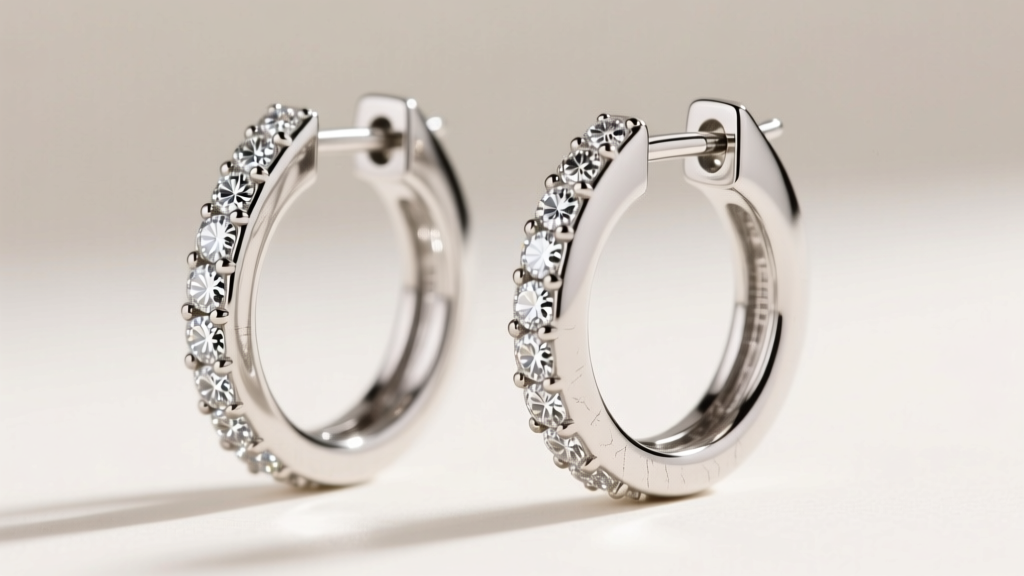
When selecting large hoop diamond earrings—typically defined as anything between 40mm and 70mm in diameter—the choice of metal is not merely an aesthetic decision; it is a structural necessity. Unlike small huggies or studs, large hoops act as levers on the earlobe. The addition of diamond pavé or bezel-set stones adds significant gravitational pull and dynamic stress. As of 2026, advancements in CAD casting and metallurgical alloys have expanded our options, but the fundamental physics of jewelry wear remain unchanged. A 60mm hoop crafted in solid platinum will weigh drastically more than its 14k gold counterpart, directly impacting lobe health and clasp longevity.
To prevent warping, the wire or tubing used for large hoops must be substantial. Expert jewelers typically recommend a minimum of 14-gauge (1.6mm) thickness for solid wire hoops, or 12-gauge (2.0mm) for hollow tubing. The metal's tensile strength and 'metal memory'—its ability to return to its original shape after being bent—dictate whether the earring will survive daily wear or succumb to oval distortion within months.
Platinum vs. 18k White Gold: The Classic Showdown
For diamond jewelry, white metals are the industry standard because they reflect light back through the stone, enhancing brilliance and masking lower color grades. However, platinum and white gold behave entirely differently under the stress of a large hoop.
Platinum 950: The Dense Anchor
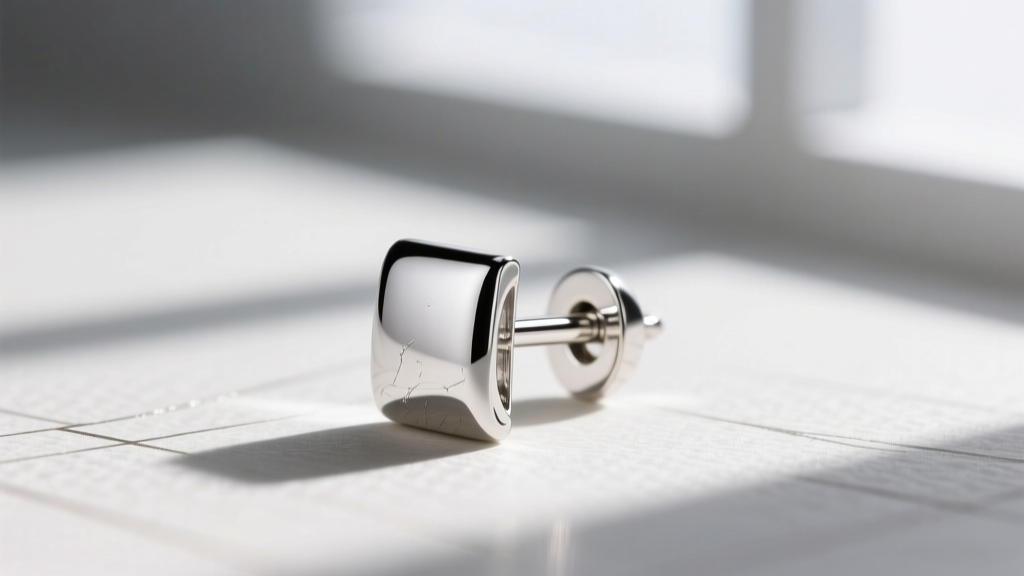
Platinum (typically alloyed with 5% ruthenium or iridium) is incredibly dense (21.45 g/cm³). Its primary advantage for diamond settings is its malleability and lack of 'metal fatigue.' When a platinum prong is bumped, it displaces rather than snaps or wears away. However, this same density makes large solid platinum hoops exceptionally heavy. A 50mm solid platinum hoop with 2.00 carats total weight (ctw) of diamonds can easily exceed 12 grams per earring, which will stretch the earlobe piercing over time. Furthermore, platinum has poor 'metal memory' compared to spring-hard gold alloys, meaning traditional latch-back clasps in platinum often loosen, necessitating the use of secure clicker or Omega-back mechanisms.
18k White Gold: The Lightweight Contender
18k white gold (75% pure gold, alloyed with palladium, nickel, or zinc) is significantly lighter (approx. 15.5 g/cm³). This makes it a superior choice for large-diameter hoops where weight distribution is a concern. The primary drawback is maintenance. 18k white gold naturally possesses a faint yellowish-gray undertone and requires rhodium plating to achieve a bright white finish. According to Jewelers of America, rhodium plating on high-friction areas like earring posts and clasps typically requires reapplication every 1 to 3 years. Additionally, white gold prongs are more brittle than platinum and can shear off if caught on clothing, a critical failure mode for large, dangling hoops.
14k and 18k Rose & Yellow Gold: Warmth and Alloy Strength
Warm-toned metals have surged in popularity, but their metallurgical properties vary wildly based on the alloy mix. 18k yellow gold is alloyed with silver and copper, resulting in a rich color but a relatively soft Vickers Hardness (HV) of around 125. For large hoops that are prone to being bumped or slept in, 18k yellow gold will dent and warp easily.
Conversely, 14k rose gold (58.5% gold, with a high copper content of up to 30%) boasts a much higher tensile strength and hardness (HV ~160). The copper acts as a natural hardener, making 14k rose gold highly resistant to the oval-warping that plagues larger hoops. From a gemological perspective, setting diamonds in yellow or rose gold requires strategic color grading. The Gemological Institute of America (GIA) notes that warm metal reflections can make near-colorless diamonds (G-H) appear slightly tinted. Therefore, experts recommend setting J or K color diamonds in yellow gold hoops; the metal's warmth masks the diamond's natural yellow tint, allowing you to allocate more budget toward carat weight and cut quality rather than color.
Material Properties Comparison Matrix
When commissioning or purchasing large hoop diamond earrings, use this matrix to weigh your options based on your lifestyle and budget. Pricing reflects the 2026 market average for a 50mm hoop with 2.00 ctw of VS-clarity, G-color diamonds.
| Metal | Density | Hardness (HV) | Maintenance Level | Est. Price Range (50mm, 2ctw) |
|---|---|---|---|---|
| Platinum 950 | 21.45 g/cm³ | 135 | Low (Patina develops) | $6,500 - $9,500 |
| 18k White Gold | 15.50 g/cm³ | 140 | High (Rhodium plating) | $4,800 - $7,200 |
| 14k Yellow Gold | 13.00 g/cm³ | 155 | Low (Polishing only) | $3,900 - $5,800 |
| 14k Rose Gold | 13.20 g/cm³ | 165 | Low (Highly durable) | $4,100 - $6,000 |
Prong Wear, Diamond Security, and Failure Modes
The setting style on a large hoop dictates its survival. Because hoops swing and catch on hair, scarves, and seatbelts, traditional shared-prong settings are highly vulnerable. If one prong bends back on a shared-prong hoop, it can compromise the security of two adjacent diamonds.
For large hoops, bead-set (pavé) or micro-bezel settings are vastly superior. Bead settings use small, rounded droplets of metal pushed over the diamond's girdle, presenting a smooth profile that resists snagging. Micro-bezels offer the ultimate security, completely encircling the diamond, though they slightly reduce the stone's visible surface area and light return. Avoid titanium or tungsten for diamond hoops; while these metals are incredibly hard, they are virtually impossible to re-tip or resize if a setting fails, often resulting in the total loss of the stone during repair attempts.
Weight Distribution and Earlobe Health
The most common complaint with large hoop diamond earrings is 'earlobe droop' or piercing elongation. The physics of a hoop concentrates the entire weight of the metal and diamonds onto a single 1mm to 2mm puncture point.
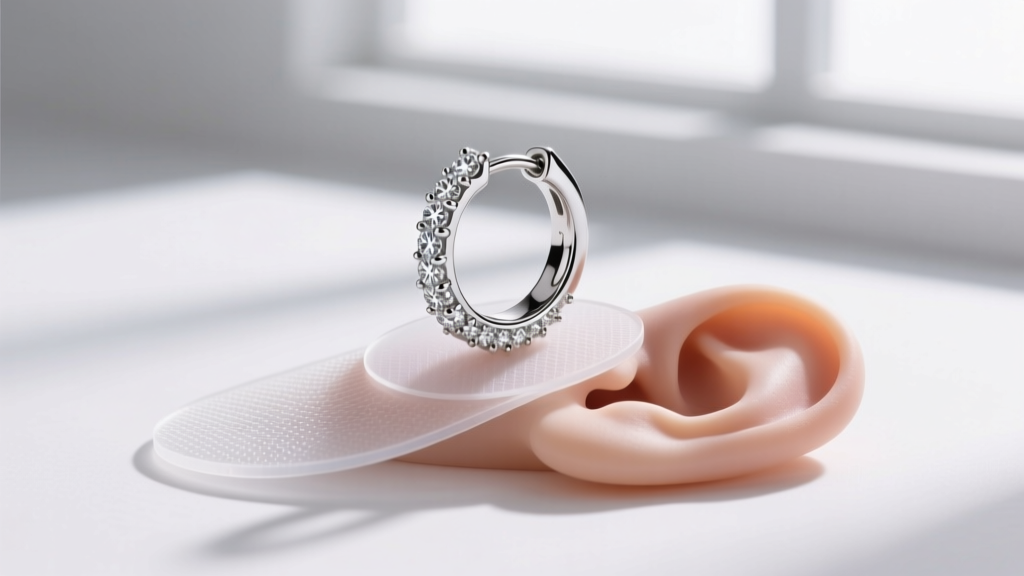
To mitigate this, modern jewelers utilize hollow tubing for hoops exceeding 50mm in diameter. Electroforming or seamless hollow tubing can reduce the metal weight by up to 40% without sacrificing the visual thickness of the hoop. However, hollow hoops are susceptible to crushing if slept in. For solid hoops, the use of silicone earlobe supports (such as BlingDots or specialized invisible patches) is mandatory. These patches distribute the hoop's downward vector force across a wider surface area of the ear's cartilage and skin, preventing permanent tearing of the fistula.
Expert Verdict: Which Metal Should You Choose?
Your final decision should align with your wear habits and diamond priorities. If you demand heirloom-level prong security and do not mind a heavier earring or a vintage patina, Platinum 950 is unmatched. If you prioritize a lightweight, brilliant white canvas for high-color diamonds (D-F) and are committed to bi-annual rhodium maintenance, 18k White Gold is the optimal choice. For everyday wearers seeking maximum structural rigidity, warp resistance, and a lower price point that allows for larger diamond carat weights, 14k Rose or Yellow Gold provides the best metallurgical resilience for large-scale hoop designs.


