Leaf Earring Trends 2026: The New Botanical Jewelry Standard
Discover the 2026 leaf earring trend. Explore botanical jewelry styles, from 18k gold fern cuffs to enamel ivy drops, with expert styling advice.

The 2026 Botanical Renaissance: Beyond the Basic Silhouette
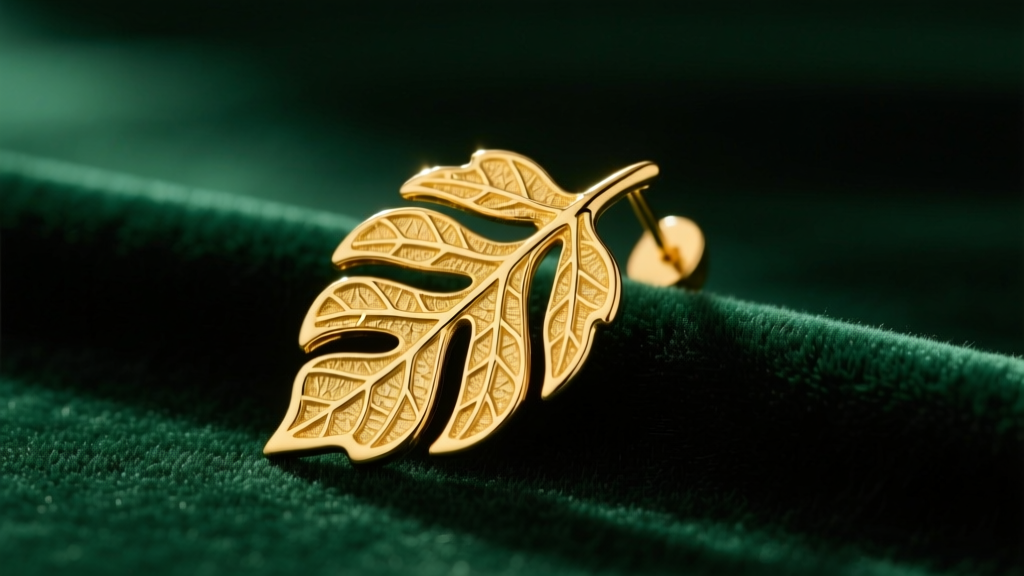
The 2026 botanical jewelry movement has decisively pivoted away from the flat, laser-cut silhouettes that dominated the previous decade. Today’s leaf earring is defined by hyper-realism, structural depth, and advanced metallurgical techniques. We are no longer looking at simple teardrop shapes with a line drawn down the middle. Instead, contemporary jewelers are drawing inspiration directly from the forest floor, translating the chaotic, asymmetrical beauty of nature into wearable art.
This shift is largely driven by a consumer demand for organic maximalism. As digital fatigue peaks, wearers are gravitating toward grounding, nature-inspired motifs. However, the execution has become vastly more sophisticated. The modern leaf earring incorporates mixed metals, micro-pavé dew-drop accents, and cold enamel detailing to mimic the vibrant life cycle of foliage. Whether you are exploring a delicate fern ear cuff for your helix or a bold, oxidized monstera drop for a gala, understanding the technical nuances of these pieces is essential for building a curated, trend-forward ear.
Material Grades and Casting Techniques
The method used to create a leaf earring dictates its weight, durability, and price point. In 2026, three primary manufacturing techniques dominate the botanical jewelry space:
Electroforming
This is the gold standard for hyper-realism. Jewelers take actual, preserved leaves, coat them in a conductive copper paint, and submerge them in an electrolyte bath. Metal builds up atom by atom, perfectly capturing the microscopic cellular structure and serrated edges of the original flora. Because the organic core is later burned away, the resulting metal leaf is incredibly lightweight yet structurally rigid, allowing for oversized statement pieces that won't stretch the earlobe.
Lost-Wax Casting
For heirloom-quality pieces, artisans carve botanical shapes into wax or use 3D resin printing, encase them in plaster, and burn out the wax before injecting molten 14k or 18k gold. According to the Gemological Institute of America (GIA), 14k gold (58.3% pure gold) is generally preferred for intricate leaf casts because the alloyed metals (like copper and zinc) provide the necessary tensile strength to prevent the delicate leaf tips from bending during daily wear.
Stamped and Oxidized Silver
For accessible, everyday wear, 925 sterling silver sheets are stamped with leaf dies and treated with liver of sulfur. This forced oxidation darkens the recessed veins of the leaf, creating a striking, high-contrast two-tone effect that highlights the botanical texture.
| Technique | Material Standard | Avg Gauge | Price Range | Best Placement |
|---|---|---|---|---|
| Electroformed | Copper base, 24k gold plated | 18G - 20G | $45 - $120 | Earlobe (Lightweight drops) |
| Lost-Wax Cast | Solid 14k or 18k Gold | 16G - 18G | $180 - $650 | Lobe & Cartilage (Studs/Cuffs) |
| Stamped & Oxidized | 925 Sterling Silver | 20G - 22G | $35 - $85 | Earlobe (Threaders/Climbers) |
| 3D CAD / Printed | ASTM F136 Titanium | 16G (1.29mm) | $60 - $150 | Fresh Piercings & Helix |
Cartilage vs. Lobe: Mapping the Leaf Earring
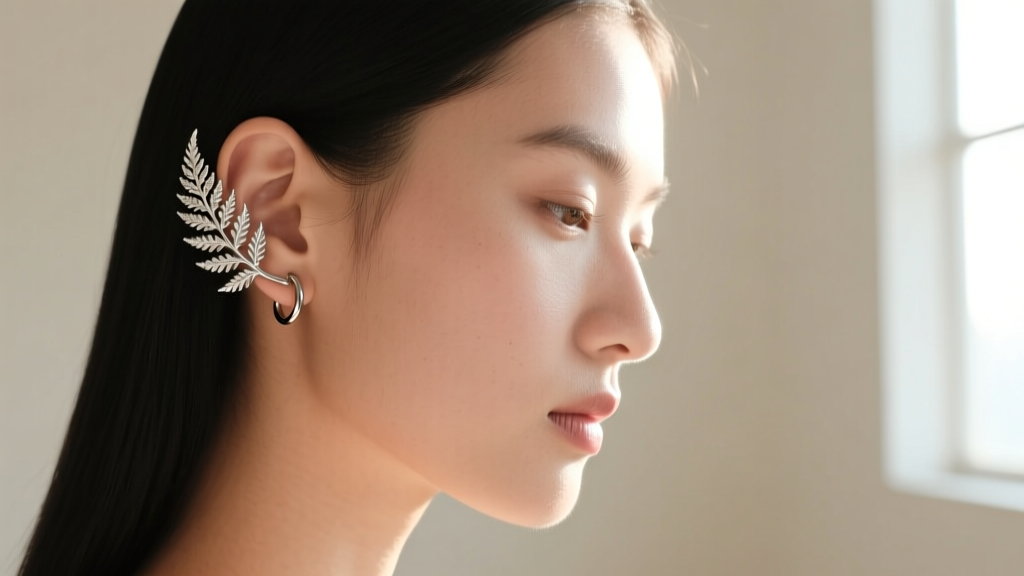
The anatomy of your ear dictates which botanical silhouettes will function correctly. A common failure mode in botanical jewelry is purchasing a piece designed for the lobe and attempting to force it into a cartilage piercing, leading to irritation bumps and bent jewelry.
Helix and Flat Cuffs
Leaf ear cuffs designed for the helix or flat cartilage rely on tension. To maintain this tension without warping, the internal wire must be at least 16-gauge (1.29mm) or 14-gauge (1.63mm). If a fern or ivy cuff is made with flimsy 20-gauge wire, it will slowly bend outward from the pressure of the cartilage, eventually falling off. For 2026, the 'vine-wrap' cuff—which mimics a creeping botanical vine winding around the outer rim of the ear—is the dominant cartilage trend.
Lobe Threaders and Climbers
Leaf ear climbers (or ear crawlers) start at the lobe piercing and curve upward along the edge of the ear. The stem of the leaf acts as the structural spine. For these, an 18-gauge (1.02mm) wire is ideal. It is thick enough to hold the S-curve shape required to hug the earlobe but thin enough to slide comfortably through a standard lobe piercing. Ensure the backing mechanism uses a tension-clasp rather than a simple friction post, as the upward weight distribution of a climber will easily pull a standard butterfly back off.
'The beauty of the 2026 leaf earring lies in its asymmetry. We are moving away from perfectly mirrored pairs. Wearing a deeply lobed oak leaf drop on the left ear and a cluster of tiny gold seed-pod studs on the right creates a dynamic, organic narrative across the face.'
— Elena Rostova, Senior Trend Forecaster at Jewel Style Radar
Face Shape Pairing Framework
Because leaf earrings often feature elongated, sweeping lines or wide, textured surfaces, they interact heavily with your facial geometry. Use this framework to select the right botanical species for your face shape:
- Round Faces: Opt for elongated, narrow silhouettes like fern drops or willow leaf threaders. The vertical lines draw the eye downward, creating the illusion of length and balancing wider cheekbones. Avoid wide, circular lily pad studs.
- Square Faces: Soften a strong jawline with curved, organic shapes. Ginkgo biloba fans or softly rounded eucalyptus hoops add necessary curvature. Avoid sharp, geometric, or highly structured oak leaf designs that mimic the angles of your jaw.
- Heart-Shaped Faces: Balance a narrower chin with volume at the bottom of the ear. Monstera deliciosa chandeliers or wide, sweeping palm frond drops add visual weight to the lower half of the face, creating harmony.
- Oval Faces: The universal canvas. You can effortlessly pull off oversized, dramatic botanical pieces, from shoulder-dusting ivy chains to bold, asymmetrical begonia studs.
Curated Ear Styling: Mixing Textures
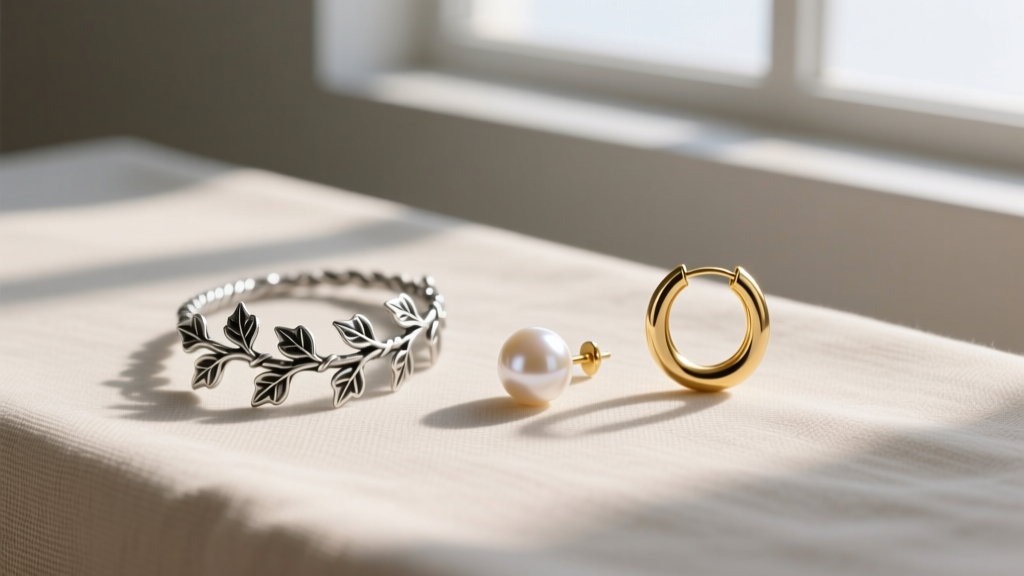
In 2026, the 'curated ear' is less about uniformity and more about textural contrast. A leaf earring should not exist in a vacuum; it must interact with the other jewelry in your ear stack. The most effective styling framework pairs the organic, matte, or heavily textured surface of a botanical piece with high-polish, geometric basics.
For example, if you are wearing a heavily oxidized sterling silver fern ear climber on your lobe, pair it with a polished 14k yellow gold huggie hoop in the second-hole piercing. The contrast between the dark, textured silver and the bright, smooth gold creates a layered, collected-over-time aesthetic. If your leaf earring features micro-pavé diamonds mimicking morning dew, keep the rest of your ear stack minimal—perhaps a simple, bezel-set diamond stud in the upper helix to echo the light-catching effect without overwhelming the senses.
Care and Maintenance for Intricate Botanical Casts
The very details that make a leaf earring stunning—the deep veins, the serrated edges, the microscopic pores—are exactly what make them challenging to clean. Improper maintenance is the leading cause of ruined botanical jewelry.
Avoid Ultrasonic Cleaners: Ultrasonic jewelry cleaners operate at high frequencies (typically 40 kHz) that create microscopic cavitation bubbles. While excellent for cleaning diamond solitaires, these vibrations can easily snap the paper-thin tips of an electroformed leaf earring or shake loose the delicate resin accents often used in modern botanical designs.
Protect the Oxidation: As noted by the Silver Institute, chemical silver dips and harsh polishing cloths will strip the intentional oxidation from sterling silver leaf earrings. If the dark contrast in the veins is removed, the earring will look flat and lose its three-dimensional depth. Instead, clean oxidized botanical pieces using a soft-bristled baby toothbrush, a drop of mild dish soap, and lukewarm water. Gently brush the surface, avoiding the deep crevices, and pat dry immediately with a microfiber cloth to prevent water spots.
Final Verdict
The 2026 leaf earring is a triumph of jewelry engineering, bridging the gap between raw natural beauty and precise metallurgical science. Whether you are investing in a lightweight, electroformed statement piece or a durable, titanium helix cuff for a fresh piercing, prioritizing correct gauge sizing and material integrity will ensure your botanical jewelry thrives. By understanding the mechanics of tension cuffs, the weight distribution of drop earrings, and the specific care required for textured metals, you can confidently cultivate a curated ear that reflects the wild, untamed elegance of the natural world.


