Material Guide to Large Turquoise Earrings: Natural vs Stabilized
Compare natural, stabilized, and reconstituted stones in large turquoise earrings. Learn how material grades impact weight, durability, and metal pairings.

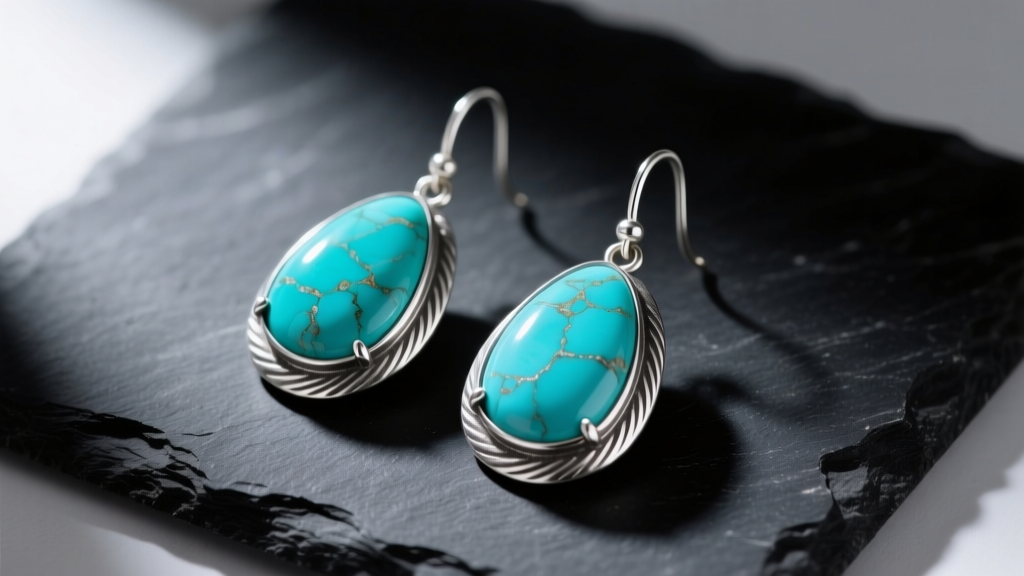
The Anatomy of Large Turquoise Earrings: Why Material Matters
Turquoise has been a cornerstone of ornamental jewelry for millennia, but when designers scale up to create large turquoise earrings, the physical and chemical properties of the stone become the primary determining factors for the piece's longevity, wearability, and value. Unlike small stud earrings where a stone might weigh less than a gram, large statement drops and oversized hoops feature substantial surface areas. This increased mass and exposure mean the material is subjected to greater mechanical stress, higher contact with skin oils, and more significant gravitational pull on the ear lobe.
In the modern jewelry market of 2026, understanding the exact treatment and origin of your turquoise is no longer optional—it is essential. The Gemological Institute of America (GIA) notes that the vast majority of turquoise on the market undergoes some form of enhancement. For large earrings, the difference between an untreated natural cabochon and a stabilized stone dictates not only the price but the daily care routine and the choice of metal settings required to keep the jewelry secure and beautiful.
Natural vs. Stabilized vs. Reconstituted Turquoise
The terminology surrounding turquoise can be intentionally opaque. To make informed purchasing decisions for oversized statement pieces, you must understand the three primary material categories and how they behave at scale.
Natural (Untreated) High-Grade Turquoise
Natural turquoise is cut and polished without any chemical alterations, resins, or waxes. High-grade stones from legendary, now-closed mines like Sleeping Beauty or Lander Blue possess a Mohs hardness of 5.5 to 6 and a tight, non-porous matrix. Because large natural cabochons are rare and command premium prices (often exceeding $30 per carat for top-tier blue), they are typically reserved for fine jewelry settings. However, natural turquoise is highly reactive. Over decades, exposure to sebum, cosmetics, and environmental pollutants will cause the stone's copper and iron content to oxidize, shifting the color from bright sky blue to a deeper, greener hue. For collectors, this 'patina' is prized; for casual buyers expecting permanent color stability, it can be a surprise.
Stabilized Turquoise
According to mineralogical data from Mindat.org, lower-grade 'chalk' turquoise is far too soft (Mohs 3 to 4) and porous to be cut into large, durable cabochons. To solve this, the industry uses stabilization: a process where the stone is submerged in a liquid polymer or epoxy resin and placed in a vacuum chamber. The pressure forces the resin deep into the microscopic pores of the stone, permanently hardening it. Stabilized turquoise will not change color from skin oils, will not crack under the stress of heavy bezel settings, and is the industry standard for large, everyday statement earrings. It is crucial to note that stabilization is an accepted, permanent enhancement, not a 'fake' treatment, provided it is disclosed by the seller.
The Zachery Treatment Method
For buyers seeking a middle ground, the Zachery treatment is a proprietary enhancement method that uses potassium and sodium silicate rather than plastic polymers. This method increases the stone's hardness and reduces porosity without altering its natural chemical feel or melting point, making it a premium choice for large artisan earrings where the natural thermal properties of the stone are desired.
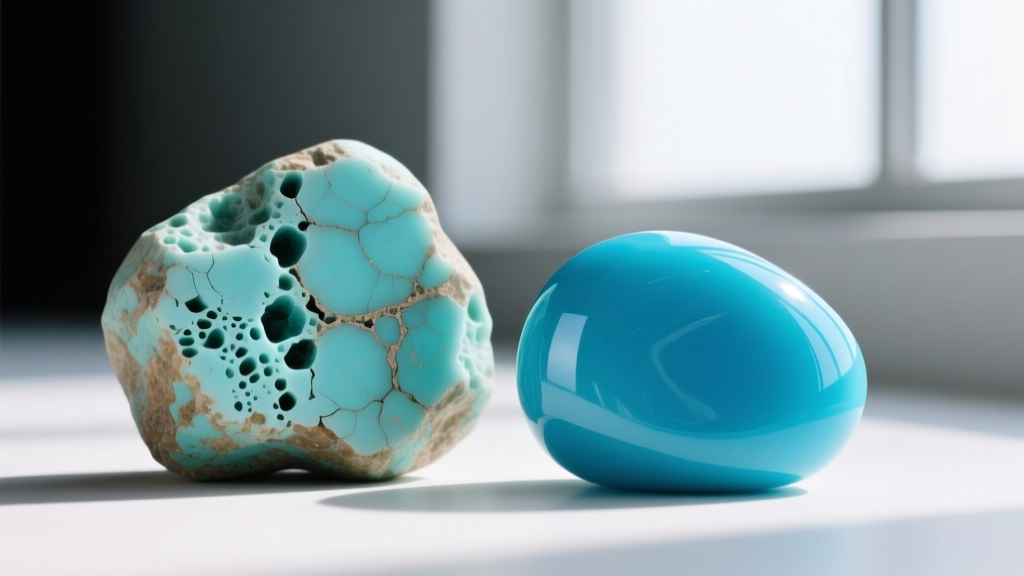
Material Properties Comparison Chart
When evaluating large turquoise earrings, use this matrix to understand the physical limitations and value propositions of each material grade.
| Material Type | Mohs Hardness | Porosity | Approx. Price per Carat | Best Application |
|---|---|---|---|---|
| Natural High-Grade | 5.5 - 6.0 | Very Low | $15 - $40+ | Heirloom pieces, fine gold settings |
| Natural Chalk (Untreated) | 3.0 - 4.0 | Extremely High | $1 - $3 | Unsuitable for large earrings |
| Stabilized (Epoxy/Polymer) | 6.0 - 7.0 | None | $3 - $12 | Everyday statement drops, heavy silver bezels |
| Zachery Treated | 5.5 - 6.5 | Low | $10 - $25 | Premium artisan jewelry, collector pieces |
| Reconstituted | 4.0 - 5.0 | None | < $1 | Fast fashion, lightweight costume jewelry |
Metal Settings: Supporting Heavy Statement Stones
Large turquoise stones require robust metal architecture. A 30mm x 20mm oval cabochon can easily weigh between 12 and 20 grams. The metal setting must secure the stone without adding excessive overall weight to the earring assembly.
Sterling Silver (925) and Oxidation
Sterling silver is the traditional pairing for turquoise, offering a high-contrast, Southwestern aesthetic. However, silver tarnishes when exposed to sulfur and moisture. If you are setting a highly porous, untreated turquoise stone, the chemicals used in silver polishing cloths can seep into the stone and cause irreversible staining. For large natural stones, jewelers often use a 'stepped bezel'—a setting that holds the stone slightly above the silver backing to prevent chemical transfer and reduce the total metal weight.
14k and 18k Gold
For high-grade natural turquoise, gold is the superior structural choice. 14k gold provides excellent tensile strength for heavy prong or bezel settings, while 18k gold offers a richer color that complements the warm brown and black matrices found in Kingman or Bisbee turquoise. Gold does not tarnish, eliminating the need for harsh polishing chemicals that could damage the stone's surface.
Brass and Copper: A Warning
While brass and copper are frequently used in budget-friendly, large bohemian earrings, they are highly reactive. When exposed to the acidic pH of human sweat, copper alloys oxidize rapidly, producing copper salts that can permanently stain porous turquoise with a sickly green tint. If purchasing large copper-set earrings, ensure the stone is fully stabilized or that the metal backing is sealed with a hypoallergenic rhodium or enamel barrier.
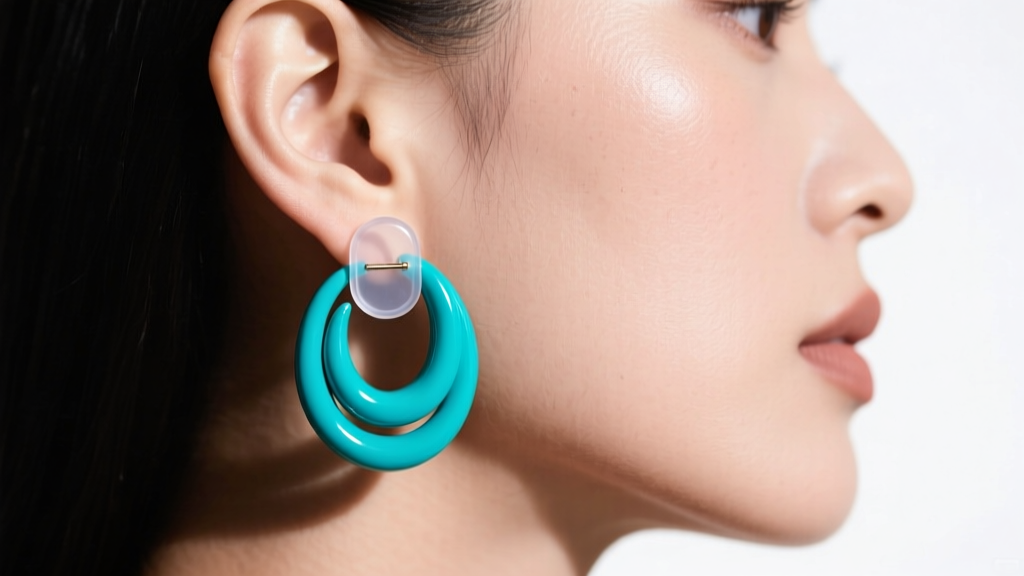
Weight Distribution and Ear Lobe Health
The most overlooked aspect of large turquoise earrings is the biomechanical stress they place on the ear lobe. A standard ear piercing is typically done at 20-gauge (0.81mm) or 18-gauge (1.02mm). When an earring exceeds 15 grams, gravity creates a fulcrum effect, pulling the ear wire downward and forward.
- Upgrade the Wire Gauge: For heavy turquoise drops, insist on 18-gauge or even 16-gauge (1.29mm) French wires. Thicker wires resist bending and distribute the shear force across a wider area of the piercing channel.
- Silicone O-Rings and Stoppers: Standard metal butterfly backs offer a microscopic surface area that digs into the back of the ear lobe under heavy weight. Wide silicone friction backs (at least 10mm in diameter) act as a shock absorber, distributing the weight and preventing the earring from drooping or tearing the tissue.
- La Pousette Backs: For high-end gold settings, La Pousette (or screw-back) mechanisms provide a secure, locking grip that prevents heavy stones from slipping off during movement, a common failure mode for standard push-backs.
- Earring Jackets and Chains: Some contemporary designers integrate delicate ear chains that wrap around the upper cartilage, transferring the weight of the large turquoise drop away from the lobe entirely and anchoring it to the stronger helix region.
Care and Maintenance by Material Grade
The cleaning protocol for your earrings must be strictly dictated by the material's porosity. The GIA warns that ultrasonic cleaners and steamers will destroy stabilized, reconstituted, and dyed stones by melting the internal resins or leaching out artificial dyes.
Expert Maintenance Rule: Never use commercial silver dip liquids or ultrasonic baths on any turquoise jewelry. For stabilized stones, a simple wipe with a damp microfiber cloth and mild dish soap is sufficient. For natural, untreated high-grade stones, use only a dry, soft-bristled brush to remove dust and skin cells from the matrix crevices, avoiding all liquids to preserve the stone's natural color profile over its lifetime.
By understanding the intricate material properties of turquoise—from its Mohs hardness and porosity to its chemical reactivity with specific metal alloys—you can confidently select large turquoise earrings that are not only visually striking but structurally sound and built to endure decades of wear.


