Material Guide: The Latest Design of Gold Earrings in 2026
Explore the material properties behind the latest design of gold earrings. Compare 14k, 18k, and vermeil for durability, weight, and style.

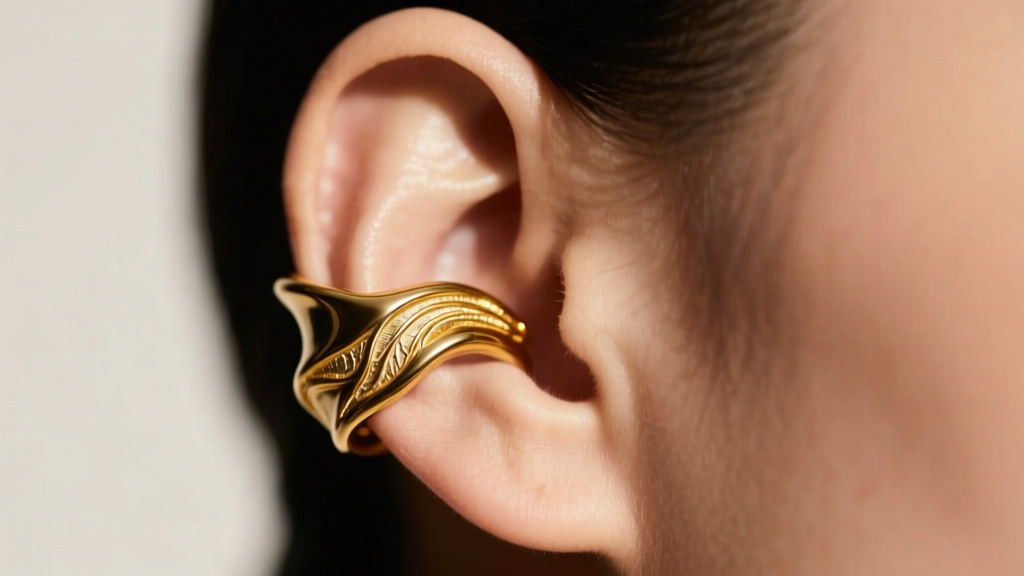
The jewelry landscape in 2026 is defined by a striking juxtaposition of organic, fluid forms and hyper-precise architectural geometry. As we explore the latest design of gold earrings, it becomes immediately apparent that aesthetics are only half the equation. The true success of these modern silhouettes—from molten-texture ear cuffs to micro-lattice huggies—relies entirely on the metallurgical properties of the gold alloys used to craft them. Choosing the right material is no longer just about color preference or budget; it is a critical decision that dictates an earring's structural integrity, weight distribution, and long-term wearability in specific piercings.
In this comprehensive material guide, we dissect the metallurgy behind today's top gold earring trends, comparing solid karats, gold-filled alternatives, and vermeil to help you make an informed, expert-level decision for your collection.
The Metallurgy Behind 2026's Top Gold Earring Trends
The latest design of gold earrings heavily features intricate 3D CAD-cast lattice structures and hammered, asymmetrical finishes. These designs push the boundaries of traditional casting, requiring alloys that possess high fluidity when molten but exceptional tensile strength once cooled. Pure gold (24K) is far too malleable for these applications, possessing a Vickers Hardness (HV) of merely 25, meaning it would bend under the slight pressure of a fingernail.
To achieve the structural rigidity required for modern, gravity-defying ear scaffolds and tension-set gemstone hoops, jewelers rely on precise alloying. By mixing pure gold with metals like copper, silver, zinc, and palladium, metallurgists can manipulate the alloy's hardness, melting point, and color. According to the Gemological Institute of America (GIA), the specific ratio of these alloying metals not only determines the karat weight but also fundamentally alters the metal's grain structure, which directly impacts how well it holds a polished or satin finish over time.
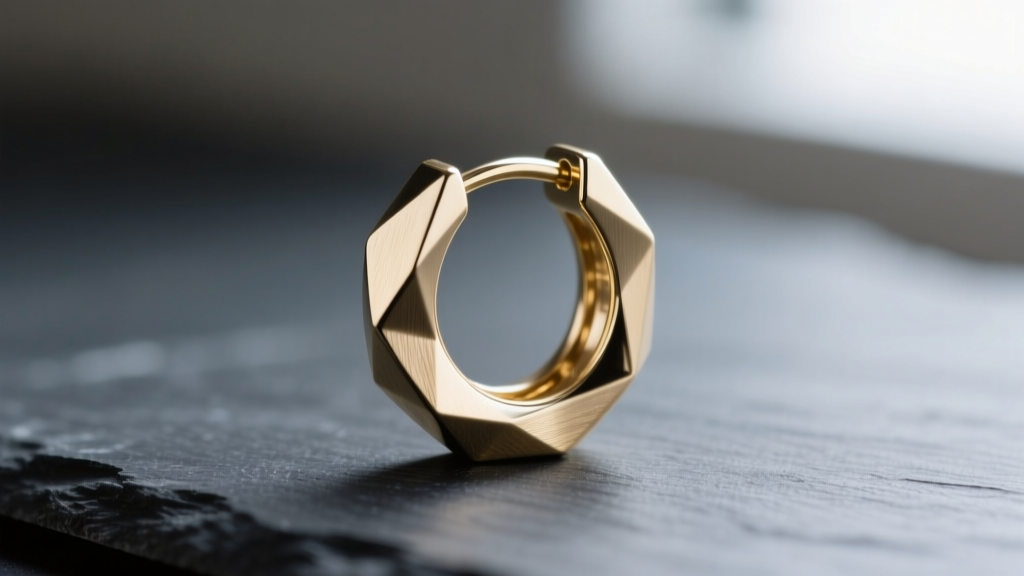
Solid Gold Karats Compared: 14K vs. 18K vs. 22K
When investing in fine jewelry, understanding the exact composition of solid gold is paramount. The karat system denotes the proportion of pure gold in the alloy, with 24 parts being pure gold. However, higher purity does not always equate to better performance in earring design.
| Alloy Grade | Gold Content | Vickers Hardness (HV) | Best Design Application | Average Price Range (Studs/Hoops) |
|---|---|---|---|---|
| 14K Yellow Gold | 58.5% | 140 - 160 HV | Intricate hinges, micro-pave settings, everyday hoops | $150 - $450 |
| 18K Yellow Gold | 75.0% | 120 - 135 HV | Sculptural drops, polished architectural studs, luxury huggies | $350 - $1,200 |
| 22K Yellow Gold | 91.6% | 60 - 80 HV | Simple, heavy cast bands, traditional solid wire hoops | $600 - $2,000+ |
14K Gold: The Workhorse of Modern Design
14K gold is the undisputed champion for mechanical components. If the latest design of gold earrings you are eyeing features a complex snap-hinge, a clicker closure, or delicate prongs holding a diamond, 14K is the optimal choice. Its higher proportion of copper and silver (often around 25% silver and 16.5% copper in yellow gold) grants it the rigidity needed to prevent prong failure and hinge warping. Furthermore, 14K white gold, typically alloyed with nickel or palladium, achieves an even higher hardness (up to 220 HV), making it ideal for secure gemstone settings.
18K Gold: The Luxury Standard
18K gold offers a richer, deeper yellow hue and superior hypoallergenic properties compared to 14K, as it contains fewer reactive base metals. However, its lower hardness means it is more susceptible to scratching and micro-dents. It is best reserved for solid, sculptural pieces without moving parts. An 18K gold ear cuff with a hammered finish will beautifully retain its intentional texture, whereas a high-polish 18K hoop will inevitably develop a patina of fine scratches with daily wear.
Gold-Filled vs. Vermeil: Evaluating the Alternatives
As the demand for the latest design of gold earrings surges, so does the market for accessible alternatives. However, conflating gold-filled and gold vermeil is a common consumer error that leads to premature jewelry failure.
Expert Insight: Gold-filled jewelry is created through a mechanical bonding process where a thick layer of solid gold (legally required to be at least 5% of the total weight) is heat- and pressure-bonded to a brass core. Vermeil, conversely, is an electroplating process where a thin layer of gold (minimum 2.5 microns) is applied over a sterling silver base.
- Durability in High-Friction Areas: Gold-filled wire and sheet metal are exceptionally durable and can last decades. However, gold-filled cannot be easily cast into complex 3D shapes. Therefore, if a trendy, cast lattice earring is marketed as 'gold-filled,' it is likely a misnomer for heavy gold plating over brass.
- The Vermeil Hinge Failure: Vermeil is excellent for lightweight, cast designs. However, it fails catastrophically in high-friction areas. A vermeil huggie earring will eventually wear through the 2.5-micron gold layer at the hinge joint, exposing the sterling silver underneath. The silver will oxidize, creating black tarnish that seizes the hinge mechanism entirely.
- Cartilage Safety: For unhealed or sensitive cartilage piercings, neither brass-core gold-filled nor silver-core vermeil is recommended due to the risk of galvanic reactions and nickel contamination in cheaper plating baths. Stick to implant-grade titanium or solid 14K/18K gold.
The Cartilage Conundrum: Weight and Gauge Considerations
When adapting the latest trends for cartilage piercings (such as the conch, daith, or rook), material density and gauge thickness become critical health factors. Gold is an incredibly dense metal; pure gold has a density of 19.3 g/cm³, and 14K gold sits around 13.5 to 14.6 g/cm³ depending on the alloy mix.
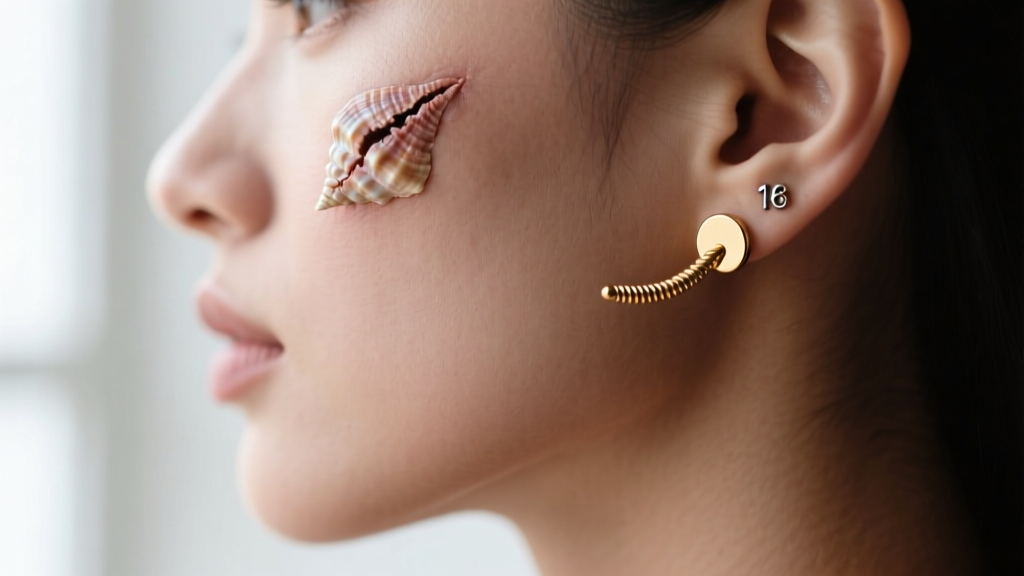
According to the Association of Professional Piercers (APP), standard cartilage piercings are typically performed at 16-gauge (1.2mm) or 14-gauge (1.6mm). Wearing a heavy, solid 18K gold dangle earring in a delicate 18-gauge (1.0mm) or 20-gauge (0.8mm) standard lobe piercing can lead to the 'cheese-cutter effect,' where the weight of the gold slowly slices through the tissue, causing irreversible migration and tearing.
Actionable Advice: If you are purchasing heavy, solid gold statement drops, ensure your piercings are stretched to at least 16-gauge to distribute the weight safely. For standard 20-gauge lobe piercings, opt for hollow-cast gold designs or 3D-printed resin cores plated in gold to maintain the voluminous aesthetic without the dangerous mass.
Care and Maintenance for Textured & Architectural Gold
The complex geometries of modern gold earrings require specialized maintenance. Traditional ultrasonic cleaners, while excellent for removing sebum and dead skin from intricate lattice designs, can be disastrous for certain gold treatments.
- Solid Gold (14K/18K): Safe for ultrasonic cleaning, provided there are no fracture-filled or soft gemstones (like opals or emeralds) set in the piece. Use a mild, ammonia-free jewelry solution.
- Gold Vermeil & Plated: Never use ultrasonic cleaners or harsh chemical dips on vermeil. The high-frequency vibrations will accelerate the delamination of the gold layer from the silver base. Clean only with a soft microfiber cloth and mild soapy water.
- Restoring Patina: Many 2026 designs intentionally feature oxidized recesses or brushed satin finishes to highlight architectural depth. Avoid using abrasive polishing cloths on these pieces, as they will inadvertently polish away the intentional texture, leaving you with a flat, overly shiny surface that ruins the designer's original vision.
Ultimately, navigating the latest design of gold earrings requires looking past the surface shine. By understanding the Vickers hardness of your chosen karat, recognizing the mechanical limits of vermeil hinges, and respecting the density of gold in cartilage piercings, you can curate a collection that is not only visually stunning but structurally engineered to last a lifetime.


