What Does Earring on Left Ear Mean? Myths & Healing
Discover what an earring on the left ear really means today. We debunk outdated cultural myths and troubleshoot single-ear piercing healing issues.

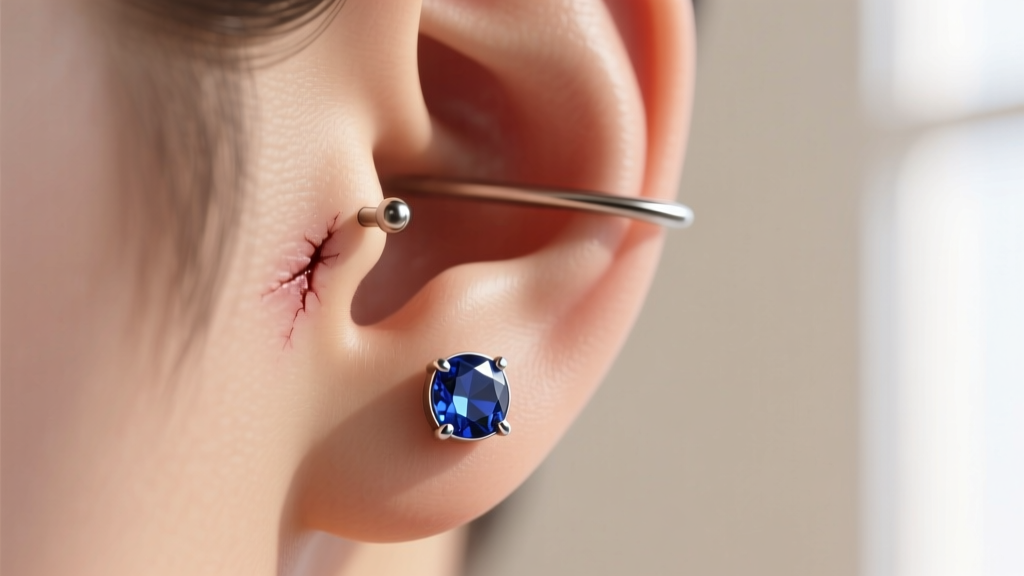
If you have found yourself typing what does earring on left ear mean into a search engine, you are likely navigating a confusing intersection of outdated cultural folklore, workplace anxieties, and modern styling dilemmas. For decades, a pervasive myth dictated that the side of your piercing broadcasted your sexual orientation or subcultural affiliation. But as we navigate the style landscape of 2026, the rules of ear curation have radically shifted. Today, the real "problems" associated with single-ear or asymmetrical piercings are not social—they are anatomical, metallurgical, and behavioral.
As a senior piercing troubleshooter, I see countless clients who favor their left ear for jewelry, only to develop chronic healing complications. This guide will quickly debunk the historical myths surrounding left-ear piercings, and then pivot into a deep-dive troubleshooting matrix to solve the physical issues that plague single-ear jewelry wearers.
The Historical Code: Debunking the Left Ear Myth
To address the cultural elephant in the room: the idea that a left-ear piercing signals a specific sexual orientation is a relic of the 1970s, 80s, and 90s. During that era, the "left is right, right is wrong" (or vice versa, depending on the region) code was used as a covert signaling method within the LGBTQ+ community. However, this code has been entirely obsolete for over two decades.
In 2026, ear curation is viewed strictly through the lens of aesthetic balance, facial symmetry, and personal expression. Gen Z and Generation Alpha have completely dismantled gendered jewelry norms. Men, women, and non-binary individuals sport asymmetrical ear parties, single-lobe studs, and intricate cartilage constellations without any underlying "code." If you are worried about workplace perceptions or social misunderstandings regarding a left-ear earring, you can safely discard that anxiety. The modern consensus is that jewelry is simply jewelry.
The Real Problem: Asymmetric Healing and Sleep Trauma
While the social meaning of a left-ear earring is a myth, the physical meaning of left-ear irritation is a very real problem I troubleshoot daily. Statistically, the majority of the population is right-handed and favors sleeping on their left side. When you wear an earring exclusively or primarily in your left ear, you subject that specific fistula (the piercing hole) to relentless nocturnal friction, pressure, and heat.
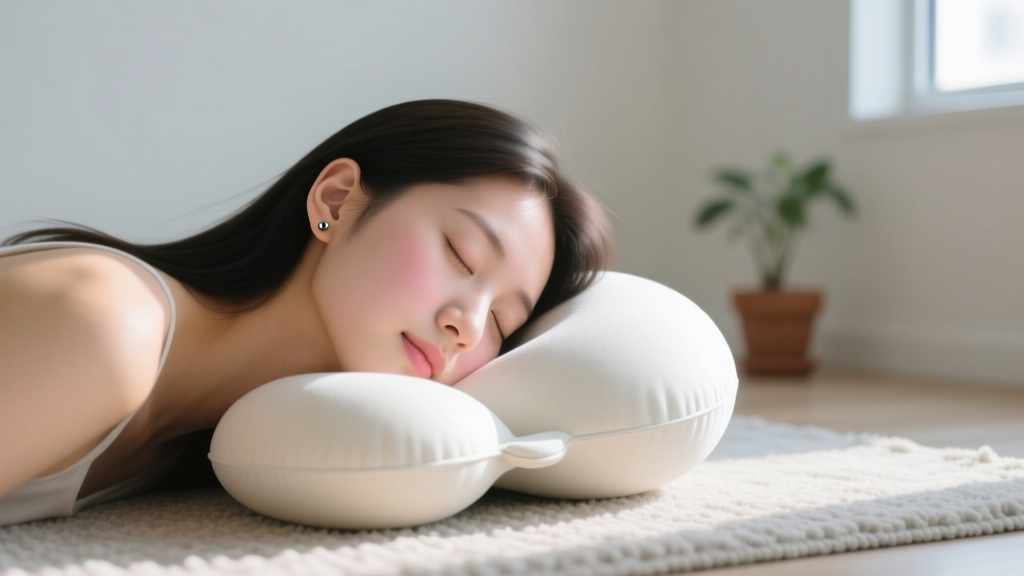
Troubleshooting the "Sleep Bump" (Irritation Granuloma)
If your left earlobe is constantly red, tender, or developing a small, fleshy bump near the exit hole, you are likely suffering from an irritation granuloma. This is not an infection; it is a localized overgrowth of fibrous tissue caused by mechanical trauma—specifically, crushing the earring post into the skin while sleeping.
- The Travel Pillow Hack: Sleep with a U-shaped neck pillow, positioning your left ear in the hollow center. This eliminates direct pressure on the jewelry while maintaining side-sleeping comfort.
- Downgrade Your Profile: Swap out any butterfly-back earrings or hoop rings for an 18-gauge or 16-gauge implant-grade titanium flat-back labret. The flat disc sits flush against the back of the ear, distributing pressure evenly and preventing the post from digging into your neck.
- Eliminate Moisture Traps: Sleeping on your left ear traps sweat and sebum against the piercing. Use a sterile 0.9% sodium chloride wound wash to clean the area in the morning, and gently dry it with a non-woven gauze pad—never a cotton swab, which can leave micro-fibers that cause further irritation.
Jewelry Metallurgy: Why Your Left Ear Might Be Rejecting the Metal
Another hidden meaning behind a chronically angry left ear is contact dermatitis. Because the left ear is pressed against pillows and held against smartphones, the skin barrier is frequently compromised. When the skin barrier is weak, it becomes hyper-reactive to the nickel content in cheap jewelry.
According to the American Academy of Dermatology, nickel allergy is one of the most common causes of allergic contact dermatitis. Many commercial "surgical steel" earrings contain up to 10% nickel. When you sleep on your left ear, the friction essentially rubs the nickel salts directly into the micro-tears of your fistula, resulting in itching, weeping, and crusting.
| Metal Grade | Nickel Content | Biocompatibility | Best Use Case |
|---|---|---|---|
| ASTM F136 Titanium | 0% | Excellent (MRI Safe) | Initial piercings, sensitive lobes, sleep-heavy ears |
| 316L Surgical Steel | 8-10% | Poor (High Allergy Risk) | Fully healed, non-sensitive ears only (avoid for sleep) |
| 14k/18k Solid Gold | Varies by Alloy | Good (If Nickel-Free) | Long-term wear in healed fistulas |
| Niobium | 0% | Excellent (Highly Inert) | Hypoallergenic alternative for custom jewelry |
For a definitive guide on safe metals, the Association of Professional Piercers (APP) strictly recommends ASTM F136 implant-grade titanium for any piercing that is healing or prone to irritation. If your left ear is constantly acting up, the first troubleshooting step is to verify your jewelry's metallurgy.
Gauge Sizing and the "Cheese-Cutter" Effect
The physical dimensions of your earring post play a massive role in left-ear comfort. Standard mall-kiosk earrings are typically 20-gauge (0.81mm thick). While this thin wire is fine for occasional wear, it is disastrous for a primary, daily-wear earring in an ear that experiences sleep friction.
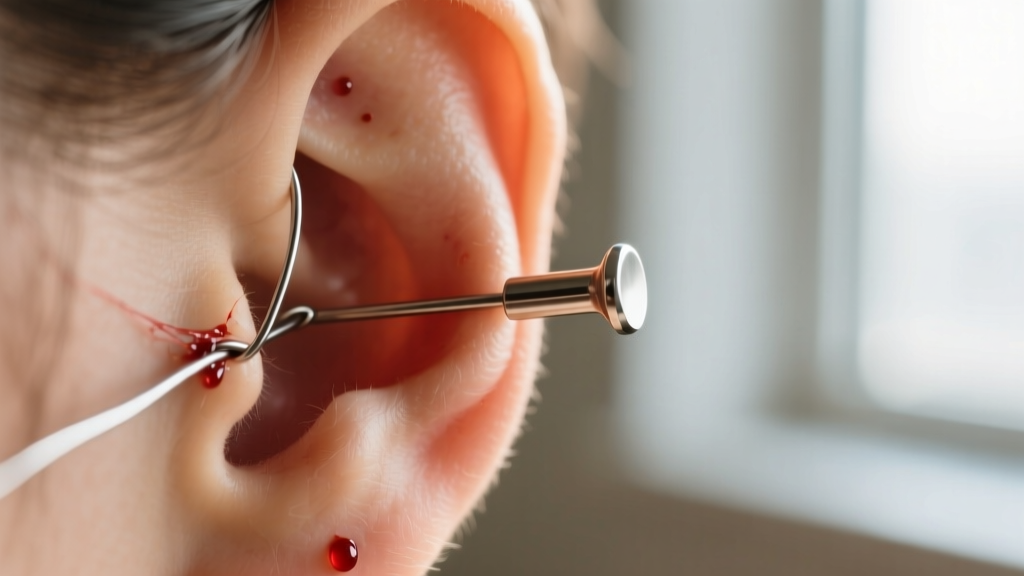
In physics, Pressure = Force / Area. A 20-gauge wire has a microscopic surface area. When you sleep on your left ear, the weight of your head and the friction of the pillow apply force to that tiny wire. This creates the "cheese-cutter effect," where the thin metal slowly migrates downward, slicing through the tissue of the earlobe and causing the piercing hole to elongate into a slit.
The Sizing Solution
To troubleshoot and prevent lobe migration, you must increase the surface area of the post. I recommend upgrading your left-ear staple jewelry to 18-gauge (1.0mm) or, ideally, 16-gauge (1.2mm). The thicker post distributes the pressure of sleep friction across a wider area of the fistula, completely neutralizing the cheese-cutter effect and stabilizing the piercing channel.
Expert Troubleshooting Tip: If your left earlobe feels like it is "stretching" or the hole looks slightly oval-shaped, remove all dangling or heavy hoop earrings immediately. Switch to a lightweight, 16-gauge titanium flat-back stud and leave it in for 6 to 8 weeks to allow the fistula to shrink and tighten around the thicker post.
The Smartphone Factor: Bacterial and Thermal Irritation
We cannot discuss left-ear troubleshooting without addressing modern technology. Most people instinctively hold their smartphones to their left ear. Smartphone screens harbor massive amounts of bacteria, and the device generates significant thermal heat during calls. Pressing a hot, bacteria-laden glass surface against a compromised left-ear fistula is a recipe for localized bacterial folliculitis.
Actionable Fix: Wipe your phone case and screen daily with a 70% isopropyl alcohol wipe. Better yet, switch to using earbuds or the speakerphone function during long calls to eliminate the thermal and bacterial transfer to your left earlobe entirely.
Step-by-Step Troubleshooting Matrix for Left Ear Irritation
If your left ear is currently causing you pain, use this diagnostic matrix to identify and solve the root cause:
- Symptom: Itchy, flaky, weeping skin inside the hole.
Diagnosis: Nickel Contact Dermatitis.
Solution: Discard surgical steel; upgrade to ASTM F136 Titanium or Niobium. - Symptom: Red, fleshy bump on the back of the lobe; tender to touch.
Diagnosis: Irritation Granuloma (Sleep Bump).
Solution: Use a travel pillow; switch to a flat-back labret; apply sterile saline. - Symptom: The hole is elongating, migrating downward, or feels "tight" on earrings.
Diagnosis: Cheese-Cutter Effect / Rejection.
Solution: Upsize to 16-gauge jewelry; remove all heavy dangles and hoops. - Symptom: Warmth, swelling, and thick yellow/green discharge.
Diagnosis: Localized Infection.
Solution: Do NOT remove the jewelry (it will trap the abscess). Consult a physician for oral antibiotics and maintain sterile saline soaks.
Final Verdict: Style Without the Baggage
So, what does an earring on the left ear mean in 2026? Socially, it means absolutely nothing other than you have an appreciation for asymmetrical style and personal aesthetics. Anatomically, however, it means that your left ear requires specialized care, superior metallurgy, and mindful sleeping habits to remain healthy.
By abandoning outdated cultural myths and focusing on the biomechanics of piercing aftercare, you can curate a stunning, comfortable, and irritation-free left ear. Invest in implant-grade titanium, respect your gauge sizing, and protect your ear from nocturnal friction. Your piercings will thank you for it.


