Earring in Left Ear Meaning: A Modern Single Earring Buying Guide
Discover the true earring in left ear meaning today. Our buying guide covers single earring styles, gauge sizes, and materials for modern asymmetric wear.

The Historical 'Earring in Left Ear Meaning' vs. Modern Styling
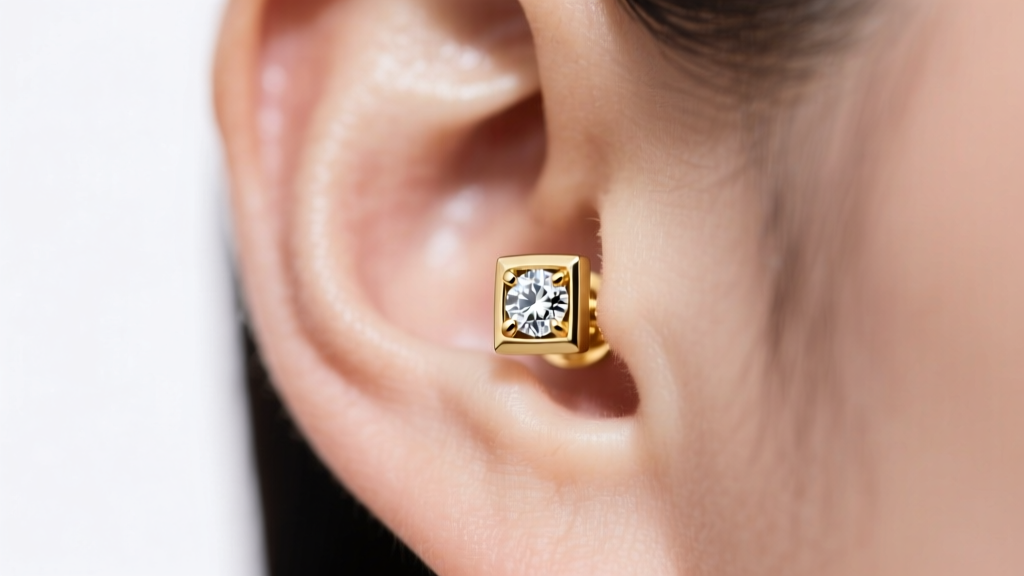
For decades, the phrase 'earring in left ear meaning' was heavily tied to 1980s and 1990s cultural coding. During that era, a pervasive myth dictated that a single earring in the left ear for men signaled a specific sexual orientation, while the right ear signaled another. This outdated 'left is right, right is wrong' hanky-code has been entirely dismantled in the modern fashion landscape.
As we navigate the style landscape of 2026, the concept of gendered jewelry is obsolete. Today, wearing a single earring in the left ear—or the right, for that matter—is an exercise in asymmetric styling, personal expression, and facial balancing. High-profile figures in music, sports, and cinema routinely sport single ear cuffs, solitary diamond studs, or lone cartilage hoops without any underlying coded message other than high-fashion aesthetics.
The modern 'single earring' trend is less about secret societal codes and more about intentional asymmetry, drawing the eye to a specific side of the face and highlighting personal curation.
If you are searching for the earring in left ear meaning today, the answer is simply: intentional style. This shift has given rise to a massive market for 'monocle' or single earrings, allowing buyers to purchase high-end, statement-making pieces without the obligation of buying a mirrored pair. This guide will walk you through exactly what to look for when buying a single earring for daily, asymmetric wear.
Buying Guide: Choosing the Perfect Single Earring
When you are only wearing one earring, that single piece becomes the focal point of your profile. It must withstand daily friction, complement your face shape, and offer premium material quality. Because you are buying half a pair, many luxury and boutique brands now offer dedicated 'single earring' collections, though you must pay attention to the specific structural requirements of solo wear.
Studs vs. Hoops vs. Dangles for Solo Wear
Not all earring types translate well to an asymmetric look. Here is how to evaluate the core styles for a single-ear setup:
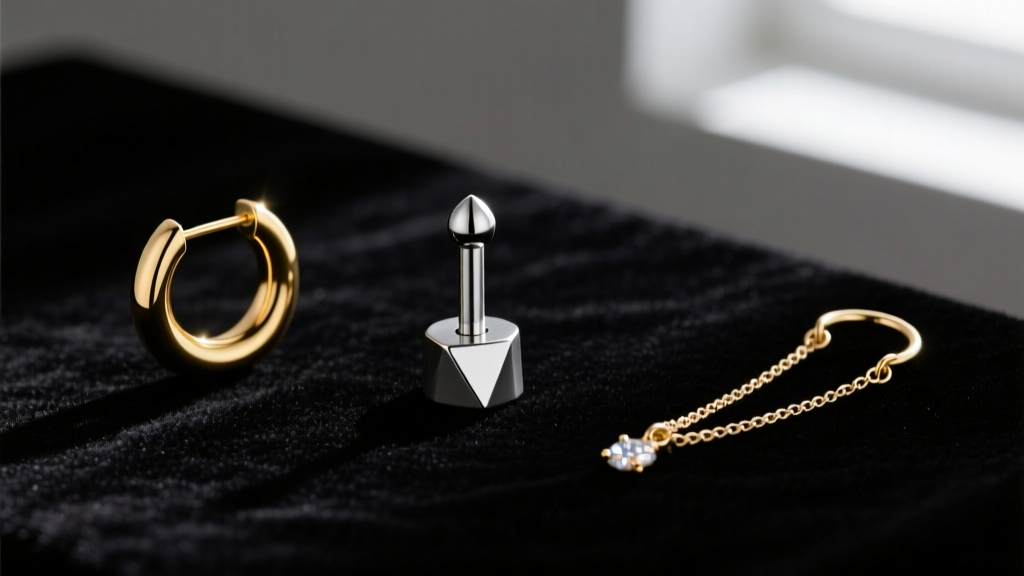
- Flat-Back Labret Studs: The undisputed king of single-ear comfort. Unlike traditional butterfly-back studs that poke the neck when sleeping on your side, a flat-back labret sits flush against the earlobe or cartilage. For a single left ear, a threadless push-pin labret with a single bezel-set gemstone offers a sleek, permanent-looking aesthetic.
- Huggies and Small Hoops: A single 10mm or 12mm huggie hoop in the left earlobe provides a subtle, edgy contour that hugs the anatomy. Avoid large, heavy hoops for daily solo wear, as the uneven weight distribution can cause lobe fatigue or stretching over time.
- Asymmetric Dangles: Dangles are best reserved for evening wear or intentional editorial looks. If you choose a single dangle, ensure it features a secure lever-back or a custom-fit hook to prevent it from catching on clothing and tearing the fistula.
Technical Specs: Gauge, Threading, and Materials
Because a single earring is worn constantly and subjected to unilateral friction (from holding phones to the left ear, sleeping on the left side, etc.), material integrity and structural engineering are paramount. The Association of Professional Piercers (APP) strictly recommends specific materials for long-term wear to prevent contact dermatitis and metal fatigue.
Understanding Gauge Sizes
Buying the wrong gauge will result in a loose fit or tissue damage. Standard piercings vary depending on the anatomical placement:
- 20-Gauge (0.81mm): Standard for traditional lobe piercings done with a piercing gun (though not recommended by professionals). Many fashion jewelry studs are 20g.
- 18-Gauge (1.02mm): The most common professional lobe piercing size. Offers a sturdy post that resists bending.
- 16-Gauge (1.29mm): The standard for upper lobe, helix, and cartilage piercings. If you are placing your single earring in the left cartilage, you will likely need a 16g post.
Threading and Failure Modes
A major failure mode for daily single-ear wearers is the destruction of the piercing fistula caused by external threading. If you buy a single earring with a screw-on back where the threads are on the post itself (external threading), those sharp threads will scrape and micro-tear the inside of your piercing every time you insert it. Always demand internally threaded jewelry (where the screw is on the backing, and the post is smooth) or threadless push-pin systems for a seamless insertion.
| Material Grade | Best Use Case | Avg. Price (Single) | Durability |
|---|---|---|---|
| ASTM F-136 Implant-Grade Titanium | Sensitive ears, new piercings, daily sleep | $35 - $85 | Exceptional (Tarnish-free) |
| 14k Solid Gold (Nickel-Free Alloy) | Luxury daily wear, warm skin tones | $120 - $350 | High (Requires polishing) |
| 18k Solid Gold | High-end statement pieces, heirloom | $200 - $600+ | Medium (Softer, can scratch) |
| Surgical Steel (316L) | Budget fashion wear (Avoid for 24/7) | $15 - $40 | Low (Contains nickel) |
Curating the Asymmetric Look: Proportions and Face Shape
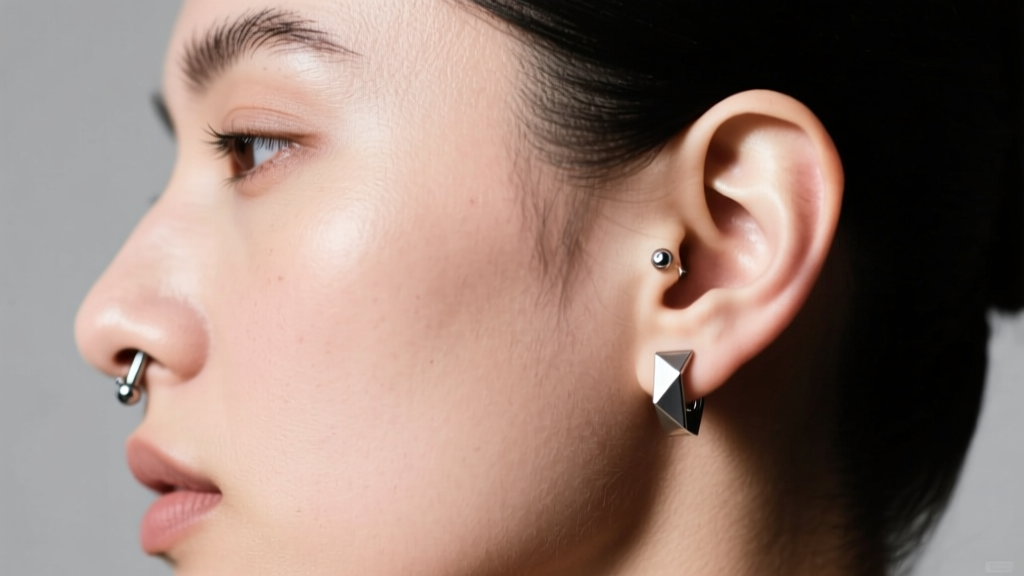
When committing to a single earring in the left ear, you must consider how it interacts with your facial geometry. Asymmetry draws the eye directly to the adorned side, meaning the jewelry will highlight your jawline, cheekbone, and hair part.
Matching Jewelry to Face Shapes
- Round Faces: Opt for vertical, elongated pieces. A single left-ear ear cuff that trails down the helix, or a solitary drop earring, helps create the illusion of a longer, more angular jawline.
- Square Faces: Soften strong jawlines with curved geometries. A single 12mm gold huggie hoop or a circular diamond halo stud in the left lobe adds softness without adding harsh angles.
- Heart-Shaped Faces: Balance a narrower chin with volume at the earlobe. A slightly wider, geometric stud or a chandelier-style single dangle draws the eye outward and balances the forehead.
- Oval Faces: The most versatile shape. Almost any single earring style, from a minimalist titanium stud to an elaborate chain-link ear cuff, will complement an oval face's natural proportions.
Where to Buy: Brands Leading the Single Earring Market
The shift toward asymmetric styling has forced the jewelry industry to adapt. Historically, buying a single high-end earring was nearly impossible without paying for a pair and discarding one. Today, several authoritative brands have pioneered the 'monocle' market, offering exquisite single pieces engineered for daily wear.
- Maria Tash: A pioneer in the curated ear movement. Their Single Earrings Collection offers everything from diamond-set stars to invisible-set baguettes, all available in 18g and 16g, with a focus on secure, comfortable threading.
- BVLA (Body Vision Los Angeles): The gold standard for custom, high-end body jewelry. While you usually need to buy the post and the end separately, BVLA's threadless 14k gold and gemstone ends are the ultimate investment for a permanent-looking single left ear stud.
- Gorjana: For accessible, fashion-forward asymmetry. Gorjana frequently sells 'single' earrings and ear cuffs designed specifically to be mixed and matched, utilizing 18k gold plating over brass (best for occasional wear rather than 24/7 sleep).
Final Verdict: Wear What Resonates
The archaic 'earring in left ear meaning' has been entirely replaced by a culture of self-expression, high-fashion asymmetry, and anatomical curation. When buying a single earring, prioritize implant-grade materials, correct gauge sizing, and ergonomic flat-backs or threadless posts to ensure your solitary statement piece remains comfortable, safe, and undeniably stylish for years to come.


