The Left Earring Superstition: History & Modern Style
Explore the left earring superstition, from pirate lore and 90s codes to 2026 asymmetrical ear styling trends and heavy single-side curation tips.

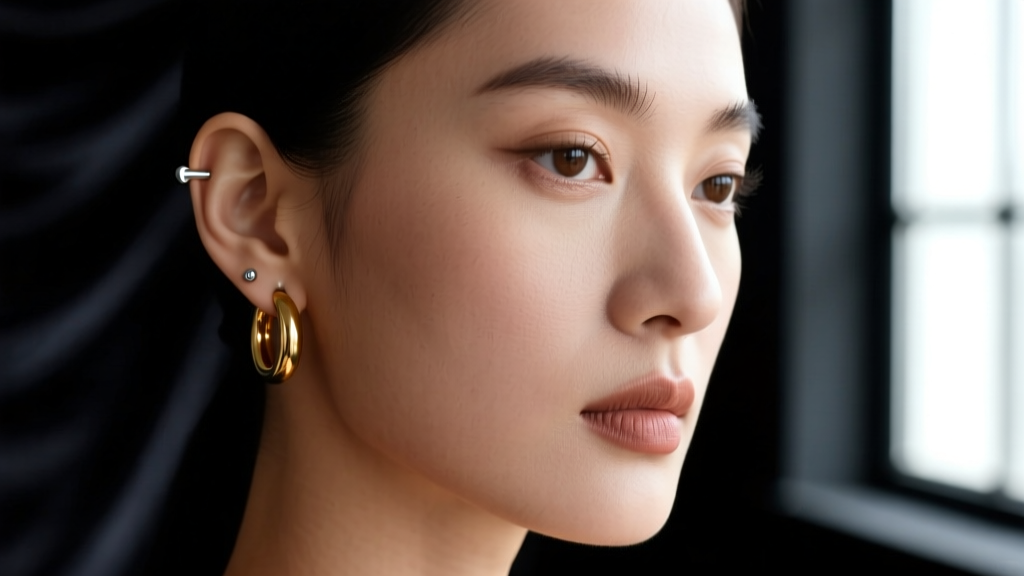
Jewelry is rarely just metal and stone; it is a canvas for human mythology. Among the most enduring and culturally pervasive myths in body modification is the left earring superstition. For centuries, the decision to pierce or adorn the left ear has been laden with hidden meanings, ranging from maritime survival tactics and ancient medical practices to 20th-century subcultural signaling. Today, as we navigate the style landscape of 2026, the rigid rules of the past have dissolved into fluid, asymmetrical ear curation. Yet, understanding the historical weight of the left ear adds a layer of depth to modern styling. This analysis explores the origins of these superstitions and how contemporary jewelry enthusiasts are rewriting the rules through advanced ear stacking and material science.
Maritime Lore and the Pirate's Gold
The most famous iteration of the left earring superstition originates from the high seas. During the Age of Sail, a single gold hoop worn in the left ear was a universally recognized maritime badge. According to naval folklore, a sailor was entitled to pierce his left ear only after surviving a treacherous shipwreck or successfully navigating around Cape Horn. The gold hoop served a highly practical, albeit morbid, purpose: if the sailor drowned and washed ashore, the precious metal was intended to pay for a proper Christian burial.
Beyond insurance, there was a pseudo-medical superstition tied to the left earlobe. Mariners believed that piercing the center of the left earlobe improved long-distance eyesight, a critical skill for navigators and lookouts. This belief actually mirrors ancient Traditional Chinese Medicine (TCM) and acupressure maps, which identify the center of the earlobe as a pressure point connected to the eye and visual cortex. While modern optometry might disagree, the aesthetic legacy of the pirate's left-ear gold hoop remains a staple in rebellious, nautical-inspired fashion.
Ayurvedic Traditions and the Lunar Left
In Indian culture, the left earring superstition takes on a deeply spiritual and physiological dimension. According to Ayurvedic texts, the left side of the body is associated with lunar energy, the feminine principle, and the reproductive system. It is a longstanding tradition to pierce a female infant's left earlobe first. The specific acupressure point targeted on the lower left earlobe is believed to be connected to the uterus and fallopian tubes, with the piercing thought to regulate the menstrual cycle and ease childbirth.
This cultural mandate transformed the left ear into a primary site for elaborate, heavy jewelry, such as the Jhumka or Karnaphool. The weight and placement were not merely decorative but were considered vital to a woman's holistic health and spiritual grounding. Today, modern South Asian designers are reinterpreting these heavy, traditional left-ear pieces using lightweight 14k gold and hollow-casting techniques to preserve the cultural silhouette without causing lobe tearing.
The 20th Century 'Code' and Subcultural Signaling
In the late 20th century, particularly during the 1980s and 1990s, the left earring superstition mutated into a rigid, often homophobic social code in Western cultures. The ubiquitous schoolyard rhyme, 'Left is right, and right is wrong,' dictated that heterosexual men should only pierce their left ear, while a right-ear piercing was a covert signal of homosexuality. This binary coding forced a generation of men to navigate their jewelry choices with extreme anxiety, turning a simple stud into a loud declaration of sexual identity.
By the 2010s, this archaic code began to collapse under the weight of gender-fluid fashion and the mainstreaming of body modification. Icons like Harry Styles and Bad Bunny dismantled the binary, wearing bilateral stacks, right-ear solos, and cartilage cuffs without regard for the outdated 'rules.' The death of this 20th-century superstition paved the way for the 2026 era of intentional, narrative-driven ear curation, where placement is dictated by anatomy and aesthetics, not fear.
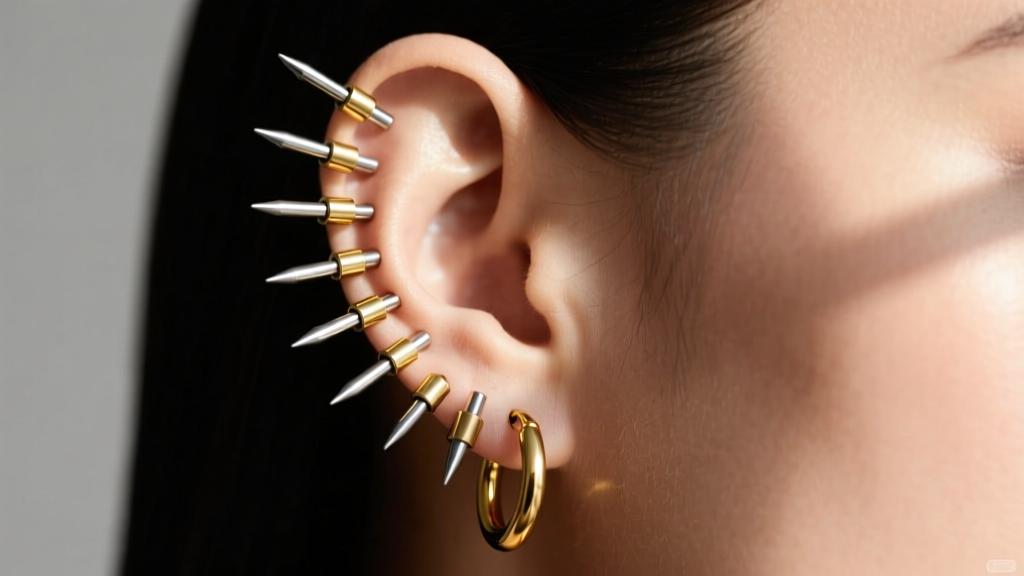
2026 Trend Analysis: The Asymmetrical Left-Heavy Stack
In 2026, the concept of the 'statement ear' has evolved into the 'earscape.' Rather than symmetrical pairs, high-end piercing studios and jewelry stylists are championing the asymmetrical left-heavy stack. This trend treats the left ear as the primary canvas for complex, multi-pierce narratives, while the right ear is left minimal or entirely bare. This deliberate imbalance draws the eye, creating a dynamic, editorial look that feels both avant-garde and deeply personal.
Anatomy of a Left-Heavy Earscape
Creating a heavy, single-sided stack requires a meticulous understanding of anatomy, gauge sizing, and jewelry mechanics. Overloading a single ear with heavy metals can lead to migration, rejection, and the dreaded 'cheese-cutter effect,' where thin jewelry slices through the tissue under its own weight.
- The Lobe Foundation: Standard lobe piercings are typically done at 18g or 16g. For a heavy stack featuring multiple huggies or medium-weight drops, upgrading to a 14g or 12g lobe piercing provides the necessary structural integrity to support the weight without stretching the fistula over time.
- Cartilage Precision: The helix, flat, and conch piercings on the left ear should be strictly maintained at 16g or 14g. Using standard 18g or 20g posts in the upper cartilage drastically increases the risk of migration when subjected to the pressure of sleeping on a heavy stack.
- The Threadless Advantage: For intricate left-ear constellations, threadless (press-fit) jewelry is the 2026 industry standard. Brands like Neometal and BVLA utilize a bent-pin tension system that eliminates the bulky threading of traditional screw-in backs, allowing for seamless, flush-fitting gems that won't snag on hair or clothing.
Superstition vs. 2026 Style Reality
| Era / Origin | The Superstition or Rule | 2026 Style Reality |
|---|---|---|
| Maritime (1700s) | Left ear gold ensures safe passage and pays for burial. | 14k solid gold hoops are worn for their hypoallergenic properties and timeless aesthetic, regardless of nautical travel. |
| Ayurvedic (Ancient) | Left lobe piercing regulates feminine reproductive health. | Heavy left-ear Jhumkas are engineered with lightweight alloys and ear chains to distribute weight safely across the ear. |
| Western (1980s) | 'Left is right, right is wrong' (Sexual orientation coding). | Gender-neutral curation dominates; bilateral and asymmetrical placements are chosen purely for facial symmetry and balance. |
Material and Weight Considerations for Single-Side Stacking
When dedicating your left ear to a dense, heavy stack, material purity is non-negotiable. The increased surface area of metal resting against the skin, combined with the friction of a heavy stack, makes the ear highly susceptible to contact dermatitis and nickel allergies. According to metallurgical standards referenced by the Gemological Institute of America (GIA), ensuring the exact karat and alloy composition of your gold is vital for long-term wear.
For fresh piercings or highly sensitive ears building a new left-ear constellation, implant-grade titanium (ASTM F-136) is the undisputed king. It contains zero nickel and can be mirror-polished to a surface finish that resists bacterial biofilm buildup. Once the fistulas are fully matured (typically 12 to 18 months for cartilage), transitioning to 14k or 18k solid yellow or white gold is recommended. Avoid gold-plated or gold-vermeil pieces entirely for heavy stacks; the friction between multiple hoops and huggies will quickly wear away the microscopic plating, exposing the reactive brass or copper core beneath.
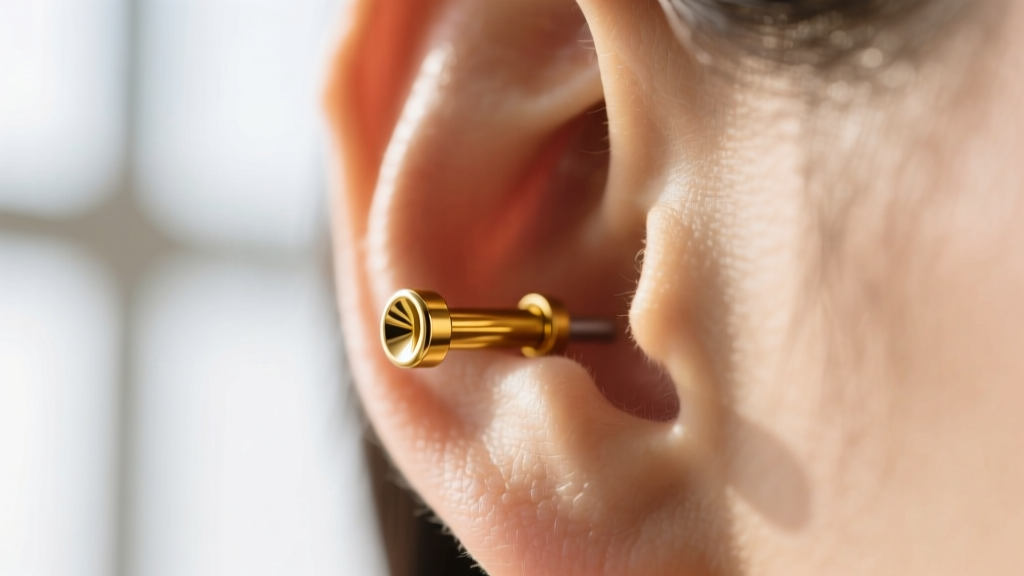
Furthermore, the style of the earring backing plays a crucial role in single-side comfort. Traditional butterfly friction backs are notorious for trapping dead skin cells and moisture, leading to localized infections in dense stacks. In 2026, the use of flat-back labrets (for cartilage) and secure, hinged snap-clickers (for hoops) ensures that the back of the left ear remains flush, comfortable, and easy to clean, even when adorned with five or six pieces of jewelry.
Final Thoughts on Ear Curation and Personal Mythology
The left earring superstition has journeyed from the salt-sprayed decks of pirate galleons to the sterile, high-end studios of modern piercing artists. While we no longer rely on a gold hoop to improve our eyesight or signal our survival to the coast, the left ear remains a powerful site for self-expression. By discarding the restrictive, fear-based codes of the 20th century, we are free to approach ear styling as a true art form. Whether you are honoring ancestral traditions or engineering a gravity-defying, asymmetrical titanium stack, the modern left ear is defined not by superstition, but by intentional, educated curation. For more insights into building your perfect earscape, consult our comprehensive guides on the history and evolution of ear piercing and cartilage anatomy.


