Limoges Earrings Value Guide: Pricing, Authenticity & Worth
Discover the true value of Limoges earrings in 2026. Learn to authenticate marks, assess bezel quality, and avoid overpaying for porcelain studs.

The Allure and Reality of Limoges Porcelain Jewelry
When most collectors hear "Limoges," they immediately envision ornate teacups, saucers, and decorative trinket boxes. However, the secondary market for Limoges porcelain jewelry—specifically earrings—has seen a quiet but steady surge in the sustainable and vintage fashion sectors. As we navigate the 2026 jewelry market, buyers are increasingly seeking pieces with historical provenance, artisanal craftsmanship, and non-traditional materials. Limoges earrings, characterized by their brilliant white kaolin clay base and intricate hand-painted or decal-transferred motifs, offer a unique aesthetic. But assessing their true value requires moving past the romanticized French origin story and looking closely at material science, hallmark authentication, and structural engineering.
True Limoges porcelain is not merely a brand; it is a protected geographic indication. It must be manufactured in the Limousin region of France using specific local kaolin clay, feldspar, and quartz, and fired at extreme temperatures (up to 1400°C) to achieve complete vitrification. This process results in a non-porous, glass-like ceramic that is highly resistant to moisture but inherently brittle. Understanding this material reality is the first step in determining whether a pair of Limoges earrings is a $20 tourist souvenir or a $300 master-crafted heirloom.
Decoding Authenticity: Marks, Stamps, and Red Flags
The most critical factor in the budget and value assessment of any Limoges piece is the maker's mark. Because the name "Limoges" carries immense prestige, it has been heavily counterfeited or misused by manufacturers outside of France. According to antique appraisal standards referenced by Christie's auction house, a genuine piece will almost always bear a specific factory mark alongside the words "Limoges France."
The Hierarchy of Limoges Marks
- Tier 1: Master Manufacturers (Highest Value) - Marks from Haviland & Co., Bernardaud, or Tressemanes & Vogt (T&V). These factories produced the highest quality blank porcelain and employed master painters. Earrings featuring these marks, especially from the mid-20th century, command premium prices.
- Tier 2: Independent Artisan Studios (High Value) - Marks featuring "Peint Main" (hand-painted) alongside a specific artist's signature or a small studio stamp. These are highly sought after for their unique, one-of-a-kind floral or geometric motifs.
- Tier 3: "Rehausse Main" (Moderate Value) - This translates to "hand-enhanced." The base design is a mass-produced decal transfer, but specific details (like gold leaf or highlights) are painted by hand. These are common in mid-tier vintage earrings.
- Tier 4: Blank or Generic Stamps (Low Value) - If the piece simply says "Limoges" without "France," or lacks a factory stamp entirely, it is likely a mass-produced novelty item or an outright fake. Value is negligible.
For a deeper dive into identifying specific factory stamps and dating marks, collector resources like the Metropolitan Museum of Art's European Decorative Arts archives provide excellent foundational knowledge on French porcelain history and marking conventions.
The Bezel Factor: Where Value is Won or Lost
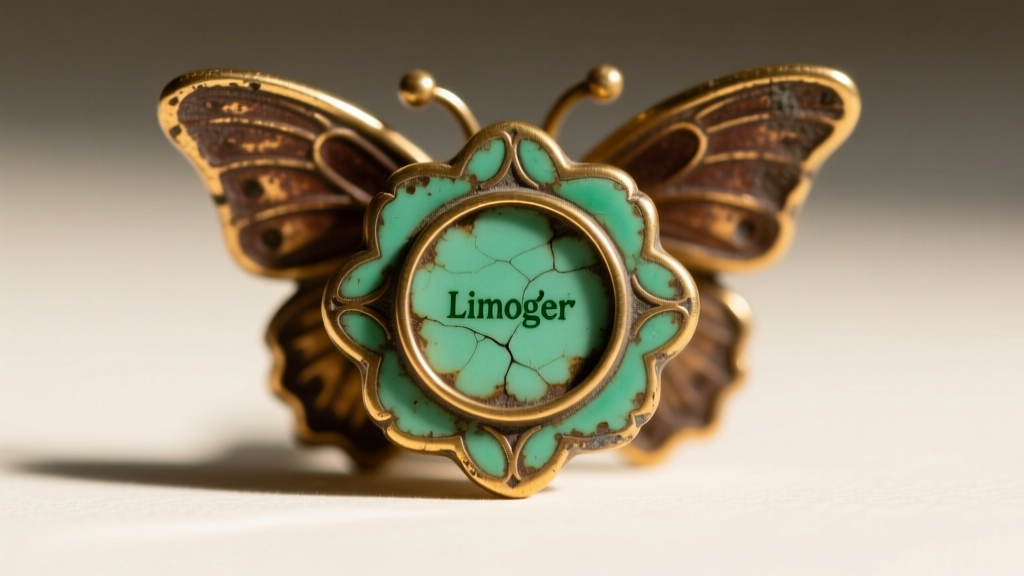
Unlike gemstones, porcelain cannot be compressed or subjected to the lateral pressure of traditional prong settings. If a jeweler attempts to push metal prongs over a raw edge of Limoges porcelain, the ceramic will instantly micro-fracture or shatter. Therefore, the value of Limoges earrings is heavily dependent on the engineering of the bezel and the setting method.
Setting Mechanics and Adhesives
High-value Limoges earrings utilize a precision-milled, friction-fit bezel or a deep channel setting (minimum 1.5mm lip) where the porcelain cabochon rests securely without edge pressure. The adhesive used is equally critical. Cheap, mass-produced pairs use standard cyanoacrylate (super glue), which degrades rapidly, turns white, and becomes brittle when exposed to the natural oils of the skin and UV light. Artisan and high-end vintage pieces use specialized two-part jeweler's epoxy or UV-stable optical resins that maintain flexibility and clarity for decades.
Post Gauge and Clutch Engineering
Porcelain is surprisingly dense. A standard 12mm round Limoges cabochon can weigh between 2.5 and 4 grams. When set in a solid metal bezel, the total weight of a single earring can easily exceed 5 grams.
The Gauge Rule: Standard 20-gauge (0.81mm) earring posts are entirely insufficient for this weight. They will bend under the lever-action of the earlobe, causing the earring to droop and eventually snap at the solder joint. High-quality Limoges studs must feature an 18-gauge (1.02mm) or 19-gauge post. Furthermore, standard butterfly clutches will fail to support the weight, leading to lost earrings. Look for heavy silicone friction backs, screw-backs, or locking latch-backs on drop styles to ensure security.
Limoges Earrings Pricing Matrix (2026 Market Assessment)
To help you accurately assess whether a seller's asking price is justified, we have compiled a comprehensive value matrix based on current market data, material grades, and authenticity tiers.
| Category / Tier | Typical Price Range | Metal & Setting Quality | Porcelain & Motif | Value Retention |
|---|---|---|---|---|
| Tourist / Novelty | $15 - $35 | Gold-plated brass or pewter; shallow glue settings; 22G thin posts. | Decal transfers; no maker mark or fake stamps; mass-produced florals. | Poor (Zero resale value) |
| Vintage Mid-Century | $45 - $120 | Sterling silver (925) or gold-filled; secure bezel; 20G-18G posts. | "Rehausse Main" or basic "Peint Main"; T&V or Haviland marks common. | Moderate (Stable market) |
| Contemporary Artisan | $130 - $280 | 14k solid gold or heavy vermeil; precision channel settings; 18G posts. | Master hand-painted; signed by artist; high-contrast cobalt/gold motifs. | High (Appreciates with artist) |
| Antique / Master | $300 - $600+ | 18k gold; museum-quality mounting; custom screw-backs or ear wires. | Rare 19th-century blanks; exquisite miniature painting; pristine condition. | Very High (Collector grade) |
Durability and Failure Modes: What Collectors Must Know
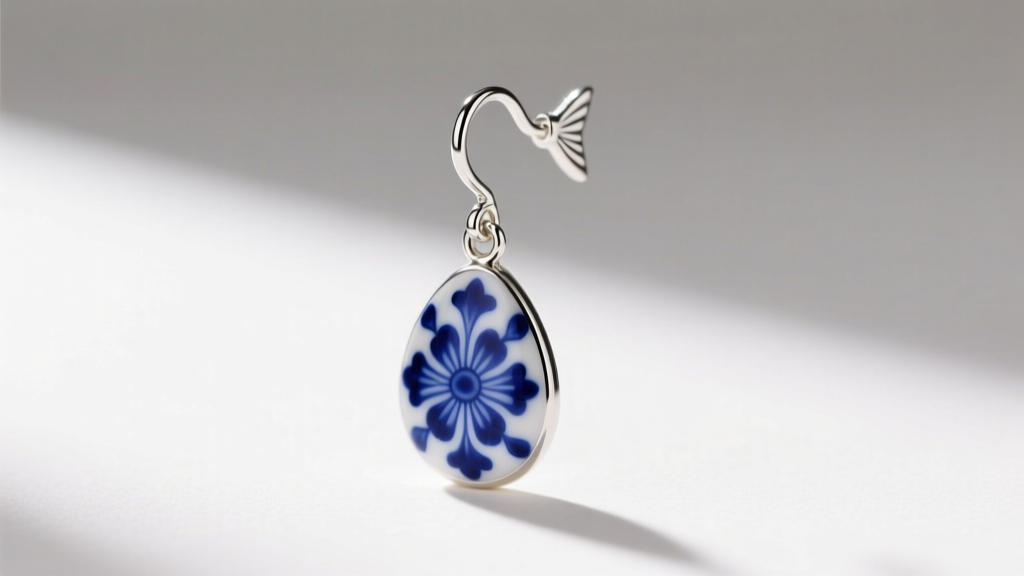
While vitrified porcelain is impervious to water and will not tarnish, it is highly susceptible to impact and thermal shock. When assessing a pair of vintage Limoges earrings for purchase, you must inspect them for specific failure modes that drastically reduce their value.
Micro-Chipping and Crazing
Run your fingernail gently along the edge where the porcelain meets the metal bezel. The most common failure mode in older pieces is micro-chipping caused by the metal expanding and contracting at different rates than the ceramic over decades of wear. Additionally, inspect the glazed surface under a bright LED light. "Crazing"—a network of microscopic cracks in the clear overglaze—indicates that the piece was subjected to thermal shock or fired improperly. While some antique collectors accept minor crazing as a sign of age, it should reduce the price by at least 30%.
Adhesive Degradation
Hold the earring by the metal post and gently tap the porcelain face. It should feel completely solid, with a high-pitched, glassy resonance. If it feels slightly dampened, loose, or emits a dull thud, the epoxy adhesive has crystallized and failed. Re-setting a Limoges cabochon requires specialized jeweler's epoxy and precise temperature control; it is not a DIY fix, and the cost of professional restoration must be factored into your buying budget.
Cleaning and Maintenance
Never place Limoges earrings in an ultrasonic cleaner. The high-frequency cavitation bubbles will aggressively strip the painted motifs, especially if they are overglaze enamels or gold leaf accents. Clean them using only a soft microfiber cloth, a mild pH-neutral soap, and lukewarm water. Avoid harsh chemicals, perfumes, and hairsprays, which can permanently dull the glass-like finish of the clear coat.
Final Verdict: Are Limoges Earrings a Sound Investment?
From a strict budget and value assessment perspective, Limoges earrings occupy a fascinating niche. They are not a liquid asset like gold or diamonds, meaning you cannot easily pawn them for their material weight. However, as wearable art and historical artifacts, they offer immense intrinsic and aesthetic value.
If you are buying purely for daily wear on a budget, a $50 pair of verified mid-century sterling silver Limoges studs offers a level of unique, hand-painted craftsmanship that is impossible to find in modern mass-produced jewelry. However, if you are looking for an investment-grade piece, you must demand absolute provenance: a verified master factory mark, an 18-gauge post, a precision bezel, and a flawless, chip-free glaze. By applying these rigorous material and structural assessments, you can confidently navigate the market and acquire pieces that are both beautiful and structurally enduring.