The Ultimate Guide to Double Earrings for Men: Styling & Sizing
Discover everything about double earrings for men. Learn lobe spacing, gauge sizes, hypoallergenic metals, and styling tips for your second piercing.


Why the Double Lobe is the Perfect Starter Upgrade
The landscape of men's jewelry has shifted dramatically over the last decade. What was once considered a niche subculture statement is now a mainstream staple of modern grooming and personal style. When exploring double earrings for men, the most common and versatile starting point is the double lobe piercing. Adding a second hole to the lower lobe provides an anchor for asymmetry, allowing you to mix metals, textures, and silhouettes without committing to cartilage work that requires months of meticulous aftercare.
A well-placed second lobe piercing frames the jawline and adds a subtle edge to both casual and formal wardrobes. However, transitioning from a single stud to a curated double stack requires an understanding of anatomy, precise spacing, and material science. This beginner-friendly explainer will walk you through the exact specifications you need to know before sitting in the piercer's chair in 2026.
Anatomy of the Second Piercing: Spacing and Gauge
The success of your double lobe setup hinges entirely on the initial placement. If the second hole is too close to the first, your jewelry will overlap, causing friction, irritation bumps, and aesthetic clutter. If it is too high, it may drift into the thicker cartilage of the upper lobe, complicating the healing process.
The Golden Rule of Spacing
Professional piercers typically measure a distance of 7mm to 10mm between the center of the first hole and the center of the second hole. This specific measurement accounts for the diameter of standard jewelry. For example, a 4mm stud in the first hole and an 8mm huggie hoop in the second require at least 6mm of clear space just to avoid touching. An 8mm gap ensures a clean, intentional look.
Gauge Size: Why Thicker is Better
Most commercial mall kiosks use piercing guns that force a 20-gauge (0.81mm) or 18-gauge (1.0mm) stud through the tissue using blunt force. This causes micro-trauma and limits your future jewelry options. For double earrings for men, you should always seek a professional who uses a hollow bevel needle.
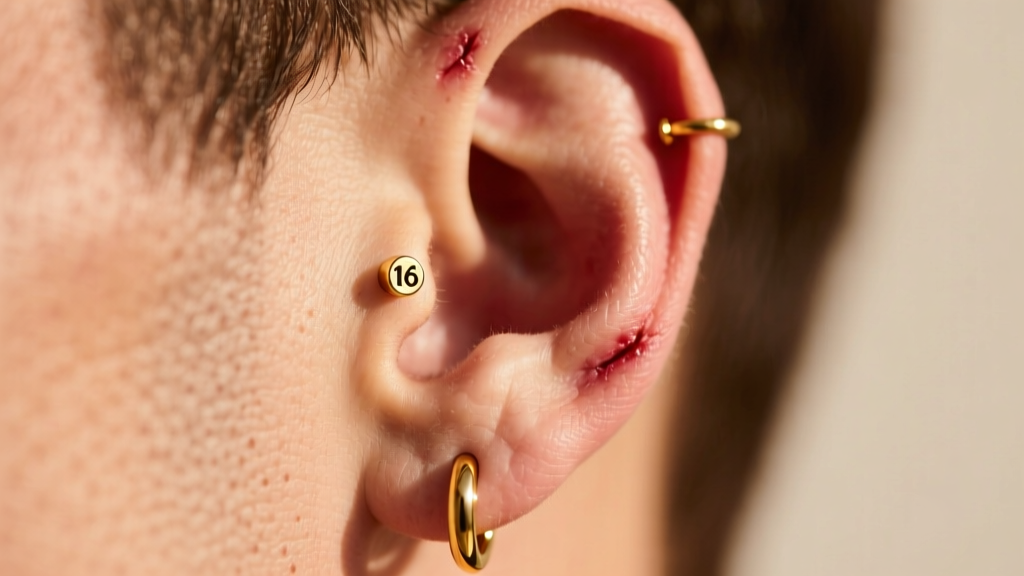
- 16-Gauge (1.2mm): The industry standard for lobes. It provides enough structural integrity to prevent the "cheese-cutter effect" (where thin wire slowly slices through the tissue) while offering a massive variety of threadless ends and seamless hoops.
- 14-Gauge (1.6mm): Ideal for men who prefer a slightly bolder, heavier look or plan to stretch the lobe slightly in the future.
Best Metal Grades for Healing and Daily Wear
When getting a second piercing, your body treats it as an open wound. The Association of Professional Piercers (APP) strictly advises against "surgical steel" for initial piercings. Surgical steel is a marketing term, not a regulated alloy, and often contains 8-12% nickel, which triggers contact dermatitis in a significant portion of the population.
| Metal Type | Required Standard | Avg. Price Range | Best Use Case |
|---|---|---|---|
| Implant-Grade Titanium | ASTM F-136 (Ti6Al4V) | $35 - $80 | Initial healing, highly sensitive skin, daily wear |
| Niobium | 99.9% Pure (Reactive) | $25 - $60 | Healing, anodized colors, nickel-free alternative |
| Solid Gold | 14k or 18k (Nickel-Free) | $120 - $350+ | Fully healed piercings, luxury statement pieces |
According to the American Academy of Dermatology, nickel allergy is the most common cause of allergic contact dermatitis. Always verify that your piercer is using ASTM F-136 certified titanium for the initial jewelry in your second hole. Once fully healed (typically 8 to 12 weeks for lobes), you can safely transition to high-quality 14k or 18k solid gold.
Styling Formulas: How to Pair Your Double Earrings
Once both piercings are fully healed, the real fun begins. The key to styling double earrings for men is creating a visual hierarchy. You want one piece to act as the anchor and the other as the accent. Here are three proven formulas that work exceptionally well for masculine and androgynous aesthetics.
1. The Anchor & The Accent (Stud + Huggie)
Place a minimalist 3mm or 4mm flat-back labret stud in the primary (lower) hole, and secure a snug 8mm or 10mm huggie hoop in the second hole. The flat-back stud sits flush against the lobe, providing a clean anchor, while the huggie adds a subtle curve that catches the light without dangling or snagging on clothing.
2. The Industrial Edge (Threadless End + Seamless Hoop)
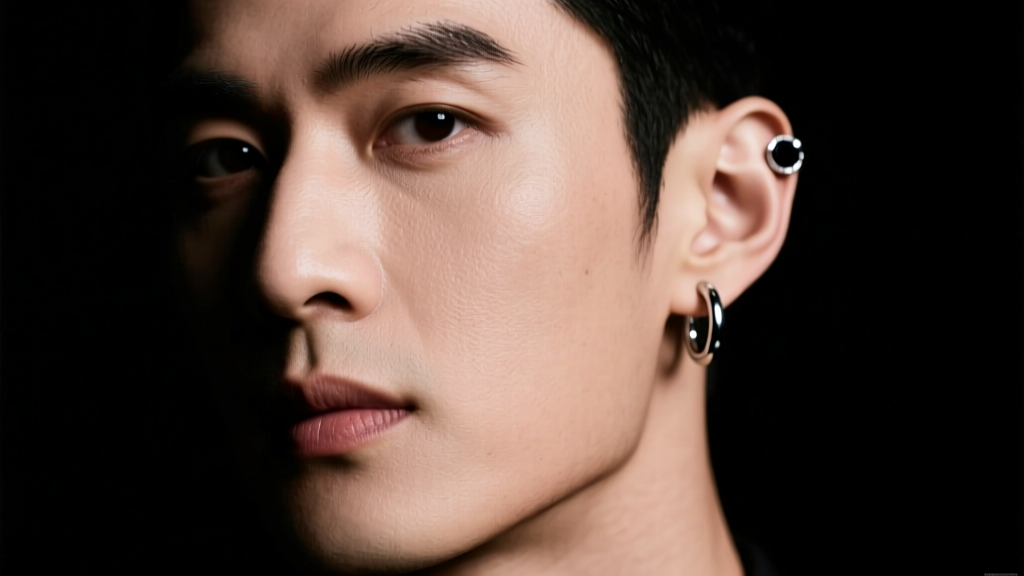
Threadless jewelry uses tension to stay secure, allowing for incredibly unique, masculine ends like matte black onyx, raw uncut diamonds, or geometric titanium spikes. Pair a dark, matte threadless end in the top hole with a polished silver or gold seamless hoop in the bottom hole to mix textures and finishes.
3. The Micro-Stack (Dual Studs)
For a highly understated, professional look, opt for two identical micro-studs (2mm to 3mm). This creates a dotted-line effect that draws the eye along the jawline. Black onyx or dark grey spinel are excellent choices for men who want to avoid the traditional flash of gold or silver.
Aftercare and Troubleshooting the Second Hole
The second lobe piercing often takes slightly longer to heal than the first, primarily because the tissue in the upper lobe can be denser and more prone to swelling. Adopting the LITHA method (Leave It The Hell Alone) is your best defense against complications.
Daily Cleaning Protocol
- Sterile Saline Only: Use a sterile wound wash spray containing only 0.9% sodium chloride and water. Avoid homemade sea salt soaks, as the incorrect ratio can dehydrate the tissue and cause irritation bumps.
- Spray, Don't Wipe: Spray the front and back of the lobe twice a day. Let it air dry or gently pat it with a non-woven gauze. Never use cotton swabs, as they leave microscopic fibers trapped in the healing fistula.
- Sleep Management: Pressure is the enemy of a healing second hole. Invest in a travel donut pillow or a specialized piercing pillow to keep your ear suspended in the hollow center while you sleep.
"Irritation bumps on the back of a new lobe piercing are almost always caused by sleeping on the ear or using jewelry with a post that is too long. Downsizing your titanium post at the 4-week mark is critical to preventing these fluid-filled bumps."
Troubleshooting: Bumps vs. Keloids
Men are often quick to panic when they see a bump near their new piercing. True keloids are rare, genetically driven, and grow far beyond the site of the piercing. What you are likely experiencing is a hypertrophic scar or an irritation bump caused by pressure, improper angles, or harsh chemicals like tea tree oil. If a bump appears, check your jewelry length, adjust your sleeping habits, and apply warm saline compresses. If it persists, consult your piercer for a jewelry swap rather than removing the earring, which can trap the infection or bump inside the tissue.
Final Thoughts on Expanding Your Collection
Committing to double earrings for men is a low-risk, high-reward style upgrade. By prioritizing professional needle placement at 16-gauge, insisting on ASTM F-136 titanium for the healing phase, and utilizing intentional styling formulas, you build a foundation for a versatile jewelry wardrobe. Whether you prefer the rugged appeal of matte black metals or the classic refinement of solid gold, the double lobe provides the perfect canvas for self-expression.


