How to Secure an Earring Fish Hook: Step-by-Step Guide
Learn how to secure an earring fish hook wire with our step-by-step guide. Discover gauge sizes, metal grades, and stoppers to prevent loss.

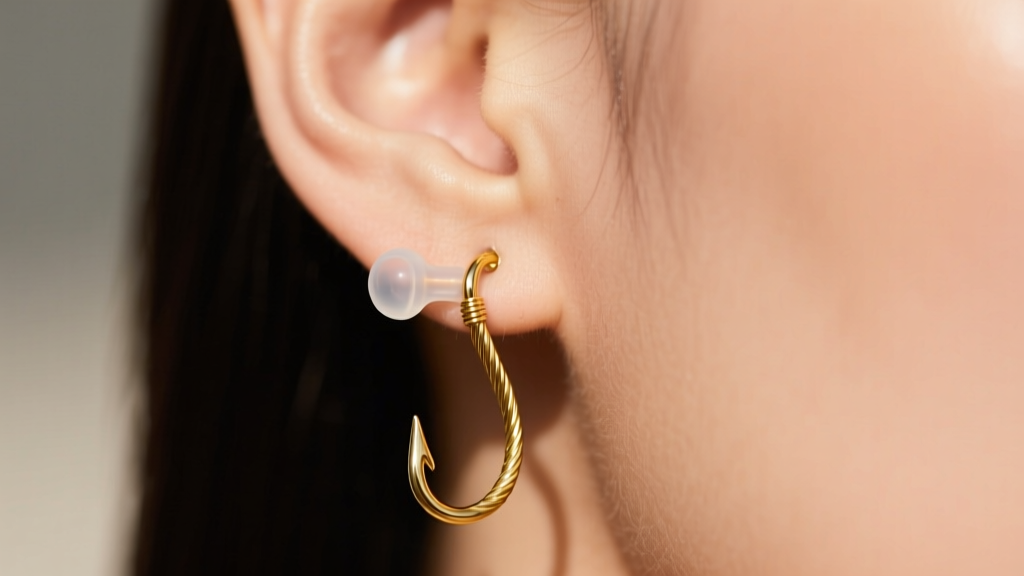
The Physics and Anatomy of the Fish Hook Wire
The "fish hook" ear wire—often referred to in the industry as a French wire or shepherd's hook—is arguably the most ubiquitous earring finding in jewelry design. Yet, it is also the most frequently lost. Understanding why an earring fish hook slips out requires a basic grasp of physics and anatomy. The primary failure mode is not the wire itself, but an improper center of gravity. When the decorative element of the earring sits too high, the hook rotates forward, sliding out of the earlobe. In 2026, modern jewelry designers counteract this by adding weighted bezels or utilizing a deeper "saddle" curve in the wire design to ensure the center of mass rests securely below the piercing fistula.
Anatomy of the Wire
- The Loop: The closed ring at the bottom where the earring component or jump ring attaches.
- The Saddle: The curved U-shape that rests inside the ear piercing.
- The Tail: The straight or slightly flared end that exits the back of the earlobe.
Gauge Sizes and Material Specifications
Selecting the correct wire thickness is critical for both comfort and security. A wire that is too thin will bend and warp under the weight of a gemstone, while a wire that is too thick can cause micro-tears in delicate earlobe tissue. Below is the industry-standard gauge chart for earring fish hooks.
| Gauge Size | Diameter (mm) | Best Application | Weight Capacity |
|---|---|---|---|
| 18 Gauge | 1.02 mm | Heavy gemstone drops, statement pieces | High |
| 20 Gauge | 0.81 mm | Standard dangles, everyday wear | Medium |
| 21 Gauge | 0.72 mm | Lightweight chains, delicate pearls | Low-Medium |
| 22 Gauge | 0.64 mm | Ultra-fine minimalist drops | Low |
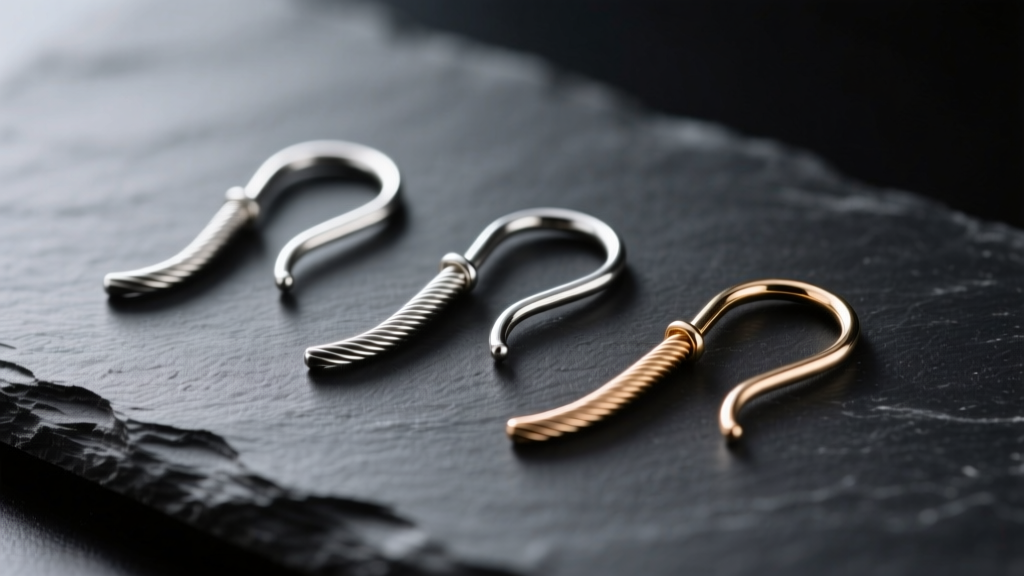
Step-by-Step: How to Insert and Secure the Wire
Proper insertion technique minimizes tissue trauma and ensures the wire sits correctly. Follow these steps for a secure fit:
Step 1: Sanitation and Preparation
Before insertion, wipe the earring fish hook with a 70% isopropyl alcohol pad. This removes sebum buildup and environmental bacteria. Ensure your hands are clean to prevent introducing pathogens into the piercing channel.
Step 2: The Insertion Technique
Hold the earring by the decorative top or the bottom loop—never pinch the wire itself, as this can alter its shape. Align the tip of the tail with the front of the piercing. Gently push the wire through, following the natural curve of the saddle. Do not force it; if you meet resistance, the piercing may have shrunk, or the wire may be bent.
Step 3: Applying the Stopper
Once the tail has fully exited the back of the earlobe, apply your chosen earring back. Push the stopper up the tail until it rests snugly against the back of the earlobe, leaving a 1mm gap to allow for natural swelling and airflow. A common mistake is pushing the stopper too tightly, which can cause pressure necrosis or trap moisture, leading to contact dermatitis.
Choosing the Right Earring Backings
The security of your earring fish hook is only as strong as the backing you use to anchor it. Here is a breakdown of the most effective stoppers available on the market:
- Silicone Ear Nuts: The gold standard for security. High-quality, medical-grade silicone stoppers provide excellent friction against the metal wire. They are inexpensive, hypoallergenic, and nearly invisible. Replace them every 3 to 6 months as the silicone degrades and loses its grip.
- Metal Scroll Backs (Butterfly Clutches): Traditional but often problematic for fish hooks. The narrow metal scroll can easily slide off a smooth, round wire. If you must use them, look for "locking" scroll backs that feature a tiny internal silicone O-ring.
- French Wire Hooks (Ear Hooks): These are secondary C-shaped wires that hook over the tail of the fish hook and rest behind the earlobe. They are highly secure for heavy earrings but can be bulky and uncomfortable for sleepers.
- Polymer Clay or Wax Stopper: A niche, DIY trick used by jewelers in a pinch. A tiny ball of jewelry wax or polymer clay can be molded onto the end of the tail, though this is strictly a temporary emergency fix.
Troubleshooting: Reshaping a Bent Wire
Because earring fish hooks are inherently open and curved, they are prone to bending when snagged on hair, sweaters, or towels. A warped saddle will not sit correctly in the ear and will inevitably fall out. To fix this, you must reshape the wire without work-hardening or snapping the metal.
The Nylon Jaw Plier Method: Never use standard steel jewelry pliers on your ear wires; the steel teeth will mar the finish and weaken the metal. Instead, use nylon jaw pliers. Gently grip the base of the saddle and apply slight pressure to bend the wire back into a smooth, uniform U-shape. If the wire is made of dead-soft sterling silver, it will reshape easily. If it is half-hard 14k gold, apply slow, steady pressure to avoid snapping the crystalline structure.
Metallurgy and Hypoallergenic Standards
When wearing an earring fish hook, the metal passes directly through the body. This makes metallurgical purity non-negotiable. As of 2026, the industry has largely moved away from vague terms like "surgical steel," which can still contain nickel. According to the Association of Professional Piercers (APP), the safest metals for long-term wear in body piercings are implant-grade materials.
Recommended Materials
- ASTM F136 Implant-Grade Titanium: The absolute best choice for sensitive ears. It contains zero nickel and is highly polished to prevent bacterial adhesion.
- Niobium: An elemental metal that is highly biocompatible and can be anodized to create vibrant colors without using dyes or plating.
- Solid 14k or 18k Gold: Must be alloyed for biocompatibility (avoiding nickel and cadmium). Gold-filled wire is acceptable for the ear wire itself, provided the outer layer is thick enough (at least 1/20th by weight) to prevent the brass core from leaching.
For jewelers crafting their own hooks, sourcing wire from reputable suppliers like those listed in Rio Grande Jewelry Making Resources ensures you are receiving accurately alloyed metals with verified melt certificates. Avoid base metal wires plated in silver or gold, as the friction of the piercing will quickly wear through the microscopic plating, exposing the skin to reactive copper and nickel alloys.
Final Thoughts on Earring Security
Mastering the earring fish hook requires attention to detail, from selecting the proper gauge to understanding the center of gravity in your jewelry design. By pairing high-quality, implant-grade wires with fresh silicone stoppers and utilizing proper insertion techniques, you can enjoy the elegant drape of French wire earrings without the constant anxiety of losing them. Treat your ear wires with the same care as the gemstones they hold, and they will provide a secure, comfortable foundation for your favorite pieces for years to come.


