Earrings in the 1920s: Art Deco Styles & Modern Revivals
Explore the geometric glamour of earrings in the 1920s. Discover Art Deco materials, filigree techniques, and how to style vintage revivals today.
The Architectural Shift: Why Earrings in the 1920s Changed Forever
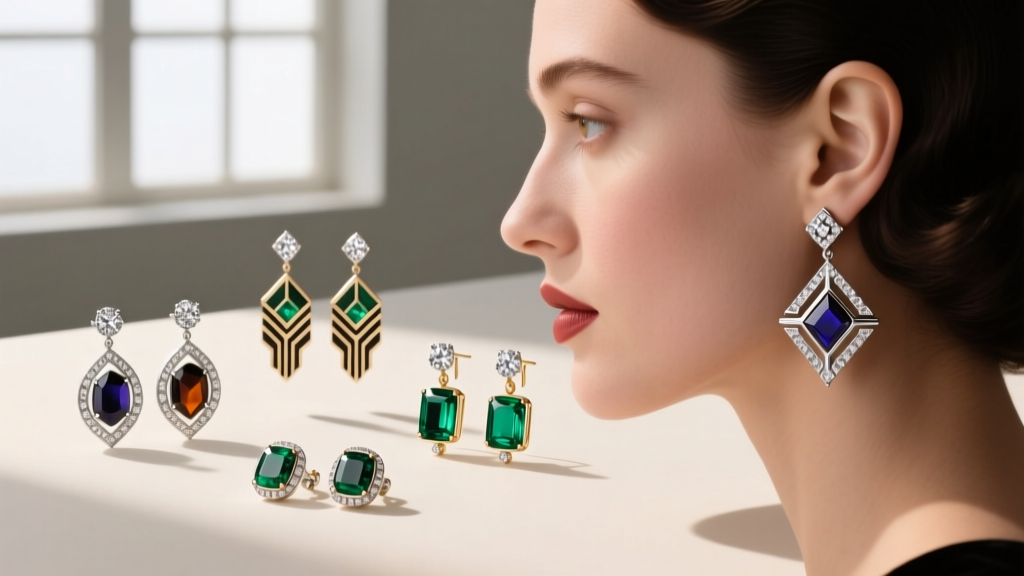
Before the Jazz Age, earrings were largely an afterthought in Western fashion. Victorian and Edwardian women wore their hair piled high in elaborate updos, effectively hiding the ears and rendering drop earrings impractical and invisible. The cultural earthquake of the 1920s changed everything. As women embraced the radical "bob" haircut and the liberating, kinetic energy of dances like the Charleston, the ear was suddenly exposed. This necessitated a dramatic shift in jewelry design, making earrings in the 1920s a focal point of personal expression and architectural brilliance.
The Art Deco movement, which officially gained global traction following the 1925 Exposition Internationale des Arts Décoratifs et Industriels Modernes in Paris, rejected the flowing, organic motifs of Art Nouveau. Instead, it embraced stark geometry, bold color contrasts, and mechanical precision. Earrings evolved from delicate, forgotten studs into swinging, chandelier-style drops that caught the light in smoky speakeasies and grand ballrooms alike.
Defining Materials and Gemstone Cuts of the Jazz Age
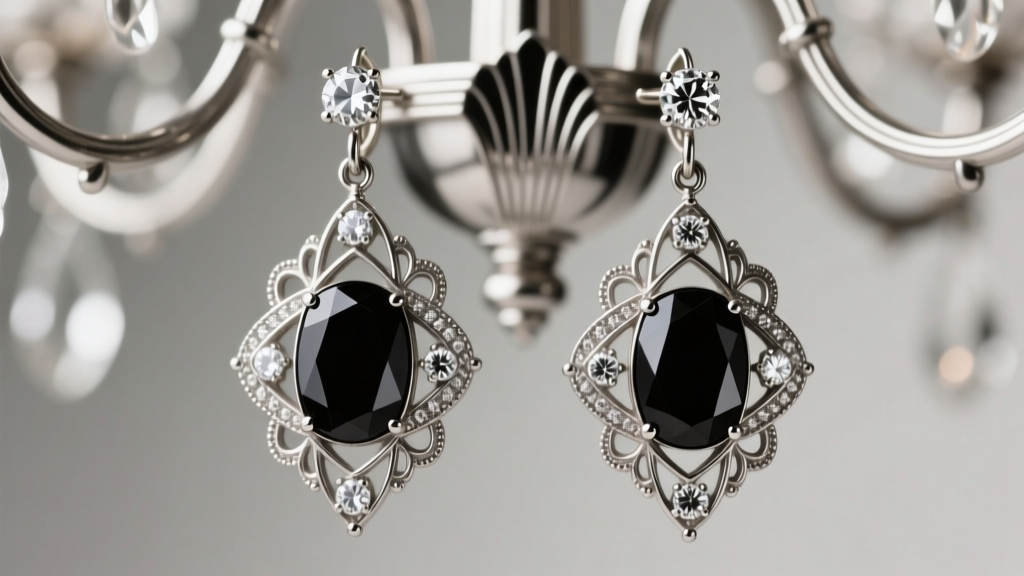
The material palette of the 1920s was defined by a stark contrast between icy white metals and vividly colored, opaque gemstones. Platinum was the undisputed king of the era. Its immense tensile strength allowed jewelers to create impossibly thin, lace-like filigree and openwork geometric patterns that would snap if crafted in gold. According to the Victoria and Albert Museum (V&A), the use of platinum enabled the signature "millegrain" technique—tiny, beaded edges applied to the metal that gave the jewelry a soft, textured glow under low lighting.
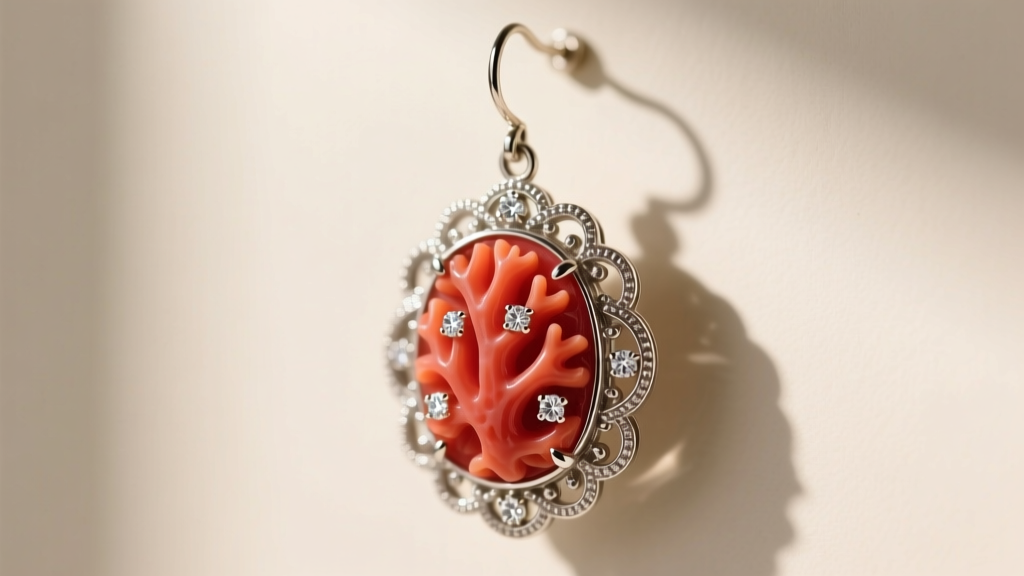
To contrast the white metal, designers utilized vibrant, opaque stones. Black onyx, carved coral, lapis lazuli, and jade were cut into geometric plaques or cabochons. However, the true hallmark of high-end 1920s earrings was the calibre cut. These were gemstones (often rubies, sapphires, or emeralds) custom-faceted and shaped to fit perfectly into a specific geometric channel or mosaic pattern within the platinum setting, leaving no visible metal gaps.
Diamond Cuts and Wire Gauges
The diamonds used in authentic 1920s pieces were predominantly Old European Cuts (OEC) or early transitional cuts. Unlike modern round brilliants, OECs featured high crowns, small tables, and large, chunky facets that were designed to sparkle in the dim, candlelit or early-electric environments of the era. Furthermore, the structural integrity of these heavy drops required substantial wire gauges. Authentic 1920s platinum drops typically utilized 18-gauge or even 16-gauge wire for the main structural hinges to prevent the heavy gemstone clusters from bending or warping over time.
Comparative Analysis: Authentic 1920s vs. Modern Art Deco Revivals
As we navigate the jewelry market in 2026, Art Deco revivals are highly sought after. However, distinguishing between a genuine Jazz Age antique and a modern reproduction requires a keen eye for manufacturing details. The table below breaks down the critical differences.
| Feature | Authentic 1920s Antique | Modern Reproduction (2026) |
|---|---|---|
| Primary Metal | Platinum or 18k White Gold | 14k White Gold, Palladium, or Platinum-plated silver |
| Diamond Cut | Old European Cut (OEC) or Transitional | Modern Round Brilliant or Lab-Grown OEC simulants |
| Black Accents | Natural Onyx or Black Enamel | Dyed Agate, Black Spinel, or Epoxy Resin |
| Clasp Mechanism | Screw-back or early Leverback | Friction Push-back or modern hinged Leverback |
| Structural Wire Gauge | 16g to 18g (Thick, rigid) | 20g to 22g (Thinner, lightweight) |
| Avg. Price Range | $4,500 - $18,000+ | $350 - $1,200 |
How to Style 1920s-Inspired Earrings Today
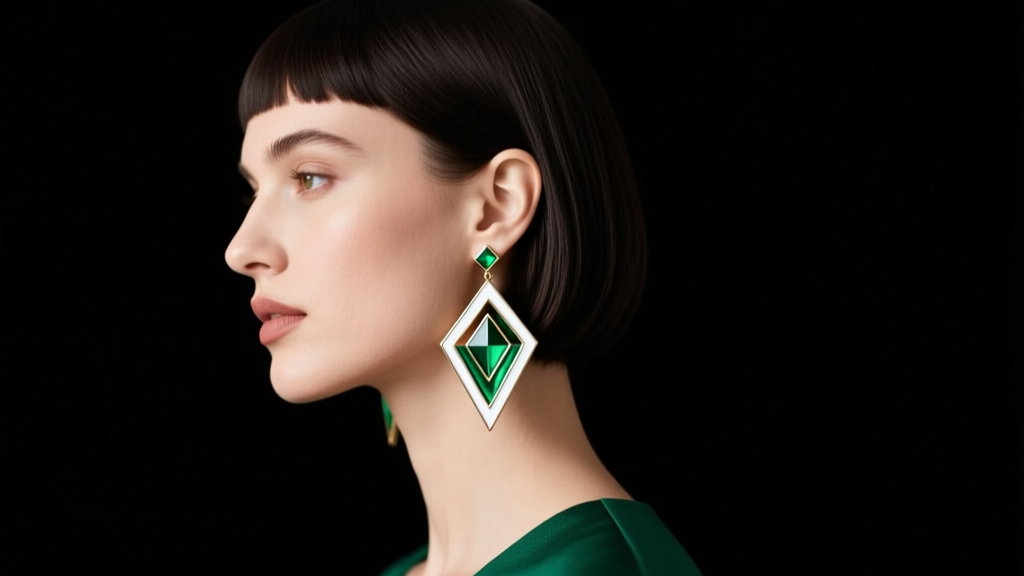
Integrating the bold geometry of 1920s earrings into a contemporary wardrobe requires balancing proportions. The golden rule of Art Deco styling is to let the earrings serve as the primary architectural element of your outfit. Because these pieces are inherently busy and highly detailed, they pair best with clean, minimalist necklines—think structured blazers, sleek slip dresses, or sharp turtlenecks.
When selecting a style based on face shape, the elongated, linear "girandole" or chandelier drops of the 1920s are exceptionally flattering for round or square face shapes, as the vertical lines create a lengthening illusion. Conversely, if you have a naturally long or oval face, avoid the extreme linear drops. Instead, opt for 1920s-style geometric cluster studs or wide, fan-shaped clip-ons that add horizontal volume and balance your facial proportions.
Sourcing and Authentication Tips for Collectors
For collectors hunting genuine antique pieces, authentication goes beyond merely looking for a maker's mark. The Gemological Institute of America (GIA) notes that many authentic 1920s pieces were never stamped with metal purities due to the customs and hallmarking laws of the time, particularly in the United States. Therefore, reliance on visual and tactile cues is paramount.
- Examine the Millegrain: Under a 10x jeweler's loupe, authentic hand-applied millegrain will show slight irregularities and soft wear. Modern CAD/CAM cast reproductions will have perfectly uniform, sharp, and identical beading.
- Check the Clasp Wear: Screw-back earrings from the 1920s should show distinct, smooth wear patterns on the threads and the pad that rests against the earlobe. A pristine screw-back mechanism on a supposedly 100-year-old earring is a major red flag.
- Assess the Patina: Platinum develops a soft, desirable patina over a century. If the white metal is blindingly bright and lacks any micro-scratches in the recessed filigree areas, it has likely been aggressively polished recently, or it is a modern white gold rhodium-plated replica.
"The true magic of 1920s Art Deco earrings lies not just in their geometric beauty, but in the sheer mechanical ingenuity required to make heavy platinum and stone structures swing fluidly with the wearer's movements without breaking."
Whether you are investing in a museum-quality platinum and onyx drop or selecting a modern, ethically sourced lab-giamond revival piece, understanding the structural and historical DNA of earrings in the 1920s ensures you appreciate the profound impact this brief, glittering decade had on the trajectory of fine jewelry design.


