2026 Style Guide: The Quiet Luxury of Little Earrings Stacking
Discover the 2026 trend of little earrings stacking. Learn expert tips on gauge sizes, material grades, and face-shape styling for micro-jewelry.

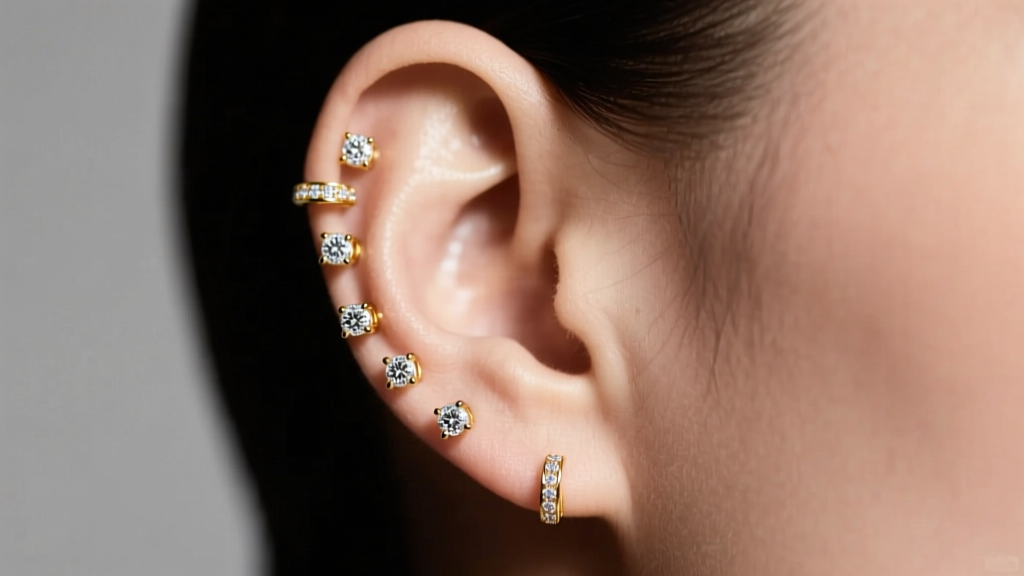
The jewelry landscape of 2026 has decisively pivoted away from maximalist, heavy silhouettes, embracing instead the hyper-refined world of micro-jewelry. At the forefront of this movement are little earrings—precision-engineered, petite pieces that prioritize high-impact minimalism over sheer volume. As style analysts at Jewel Style Radar, we have tracked this shift from the post-pandemic 'curated ear' trend into what we now call 'micro-curation.' This is not merely about wearing small studs; it is an architectural approach to ear styling that relies on exact gauge sizing, premium material grades, and deliberate spatial distribution.
Whether you are building a constellation cluster across your helix or anchoring a lobe stack with 2mm bezel-set diamonds, mastering the art of little earrings requires a deep understanding of body jewelry mechanics and facial proportion. Below, we break down the definitive 2026 style guide to petite ear candy, complete with material science, failure-mode troubleshooting, and expert stacking frameworks.
The Evolution of Micro-Curation in 2026
Historically, 'little earrings' were relegated to the realm of basic, mass-market sleepers or simple pearl studs. Today, they represent the pinnacle of quiet luxury. The modern consumer demands intricate detailing scaled down to millimeter-level precision. We are seeing a massive surge in micro-huggies measuring just 8mm in inner diameter, and threadless cartilage ends featuring sub-3mm gemstones.
This trend is heavily driven by advancements in CAD (Computer-Aided Design) casting and laser welding, which allow jewelers to create ultra-fine 14k and 18k gold structures that do not compromise on durability. According to industry analyses, the demand for melee diamonds (stones weighing less than 0.15 carats) has skyrocketed, as these are the primary gemstones used in high-end little earrings. The Gemological Institute of America (GIA) notes that while melee diamonds are small, their cut quality is paramount; a poorly cut 2mm diamond will appear dull, whereas an ideal-cut micro-stone will refract light brilliantly, giving little earrings their signature 'sparkle factor' without the need for large carat weights.
Anatomy of the Perfect Little Earring Stack
A successful micro-stack relies on varying the silhouette and respecting the anatomical limitations of the ear cartilage. The golden rule of 2026 is 'graduated spacing'—starting with slightly larger pieces at the lobe and scaling down to microscopic ends as you move up the helix.
| Placement | Ideal Gauge | Jewelry Type | Recommended Size |
|---|---|---|---|
| Standard Lobe | 20G (0.8mm) or 18G (1.0mm) | Micro-Huggie / Clicker | 8mm - 10mm inner diameter |
| Upper Lobe | 18G (1.0mm) | Threadless Labret Stud | 3mm - 4mm end |
| Helix | 16G (1.2mm) | Flat-Back Bezel Cluster | 2.5mm - 4mm end |
| Conch | 14G (1.6mm) or 16G (1.2mm) | Large Bezel / Micro-Shield | 5mm - 8mm end |
| Tragus | 18G (1.0mm) | Prong-Set Solitaire | 2mm - 3mm end |
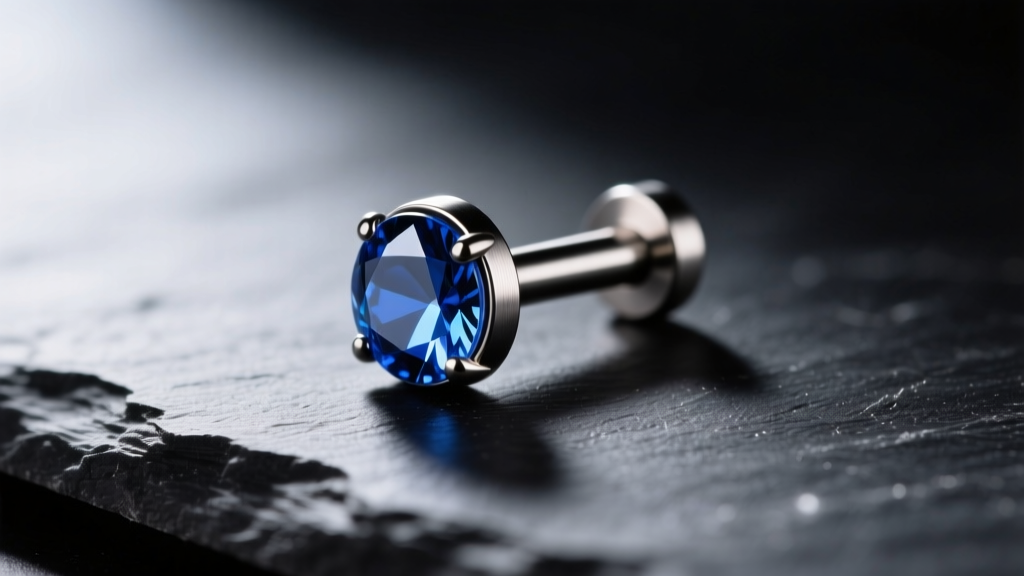
When executing this stack, the backing mechanism is just as critical as the front design. For cartilage placements, the Association of Professional Piercers (APP) strongly recommends internally threaded or threadless (push-pin) flat-back labrets over traditional butterfly friction backs. Butterfly backs harbor bacteria, create pressure necrosis on the cartilage, and are virtually impossible to secure properly on a micro-stud.
Material Science and Failure Modes
Because little earrings possess less surface area and finer structural components, material purity and mechanical integrity are non-negotiable. Here is what you need to know before investing in micro-jewelry:
The Hinge Failure in Micro-Huggies
One of the most common failure modes in little earrings is the snapping of the hinge on micro-huggies. When a huggie's wire thickness drops below 1.0mm to achieve a 'delicate' look, the hinge mechanism becomes a weak point. Repeated opening and closing will cause metal fatigue, especially in softer alloys like 22k gold or sterling silver. The Expert Fix: Opt for 14k or 18k solid gold huggies with a minimum wire thickness of 1.2mm, or switch to segment rings (which have no hinge and rely on tension) for a seamless, unbreakable alternative.
Implant-Grade Titanium vs. Gold Alloys
For newly pierced micro-placements (like a delicate high-helix or rook), ASTM F136 implant-grade titanium is the only acceptable material. It is entirely nickel-free and biocompatible. Once healed, you can transition to nickel-free 14k or 18k gold. Avoid 'gold-plated' or 'gold-vermeil' little earrings for cartilage piercings; the micro-friction of the post against the fistula will quickly wear away the plating, exposing the reactive brass or copper core underneath, leading to localized contact dermatitis.
Proportion and Face Shape Dynamics
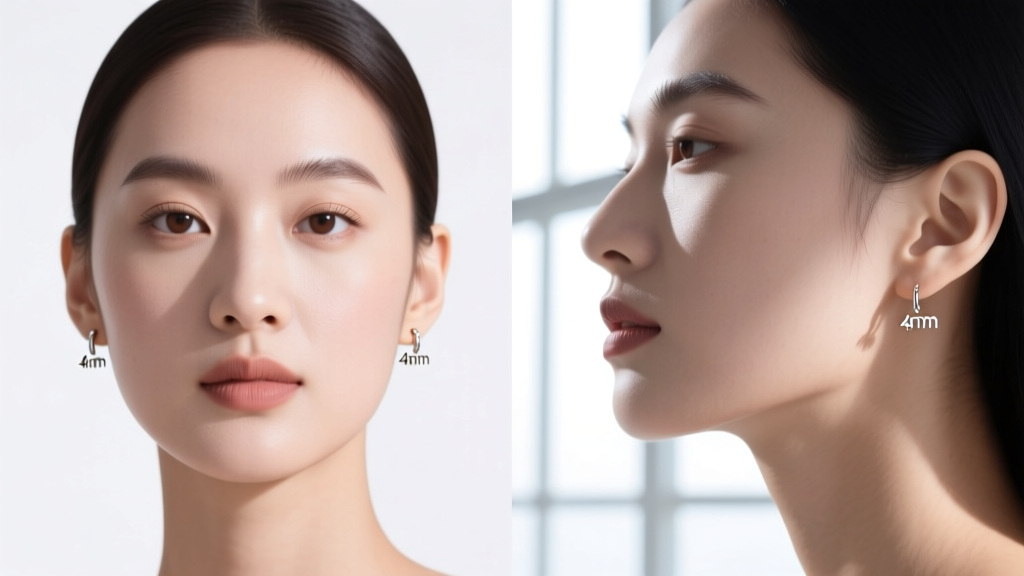
While the curated ear trend often focuses solely on the ear's anatomy, true style analysis requires considering how little earrings frame the face. Petite jewelry interacts with facial geometry differently than statement pieces.
- Round Face Shapes: To create the illusion of length, avoid clustering round micro-studs exclusively. Instead, incorporate linear little earrings, such as 15mm delicate chain threaders or micro-drop earrings featuring vertically set baguette diamonds. This draws the eye downward, elongating the jawline.
- Angular and Square Face Shapes: Soften sharp jawlines by utilizing round little earrings. A tight constellation of 2mm bezel-set round diamonds or seamless micro-huggies adds a softening, curved element that balances strong bone structure.
- Oval Face Shapes: The most versatile canvas. Oval faces can pull off the highly asymmetrical 'micro-mismatch' trend of 2026, where one ear features a dense cluster of geometric little earrings (like tiny princess-cut squares), while the other sports a single, solitary 3mm pearl stud.
Pricing and Investment Value
The micro-jewelry market is segmented into distinct pricing tiers based on material and gemstone origin. Understanding these tiers ensures you are paying for actual intrinsic value rather than brand markup.
Tier 1: Fashion & Plated ($30 - $80)
Sterling silver or brass with gold plating and cubic zirconia. Suitable for temporary wear on healed standard lobes, but highly discouraged for cartilage or long-term daily wear due to plating degradation and snag hazards.
Tier 2: Solid Gold & Lab-Grown ($150 - $450 per piece)
The sweet spot for the 2026 consumer. 14k solid gold little earrings featuring lab-grown diamonds. Lab-grown melee diamonds offer identical optical and chemical properties to mined stones but reduce the cost of a micro-cluster by up to 40%. Brands utilizing threadless systems in this tier offer the best balance of luxury and mechanical security.
Tier 3: Fine & Mined Heirloom ($600 - $1,500+ per piece)
18k gold or platinum settings featuring natural, VS-clarity melee diamonds. These little earrings are treated as fine jewelry investments, often featuring custom CAD designs and hand-set prongs that minimize the metal-to-stone ratio, maximizing light return.
The 2026 Verdict: Less Metal, More Precision
'The true luxury of 2026 is not found in the weight of the gold, but in the precision of the cut and the security of the mechanism. Little earrings are an exercise in intentional restraint.'
As we move through the year, the dominance of little earrings in the fine jewelry sector is a testament to the modern wearer's desire for jewelry that integrates seamlessly into an active, high-definition lifestyle. By prioritizing correct gauge sizing, demanding threadless or internally threaded mechanisms, and selecting ideal-cut micro-gemstones, you can build a curated ear that is as structurally sound as it is aesthetically breathtaking. Whether you are anchoring a lobe with a micro-huggie or mapping a helix with 2mm sapphire ends, remember: in the world of micro-jewelry, every millimeter matters.


