Are Lobe Wonder Earring Support Patches Worth the Cost?
We assess the true value of Lobe Wonder earring support patches versus generic alternatives, analyzing cost-per-wear, adhesive strength, and support.


The Heavy Earring Dilemma: Why Lobe Support Matters
For jewelry enthusiasts who favor statement pieces, vintage clip-ons converted to posts, or heavy gemstone chandeliers, earlobe fatigue is an unavoidable reality. The biomechanics of the earlobe are simple: it is composed of loose connective tissue, fat, and collagen, lacking the rigid cartilage structure found in the upper ear. When subjected to the sustained downward pull of a 15-gram drop earring, the tissue stretches, leading to the dreaded "droop" or, in severe cases, permanent earlobe clefting. According to research published by the National Library of Medicine, chronic mechanical stress from heavy jewelry is a leading cause of acquired earlobe deformities.
Enter the adhesive support patch. As of 2026, the market is saturated with options, but the original brand remains the most searched. When evaluating lobe wonder earring support patches against a flood of inexpensive generic alternatives and reusable silicone lifters, the question shifts from "do they work?" to "are they actually worth the premium?" This comprehensive budget and value assessment breaks down the material science, cost-per-wear economics, and real-world failure modes of earring support patches to help you make an informed purchasing decision.
Material Science: Brand Name vs. Generic Foam
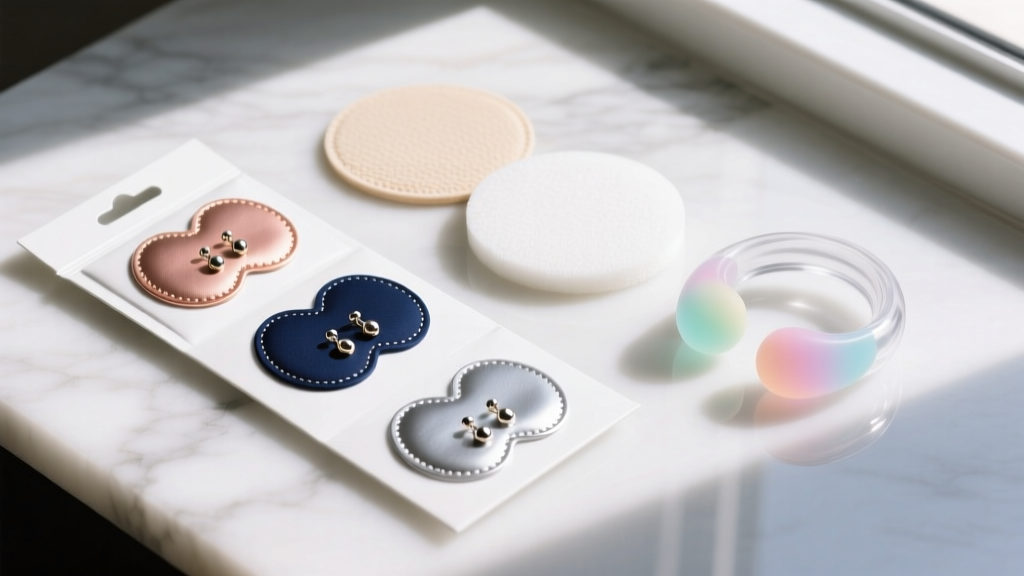
The original Lobe Wonder patches are constructed from a patented, medical-grade polyurethane foam coated with a hypoallergenic acrylic adhesive. Polyurethane is chosen for its micro-cellular structure, which allows it to compress under the weight of an earring post while rebounding just enough to distribute the sheer force across a wider surface area of the earlobe. This prevents the earring post from acting like a cheese wire against your skin.
Generic alternatives, often sold in bulk on e-commerce platforms for a fraction of the price, typically use EVA (ethylene-vinyl acetate) foam or standard polyethylene. EVA is denser and less breathable. While it provides adequate structural support for moderate-weight hoops, it lacks the skin-conforming flexibility of polyurethane. Furthermore, the American Academy of Dermatology notes that cheaper, unregulated adhesives frequently contain higher levels of acrylate monomers, which are a primary trigger for allergic contact dermatitis. If you have sensitive skin, the budget savings of generic patches may be negated by the cost of treating an adhesive rash.
Cost-Per-Wear Analysis: The Budget Verdict
To determine the true value, we must look beyond the sticker price and calculate the cost-per-wear (CPW) alongside durability. Below is a comparative breakdown of the current earring support market:
| Product Type | Avg. Cost (Pack) | Cost Per Wear | Best For | Durability |
|---|---|---|---|---|
| Lobe Wonder (Name Brand) | $12.00 (60 pairs) | $0.10 | Special events, heavy vintage clips | Single-use (8-12 hrs) |
| Generic Foam Patches | $6.00 (120 pairs) | $0.025 | Daily wear, moderate drops | Single-use (4-8 hrs) |
| Silicone Ear Lifters | $14.00 (3 pairs) | $0.15 (reusable) | Thick posts (16G-14G) | Reusable (up to 30x) |
| Acrylic Ear Splints | $18.00 (2 pairs) | $0.05 (reusable) | Stretched lobes, extreme weight | Reusable (indefinite) |
While the name brand patches cost four times as much per wear as generic foam, their superior adhesive formulation and 12-hour hold time make them the superior ROI for high-stakes environments like weddings or galas where a mid-day failure is unacceptable. For daily office wear with lightweight dangles, the generic patches offer undeniable budget value.
Real-World Failure Modes: When Patches Don't Work
Even the highest-rated lobe wonder earring support patches will fail if the physics of your specific jewelry are incompatible with the patch design. Understanding these failure modes is critical for maximizing your investment:
- The Gauge Mismatch: Standard earring posts are 20-gauge (0.81mm) or 18-gauge (1.02mm). The pre-punched hole in most foam patches is approximately 1.5mm. If you use a thin 22-gauge (0.64mm) post, the earring will pivot and spin within the patch hole, causing the patch to peel away from the skin. Patches work best with 16-gauge (1.29mm) or 14-gauge (1.63mm) posts that fill the hole snugly.
- Skincare Interference: The acrylic adhesive is completely defeated by lipids. If your earlobe has residual squalane oil, hyaluronic acid serums, SPF, or natural sebum, the patch will slide off within two hours.
- Humidity and Perspiration: Polyurethane foam is breathable, but the adhesive layer is not. In high-humidity environments or during physical activity, trapped moisture breaks the adhesive bond, leading to the "sliding droop" effect.
- Friction Back Placement: The most common user error is failing to push the earring back (butterfly clutch) completely flush against the back of the patch. If there is even a 1mm gap between the patch and the earring back, the leverage of a heavy drop earring will bend the post and rip the patch off the lobe.

Expert Application Protocol for Maximum ROI
To ensure you get the full 12-hour wear out of a single-use patch, follow this dermatologist-aligned application protocol:
- Prep the Canvas: Wipe the front and back of the earlobe with a 70% isopropyl alcohol pad. This strips away oils and dead skin cells. Allow it to air dry completely for 30 seconds.
- Apply and Pierce: Peel the patch and apply it to the back of the earlobe, aligning the pre-punched hole exactly with your piercing. Push the earring post through the hole.
- Lock it Down: Slide the friction back onto the post and push it firmly until it makes direct, tight contact with the back of the foam patch. You should feel slight resistance as the foam compresses.
Expert Alternatives for Chronic Lobe Fatigue
If you find that single-use patches are draining your jewelry budget, or if your piercings are already stretched from years of heavy wear, it is time to pivot to reusable structural supports. Silicone ear lifters (often shaped like small curved paddles) wrap around the post behind the lobe. They are vastly superior for 14G and 12G posts because the flexible silicone stretches to grip the thicker wire, eliminating the "hole mismatch" spin issue. They can be washed with mild soap and reused up to 30 times, making their long-term CPW highly competitive.
For extreme statement pieces exceeding 30 grams, foam patches are insufficient. In these cases, invest in clear acrylic ear splints. These rigid, contoured shields sit behind the lobe and distribute weight across the entire mastoid area, not just the piercing site. Alternatively, consult a bench jeweler to convert heavy post earrings into French wires or leverbacks, which naturally shift the center of gravity and allow the earring to hang from the curve of the ear rather than pulling directly down on the puncture wound.
Final Assessment: Should You Buy Them?
The Verdict: Lobe Wonder earring support patches are a highly effective, premium-priced consumable. They are absolutely worth the cost for occasional wear with heavy, 18G or 16G statement jewelry, provided you prep your skin with alcohol. However, for daily wearers or those utilizing thin 20G posts, generic foam patches or reusable silicone lifters offer a significantly better budget-to-value ratio.


