Long Chain Earrings Value Guide: Cost, Metals & Durability
Discover if long chain earrings offer true value. We analyze metal grades, pricing tiers, lobe tension risks, and durability to help you buy smart.

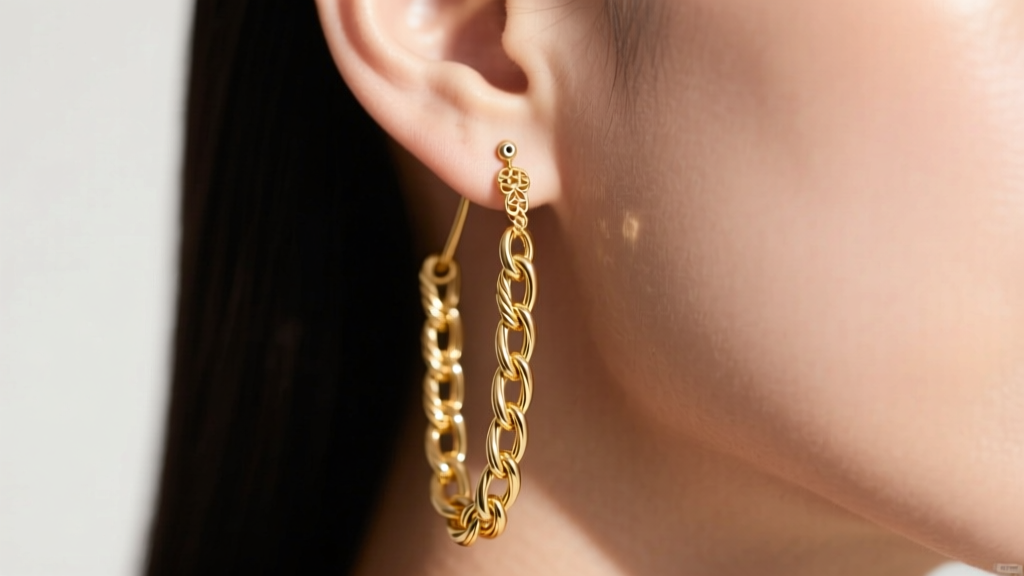
The Hidden Physics of Long Chain Earrings
When evaluating the true cost and value of long chain earrings, most buyers focus solely on the upfront price tag and the karat weight of the metal. However, as a domain expert in jewelry mechanics, I must direct your attention to the kinetic physics that dictate the lifespan of these pieces. Long chain earrings—whether they are threaders, lariat styles, or extended dangles—are subject to a phenomenon jewelers call the 'pendulum effect.' Every time you walk, turn your head, or lean forward, a chain extending two to four inches below the earlobe acts as a lever. This creates continuous kinetic friction against the fistula (the piercing hole) and places repetitive tensile stress on the chain links themselves.
Because of this pendulum effect, a budget-friendly pair of long chain earrings made from improper alloys or weak link structures will inevitably stretch, snap, or cause lobe trauma within months. In 2026, with precious metal markets experiencing significant volatility, understanding the intersection of material science, chain anatomy, and pricing tiers is essential for making a sound investment. This guide strips away the marketing fluff to reveal which long chain earrings actually hold their value and which are destined for the jewelry repair bin.
Material Grades and Tensile Strength: What Holds Up?
The metal you choose for a long chain earring is not just about skin sensitivity or color preference; it is fundamentally about tensile strength and work-hardening resistance. The longer the chain, the higher the mechanical stress it must endure.
The 14k vs 18k Gold Durability Paradox
Many consumers assume that 18k gold is inherently superior to 14k gold because of its higher pure gold content (75% vs 58.5%). While 18k is more valuable for heavy cast pieces or solid bands, it is actually a liability for delicate, long chain earrings. Pure gold is a notoriously soft metal. According to the Gemological Institute of America (GIA), the alloy metals mixed with gold (such as copper, silver, and zinc) provide structural integrity. A 20-gauge (0.8mm) 18k gold chain is highly susceptible to stretching and snapping under the pendulum weight of a long dangle. Conversely, 14k gold offers a vastly superior strength-to-weight ratio, making it the undisputed champion for long chain longevity. The slightly lower resale value of 14k is heavily offset by the fact that it will not stretch out of shape during daily wear.
The Vermeil Trap for Chain Links
Gold vermeil (pronounced ver-may) is heavily marketed as a budget-friendly alternative to solid gold. The Federal Trade Commission (FTC) mandates that vermeil must consist of a sterling silver base coated with at least 2.5 microns of gold. However, this standard was written with smooth bands and pendants in mind. In a chain earring, every single link rubs against its neighbor thousands of times a day. This micro-friction acts like sandpaper, wearing away the 2.5-micron gold layer at the contact points within three to six months. Once the sterling silver core is exposed to air and sulfur, those specific friction points tarnish black, creating weak spots that eventually snap. For long chain earrings, vermeil is a false economy; you will end up replacing the pair annually.

Chain Link Anatomy: Which Styles Survive Daily Wear?
Not all chains are created equal. The geometry of the link dictates how well the earring resists catching, tangling, and snapping. When shopping for long chain earrings, scrutinize the link type closely.
- Cable Chains: Composed of uniform oval or round links connected in a simple alternating pattern. This is the most durable and reliable choice for long chain earrings. The smooth, rounded edges resist catching on hair and sweaters, and the links distribute tension evenly.
- Box Chains: Made of square links that create a smooth, continuous tube. While visually striking, box chains are notorious for catching long hair. Worse, if a box chain is bent or kinked, the structural integrity of the square links is permanently compromised, leading to sudden snapping.
- Rolo Chains: Featuring interlocking round links that are uniform in size. Rolo chains are incredibly strong and resist pulling apart, but they are heavier than cable chains. For very long earrings (over 3 inches), the added weight of a rolo chain can cause earlobe fatigue.
- Snake Chains: Tightly joined wavy rings that form a flexible tube. Avoid these entirely for long dangles. Snake chains are highly prone to kinking, and once kinked, they cannot be repaired. They also trap skin oils and lotions between the microscopic gaps, leading to irreversible discoloration.
Price vs. Value Matrix: 2026 Market Assessment
To help you navigate the current market, I have categorized long chain earrings into three distinct pricing tiers. This matrix evaluates the true cost-per-wear and long-term value of each category.
| Tier | Price Range | Typical Materials | Expected Lifespan | Value Verdict |
|---|---|---|---|---|
| Budget | $25 - $65 | Gold Vermeil, Sterling Silver, Brass | 6 - 14 Months | Poor. High replacement rate due to friction-point tarnishing and link stretching. |
| Mid-Tier | $90 - $220 | Solid 10k or 14k Gold (Hollow or Semi-Solid Links) | 3 - 5 Years | Good. Best entry point for daily wear. 14k provides necessary tensile strength. |
| Investment | $280 - $600+ | Solid 14k or 18k Gold (Solid Links, Designer Craftsmanship) | Lifetime (with care) | Excellent for heirlooms, but 18k requires careful handling to avoid stretching. |
Lobe Health: Gauge Sizes and Weight Limits
The physical toll that long chain earrings take on your earlobes is a critical, often overlooked component of their overall value. A beautiful earring is worthless if it ruins your piercing. The standard gauge for most commercial threader chains is 22-gauge (0.65mm) or 20-gauge (0.8mm). While 22-gauge chains look incredibly delicate and elegant, they act like a cheese wire against the earlobe when subjected to the pendulum effect of a heavy dangle. Over time, this can cause the piercing to migrate, stretch, or even tear completely.
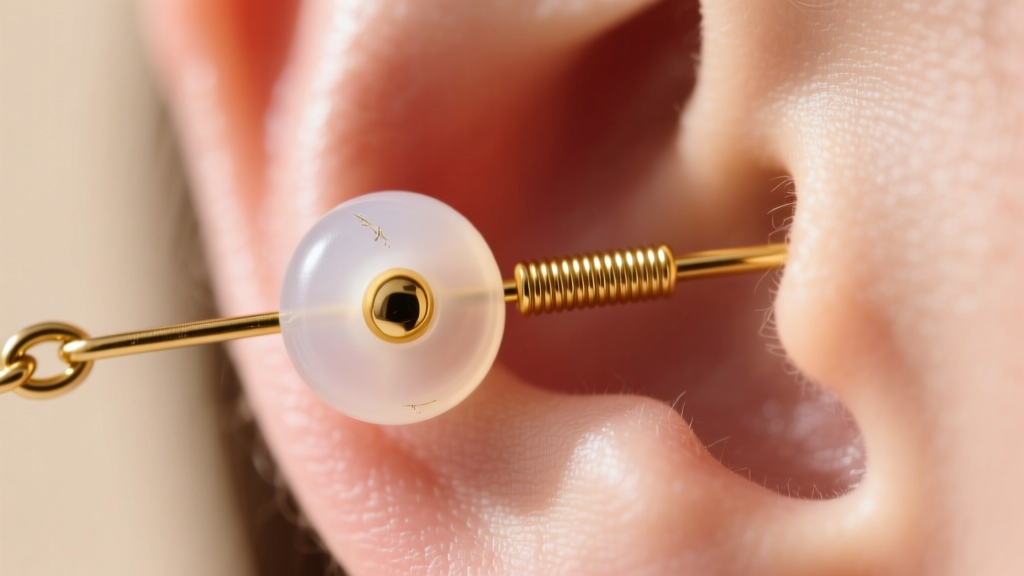
For long chain earrings that feature a heavy charm, gemstone, or extended metal drop at the bottom, you must insist on a minimum of 18-gauge (1.0mm) wire thickness for the portion of the chain that passes through the ear. Additionally, I strongly recommend utilizing clear silicone earring stoppers (O-rings) on the back of the threader chain. By securing the chain in place, you eliminate the sliding friction against the fistula and transfer the kinetic energy of the swing away from the delicate piercing tissue.
Final Verdict: How to Buy Smart
When assessing the budget and value of long chain earrings, you must look past the initial price tag and evaluate the mechanical realities of the piece. The ultimate sweet spot for value in 2026 is a 14k solid gold cable chain, measuring between 20-gauge and 18-gauge in thickness, priced in the $120 to $180 range. This specific configuration offers the tensile strength required to survive the pendulum effect, the smooth geometry needed to prevent hair tangling, and a material purity that will not tarnish at the friction points.
'Never compromise on the clasp or the jump ring connecting the chain to the ear wire. A master jeweler will always solder the jump ring shut on a long dangle earring; an open jump ring is a guaranteed failure point waiting to catch on a sweater and pull apart.'
By prioritizing structural metallurgy and link geometry over superficial brand markups, you can curate a collection of long chain earrings that remain elegant, intact, and highly valuable for decades.


