Long Earring Trends 2026: Architectural Drops & Styling
Discover 2026 long earring trends, from architectural drops to shoulder dusters. Learn how to style, balance weight, and choose the right gauge.
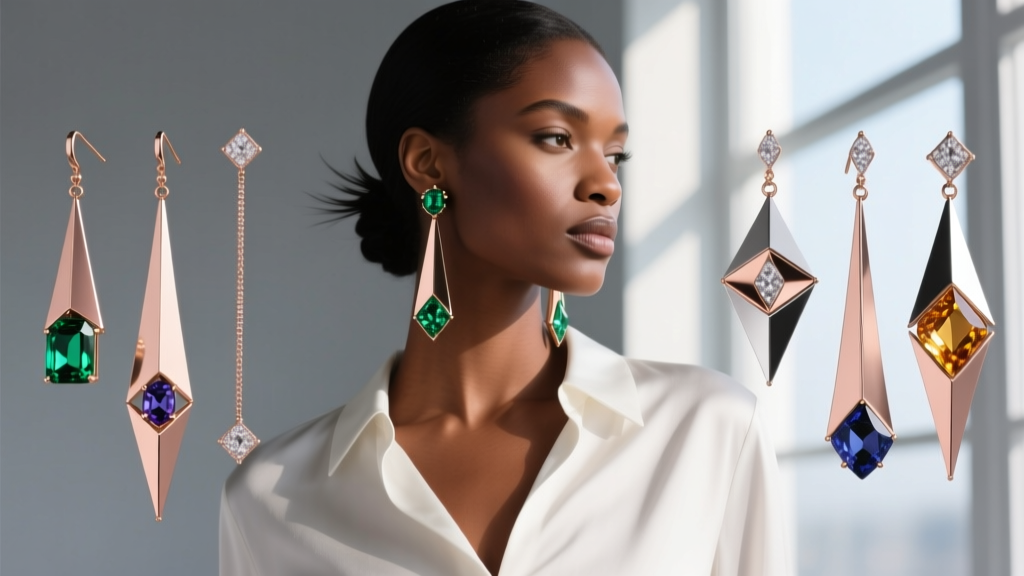
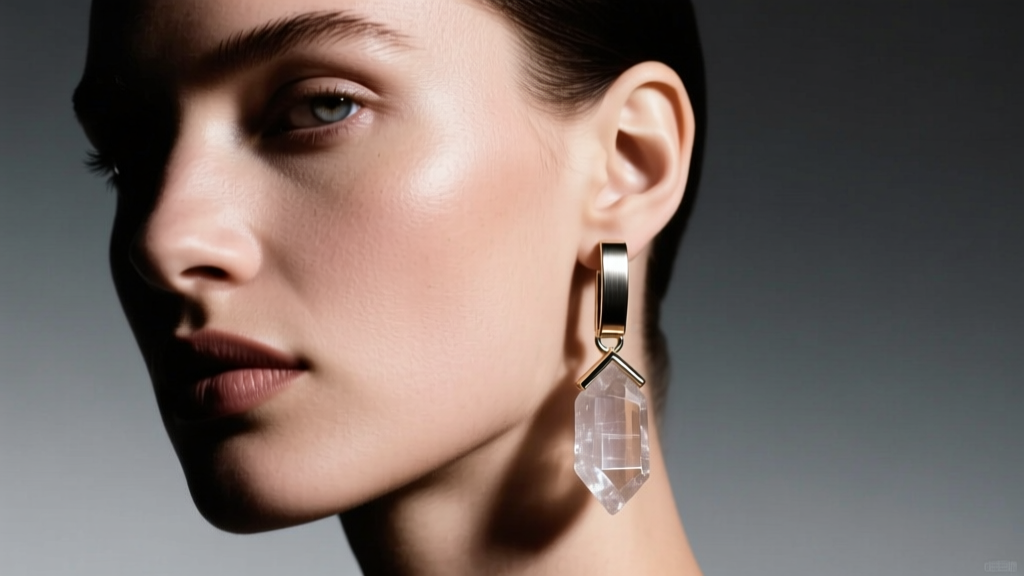
The evolution of ear adornment has reached a fascinating inflection point in 2026. Gone are the days when the long earring was strictly relegated to bohemian festival wear or characterized by heavy, tangled fringe. Today, the forefront of jewelry design is dominated by the "architectural drop"—a structural, kinetic, and meticulously engineered approach to elongated silhouettes. As designers push the boundaries of metallurgy and spatial design, wearing a long earring is no longer just a style choice; it is an exercise in wearable sculpture.
At Jewel Style Radar, we track the intersection of high-fashion runways and everyday wearability. This comprehensive guide breaks down the 2026 long earring landscape, offering deep-dive technical insights into weight distribution, gauge requirements, and face-shape engineering, ensuring your earlobe health remains as impeccable as your style.
The 2026 Shift: From Boho Tassels to Architectural Drops
Over the past decade, the long earring market was saturated with threader chains and beaded tassels. While those styles retain a niche audience, the 2026 trend cycle has pivoted sharply toward brutalist textures, mixed-metal oxidation, and kinetic hinges. According to trend forecasting from The Business of Fashion, consumers are increasingly investing in "statement architecture"—pieces that feature rigid geometric lines, asymmetrical counter-weights, and modular components.
This year’s premier long earring designs utilize negative space as a primary material. Instead of a solid cascade of metal, designers are employing open-framework polyhedrons and suspended tension-set gemstones. This not only creates a striking visual lightness but also solves the age-old problem of shoulder-duster earrings feeling like physical burdens by the end of the evening.
The Physics of the Long Earring: Weight, Gauge, and Lobe Health
The most critical, yet frequently ignored, aspect of buying a long earring is understanding the physics of the "fulcrum effect." A standard 1-inch stud weighing 10 grams exerts a relatively even downward force on the earlobe. However, a 3-inch long earring weighing the exact same 10 grams creates significantly more torque. Because the center of mass is further from the piercing hole, the downward rotational force on the bottom of the piercing channel is magnified, leading to the dreaded "cheese-cutter effect"—where the wire slowly slices through the tissue over time.
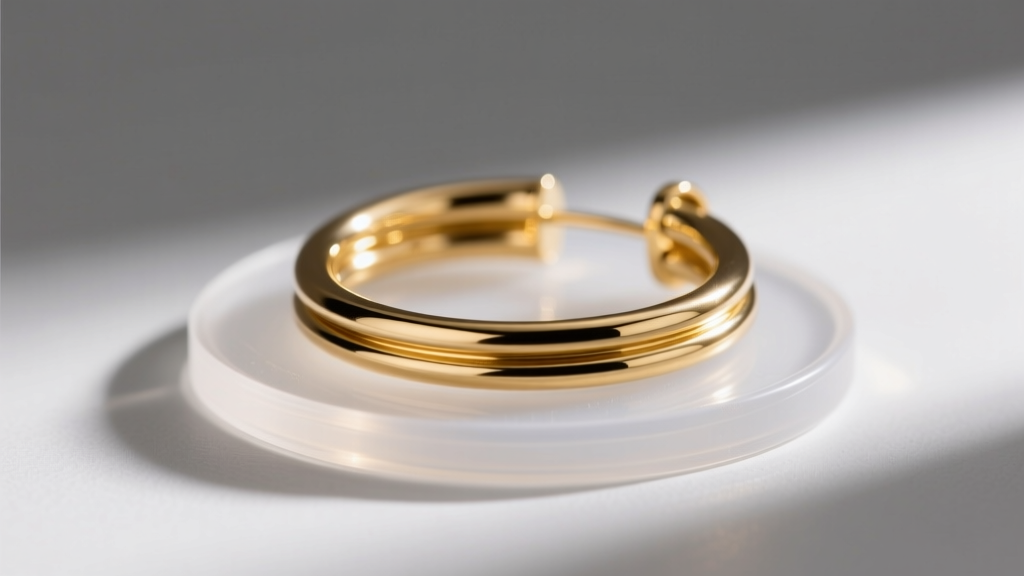
To mitigate this, you must pay strict attention to the wire gauge and support mechanisms of any elongated piece:
- 20-Gauge (0.81mm): The industry standard for lightweight fashion earrings. If your long earring exceeds 6 grams, a 20G wire will eventually cause lobe fatigue and stretching.
- 18-Gauge (1.02mm): The ideal sweet spot for medium-weight architectural drops (7 to 12 grams). It provides structural rigidity without requiring a stretched piercing.
- 16-Gauge (1.29mm): Essential for heavy, avant-garde shoulder dusters exceeding 12 grams. Note that many standard lobe piercings are done at 18G or 20G; inserting a 16G hook may require gradual stretching or cause micro-tears if forced.
Expert Troubleshooting: If you already own a heavy long earring with a thin wire, do not attempt to bend the wire to distribute weight. Instead, invest in high-density polyurethane support discs (like BlingGuard Pro). These discs sit flush against the back of the lobe, increasing the surface area and distributing the torque across a wider radius of tissue.
Face Shape Elongation: A Structural Framework
A long earring acts as a vertical plumb line, drawing the eye downward and fundamentally altering the perceived proportions of the jaw and neck. However, not all elongated silhouettes suit every facial geometry. Below is our 2026 structural framework for matching drop silhouettes to face shapes.
| Face Shape | Ideal Long Earring Silhouette | Designs to Avoid |
|---|---|---|
| Round | Linear, rectangular drops; sharp geometric angles that create vertical illusions. | Wide chandeliers, large circular hoops, and clustered teardrops. |
| Square | Curved, undulating drops; soft oval or teardrop shapes that soften a strong jawline. | Boxy, rigid geometric drops that mirror and exaggerate angularity. |
| Heart | Bottom-heavy chandeliers; triangular drops that add visual width to a narrow chin. | Inverted triangles or top-heavy designs that emphasize a wide forehead. |
| Oval | Highly versatile; striking brutalist or asymmetrical drops add avant-garde contrast. | Extreme lengths that drop past the collarbone, which can over-elongate the face. |
Material Spotlight: Titanium vs. Hollow-Form Gold
As the demand for longer, more dramatic earrings grows, metallurgists and jewelers have had to innovate to keep weights manageable. Two materials are currently dominating the 2026 long earring market, each with distinct pros, cons, and price points.
Grade 5 Titanium (Ti-6Al-4V)
Titanium is roughly 45% lighter than steel and possesses an exceptional strength-to-weight ratio. Designers are using CNC-milled Grade 5 titanium to create massive, 4-inch architectural cages that weigh under 5 grams. Furthermore, titanium is highly biocompatible. According to the Gemological Institute of America (GIA), titanium's hypoallergenic properties make it an excellent choice for those with nickel sensitivities, though it cannot be resized or easily soldered if a hinge breaks.
- Average Price Range: $60 – $180
- Best For: Hyper-sensitive ears, avant-garde brutalist designs, everyday heavy-wear.
Electroformed Hollow-Form 14k Gold
Traditional cast gold is incredibly dense. To create a 3-inch solid gold drop earring would result in a piece weighing over 30 grams—far too heavy for a standard lobe. The solution is electroforming, a process that deposits a microscopic layer of gold (usually 0.2mm to 0.4mm thick) over a wax or resin mold, which is later dissolved. This creates a hollow-form gold earring that looks substantial but is up to 60% lighter than its cast counterpart. The trade-off? Hollow-form gold is highly susceptible to denting if dropped on a hard surface.
- Average Price Range: $280 – $750
- Best For: Luxurious evening wear, classic teardrop silhouettes, lightweight volume.
Styling the Asymmetrical Long Earring
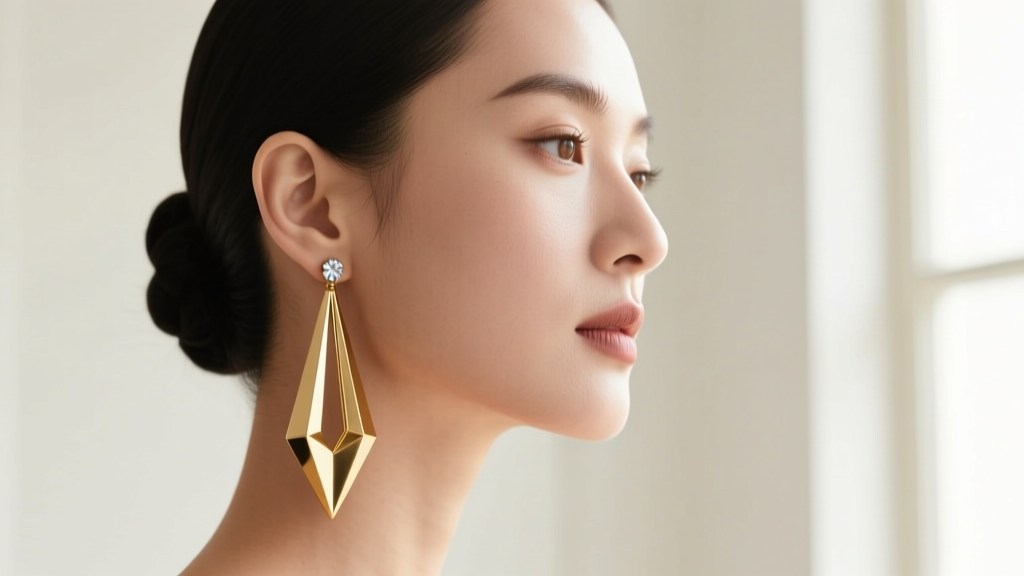
The most prominent styling directive for 2026 is the deliberate embrace of asymmetry. The "one-and-done" long earring trend involves wearing a single, highly complex shoulder-duster or architectural drop on one ear, while anchoring the opposite ear with a minimalist piece. This creates a dynamic visual tension that feels curated rather than accidental.
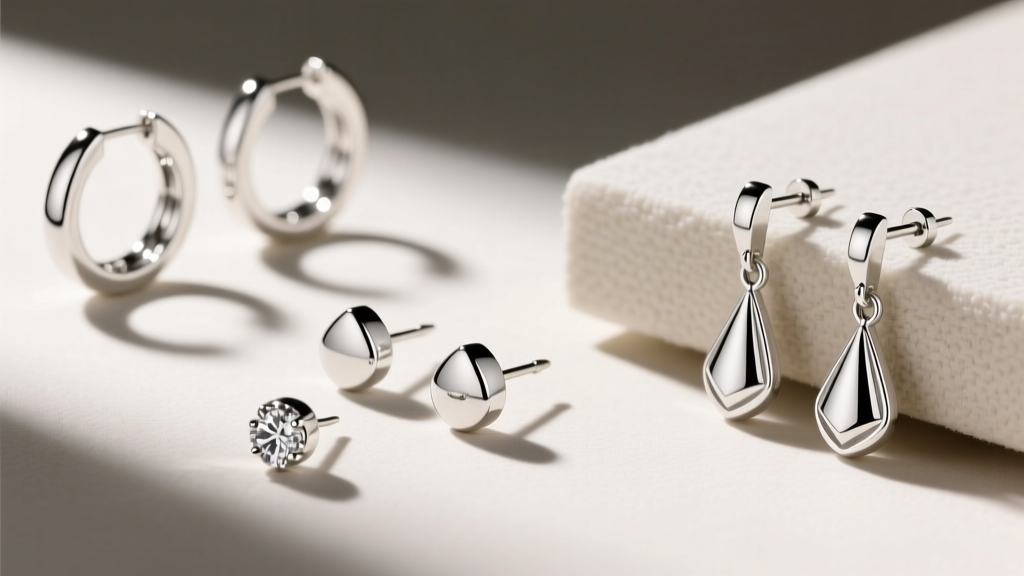
To execute this flawlessly, you must balance the visual weight, not just the physical weight. If your left ear features a 3-inch long earring composed of oxidized silver and raw quartz, your right ear should not be left completely bare, as this can make the styling look incomplete. Instead, opt for a high-impact huggie with a pavé diamond inset, or a 4mm solitaire stud. The small flash of light from the opposite ear provides a necessary counter-anchor, allowing the long earring to remain the undisputed focal point of your profile.
Maintenance and Storage of Elongated Silhouettes
The structural complexity of modern long earrings demands a rigorous approach to storage. Tossing a kinetic, multi-hinged drop earring into a communal jewelry box is a guaranteed way to result in tangled chains, bent tension-wires, and scratched gemstones.
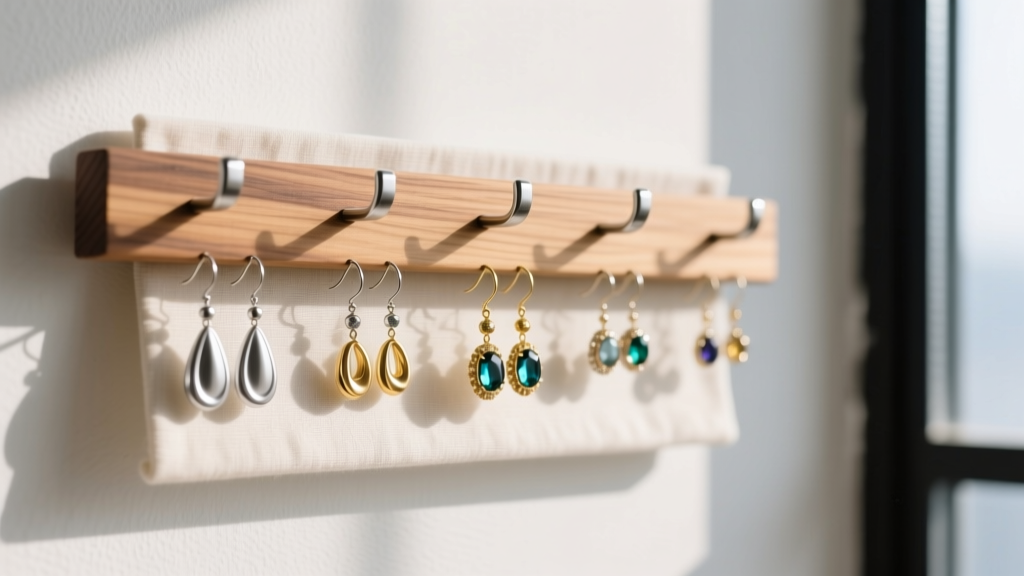
The Golden Rule of Elongated Storage: Never store a hinged long earring lying flat. Gravity and the weight of other jewelry will eventually warp the micro-hinges, causing the earring to hang crookedly when worn.
For pieces featuring chain elements or complex drop-wires, utilize a hanging acrylic display organizer or a slotted leather jewelry roll. Ensure the ear wire is securely fastened through the slot so the body of the earring hangs freely without compression. For hollow-form gold pieces, store them individually in anti-tarnish microfiber pouches to prevent friction scratches, which are highly visible on large, smooth, hollow surfaces.
By understanding the engineering, material science, and styling geometry behind the modern long earring, you can confidently invest in pieces that elevate your aesthetic while preserving the long-term health and integrity of your piercings.