Lotus Earrings Material Guide: Gold, Titanium & Enamel Compared
Discover the best materials for lotus earrings. Compare gold, titanium, enamel, and silver for durability, weight, and hypoallergenic properties.

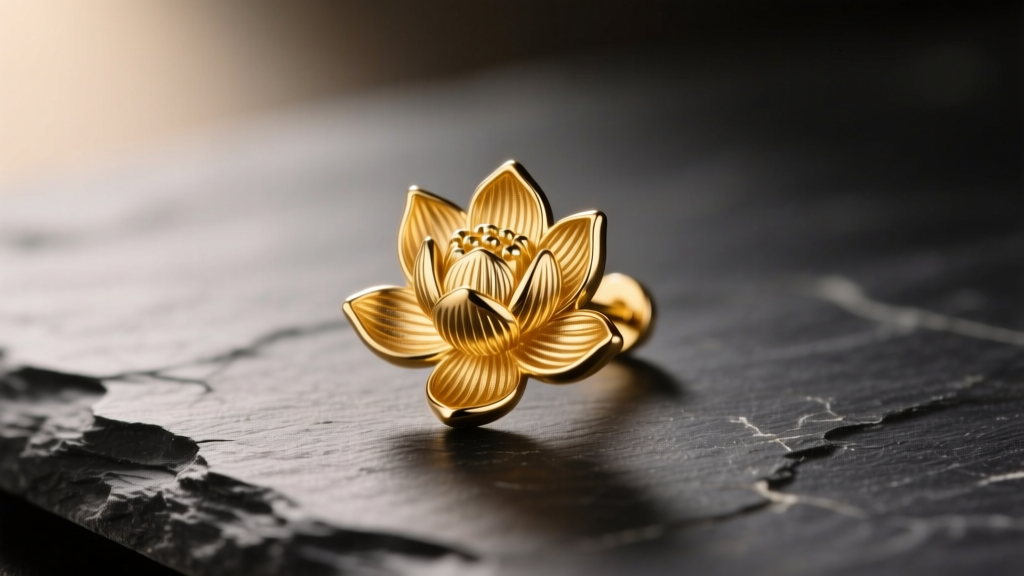
The lotus flower is a profound symbol of purity, resilience, and rebirth, making it one of the most sought-after motifs in fine and fashion jewelry. However, translating the intricate, multi-layered petals of a lotus into a wearable earring presents unique metallurgical and structural challenges. Unlike simple geometric studs, lotus earrings feature deep crevices, wide surface areas, and front-heavy silhouettes that dictate how different materials perform over time.
Whether you are browsing for delicate cartilage cuffs or bold lobe statements, understanding the material properties of your jewelry is essential for comfort, longevity, and skin health. This comprehensive guide breaks down the best materials for lotus earrings, comparing precious metals, hypoallergenic alternatives, and decorative finishes from a master jeweler's perspective.
The Anatomy of Lotus Earrings: Why Material Dictates Comfort
Before diving into specific alloys, it is crucial to understand why the lotus shape demands special material consideration. A typical lotus stud ranges from 10mm to 18mm in diameter. To capture the overlapping petals, jewelers must use casting or stamping techniques that result in varying metal thicknesses.
- Weight Distribution: The wide face of a lotus earring pushes the center of gravity away from the earlobe. Heavier materials will cause the earring to droop, stretching the piercing over time.
- Moisture Trapping: The deep grooves between lotus petals trap sweat, sebum, and shower water. Materials prone to oxidation or water damage will degrade faster in this specific shape.
- Structural Integrity: Thin petal edges are susceptible to bending and snagging on hair or clothing. Softer metals will lose their crisp detailing within months of daily wear.
Precious Metals: Solid Gold vs. Sterling Silver
Precious metals remain the gold standard for fine floral jewelry, but not all karats or alloys are created equal when it comes to intricate botanical designs.
14k vs. 18k Gold for Intricate Petal Work
While 18k gold (75% pure gold) offers a richer, warmer color, it is inherently softer due to its higher gold content. For a lotus earring with delicate, protruding petal tips, 18k gold is prone to bending and scratching. 14k gold (58.5% pure gold) is the superior choice for lotus motifs. The higher alloy content (usually copper, silver, or zinc) provides the tensile strength needed to maintain sharp petal veining and resist deformation.
Pricing Note: Expect to pay between $150 and $400 for a high-quality, solid 14k gold lotus stud weighing approximately 2.5 to 3.5 grams. Beware of 'gold vermeil' lotus earrings; the friction of hair and the pooling of moisture in the petal grooves will cause the thin gold layer to wear off rapidly, exposing the base metal beneath.
The Tarnish Trap in Sterling Silver Lotus Designs
Sterling silver (.925) is an affordable and popular choice for lotus earrings, typically ranging from $30 to $90. However, silver reacts with sulfur in the air and on the skin to form silver sulfide (tarnish). In a smooth, polished hoop, tarnish is easily wiped away. In a lotus earring, tarnish aggressively accumulates in the deep recesses between the petals, creating a dark, muddy appearance that is incredibly difficult to polish out without specialized tools.
If you choose silver, look for pieces that are heavily rhodium-plated. Rhodium provides a bright, tarnish-resistant barrier, though it will eventually wear thin in high-friction areas.
Hypoallergenic Alternatives: Implant-Grade Titanium & Niobium
For those with contact dermatitis or metal sensitivities, the deep crevices of a lotus earring can become a nightmare if the metal contains nickel. According to the American Academy of Dermatology, nickel allergy is the most common cause of allergic contact dermatitis, often exacerbated by trapped moisture in jewelry grooves.
ASTM F136 Titanium: The Ultimate Biocompatible Canvas
Not all titanium is equal. When shopping for hypoallergenic lotus earrings, you must look for ASTM F136 implant-grade titanium. This specific alloy (Ti-6Al-4V ELI) is completely nickel-free and is the exact material used in surgical implants. It is incredibly lightweight—a 15mm titanium lotus stud weighs roughly 40% less than its 14k gold counterpart, completely eliminating the 'drooping earlobe' issue.
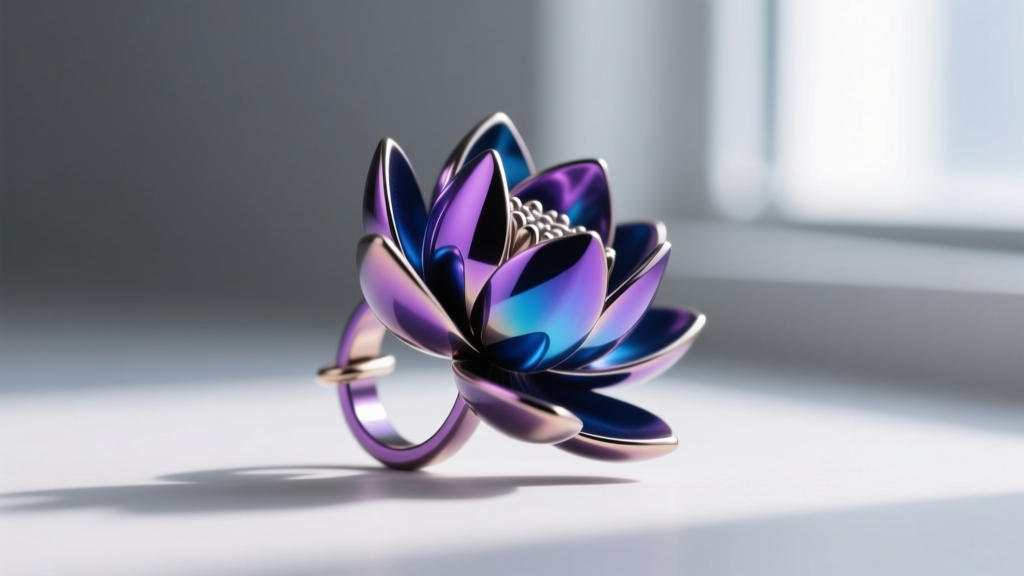
Furthermore, titanium can be anodized. By applying an electrical current, jewelers alter the thickness of the titanium oxide layer on the surface, creating vibrant, iridescent colors (like deep purples, blues, and golds) without using any dyes, resins, or allergenic plating. This makes anodized titanium lotus earrings a masterpiece of both safety and color.
Niobium: The Malleable Alternative
Niobium is another highly biocompatible, nickel-free metal. It is slightly heavier than titanium but softer, making it easier for jewelers to hand-carve or stamp highly detailed lotus petal textures. It also takes anodization beautifully, often achieving deeper, darker hues like midnight blue and rich magenta.
Decorative Finishes: Enamel, Resin, and Wood
To capture the vibrant pinks, whites, and greens of a real lotus flower, jewelers often turn to surface treatments. The durability of these treatments varies wildly.
Vitreous Enamel vs. Cold Enamel (Resin)
Vitreous enamel is created by fusing powdered glass to a metal base (usually gold or copper) in a kiln at temperatures exceeding 1,400°F. The result is a brilliant, scratch-resistant, and waterproof finish that will not yellow or fade. According to the Gemological Institute of America (GIA), vitreous enamel has been used for centuries due to its permanent luminosity. However, it is glass-like and can chip if the earring is dropped on a hard tile floor.
Cold enamel (epoxy resin) is a modern, cheaper alternative. It is painted on and air-dried. While it allows for complex gradients on lotus petals, resin is highly susceptible to UV degradation. A resin lotus earring worn daily in the sun will yellow and become brittle within 12 to 18 months.
Material Comparison Matrix
| Material | Avg. Weight (12mm) | Allergy Risk | Maintenance Level | Est. Price Range |
|---|---|---|---|---|
| 14k Solid Gold | 2.5g - 3.5g | Low (if nickel-free) | Low | $150 - $400 |
| .925 Sterling Silver | 2.0g - 3.0g | Moderate | High (tarnish) | $30 - $90 |
| ASTM F136 Titanium | 1.2g - 1.8g | None | Very Low | $40 - $120 |
| Vitreous Enamel on Gold | 3.0g - 4.5g | Low | Moderate (chipping) | $200 - $600 |
| Cold Enamel (Resin) | 1.5g - 2.5g | Low | High (yellowing) | $20 - $60 |
Sizing, Gauge, and Backing Mechanics for Wide Silhouettes
The material of the earring face is only half the equation; the post and backing mechanics are where many lotus earrings fail. Because a lotus design is wide and flat, it acts like a lever against the earlobe.
The Danger of 20-Gauge Posts
Most commercial earrings use 20-gauge (0.81mm) posts. If a 14k gold lotus earring weighs 3.5 grams, a 20g post will physically bend under the weight, causing the flower to point downward or sideways. For any lotus stud over 10mm in diameter, insist on an 18-gauge (1.02mm) or 16-gauge (1.29mm) post. This thicker wire provides the necessary rigidity to keep the lotus facing forward.
Upgrading the Backing
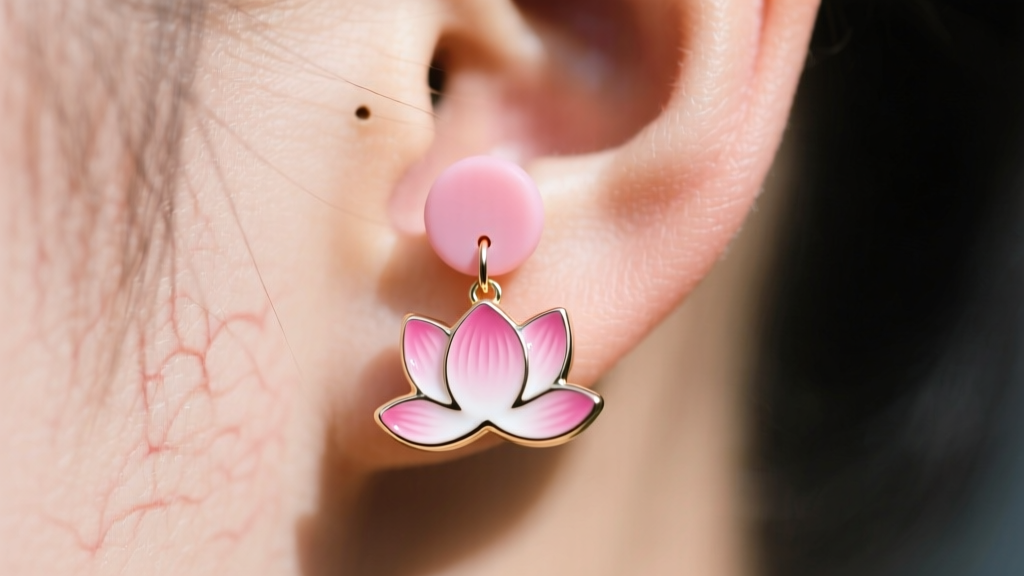
Standard 'butterfly' friction backs concentrate the earring's weight onto a tiny 2mm point on the back of your earlobe, leading to painful pressure sores. For lotus earrings, you must distribute the weight. Swap standard backs for 10mm flat silicone disc backs or invest in la pousette (screw-back) mechanisms. The wide disc acts as a supportive platform, holding the heavy floral face perfectly flush and comfortable against the lobe all day.
Care and Maintenance: Cleaning Crevices in Floral Motifs
Maintaining the brilliance of lotus earrings requires specific cleaning protocols due to their textured topography.
- For Gold and Titanium: Use a few drops of mild dish soap in warm water and a soft-bristled baby toothbrush. Gently agitate the bristles into the petal grooves to dislodge sebum and dead skin cells. Rinse and pat dry with a microfiber cloth.
- For Sterling Silver: Avoid liquid 'silver dip' chemicals if your lotus earring has an intentionally oxidized (darkened) background meant to highlight the raised petals. Silver dip will strip the oxidation, leaving the earring looking flat and washed out. Instead, use a treated polishing cloth, folding the edge to reach into the deepest crevices.
- For Enamel: Never put vitreous enamel lotus earrings in an ultrasonic cleaner. The high-frequency vibrations can cause micro-fractures in the glass enamel, leading to catastrophic chipping. Stick to gentle hand-washing.
Jeweler's Tip: Always put your lotus earrings on after applying hairspray, perfume, and lotions. The chemical solvents in cosmetics can degrade resin finishes and leave a cloudy, difficult-to-remove film over intricate metal veining.
Final Thoughts on Selecting Your Lotus Earrings
Choosing the right material for your lotus earrings is a balance of aesthetics, budget, and anatomical reality. If you prioritize heirloom durability and crisp detailing, 14k solid gold is unmatched. If you require absolute hypoallergenic safety and lightweight comfort for stretched or sensitive lobes, anodized ASTM F136 titanium is the modern pinnacle of jewelry engineering. By matching the material properties to the unique structural demands of the lotus motif, you ensure your floral jewelry blooms beautifully for a lifetime.


