Expert Care and Cleaning for 2.5 Inch Hoop Earrings
Learn expert cleaning and maintenance tips for 2.5 inch hoop earrings. Protect hinges, prevent tarnish, and keep your statement hoops shining.

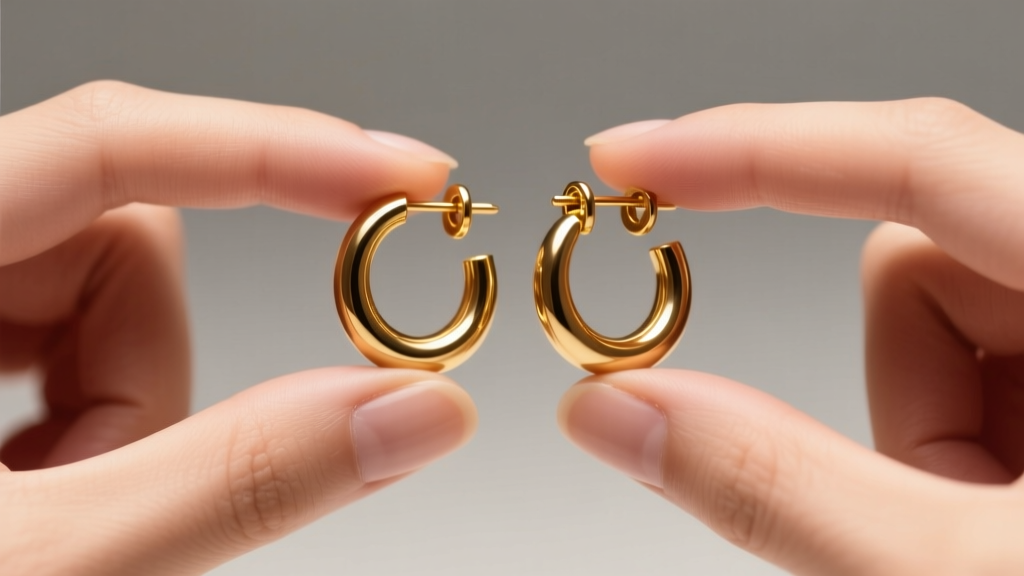
Statement jewelry demands statement-level maintenance. When you invest in 2.5 inch hoop earrings (approximately 63.5mm in diameter), you are wearing a piece of architecture that interacts dynamically with your movements, hair, and clothing. Unlike small studs or huggies, large-diameter hoops are subject to unique mechanical stresses, leverage issues, and accelerated tarnishing due to their expansive surface area.
Whether your hoops are solid 14k gold, sterling silver, or gold vermeil, treating them with a generic, one-size-fits-all cleaning approach is a fast track to ruined finishes and bent wires. In this comprehensive guide, we break down the exact material science, mechanical vulnerabilities, and professional cleaning protocols required to keep your 2.5 inch hoops in pristine condition for decades.
The Physics of Large Hoops: Gauge and Leverage
Before applying any cleaning solution, you must understand the structural vulnerabilities of a 63.5mm drop. The sheer size of a 2.5 inch hoop creates a lever effect on your earlobe and, more importantly, on the earring's post and hinge.
If your hoops are crafted from wire thinner than 18-gauge (1.02mm), they are highly susceptible to warping from the simple friction of pulling a sweater over your head. For a 2.5 inch diameter, expert jewelers recommend a minimum of 16-gauge (1.29mm) or even 14-gauge (1.63mm) wire to maintain structural rigidity. If your hoops are hollow tubing rather than solid wire, they are lightweight but incredibly prone to micro-dents that cannot be buffed out at home.
Pro Tip: Always put your large hoops in after your hair and makeup are completely finished, and take them out before changing clothes. Snagging a 2.5 inch hoop on a neckline is the number one cause of snapped posts and torn earlobes.
Material-Specific Cleaning Protocols
Because 2.5 inch hoops cover a large surface area, they accumulate skin oils, lotions, and environmental pollutants much faster than smaller jewelry. However, the cleaning agent you choose must be matched precisely to the metal's composition. According to the Gemological Institute of America (GIA), harsh chemicals can permanently alter the surface tension and luster of precious metals.
| Material | Ideal Cleaning Agent | Dwell Time | Critical Risks to Avoid |
|---|---|---|---|
| Solid 14k/18k Gold | Mild dish soap (phosphate-free) + warm distilled water | 5-10 minutes | Bleach or chlorine (causes irreversible stress corrosion cracking) |
| Gold Vermeil | Damp microfiber cloth only; no soaking | N/A (Wipe gently) | Any abrasive (baking soda, toothpaste) will strip the 2.5-micron gold layer |
| Sterling Silver | Specialized silver dip (thiourea-based) for heavy tarnish | 10-30 seconds | Leaving in dip too long causes a white, cloudy oxidation layer |
| Brass / Bronze | Lemon juice and coarse salt paste | 2-3 minutes | Exposure to moisture without thorough drying causes rapid verdigris (green rot) |
The Step-by-Step Manual Cleaning Routine
While ultrasonic cleaners are a staple in professional jewelry workshops, they are highly dangerous for large hoop earrings. The 40kHz high-frequency vibrations can easily loosen tension settings if your hoops feature gemstones. Furthermore, if your 2.5 inch hoops are made of hollow tubing, ultrasonic waves can force water through microscopic seams, leading to internal corrosion and a permanent, dull rattling sound.
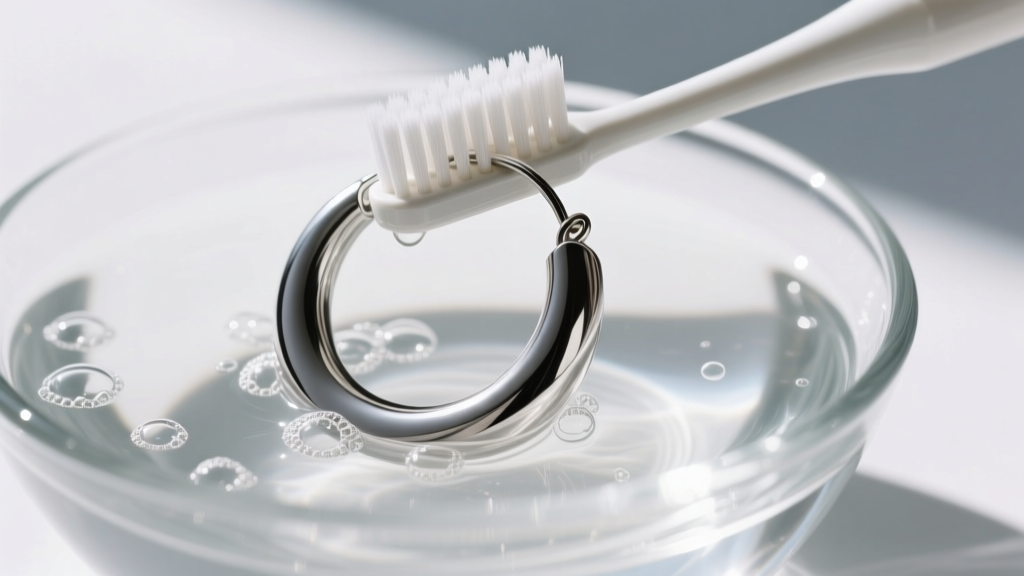
1. The Soak (Solid Metals Only)
Mix three drops of phosphate-free dish soap into a bowl of warm distilled water. Submerge your solid gold or platinum hoops for exactly 10 minutes. This breaks down the lipid bonds of sebum and cosmetic buildup without attacking the metal.
2. The Agitation
Use a baby toothbrush (which features ultra-soft bristles) or a dedicated, brand-new makeup brush. Gently sweep along the inner curve of the hoop and the textured areas. Never use stiff-bristled nail brushes or toothpaste, as the silica in toothpaste acts as a micro-abrasive that will leave thousands of microscopic scratches across the expansive surface of a 2.5 inch hoop, dulling its mirror finish.
3. The Rinse and Dry
Rinse under a gentle stream of lukewarm water. Immediately pat dry with a lint-free microfiber cloth. Avoid cotton balls or paper towels; the fibers will snag on the clasp mechanisms and leave behind lint that is incredibly difficult to extract from a saddle hinge.
Hinge and Clasp Maintenance: The Hidden Failure Points
The most critical component of any large hoop is the clasp. A 2.5 inch hoop carries significant kinetic energy when you walk or turn your head, placing repetitive stress on the hinge.
- Saddle Hinges: Common on classic thick hoops. The tiny groove where the post clicks into the receiver tube frequently traps lotion and dead skin cells. When this happens, the clasp loses its satisfying 'click' and becomes loose. Use a 0.4mm interdental brush (the kind used for braces) dipped in rubbing alcohol to gently ream out the receiver tube.
- Continuous / Endless Hoops: These feature a thin wire post that bends slightly to snap into the opposite hollow end. Never force these. If the post becomes misaligned, use two pairs of nylon-jawed pliers to gently twist the wire back to a 90-degree angle relative to the hoop's plane. Metal fatigue from over-bending will snap a continuous hoop post within 3 to 5 adjustments.
- Clicker Hinges: Often found on cartilage or daith hoops, but sometimes adapted for large lobes. The internal spring mechanism is delicate. If a clicker stops snapping shut, a single drop of mineral oil applied with a sewing needle to the hinge pin will restore its function.
Proper Storage to Prevent Warping and Tarnish
Because of their wide diameter, 2.5 inch hoops should never be tossed loosely into a jewelry box. Laying them flat in a crowded drawer invites warping from the weight of other pieces and guarantees deep scratches.
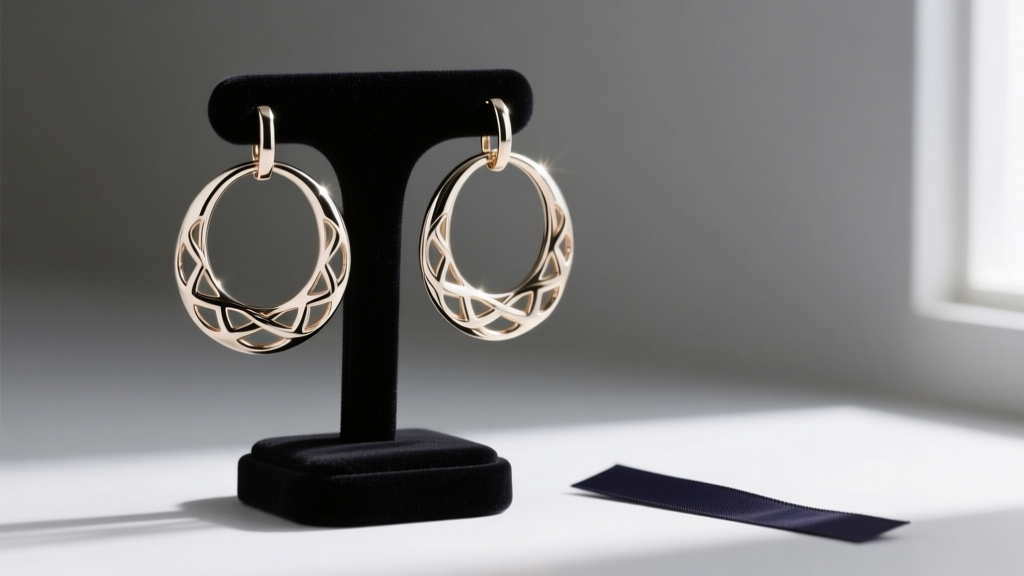
The Silver Institute notes that silver tarnish is primarily caused by hydrogen sulfide in the ambient air. Because large hoops have maximum surface exposure, they must be stored in an airtight environment.
- Hang Them: Use a velvet-lined jewelry stand with individual pegs. Hanging allows the hoops to rest in their natural gravitational plane, preventing the wire from bending over time.
- Anti-Tarnish Strips: If you must store them in a box or pouch, place a 3M anti-tarnish strip inside the enclosure. These strips absorb sulfur compounds and will protect the expansive surface area of your hoops for up to 12 months.
- Ziplock with a Caveat: If using plastic bags, ensure they are made of polyethylene (which is sulfur-free). Avoid PVC or rubber bands, which emit gases that cause rapid, severe blackening of sterling silver.
When to Seek Professional Restoration
Home maintenance can only go so far. If your 2.5 inch gold vermeil hoops have faded to reveal the silver or brass base beneath, no amount of polishing will restore them. They require professional electroplating to re-apply the 2.5-micron gold layer. Similarly, if the post of a soldered hinge has sheared off, do not attempt to glue it. A professional jeweler can laser-weld the post back onto the hoop in minutes, leaving zero visible scorch marks and restoring the structural integrity required to support the weight of a large-diameter earring.


