Material Guide: Earrings Double Stud and Jacket Configurations
Discover the best metals for earrings double stud and jacket setups. Compare titanium, gold, and steel for multi-point lobe contact and allergy safety.

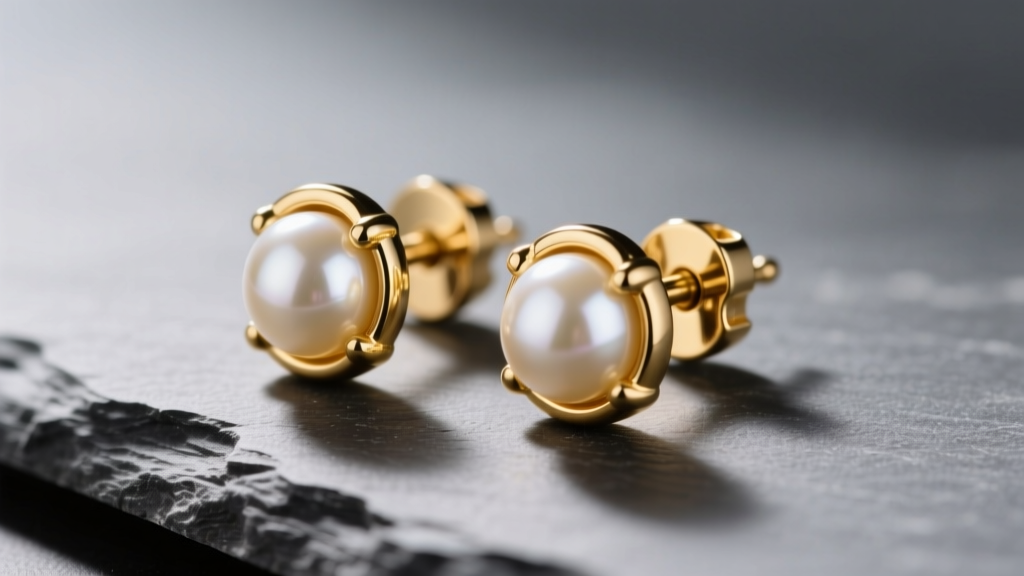
The Biomechanics of Earrings Double Stud Setups
When curating a multi-piercing setup or wearing front-and-back jacket styles, the physical mechanics of your jewelry change drastically. Unlike a standard single-front stud, an earrings double stud configuration—whether achieved through a single post with a decorative front and back (often called a jacket or tribal earring) or by wearing two distinct studs in adjacent first and second lobe piercings—creates a unique biomechanical environment. The earlobe tissue is effectively 'splinted' between two points of rigid contact. This multi-point compression alters how weight is distributed, how the fistula (the piercing channel) bears sheer stress, and how the skin reacts to prolonged metal exposure.
Because double stud setups restrict the natural micro-movements of the earlobe, the choice of metal is not merely an aesthetic decision; it is a structural and dermatological necessity. The friction between two metal bases, the torque applied when securing the backing, and the potential for galvanic reactions when mixing metals require a rigorous understanding of material properties. In this guide, we break down the exact metallurgical grades, hardness ratings, and failure modes associated with multi-point lobe jewelry.
Material Breakdown: Grading Metals for Multi-Point Contact
The surface area of metal touching the skin increases significantly with jacket styles and adjacent double piercings. This amplifies both the benefits of hypoallergenic metals and the risks of reactive alloys.
Implant-Grade Titanium (ASTM F136)
For any fresh piercing or highly reactive earlobe, ASTM F136 implant-grade titanium remains the undisputed baseline. According to the Association of Professional Piercers, this specific alloy contains zero nickel and boasts a Vickers hardness (HV) of approximately 350. This high hardness is critical for the posts of double stud earrings, as the thicker, heavier backing plates of jacket styles exert lateral torque on the post when being fastened. Titanium resists bending and will not warp under the pressure of a heavy front-and-back configuration, ensuring the fistula remains straight and un-irritated.
14k and 18k Solid Gold (Nickel-Free Alloyed)
Gold is a staple for luxury double stud sets, but purity matters immensely. Pure 24k gold is too soft (approx. 25 HV) to function as a structural post. Therefore, jewelers alloy it with copper, silver, and sometimes palladium. 14k gold (58.5% pure) is generally superior to 18k gold for the structural components of an earrings double stud setup. The higher copper and silver content in 14k gold increases its Vickers hardness to roughly 160 HV, compared to 18k gold's 130 HV. This extra rigidity prevents the post from bending when adjusting heavy decorative backs. However, buyers must explicitly verify that white gold is alloyed with palladium rather than nickel, as nickel-based white gold is a primary culprit for severe contact dermatitis in multi-point jewelry setups.
Niobium vs. 316L Surgical Steel
Niobium is highly biocompatible and nickel-free, making it an excellent alternative to titanium for allergy sufferers. However, niobium is significantly softer and denser. In a heavy double stud jacket, a niobium post may bend over time, and the overall weight of the jewelry can drag on the lobe. Conversely, 316L Surgical Steel contains 8-10% nickel. While the nickel is largely trapped in the alloy's crystalline matrix, the extended skin contact and friction inherent to double stud backs can cause microscopic surface degradation, leading to nickel leaching. The National Center for Biotechnology Information notes that prolonged friction on surgical steel dramatically increases the risk of nickel-induced contact dermatitis.
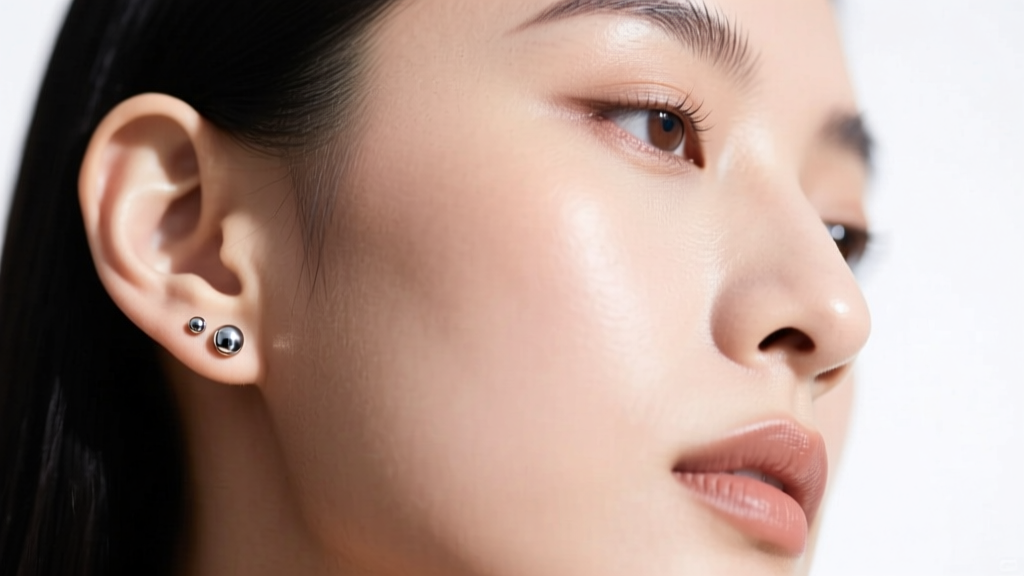
The Galvanic Corrosion Risk in Mixed-Metal Setups
A common mistake in styling front-and-back earrings is mixing metals—for instance, wearing a 14k gold decorative front with a 316L stainless steel backing plate or butterfly clutch. When these two dissimilar metals are connected by a conductive post and exposed to an electrolyte (human sweat, which contains sodium chloride), a galvanic cell is formed.
Expert Insight: In a mixed-metal double stud setup, the more anodic metal (surgical steel) will corrode rapidly to protect the cathodic metal (gold). This localized corrosion not only destroys the structural integrity of the backing but causes a massive, sudden release of nickel and chromium ions directly into the compressed tissue of the earlobe, resulting in acute allergic flare-ups and hyperpigmentation.
To prevent this, always ensure that both the front face, the post, and the backing plate of your earrings double stud configuration are crafted from the exact same metal alloy, or at least metals that share a similar galvanic potential, such as titanium and niobium.
Comparative Data: Hardness, Allergy Risk, and Pricing
The following table provides a quick-reference framework for selecting materials based on structural needs and budget for double stud and jacket configurations.
| Material Grade | Nickel Release (µg/cm²/week) | Vickers Hardness (HV) | Avg. Price (Double Stud Set) | Best Application |
|---|---|---|---|---|
| ASTM F136 Titanium | 0.0 (None) | ~350 | $45 - $120 | Heavy jackets, fresh piercings, high-torque backs |
| 14k Solid Gold (Yellow) | <0.1 (Trace) | ~160 | $180 - $450 | Luxury everyday wear, moderate weight setups |
| 18k Solid Gold (Yellow) | <0.1 (Trace) | ~130 | $250 - $600+ | Lightweight decorative fronts (requires thicker gauge) |
| Niobium | 0.0 (None) | ~60 | $35 - $90 | Lightweight setups, extreme metal sensitivities |
| 316L Surgical Steel | 0.5 - 2.0+ | ~220 | $15 - $40 | Fully healed, non-sensitive lobes (Not recommended for jackets) |
Gauge Sizing and Lobe Tension Frameworks
The 'cheese-cutter effect' is a primary failure mode in heavy jewelry. When a heavy front-and-back double stud is mounted on a thin 20-gauge (0.8mm) wire, the downward force concentrates entirely on the bottom edge of the fistula. Over time, this sheer stress causes the tissue to migrate and eventually tear.
- 20-Gauge (0.8mm): Standard for cheap fashion jewelry. Unsuitable for double stud jackets due to high bending risk and tissue migration.
- 18-Gauge (1.0mm): The optimal balance for most double stud setups. Provides enough tensile strength to support the weight of a decorative back plate without excessive stretching.
- 16-Gauge (1.2mm): Recommended for oversized, heavy stone double stud configurations. Requires a professionally stretched or naturally accommodating fistula.
Furthermore, the American Academy of Dermatology emphasizes minimizing mechanical irritation to prevent dermatitis flare-ups. Upgrading your gauge size reduces the localized pressure points on the earlobe, keeping the tissue healthy even under the compression of a double-sided design.
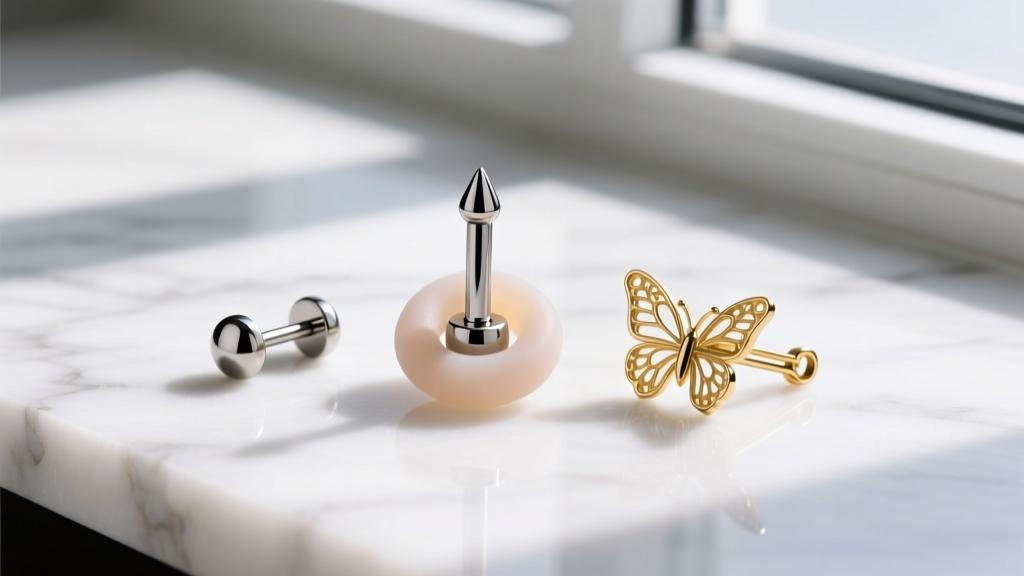
Threading and Clutch Mechanics for Double Studs
How the backing attaches to the post is just as critical as the metal itself. Traditional 'butterfly' or 'push' clutches rely on friction and often feature sharp, stamped metal edges that dig into the back of the earlobe. In a double stud jacket setup, where the back piece is already a large decorative element, using a standard butterfly clutch creates a painful pressure sandwich.
For optimal comfort and tissue health, transition to flat-back labret studs with either internal threading or threadless (push-pin) mechanisms. A flat-back titanium or gold disc distributes the clamping force of the heavy front piece evenly across a wide surface area of the rear lobe. External threading—where the screw threads are cut directly into the post—should be strictly avoided. Passing an externally threaded post through the fistula, especially when wrestling with a tight double stud backing, acts like a microscopic file, scraping the delicate interior tissue and delaying healing or causing chronic irritation bumps.
Final Verdict: Matching Material to Piercing Maturity
Choosing the right metal for your earrings double stud configuration requires balancing aesthetic desires with biomechanical realities. For newly pierced lobes or those prone to contact dermatitis, ASTM F136 titanium with a flat-back labret mechanism is the only medically sound choice. For fully healed, mature piercings where luxury is the priority, 14k nickel-free gold offers the perfect blend of structural rigidity and high-end finish. By understanding gauge thickness, avoiding galvanic metal mixing, and prioritizing smooth internal threading, you can ensure your multi-point ear curation remains both visually striking and anatomically comfortable for years to come.


