The Ultimate Material Guide for Women with Earrings
Discover the best hypoallergenic metals and material properties for women with earrings sensitivities. Compare titanium, niobium, and gold alloys.


The Hidden Metallurgy of Ear Sensitivities
For women with earrings who experience chronic lobe irritation, navigating the jewelry market can feel like a minefield. In 2026, despite stricter global dermatological guidelines and increased consumer awareness, the market remains flooded with misleading terms like 'hypoallergenic' and 'surgical steel.' To build a comfortable, long-lasting jewelry collection, we must look past marketing buzzwords and examine the actual metallurgical properties, alloy compositions, and structural tolerances of the metals touching your skin.
According to the Mayo Clinic, nickel allergy is the most common cause of allergic contact dermatitis, affecting a significant percentage of the population. However, copper oxidation, galvanic reactions, and mechanical irritation from improper gauge sizes are equally culpable for reactive earlobes. Understanding the exact composition of your jewelry is the first step toward eliminating discomfort.
The 'Surgical Steel' Myth
One of the most pervasive myths in the jewelry industry is that 'surgical steel' or 'stainless steel' is inherently safe for sensitive ears. In reality, the most common grade used in fashion jewelry is 316L stainless steel. While it is highly resistant to corrosion and rust, 316L steel contains between 10% and 14% nickel to achieve its structural integrity and luster. When the protective chromium oxide layer on the surface of the steel is compromised by sweat, friction, or microscopic scratches, nickel ions are released into the skin, triggering an immune response.
If you have a known nickel sensitivity, 316L stainless steel should be strictly avoided for initial piercings and long-term daily wear, regardless of whether the packaging claims it is hypoallergenic.
Tier 1: Implant-Grade Titanium and Niobium
When absolute biocompatibility is required, the Association of Professional Piercers (APP) recommends specific reactive metals that do not contain nickel and resist corrosion flawlessly inside the human body.
ASTM F136 vs. Commercial Titanium
Not all titanium is created equal. Commercial-grade titanium (often used in aerospace or general manufacturing) may contain trace impurities. For body jewelry, you must look for ASTM F136 (Ti6Al4V ELI) or ASTM F67 (commercially pure titanium). ASTM F136 is an implant-grade titanium alloy that is completely nickel-free, highly polished to a mirror finish to prevent bacterial adhesion, and exceptionally lightweight. It is the gold standard for fresh piercings and hyper-sensitive lobes.
The Magic of Niobium
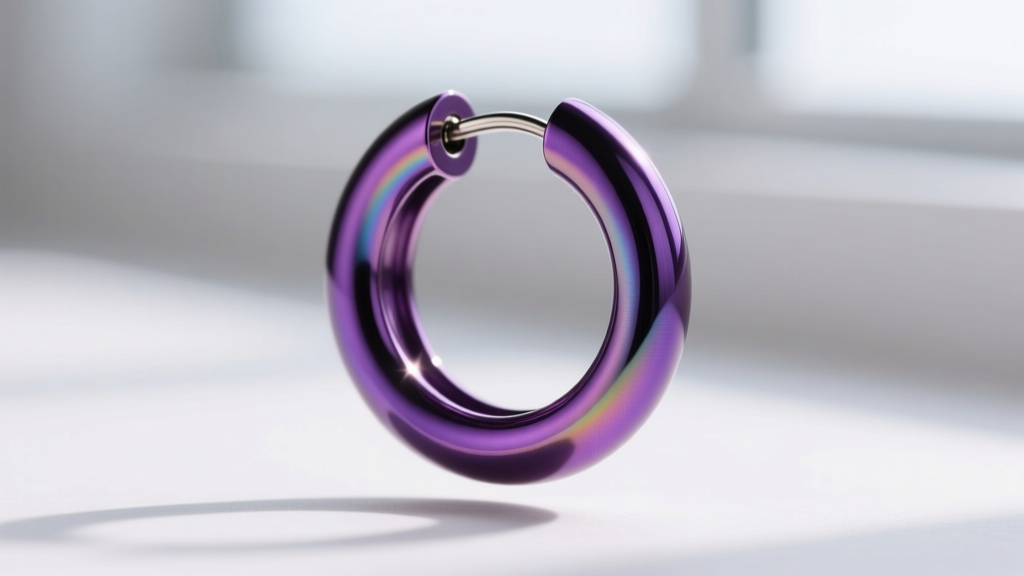
Niobium (element 41) is a soft, reactive metal that is entirely free of nickel and lead. Unlike titanium, which is usually anodized or polished in its natural silver-gray hue, niobium can be heat-anodized to produce a spectacular array of vibrant colors without the use of toxic dyes or platings that can chip off over time. Because it is a softer metal, niobium is often used for seamless rings and huggies that require gentle bending for insertion.
Tier 2: Navigating Gold Alloys and Platinum
Gold is a classic choice, but pure 24-karat gold is far too soft for structural earring posts; a 24k post will easily bend, warp, and lose gemstones under the pressure of daily wear. Therefore, gold must be alloyed with other metals to increase its hardness, which introduces potential allergens.
The Karat Conundrum: 14k vs. 18k
14k Gold consists of 58.5% pure gold, with the remaining 41.5% made up of metals like copper, silver, and zinc. High-quality 14k yellow gold is generally safe for most people, provided the alloy uses silver and copper rather than nickel. 18k Gold (75% pure gold) is even safer and more hypoallergenic, though it commands a premium price and is slightly softer than 14k.
The White Gold Rhodium Trap
White gold is notoriously problematic for sensitive ears. To achieve a bright, silvery-white color, manufacturers traditionally alloy yellow gold with nickel or palladium, and then plate the surface with rhodium. Over 6 to 12 months of daily wear, the rhodium plating inevitably wears away, exposing the underlying nickel alloy directly to the skin. If you prefer the look of white metal, always opt for Palladium White Gold (alloyed with palladium instead of nickel) or upgrade to Platinum (950 Pt), which is naturally white, incredibly dense, and completely hypoallergenic.
Material Comparison Chart
| Material | Alloy Composition | Nickel Risk | Avg. Price (Studs) | Best Application |
|---|---|---|---|---|
| Implant-Grade Titanium | Ti6Al4V ELI (ASTM F136) | None | $25 - $60 | Fresh piercings, daily wear |
| Niobium | Pure Elemental Nb | None | $20 - $45 | Seamless hoops, huggies |
| 14k Yellow Gold | 58.5% Gold, Silver, Copper | Very Low | $80 - $250 | Healed piercings, luxury |
| 14k White Gold | 58.5% Gold, Nickel/Palladium | High (if nickel alloy) | $90 - $280 | Occasional wear only |
| Platinum | 95% Pt, 5% Ruthenium/Iridium | None | $300 - $800+ | Lifetime heirloom pieces |
Tier 3: Non-Metal Alternatives
For individuals who react to almost all metals, or those dealing with active infections and blowouts, non-metal alternatives provide a crucial safe harbor.
- Borosilicate Glass: Often sold as 'glass retainers,' high-quality borosilicate glass is completely non-porous, inert, and smooth. It can be sterilized in an autoclave and is the absolute best material for calming an angry, reactive piercing channel.
- PTFE (Bioplast): A flexible, bio-compatible plastic often used for initial piercings or MRI-safe jewelry. While safe, PTFE can degrade over time, harbor bacteria in microscopic scratches, and become brittle. It is recommended for short-term healing, not permanent wear.
- Wood and Bone: While aesthetically pleasing for stretched lobes, organic materials are highly porous and can absorb sweat and dead skin cells, leading to bacterial growth. They should only be worn in fully healed, healthy piercings.
Mechanical Irritation vs. True Allergies
Many women mistakenly believe they are allergic to a metal when they are actually suffering from mechanical irritation caused by improper jewelry sizing. Standard lobe piercings are typically done at 20-gauge (0.81mm) or 18-gauge (1.02mm), while cartilage piercings are usually 16-gauge (1.29mm) or 14-gauge (1.60mm).
If you wear a flimsy 22-gauge earring post in an 18-gauge piercing hole, the thin wire acts like a cheese-cutter, creating micro-tears in the fistula (the skin tunnel). These micro-tears trap bacteria and cause swelling, redness, and weeping—symptoms that perfectly mimic an allergic reaction. Always ensure your earring posts match the gauge of your piercing to provide adequate structural support and prevent friction-induced trauma.
Conclusion
Upgrading your jewelry box in 2026 means prioritizing metallurgical transparency over fast-fashion trends. By shifting your investments toward ASTM F136 titanium, pure niobium, and carefully selected palladium-alloyed golds, you can eliminate contact dermatitis and enjoy your favorite styles without the pain. Always verify the exact alloy with your jeweler, and remember that proper gauge thickness is just as critical as the metal itself.


