Best Materials for Uneven Earrings: Weight and Balance
Discover the best materials for uneven earrings. Compare metal densities, gauge requirements, and weight distribution for perfect asymmetrical balance.

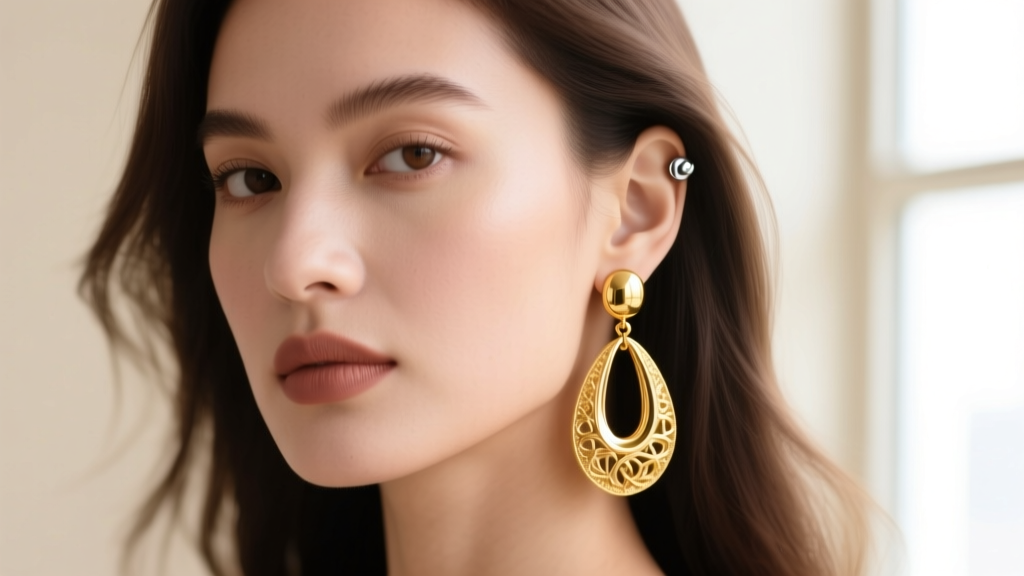
The trend of wearing uneven earrings—intentionally mismatched, asymmetrical designs or pieces curated to balance physically uneven piercings—has dominated contemporary jewelry styling. However, pulling off an asymmetrical aesthetic is not merely a visual challenge; it is an exercise in physics and material science. When one earlobe bears a substantial geometric drop while the other hosts a minimalist stud, the disparity in weight distribution can lead to tissue stress, lobe elongation, and severe discomfort.
To master the art of asymmetrical ear styling, you must understand how different jewelry materials behave regarding density, tensile strength, and skin reactivity. This guide breaks down the exact metallurgical properties you need to consider when curating and engineering the perfect set of uneven earrings.
The Physics of Asymmetry: Why Specific Gravity Matters
In jewelry design, the visual size of an earring rarely correlates with its actual weight. The deciding factor is Specific Gravity (SG), a measurement of a material's density relative to water. When designing or selecting uneven earrings, balancing the SG of the heavier statement piece against the lighter counterpart is critical to preventing the 'cheese-cutter effect'—a phenomenon where a heavy, thin wire slowly migrates through the earlobe tissue due to constant downward gravitational pull.
According to the Association of Professional Piercers (APP), excessive weight on a standard lobe piercing can cause irreversible tissue thinning. Therefore, selecting low-density metals for the 'heavy' side of your asymmetrical set is a non-negotiable rule for long-term ear health.
Understanding the Density Scale
Let us look at the specific gravity of common jewelry metals to understand why certain materials fail in asymmetrical designs:
- Acrylic/Resin: SG ~1.18 (Extremely light, ideal for massive statement pieces)
- Titanium (Grade 23): SG 4.43 (Lightweight, hypoallergenic, structurally rigid)
- 316L Surgical Steel: SG 8.0 (Moderate weight, high rigidity)
- Niobium: SG 8.57 (Heavier, highly malleable, excellent for anodizing)
- 14k Yellow Gold: SG ~13.5 (Very heavy, requires careful engineering for large drops)
- Sterling Silver: SG 10.4 (Moderate-heavy, prone to tarnishing and softness)
If you are wearing a large, solid 14k gold hoop on your left ear, the sheer density of the gold will drag the lobe down. To counteract this, expert jewelers often use hollow electroforming techniques or pivot to low-SG materials like Grade 23 titanium or carved wood for the larger silhouettes.
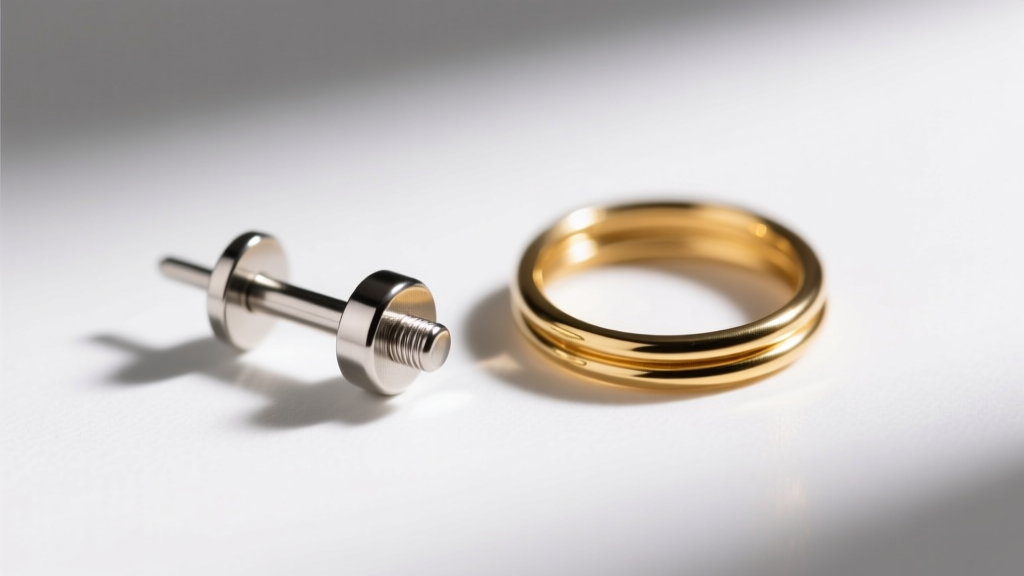
Material Breakdown: Pros, Cons, and Weight Profiles
Choosing the right metal requires balancing aesthetics with structural integrity. Below is a comprehensive comparison of the top materials used in high-end uneven earring sets.
| Material | Specific Gravity | Yield Strength | Hypoallergenic | Best Asymmetrical Application |
|---|---|---|---|---|
| ASTM F136 Titanium | 4.43 | High | Yes (Nickel-Free) | Oversized structural drops, heavy geometric shapes |
| Niobium | 8.57 | Low-Medium | Yes | Colorful anodized hoops, counter-weighted dangles |
| 14k / 18k Gold | 13.5 - 15.6 | Medium | Varies by Alloy | Small balancing studs, intricate micro-pave accents |
| 316L Steel | 8.00 | Very High | No (Contains Nickel) | Industrial bars, rigid ear cuffs, budget-friendly sets |
| Polycarbonate | 1.20 | Low | Yes | Massive avant-garde statement pieces, runway looks |
The Titanium Advantage in Asymmetry
For the larger, heavier side of an uneven earring pairing, ASTM F136 Grade 23 Titanium (Ti-6Al-4V ELI) is the undisputed champion. It is nearly half the weight of surgical steel and a fraction of the weight of gold. Furthermore, its high yield strength means a titanium wire will not bend or warp under the kinetic stress of daily movement, ensuring the earring maintains its intended architectural shape.
The Role of Niobium and Anodization
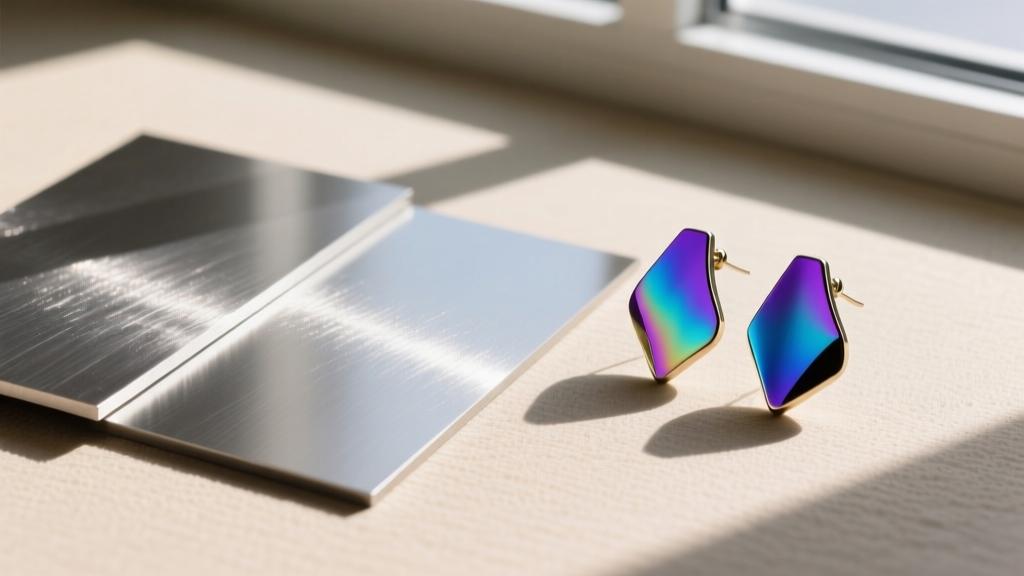
Niobium is slightly heavier than titanium but offers a unique property: it can be anodized to produce vibrant, permanent colors without the use of toxic dyes or plating. As highlighted by the Gemological Institute of America (GIA), anodized niobium is highly stable and biocompatible. In an asymmetrical set, a niobium piece can provide a striking pop of color on one ear, balanced by a neutral diamond or white gold stud on the other, without triggering contact dermatitis.
Engineering the Perfect Uneven Earring Set
Creating a comfortable asymmetrical look goes beyond selecting the right metal; it requires precise engineering of the earring's structural components, specifically the post gauge and the backing mechanism.
Post Gauge and Lobe Stress Management
Standard commercial earrings are typically manufactured with 20-gauge (0.81mm) or 22-gauge (0.64mm) posts. When dealing with uneven earrings where one side features a substantial drop, these thin gauges are dangerous. The concentrated pressure of a heavy earring on a 0.64mm wire will slice through the fistula (the piercing channel).
The Expert Rule: For any asymmetrical drop earring exceeding 8 grams in total weight, the post or wire must be upgraded to a minimum of 16-gauge (1.29mm) or 14-gauge (1.63mm). This thicker wire distributes the gravitational load across a wider surface area of the earlobe tissue, preventing migration and tearing.
Counterweight Techniques for Dangles
If you are designing or purchasing a long, uneven dangle earring, look for integrated counterweights. High-end jewelers often incorporate a discreet, denser metal bead (like a small 14k gold sphere) at the top of the earring, just behind the earlobe. This shifts the center of gravity backward, keeping the earring upright and preventing the heavy decorative face from pulling the lobe forward and down.
Skin Reactivity and the Asymmetrical Stress Factor
When you wear uneven earrings, the heavier side experiences more kinetic friction and micro-movements against the skin. This constant agitation compromises the skin barrier inside the piercing, making the ear significantly more susceptible to allergic reactions and bacterial ingress.
This is why the EU Nickel Directive (which limits nickel release to 0.5 µg/cm²/week) is a vital benchmark. Even if a piece of 316L surgical steel technically meets this standard, the increased friction from a heavy, asymmetrical drop can cause micro-abrasions, allowing nickel ions to bypass the stratum corneum and trigger localized eczema. For the 'heavy' side of your uneven pairing, strictly adhere to nickel-free materials like solid 14k/18k gold (alloyed with copper/silver, not nickel), platinum, or titanium.
Final Verdict: Building Your Asymmetrical Wardrobe
Mastering the uneven earring trend requires a shift in perspective from purely visual styling to biomechanical awareness. By prioritizing low-specific-gravity materials like Grade 23 titanium and acrylic for your statement pieces, and reserving high-density metals like solid gold for your smaller balancing studs, you achieve perfect visual and physical equilibrium. Always demand thicker gauge posts for heavier drops, and never compromise on nickel-free certifications. When you respect the physics of your jewelry, your asymmetrical aesthetic will remain as comfortable as it is striking.


