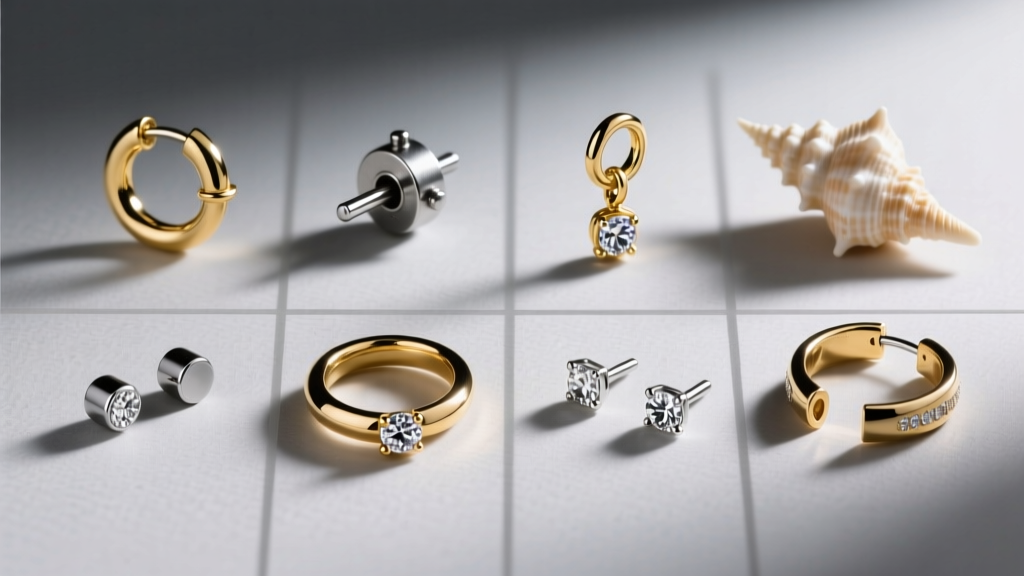
Mens Earring Styles in 2026: The Ultimate Trend Guide
Discover the top mens earring styles defining 2026. From titanium huggies to pearl drops, explore gauge sizes, materials, and expert styling tips.

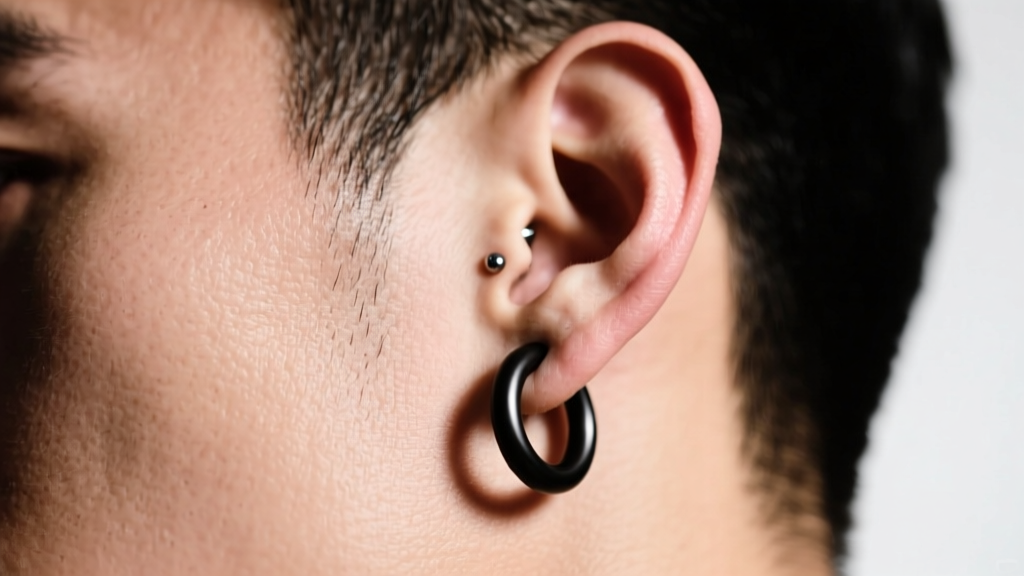
The Shift in Mens Earring Styles for 2026
The landscape of men's jewelry has undergone a radical transformation over the last decade, and 2026 marks the year where experimental curation meets refined minimalism. Gone are the days when a simple diamond stud or a bulky steel hoop were the only acceptable options. Today, the most prominent mens earring styles reflect a deep understanding of anatomy, metallurgy, and personalized earscapes. Men are now investing in high-grade implant materials, exploring asymmetric placements, and embracing gemstones that were once strictly categorized as feminine.
This shift is not merely aesthetic; it is deeply technical. Modern consumers are demanding internally threaded or threadless hardware, rejecting the tissue-tearing externally threaded posts of the past. Whether you are looking to curate a multi-piercing helix setup or simply upgrade your standard lobe studs, understanding the intersection of style and structural integrity is paramount. Below, we break down the definitive trends, material specifications, and placement strategies defining men's ear adornments this year.
Top 3 Mens Earring Styles Dominating the Market
Architectural Huggies and Seamless Clickers
The huggie hoop has evolved from a basic circle into an architectural statement piece. In 2026, the trend heavily favors 'clickers'—hinged rings that snap securely into place without the need for tools. For men, the preferred aesthetic leans toward matte finishes, geometric inlays, and slightly thicker gauges. A 14-gauge (1.6mm) or 12-gauge (2.0mm) clicker provides a substantial, masculine weight that prevents the 'cheese-cutter effect' (where thin wire slowly slices through the tissue) often caused by heavier, thinner hoops. Matte black PVD-coated titanium and brushed 14k gold are the most sought-after finishes, offering a rugged yet sophisticated look that pairs perfectly with both streetwear and tailored suiting.
The Single Pearl Drop
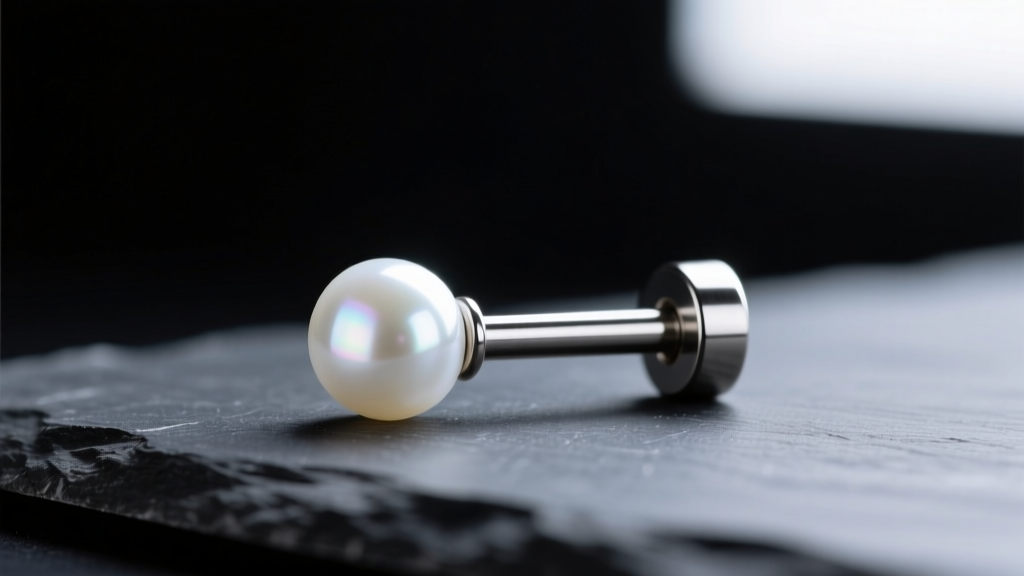
Pearls have completely shattered gender norms in jewelry, and the single pearl drop is currently the most striking of all mens earring styles. Rather than traditional matched pairs, the 2026 trend dictates a solitary, high-luster Akoya or freshwater pearl suspended from a threadless labret post in the lower lobe or a conch piercing. The contrast between the organic, iridescent surface of an 8mm to 9mm pearl and the industrial precision of a titanium post creates a striking visual tension. This style works exceptionally well for men with angular jawlines, as the spherical drop softens sharp facial features without compromising a masculine edge.
Hammered and Matte Signet Studs
For those who prefer the subtlety of a stud but want to avoid the flashiness of a faceted gemstone, hammered signet studs are the ultimate choice. These flat-fronted discs, typically ranging from 4mm to 7mm in diameter, feature a hand-textured surface that catches light diffusely. Crafted primarily in 14k or 18k solid gold, the hammered finish hides micro-scratches and daily wear far better than high-polish alternatives. They are frequently worn in asymmetric setups—perhaps a 6mm hammered gold stud in the primary lobe piercing, paired with a 3mm flush-set black diamond in the upper helix.
Technical Specifications: Materials and Gauges
Choosing the right mens earring styles is only half the battle; selecting biocompatible materials is critical for long-term wear, especially in cartilage piercings which are highly prone to irritation bumps and contact dermatitis. The Association of Professional Piercers (APP) strictly recommends specific grades of metal for prolonged skin contact.
| Material | Grade / Standard | Best Use Case | Price Range (USD) |
|---|---|---|---|
| Titanium | ASTM F136 (Implant Grade) | Fresh piercings, cartilage, sensitive skin | $40 - $120 |
| Stainless Steel | 316L (Surgical Grade) | Healed lobes only (contains nickel) | $15 - $45 |
| Yellow Gold | 14k or 18k (Nickel-Free Alloy) | Healed lobes, helix, premium aesthetics | $150 - $600+ |
| Niobium | Reactive (Unalloyed) | Hypersensitive skin, anodized colors | $30 - $80 |
When selecting gauge sizes, standard lobe piercings usually accommodate 18-gauge (1.0mm) or 16-gauge (1.2mm) posts. Cartilage piercings, such as the helix or conch, are typically pierced at 16-gauge or 14-gauge (1.6mm) to provide structural stability and minimize the 'cheese-cutter' migration effect.
Curating the Male Earscape: Placement and Face Shape
The placement of your earrings should complement your facial geometry and ear anatomy. The 'curated ear' trend for men in 2026 relies on strategic spacing and varying jewelry profiles rather than simply filling every available millimeter of cartilage.
- Round Faces: Opt for vertical drops or elongated barbells in the conch or tragus to draw the eye downward and create the illusion of a longer, more angular face shape. Avoid wide, bulky hoops that emphasize cheek width.
- Square/Angular Faces: Soften strong jawlines with circular barbells, seamless rings, or pearl drops. A well-placed 10mm hoop in the upper helix can balance a heavy lower jaw.
- Oval Faces: Highly versatile; almost any mens earring style works. A classic flat-back signet stud in the lobe combined with a small, threaded clicker in the forward helix provides excellent proportional balance.
Always consult with a professional piercer who can assess your specific ear anatomy. Not all ears have the ridge depth required for a daith or rook piercing, and forcing jewelry into shallow folds leads to chronic rejection and scarring.
Hardware Mechanics and Failure Mode Troubleshooting
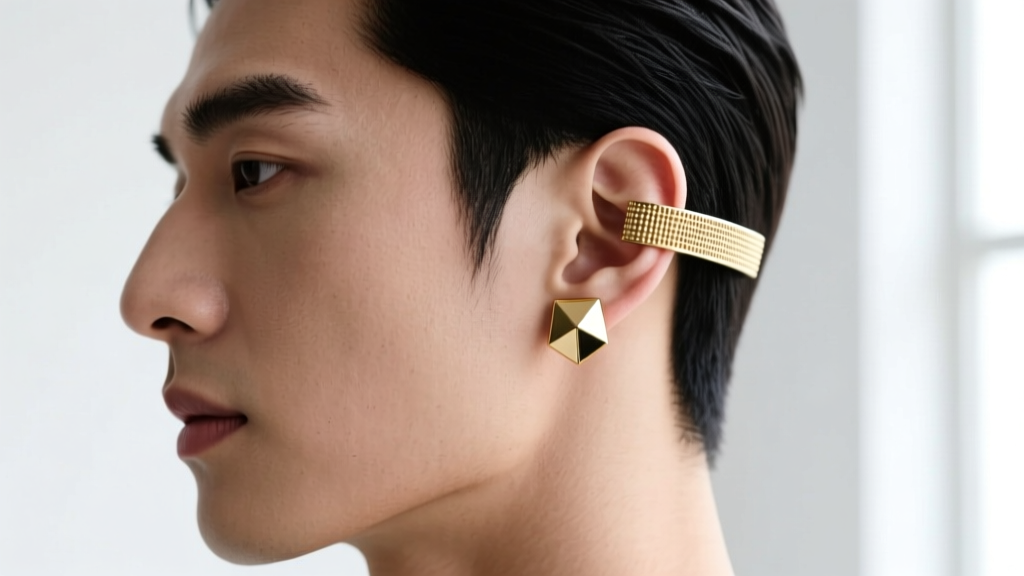
Understanding how your jewelry locks together will save you from lost gems and damaged tissue. There are two primary mechanisms dominating high-end mens earring styles today: internal threading and threadless (push-pin) systems.
'Externally threaded jewelry, where the screw pattern is on the post that passes through the tissue, acts like a file, tearing the delicate fistula upon insertion. It has no place in modern, professional body jewelry.' — Association of Professional Piercers
Troubleshooting Common Hardware Failures
- Thread Stripping: If you force an internally threaded end at an angle, you will strip the microscopic threads. Always back the screw up slightly until you feel it 'click' into the groove, then tighten gently. If stripped, the entire post must be replaced.
- Threadless Ends Popping Out: Threadless jewelry relies on the tension of a slightly bent pin inside the hollow post. If your pearl or gemstone end keeps falling out, the pin has lost its bend. Remove the end, slightly bend the pin (about 2 to 3 degrees), and reinsert. Do not over-bend, or you will not be able to remove it later without pliers.
- Cartilage Irritation Bumps: Often mistaken for keloids, these are usually hypertrophic scars caused by pressure. If you are sleeping on a fresh helix piercing, the angle of the post will shift, causing the flat back to dig into the tissue. Use a U-shaped travel pillow to keep your ear suspended in the center hole while sleeping.
- Embedding: If a flat-back post is too short (e.g., using a 5mm post for a lobe that requires 8mm), the swelling will cause the skin to engulf the decorative end. This requires immediate professional intervention to swap to a longer post.
Final Styling Verdict
The evolution of mens earring styles in 2026 proves that men's jewelry is no longer an afterthought; it is a highly technical, deeply personal form of self-expression. By prioritizing ASTM F136 titanium, embracing threadless mechanics, and experimenting with asymmetric placements and organic materials like Akoya pearls, men are redefining modern masculinity. Whether you are stepping into a studio for your first helix piercing or upgrading your lobe staples to hammered gold signets, the key lies in respecting both the anatomy of the ear and the quality of the hardware. Invest in pieces that are built to last, and your curated earscape will serve as a timeless extension of your personal style.