Men's Earrings Hoops: The 2026 Buying Guide & Fit Rules
Discover how to choose the perfect men's earrings hoops. Learn about gauge sizes, premium metals, diameter rules, and styling tips in our expert guide.

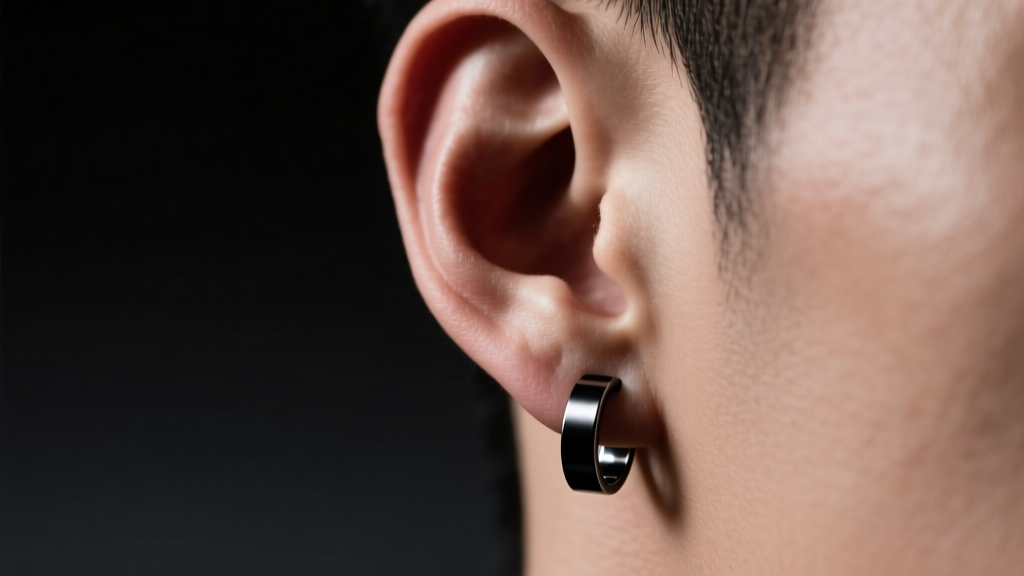
The Evolution of Men's Hoop Earrings
The landscape of men's jewelry has shifted dramatically. Gone are the days when men's earrings hoops were limited to flimsy, oversized wire rings or cheap, nickel-laden alloys that turned earlobes green. In 2026, the market demands architectural precision, biocompatible metals, and tailored proportions. Whether you are outfitting a standard lobe piercing, a stacked helix, or a conch, selecting the right hoop requires an understanding of metallurgy, piercing anatomy, and facial geometry. This guide strips away the marketing fluff and provides a technical, actionable framework for buying hoops that fit perfectly, heal safely, and elevate your personal style.
Decoding Diameter and Gauge: The Numbers That Matter
The two most critical metrics when shopping for hoops are inner diameter (ID) and wire gauge (thickness). Guessing these measurements is the primary reason men end up with hoops that either strangle their cartilage or hang awkwardly low on their lobes.
Gauge (Thickness): Standard lobe piercings are typically done at 20G (0.8mm) or 18G (1.0mm). Cartilage piercings (helix, tragus, conch) are almost universally pierced at 16G (1.2mm) or 14G (1.6mm). Wearing a 20G hoop in a 16G cartilage piercing will cause the "cheese-cutter effect," where the thin wire slowly migrates through the tissue due to pressure.
Inner Diameter (ID): This dictates how the hoop sits against the ear. A hoop that is too tight will cause irritation bumps; one that is too large will catch on clothing.
| Inner Diameter | Best Use Case | Standard Gauge | Price Range (Solid Gold) |
|---|---|---|---|
| 6mm - 8mm | Huggies for snug lobes or tight tragus | 18G - 16G | $120 - $250 |
| 10mm - 12mm | Classic standard lobe, flat conch | 18G - 16G | $180 - $350 |
| 14mm - 16mm | Statement lobe, outer helix, daith | 16G - 14G | $250 - $500 |
| 18mm - 22mm+ | Stretched lobes, bold statement drops | 14G - 8G | $400 - $900+ |
Material Grades: What to Look For (and Avoid)
The metal touching your fistula (the piercing channel) dictates your comfort and long-term health. According to the Association of Professional Piercers (APP), biocompatibility is non-negotiable for cartilage and fresh piercings.
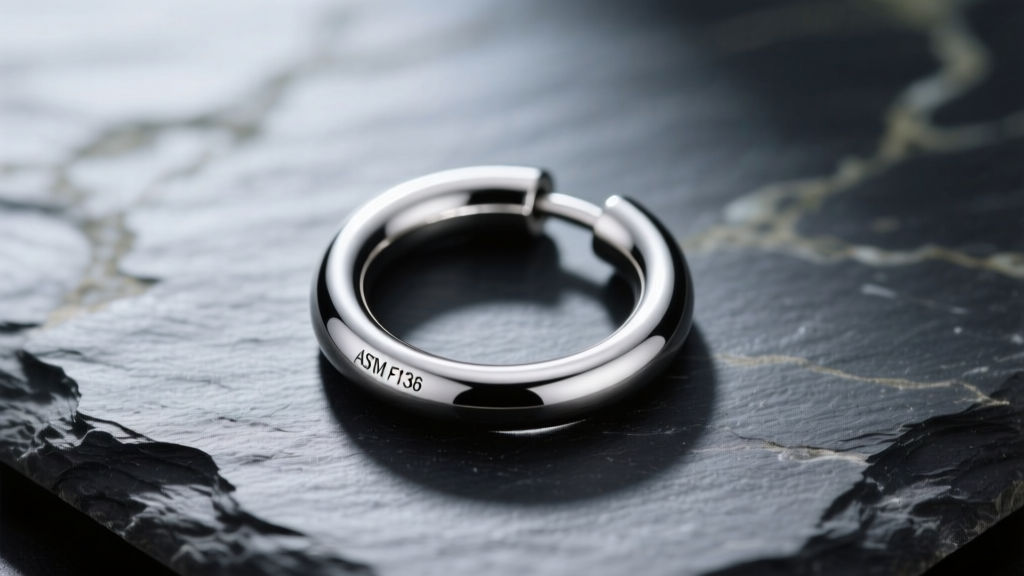
The Tier List of Hoop Metals
- ASTM F136 Implant-Grade Titanium: The undisputed champion for sensitive skin and fresh piercings. It contains zero nickel, is highly polished to a mirror finish (preventing bacterial harboring), and is lightweight. Brands like BVLA and Industrial Strength set the standard here.
- Solid 14k and 18k Gold: Excellent for healed piercings. According to the Gemological Institute of America (GIA), 14k gold offers superior durability for thin hoops because the higher alloy content resists bending. 18k gold provides a richer, warmer yellow hue but is softer and more prone to warping if the gauge is below 16G.
- 316L Surgical Steel: A budget-friendly option ($20-$50), but it contains 8-10% nickel. While fine for fully healed, non-sensitive lobes, it is a major risk factor for contact dermatitis in cartilage piercings. Avoid this if you have any metal sensitivities.
- Gold-Plated Brass or Copper: Avoid entirely. The plating will inevitably wear off, exposing base metals that oxidize, cause severe allergic reactions, and permanently stain the skin.
Closure Mechanisms: Security vs. Aesthetics
How your hoop closes impacts both the visual continuity of the ring and your daily convenience.
Hinged Clickers: Featuring a subtle hinge and a snap-shut segment, clickers are the most user-friendly option. They offer a secure lock that you can hear and feel, making them ideal for helix and daith piercings where fumbling with tiny parts is frustrating.
Continuous (Infinite) Hoops: These rely on tension, with a thin pin sliding into a hollow tube. They offer the cleanest, most seamless aesthetic with no visible breaks. However, their failure mode is high: they are easily pulled open by towels or pillows, leading to lost earrings.
Captive Bead Rings (CBRs): The traditional ring held together by the tension of a small bead. While secure, they require specialized ring-opening pliers to change. For modern daily wear, they are largely considered outdated and cumbersome compared to clickers.
Face Shape and Proportion Guidelines
Men's earrings hoops should complement your facial architecture, not clash with it. The goal is to create balance through geometric contrast.
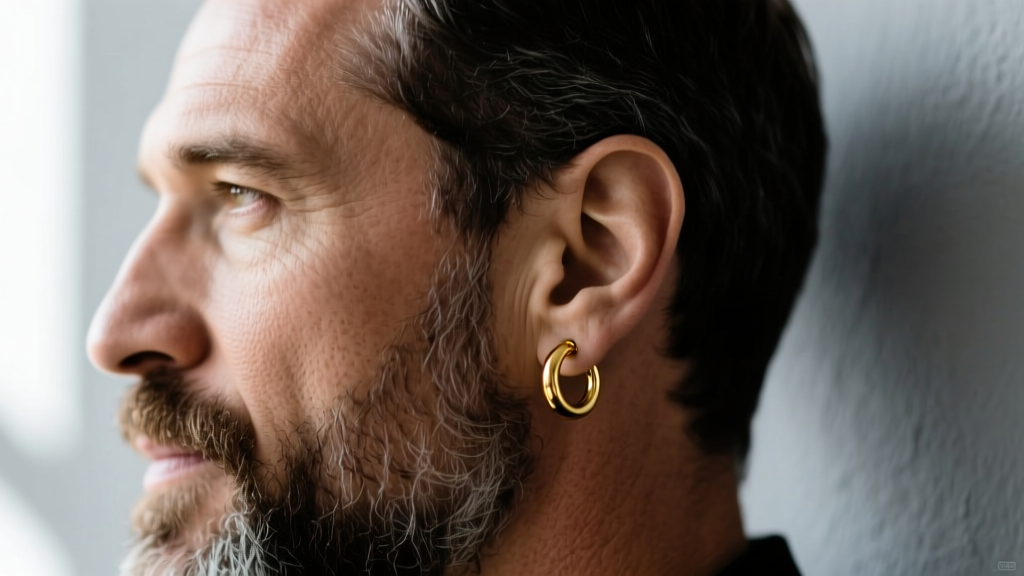
- Square and Angular Jawlines: Opt for perfectly round, medium-diameter hoops (12mm-15mm). The curves of the hoop soften the sharp angles of the jaw and cheekbones. Avoid elongated drop hoops, which can make the face look overly severe.
- Round and Soft Features: Introduce structure with thicker gauge hoops (14G) or slightly squared-off "rounded rectangle" hoops. Huggies (8mm-10mm) that sit tightly against the lobe add a sharp, masculine accent without adding unwanted width to the face.
- Long/Oval Faces: You have the versatility to pull off larger statement hoops (18mm+) or stacked huggies. Wider hoops add horizontal visual weight, balancing the vertical length of the face.
Real-World Troubleshooting & Maintenance
Even with the right measurements, real-world wear presents challenges. Here is how to troubleshoot common hoop issues:
Problem: The hoop constantly flips upward in my helix piercing.
Diagnosis: The inner diameter is too small. Cartilage swells slightly and shifts; a tight hoop creates upward tension, forcing the jewelry to rotate and rest awkwardly against the head.
Solution: Size up by 1.5mm to 2mm to allow the hoop to hang freely under its own weight.
Problem: My lobe feels tender and stretched after a week of wear.
Diagnosis: The hoop is too heavy for the gauge, or the diameter is catching on collars and pulling. Solid gold 18mm hoops in 18G are notoriously heavy.
Solution: Switch to a hollow-tube hoop (which maintains the look of a thick gauge but drastically reduces weight) or downgrade to ASTM F136 titanium, which is 45% lighter than steel or gold.
Maintenance Rule: Hoops, especially continuous and clickers, accumulate sebum and dead skin cells inside the closure mechanism. Once a week, use a soft-bristled brush and mild, fragrance-free soap to clean the hinge and clasp. Never use rubbing alcohol on solid gold or anodized titanium, as it can degrade the finish and dull the metal over time.


