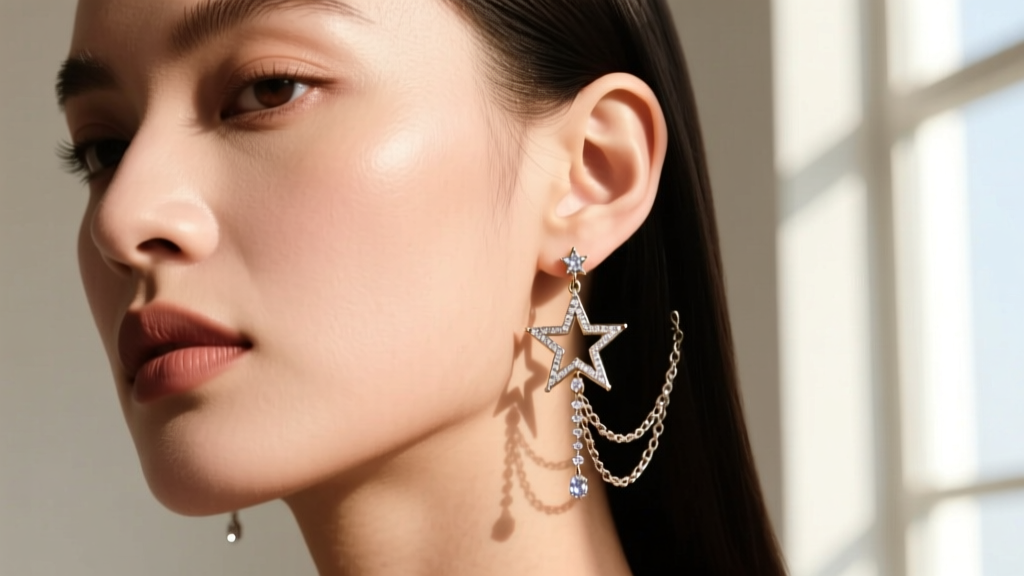
Star Earrings for Men: The Ultimate Buying Guide & Style Tips
Discover how to choose the perfect star earrings for men. Learn about gauge sizes, implant-grade metals, backing types, and styling for lobe or cartilage.

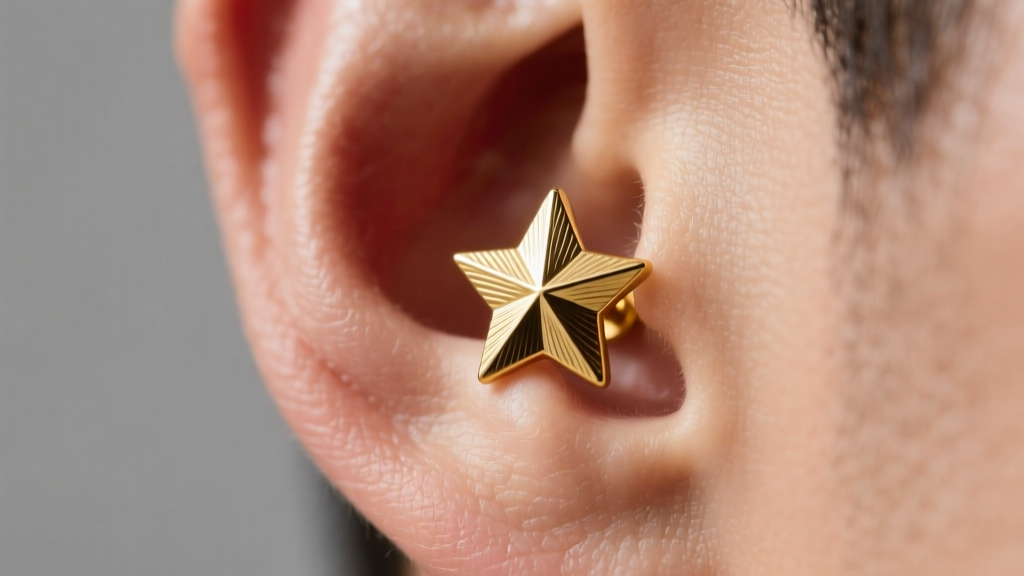
The Shift to Geometric Minimalism in Men's Jewelry
Star earrings for men have undergone a massive aesthetic evolution. Moving far beyond the novelty pop-punk accessories of the early 2000s, today's celestial motifs are rooted in architectural minimalism and high-end geometric design. In 2026, the modern man's jewelry box favors sharp, deliberate lines over ornate detailing. Whether you are looking for a subtle 4mm stud for the office or an edgy 8mm black titanium piece for your helix, understanding the technical specifications of men's earrings is crucial. This buying guide cuts through the marketing fluff to deliver the exact metallurgy, gauge sizes, and mechanical insights you need to make a smart purchase.
Decoding the Specs: Gauge, Sizing, and Proportions
The most common mistake men make when buying earrings is ignoring the gauge (the thickness of the post) and the facial proportions required for the star's diameter. A star earring that is too small will get visually lost in facial hair or jawline shadows, while one that is too large can look costume-like. Furthermore, forcing a standard 20-gauge post into a 16-gauge cartilage piercing can trigger the 'cheese-cutter effect,' where the thin wire slowly migrates through the tissue due to uneven weight distribution.
| Piercing Placement | Standard Gauge | Ideal Star Diameter | Recommended Post Length | Best Backing Type |
|---|---|---|---|---|
| Standard Lobe | 20G (0.8mm) or 18G (1.0mm) | 4mm - 6mm | 6mm - 8mm | Friction Push or La Pousette |
| Upper Lobe / Flat | 18G (1.0mm) or 16G (1.2mm) | 3mm - 5mm | 6mm - 8mm | Flat-Back Labret |
| Helix (Cartilage) | 16G (1.2mm) or 14G (1.6mm) | 5mm - 8mm | 6mm - 10mm | Threadless Push-Pin |
| Tragus | 16G (1.2mm) | 3mm - 4mm | 6mm - 8mm | Flat-Back Labret |
Material Metallurgy: What to Actually Buy (and Avoid)
When shopping for star earrings for men, the metal grade dictates both the longevity of the piece and your skin's biological response. The term 'surgical steel' is largely a marketing fabrication; it is not a standardized alloy and often contains high levels of nickel, which can cause contact dermatitis.
The Gold Standard: Implant-Grade Titanium
For any cartilage piercing or sensitive lobe, you must look for ASTM F136 Implant-Grade Titanium. According to the Association of Professional Piercers (APP), this specific alloy is entirely nickel-free and biocompatible, making it the safest choice for long-term wear. It is also incredibly lightweight, preventing heavy star points from pulling down on delicate ear tissue.
Precious Metals: 14k and 18k Gold
If you prefer the warmth of gold, ensure it is at least 14k. However, be highly cautious with white gold. Traditional white gold is alloyed with nickel to achieve its silver color. Always seek out nickel-free white gold, which is alloyed with palladium instead. The Gemological Institute of America (GIA) notes that palladium-alloyed gold is not only hypoallergenic but also maintains a brighter, more durable finish over time.

Backing Mechanisms: The Hidden Failure Point
The backing of an earring is its mechanical anchor. A poorly designed backing will result in lost jewelry and irritated piercings. Here is how the three main systems compare for men's star earrings:
- Butterfly / Friction Backs: The most common and least secure. The metal clutch relies on tension that degrades over time. They also trap dead skin and sebum, leading to odors. Avoid these for expensive or heavy star studs.
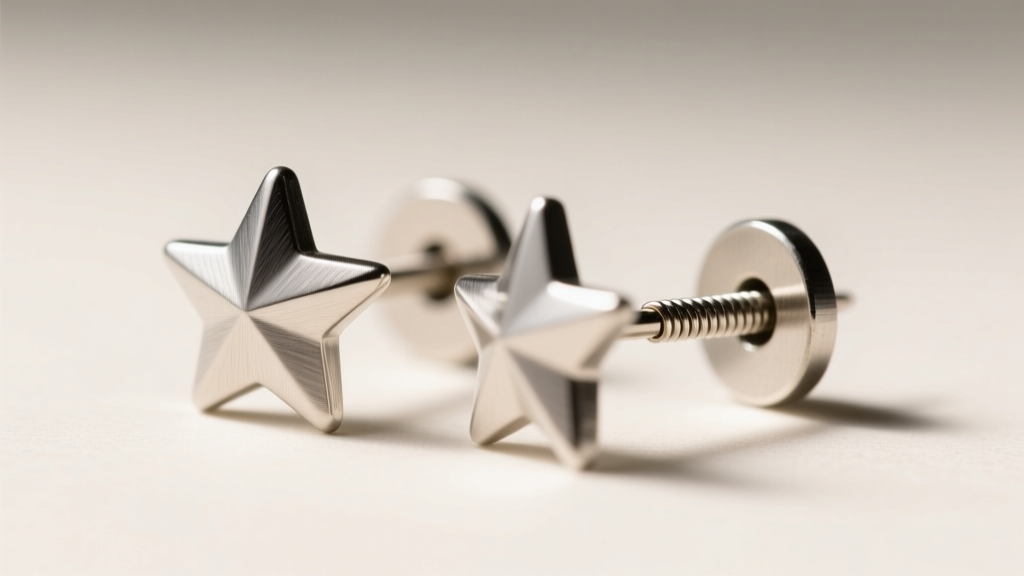
- Screw-In Backs: More secure than friction backs, but the microscopic threads can easily strip if cross-threaded, ruining the post. They are also frustrating to put on with one hand.
- Threadless Push-Pin (Top Choice): The industry standard for high-end body jewelry. The star's pin is slightly bent by hand (at a 5 to 10-degree angle) before being pushed into the hollow backing tube. The tension of the bent metal trying to straighten out creates a custom, unbreakable grip that will never strip or loosen.
Diamond Pave vs. Solid Metal: Aesthetic and Durability
When choosing between a solid metal star and a diamond-encrusted one, consider your lifestyle. Solid metal stars (especially with brushed or sandblasted finishes) are virtually indestructible and require zero maintenance. They catch the light through geometric angles rather than gemstones.
If you opt for diamond pave, avoid traditional prong settings. The tiny prongs used in micro-pave stars easily snag on towels, hair, and clothing, eventually bending and losing stones. Instead, look for bezel-set or flush-set stars, where the metal is pushed entirely around the diamond's girdle, creating a smooth, snag-proof surface that protects the stones from impact.
Placement Strategies: Lobe, Helix, and Tragus
The placement of your star earring dramatically changes its visual impact. For men with strong, angular jawlines, a single 5mm star in the standard lobe provides a sharp, classic contrast. If you have a more rounded face, stacking a small 3mm star in the upper lobe with a slightly larger 6mm star in the lower lobe creates a vertical elongation effect.
For the helix (the outer rim of cartilage), matte black or anodized dark grey titanium stars offer a rugged, industrial aesthetic that pairs exceptionally well with streetwear and modern minimalist fashion. Ensure the post length is perfectly measured; a post that is too long will stick out awkwardly from the side of the head, while one that is too short will embed into the cartilage.
Price Tiers and Red Flags When Shopping
Understanding the pricing landscape prevents you from overpaying for subpar materials.
- Budget ($20 - $60): Expect 316L stainless steel or sterling silver. Sterling silver tarnishes rapidly and should never be worn in unhealed piercings or left in the ear 24/7.
- Mid-Range ($80 - $200): The sweet spot for ASTM F136 titanium and 14k solid gold. Brands in this tier usually offer threadless backings and precise CNC-machined star points.
- High-End ($250 - $1,000+): 18k gold, custom anodization, and high-clarity flush-set diamonds. You are paying for master craftsmanship and premium gemological sourcing.
Red Flags: Avoid any brand that uses the term 'hypoallergenic surgical steel' without specifying the exact alloy grade. Also, be wary of hollow-cast stars; they are prone to denting and trapping moisture inside the jewelry, which can lead to localized infections.
Long-Term Care and Maintenance
To maintain the sharp geometry of your star earrings, regular cleaning is essential. Avoid using harsh chemicals like bleach or alcohol, which can degrade gold alloys and strip the anodized color from titanium. Instead, use a mild, fragrance-free liquid soap and a soft-bristled toothbrush to gently clean the crevices of the star.
For diamond pave stars, an ultrasonic jewelry cleaner used for just 3 to 5 minutes once a month will dissolve the microscopic layers of sebum and lotion that cloud the diamonds, instantly restoring their brilliance without damaging the metal settings.
By prioritizing implant-grade materials, precise gauge sizing, and secure threadless mechanics, you can invest in star earrings that not only elevate your personal style but also stand the test of time both mechanically and aesthetically.