Exploring Earrings Types of Piercings and Material Grades
Discover which metal grades suit your anatomy. We compare implant-grade titanium, niobium, and gold for all earrings types of piercings to ensure safe healing.

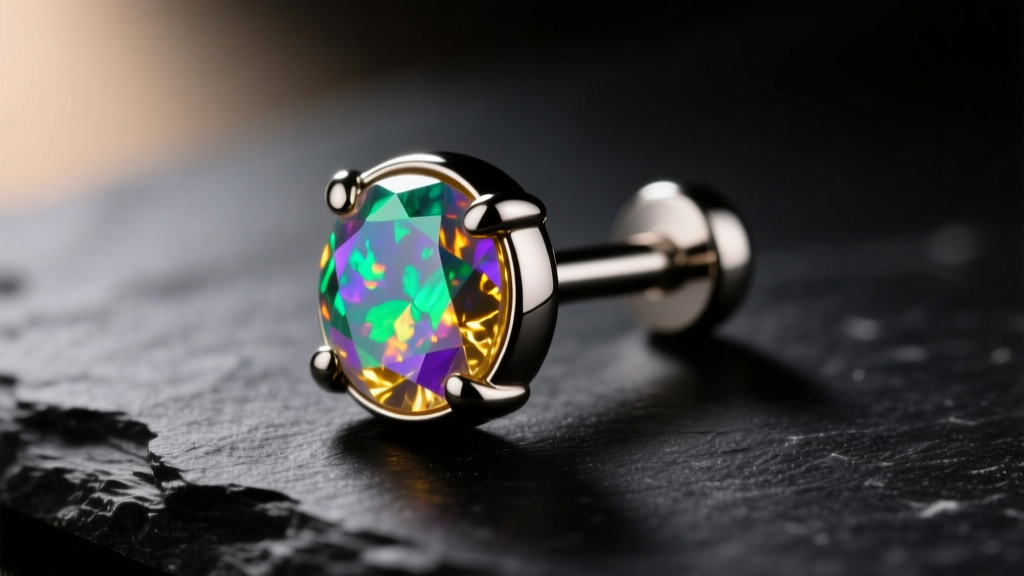
When navigating the complex world of body jewelry, the phrase 'earrings types of piercings' encompasses far more than just aesthetic preferences. The specific anatomical location of your piercing—whether it is a highly vascularized earlobe or a dense, avascular cartilage fold like the daith or conch—dictates the exact metallurgical requirements for safe, long-term wear. In 2026, the jewelry market is flooded with 'hypoallergenic' claims, but as any board-certified dermatologist or professional piercer will tell you, marketing buzzwords do not prevent contact dermatitis or hypertrophic scarring.
To make informed decisions, we must look past the surface finish and examine the atomic structure, alloy composition, and manufacturing standards of the metals touching your skin. This guide breaks down the material properties that matter most, providing a definitive framework for matching metal grades to your specific ear anatomy.
The Anatomy of Ear Jewelry: Why Metal Grade Matters
A piercing is essentially a controlled puncture wound that forms a fistula—a tube of scar tissue lining the hole. The environment inside a healing or even fully healed fistula is warm, moist, and slightly acidic due to the presence of sebum, sweat, and cellular debris. When you introduce metal into this environment, a galvanic reaction can occur if the alloy is unstable.
The primary culprit for adverse reactions is nickel. According to the Association of Professional Piercers (APP), nickel is present in many lower-grade stainless steels and white gold alloys. When sweat breaks down the passive oxide layer on poor-quality metals, nickel ions leach into the tissue, triggering an immune response that manifests as itching, swelling, and localized weeping. Understanding the exact ASTM (American Society for Testing and Materials) standards is the only way to guarantee a metal is truly biocompatible.
Decoding Metal Grades for Fresh vs. Healed Piercings
Not all titanium or gold is created equal. The manufacturing process and the specific alloying elements determine whether a piece of jewelry is safe for a fresh cartilage piercing or strictly reserved for a healed lobe.
Implant-Grade Titanium (ASTM F136)
Implant-grade titanium, specifically Ti-6Al-4V-ELI (Extra Low Interstitial), is the gold standard for initial piercings. The ASTM F136 standard ensures that the alloy contains virtually zero nickel and has a highly polished, mirror-finish surface that resists bacterial adhesion. Because it is non-magnetic and incredibly lightweight, it is ideal for heavy cartilage placements like the conch or industrial, where excess weight can cause migration or rejection.
Niobium (Unalloyed Element)
Unlike titanium, niobium is not an alloy; it is a pure elemental metal. It is highly malleable, making it the premier choice for seamless rings and clickers used in daith, rook, and helix piercings. Niobium cannot be anodized to create vibrant colors without altering its biocompatibility, but its natural gunmetal grey or polished silver finish is exceptionally safe for those with severe metal allergies. It is slightly heavier than titanium, which is a factor to consider for delicate earlobe stretches.
Solid Gold: The 14k and 18k Sweet Spot
While 24k gold is pure, it is far too soft for body jewelry; it will easily scratch, harbor bacteria, and deform under the pressure of a swelling cartilage piercing. For earrings, types of piercings that experience high friction require 14k or 18k solid gold. However, the alloy matrix is critical. The gold must be alloyed with palladium or silver, never nickel or zinc. High-quality 14k gold offers the best balance of durability, biocompatibility, and rich color, though it commands a premium price ranging from $150 to over $800 for intricate threadless ends.
Surgical Steel (ASTM F138): The 'Mild' Steel Trap
Often mislabeled as 'hypoallergenic,' ASTM F138 surgical steel contains between 8% and 10.5% nickel. While the passive oxide layer usually traps the nickel inside the metal, microscopic scratches from daily wear can expose the tissue to nickel ions. Surgical steel is generally acceptable for fully healed, low-movement earlobes, but it should never be used for fresh piercings or high-movement cartilage placements like the tragus.
Material Matchmaking by Piercing Location
Different ear placements endure varying levels of friction, pressure, and moisture. The table below outlines the optimal material and gauge specifications based on anatomical location and tissue density.
| Piercing Location | Standard Gauge | Tissue Type | Recommended Material (Healing) | Recommended Material (Healed) |
|---|---|---|---|---|
| Standard Lobe | 20g - 18g | Vascular, Soft | Implant-Grade Titanium | Titanium, 14k/18k Gold, Niobium |
| Helix / Flat | 16g | Avascular, Dense Cartilage | Implant-Grade Titanium | Titanium, 14k Gold, Niobium |
| Tragus | 16g | Dense Cartilage, High Friction | Implant-Grade Titanium (Threadless) | Titanium, 14k Gold |
| Conch | 16g - 14g | Thick Cartilage | Implant-Grade Titanium | Titanium, 14k/18k Gold, Glass |
| Daith | 16g | Curved Cartilage Fold | Implant-Grade Titanium (Clicker) | Niobium, Titanium, 14k Gold |
| Industrial | 14g | Double Puncture, High Tension | Implant-Grade Titanium (Straight Barbell) | Titanium, Custom Contoured Gold |
The Hidden Dangers of Plated and Coated Jewelry
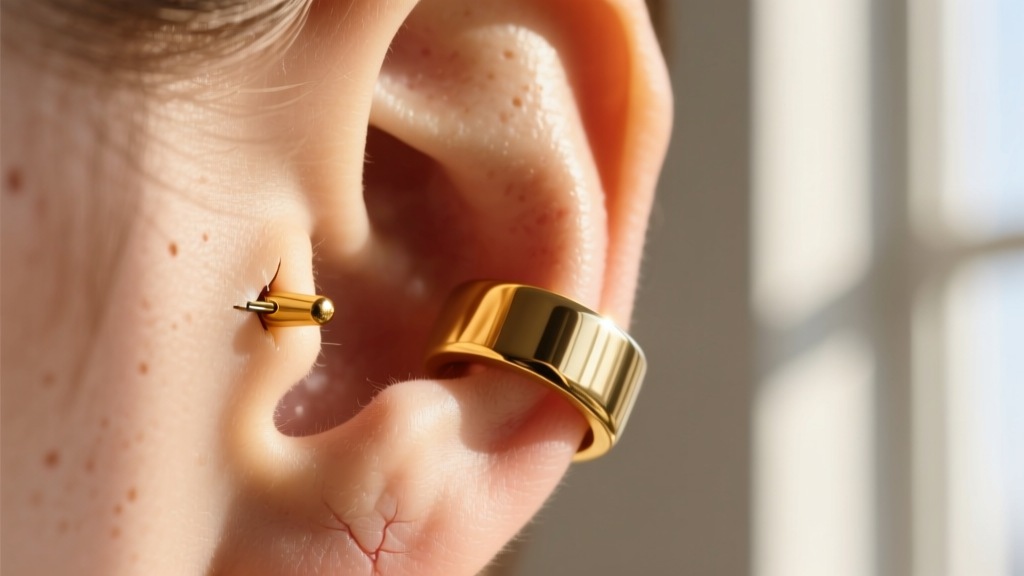
In the pursuit of affordable aesthetics, many consumers turn to gold-plated, vermeil, or PVD-coated (Physical Vapor Deposition) jewelry. While PVD coatings on titanium are incredibly durable and generally safe for healed piercings, traditional electroplating over brass or copper bases is a recipe for disaster.
Plating is measured in microns. Most fashion jewelry features a gold layer less than 0.5 microns thick. In high-friction areas like the tragus or the snug, the constant mechanical abrasion against the fistula will wear through the plating in a matter of weeks. Once the base metal is exposed to the acidic environment of the ear, rapid galvanic corrosion occurs, leading to severe contact dermatitis and the potential need to abandon the piercing entirely. If you are exploring earrings, types of piercings that involve cartilage demand solid metals or thick, verifiable PVD coatings over an implant-grade titanium base.
Practical Buying Framework: What to Ask Your Piercer
To ensure you are receiving the metallurgical quality you are paying for, adopt this strict verification framework when purchasing body jewelry:
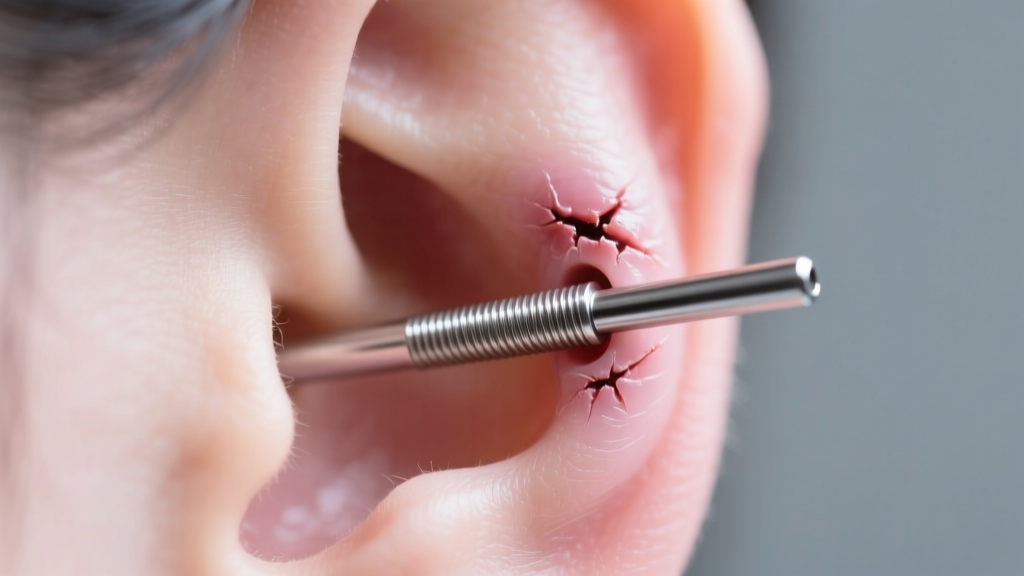
- Demand Internally Threaded or Threadless Designs: Externally threaded jewelry features sharp screw threads that must pass through the fistula, tearing the delicate scar tissue with every insertion. Internally threaded (where the screw is on the gem end) or threadless (push-pin) designs feature a smooth, uninterrupted post.
- Request Mill Certificates: Reputable jewelry brands like Industrial Strength, Anatometal, and BVLA can provide mill certificates proving their titanium meets the ASTM F136 standard. Do not accept 'surgical steel' as a substitute for fresh cartilage.
- Verify the Polish: A mirror finish is not just for shine; it is a sanitary requirement. Microscopic scratches on a dull or matte-finished post provide breeding grounds for anaerobic bacteria. Inspect the post under a bright light before insertion.
- Check the Alloy Matrix for Gold: If buying white gold, explicitly ask the piercer or jeweler if it is alloyed with palladium. Nickel-alloyed white gold will cause severe reactions in a healing piercing.
By prioritizing verifiable material grades over fleeting trends, you ensure that your ear curations remain healthy, vibrant, and structurally sound for a lifetime. Understanding the intersection of anatomy and metallurgy is the ultimate key to mastering your personal jewelry aesthetic.


