Metal Hoop Earrings: A Technical Deep Dive into Alloys and Gauges
An expert technical guide to metal hoop earrings, covering ASTM alloy grades, gauge thickness, closure mechanics, and precise sizing geometry.

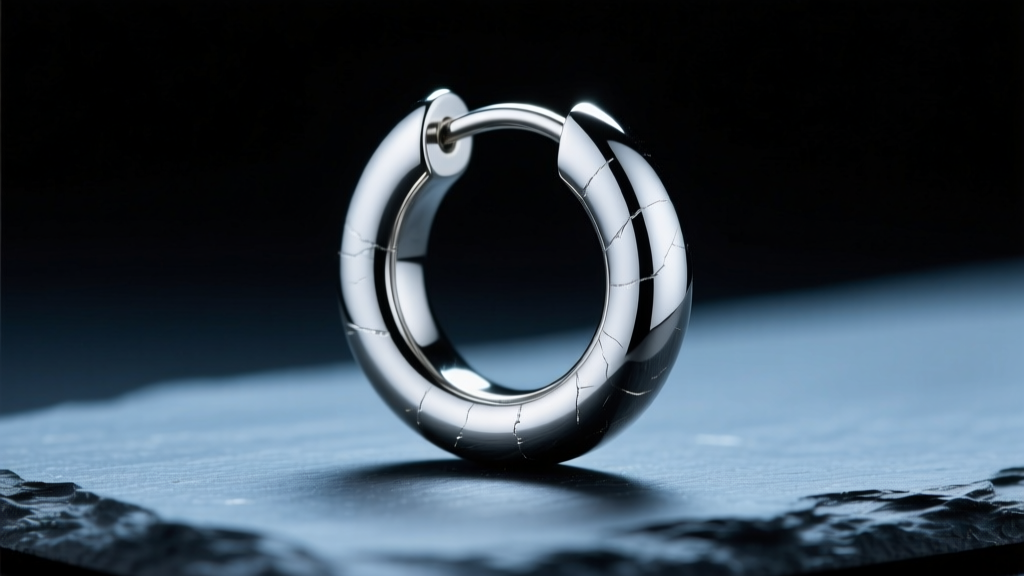
The Metallurgy of Premium Metal Hoop Earrings
When selecting metal hoop earrings, the untrained eye focuses primarily on diameter and finish. However, from a metallurgical and biomedical engineering perspective, the alloy composition dictates not only the structural longevity of the jewelry but also its biocompatibility within the micro-environment of a piercing fistula. For cartilage and lobe piercings, the friction and moisture present demand materials that resist galvanic corrosion and ion leaching.
The gold standard for high-end metal hoop earrings is Implant-Grade Titanium (ASTM F136). Specifically, Ti-6Al-4V ELI (Extra Low Interstitial) offers an exceptional strength-to-weight ratio and a naturally occurring passive oxide layer that prevents bacterial adhesion and allergic reactions. Unlike commercial 'surgical steel,' which is a largely unregulated marketing term, ASTM F136 titanium contains zero nickel, making it the undisputed choice for sensitive ears and fresh piercings.
Conversely, Surgical Steel (ASTM F138 / 316LVM) contains between 8% and 12% nickel. While the vacuum-melting process (VM) traps some nickel within the alloy matrix, the mechanical friction of a hoop earring rotating through the ear canal can degrade the passive layer, leading to nickel ion leaching and subsequent allergic contact dermatitis. For those seeking alternative reactive metals, Niobium is a highly malleable, nickel-free elemental metal that can be anodized to produce vibrant colors without the use of toxic chemical dyes or platings.
For precious metal enthusiasts, 14k and 18k gold remain premium choices, provided they are alloyed correctly. Reputable manufacturers like BVLA and Anatometal use palladium or silver to create white gold, entirely avoiding the nickel-zinc alloys found in mass-market jewelry that cause severe tissue irritation. Expect to pay between $45 and $120 for basic titanium hoops, while precision-machined 18k gold clickers frequently exceed $350 due to the raw material cost and CNC lathe tolerances required.
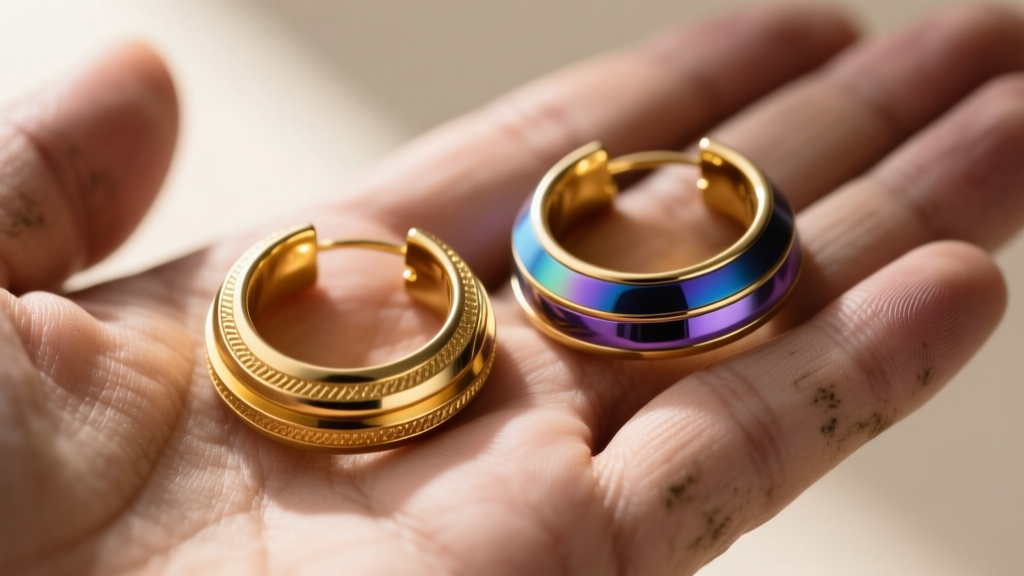
Gauge Thickness and Structural Integrity
The gauge of a hoop earring refers to the thickness of the wire or tubing used to form the ring. Selecting the correct gauge is critical for preventing the 'cheese-cutter effect,' where a wire that is too thin slowly migrates through the tissue under the weight of the jewelry. Wire drawing and work-hardening processes also dictate how much tensile stress the hoop can endure before permanently deforming.
| Gauge (AWG) | Millimeter (mm) | Primary Application | Structural Notes |
|---|---|---|---|
| 20g | 0.81mm | Standard Lobe, Nostril | High flexibility, prone to bending if snagged. Not recommended for cartilage. |
| 18g | 1.02mm | Lobe, Helix, Tragus | Optimal balance of weight and strength for standard healed piercings. |
| 16g | 1.29mm | Helix, Conch, Daith, Industrial | Industry standard for cartilage. Provides necessary rigidity to prevent migration. |
| 14g | 1.63mm | Snug, Rook, Thick Lobe | High tensile strength. Requires precise piercing angles to avoid tissue pressure. |
| 12g | 2.05mm | Stretched Lobes, Conch | Heavyweight. Often utilizes tubular construction rather than solid wire to reduce mass. |
According to the Association of Professional Piercers (APP), 16g (1.29mm) is the minimum recommended thickness for any initial cartilage piercing to ensure structural stability and minimize rejection risks. Upgrading from an 18g to a 16g metal hoop earring in a healed helix piercing can significantly reduce localized swelling caused by jewelry movement.
Mechanical Failure Points in Closure Systems
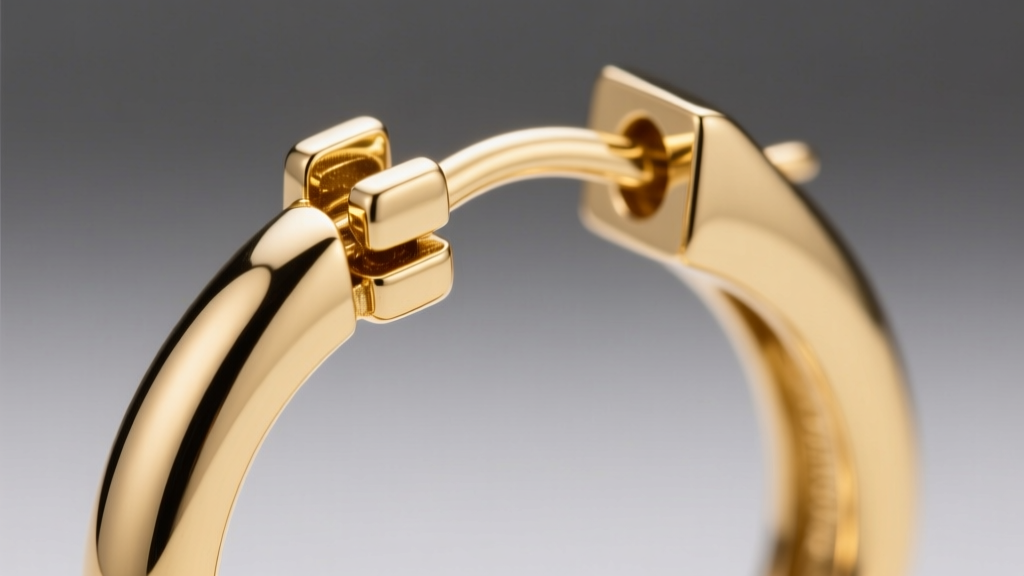
The closure mechanism of a hoop earring is its most vulnerable mechanical failure point. The repetitive stress of opening and closing the ring introduces metal fatigue, particularly at the hinge or segment joint. Understanding the engineering behind these closures is vital for long-term wearability.
- Hinged Segment Rings: These feature a microscopic stainless steel or titanium pin acting as a fulcrum. While convenient, the hinge pin is susceptible to shearing if the wearer forces the ring open beyond its intended 90-degree arc. High-end brands use CNC-machined tolerances to ensure the seam is virtually invisible when closed, preventing hair and lint from catching in the joint.
- Clickers: Utilizing a spring-loaded latch that produces an audible 'click,' these are highly secure but mechanically complex. The internal spring mechanism can become jammed by sebum, dead skin cells, or ultrasonic cleaning solutions if not properly maintained. They are ideal for daith and rook piercings where manipulating a standard clasp is physically difficult.
- Continuous (Segment) Rings: A minimalist design where a slightly thinner segment wire plugs into a hollow tubular receiver. The retention relies entirely on the tensile memory of the metal. Over time, repeated insertion can stretch the receiver tube, leading to a loose fit and accidental loss of the segment.
- Captive Bead Rings (CBR): These rely on the inherent outward spring tension of the ring to hold a small bead in place. While they lack mechanical hinges that can break, they require specialized ring-opening pliers for insertion. If the ring is under-tensioned, the bead will pop out; if over-tensioned, it can cause micro-tears in the fistula during insertion.
Sizing Geometry: Inner Diameter vs. Tissue Swelling
The sizing of metal hoop earrings is measured by the Inner Diameter (ID), not the Outer Diameter (OD). This distinction is crucial because the thickness of the wire (gauge) directly impacts how much physical space is left inside the ring for the ear tissue. A 10mm ID hoop made from 16g wire will fit significantly tighter than a 10mm ID hoop made from 20g wire, despite sharing the same nominal size.
For cartilage piercings like the helix or conch, the natural curvature of the ear must be accounted for. A hoop with an ID that is too small will press against the outer edge of the piercing channel, creating localized pressure necrosis and encouraging the formation of hypertrophic scarring or irritation bumps. Expert piercers typically recommend an ID that allows for at least 2mm to 3mm of clearance to accommodate natural tissue swelling, which can fluctuate based on ambient temperature, sleep pressure, and systemic hydration levels.
'A properly fitted hoop should follow the natural anatomical contour of the ear without exerting lateral pressure on the fistula. When in doubt regarding swelling coefficients, sizing up by 1.5mm in diameter is a safer biomechanical choice than sizing down.' — Advanced Piercing Geometry Guidelines.
Expert Maintenance and Ultrasonic Protocols
To maintain the structural integrity and biocompatibility of metal hoop earrings, rigorous cleaning protocols must be followed. The crevices of hinged closures and the internal threading of clickers act as traps for environmental debris and cellular buildup. Submerging the jewelry in an ultrasonic cleaner filled with a mild, non-ammoniated surfactant for 3 to 5 minutes will dislodge microscopic particulates without degrading the alloy matrix.
Avoid the use of harsh chemicals, rubbing alcohol, or hydrogen peroxide, particularly on anodized niobium or porous gemstone inlays, as these can strip the oxide layer or fracture the stone settings. For solid gold and titanium hoops, a final polish with a microfiber cloth restores the mirror finish by removing microscopic water spots. By treating your metal hoop earrings as precision-engineered medical devices rather than mere accessories, you ensure a lifetime of comfortable, irritation-free wear.


