Earrings Healing Time: How Material Choices Speed Recovery
Discover how metal grades impact your earrings healing time. Compare titanium, gold, and steel to optimize lobe and cartilage piercing recovery.

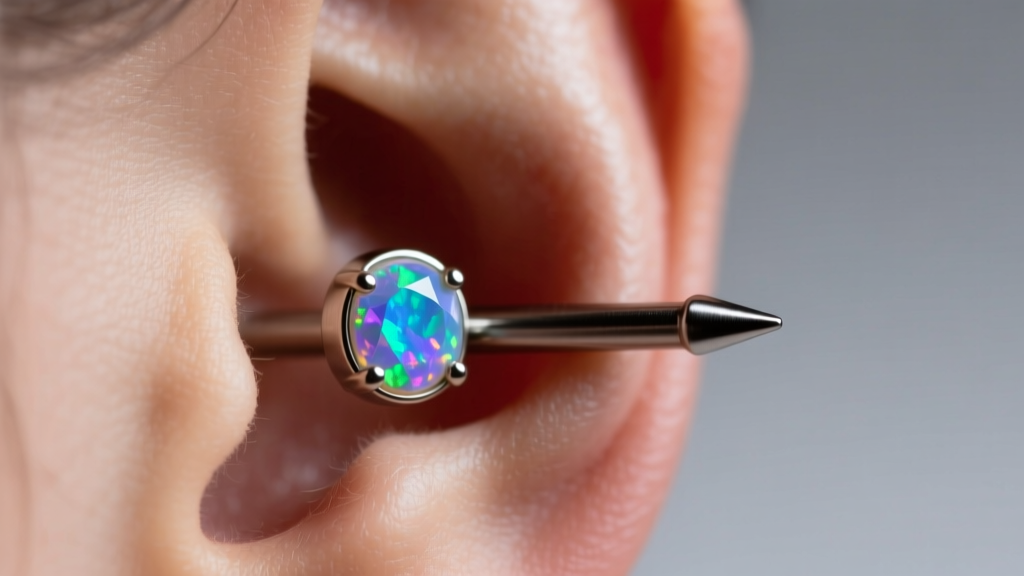
When navigating the delicate journey of a new piercing, most of the focus is placed on aftercare routines like sterile saline sprays and avoiding sleeping on the affected side. However, one of the most critical, yet frequently overlooked, variables that dictates your earrings healing time is the metallurgical composition of the jewelry itself. The human body is remarkably sensitive to the metals it interacts with, and introducing the wrong alloy into an open wound can trigger immune responses that stall recovery for months.
In 2026, professional piercing standards have evolved significantly, moving away from outdated 'surgical steel' recommendations toward highly specific, biocompatible materials. Understanding the properties of these metals is the key to minimizing irritation bumps, preventing contact dermatitis, and achieving the fastest possible earrings healing time for both soft tissue lobes and dense cartilage placements.
The Science of Piercing Recovery and Metal Reactivity
When an ear is pierced, the body immediately begins constructing a fistula—a protective tube of scar tissue that lines the piercing channel. For this tissue to mature efficiently, the environment must remain stable, inert, and free of microscopic irritants. If a metal leaches ions into the wound bed, the immune system dispatches macrophages to attack the foreign invaders. This chronic inflammation diverts energy away from tissue regeneration, drastically extending your earrings healing time.
Furthermore, the physical surface finish of the metal matters. High-polish, mirror-finished metals resist bacterial adhesion. Conversely, porous or scratched metals harbor biofilm, creating a breeding ground for staphylococcus bacteria that can lead to localized infections and prolonged weeping.
Material Breakdown: What to Wear for the Fastest Recovery
Not all metals are created equal. According to the Association of Professional Piercers (APP), only a select few materials possess the necessary biocompatibility for fresh piercings. Here is how the top-tier options compare.
ASTM F-136 Implant-Grade Titanium (The Gold Standard)
Implant-grade titanium (specifically alloyed to ASTM F-136 or F-67 standards) is the undisputed champion for minimizing earrings healing time. It contains zero nickel, making it entirely hypoallergenic. Titanium is highly resistant to corrosion from wound exudate and saline solutions. When polished to a mirror finish, it offers a frictionless surface that allows the delicate fistula to form without micro-tearing. Expect to pay between $35 and $90 for high-quality, threadless titanium ends and posts.
Niobium (The Hypoallergenic Alternative)
Niobium is an elemental metal, meaning it is not alloyed with other reactive metals. It is exceptionally well-tolerated by the human body and is often used for initial cartilage piercings or hoop placements where rigid titanium posts are unsuitable. While slightly heavier than titanium, its inert nature ensures that your earrings healing time is not delayed by allergic contact dermatitis.
Solid 14k or 18k Gold (The Luxury Option)
Gold can be an excellent choice for fresh piercings, provided it meets strict criteria. It must be 14k or 18k and alloyed with biocompatible metals like palladium or silver—never nickel. Avoid 24k gold, as its extreme softness makes it prone to scratching, which can harbor bacteria and delay healing. Properly alloyed gold offers a smooth surface and excellent biocompatibility, though it commands a premium price, often ranging from $120 to over $400 per piece.
Surgical Stainless Steel (The Risky Budget Option)
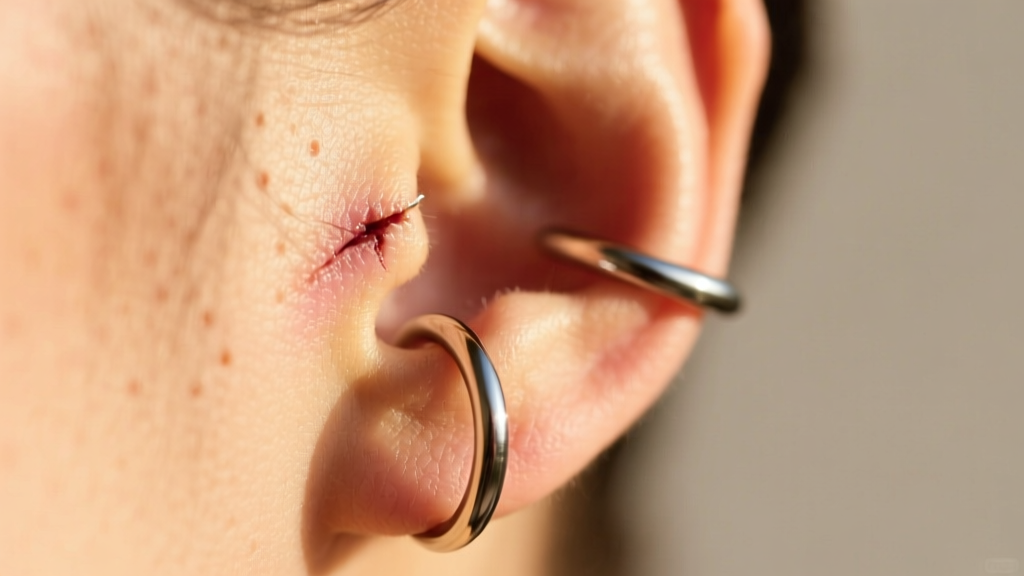
Often marketed as 'surgical steel' (typically 316L VM), this alloy contains between 8% and 10% nickel. While the nickel is bound within the alloy, the saline environment of a fresh wound can cause microscopic leaching. For the estimated 15-20% of the population with nickel sensitivities, this exposure triggers an immune response, resulting in itching, swelling, and an earrings healing time that can stretch from a standard 8 weeks to over 6 months of chronic irritation.
Earrings Healing Time Comparison Chart
The table below outlines expected recovery timelines based on material choice and piercing placement, assuming proper aftercare protocols are followed.
| Material Grade | Lobe Healing Time | Cartilage Healing Time | Nickel Risk | Avg. Price Range |
|---|---|---|---|---|
| ASTM F-136 Titanium | 6 - 8 Weeks | 6 - 9 Months | None | $35 - $90 |
| Niobium | 6 - 8 Weeks | 6 - 9 Months | None | $30 - $75 |
| 14k/18k Palladium Gold | 6 - 10 Weeks | 8 - 12 Months | None | $120 - $400+ |
| 316L Surgical Steel | 8 - 14 Weeks | 10 - 18 Months | High | $15 - $40 |
Hidden Saboteurs: Materials That Prolong Healing
If your piercing has stalled, review your jewelry choices. Certain materials should never be introduced to a fresh wound due to their chemical instability or physical porosity.
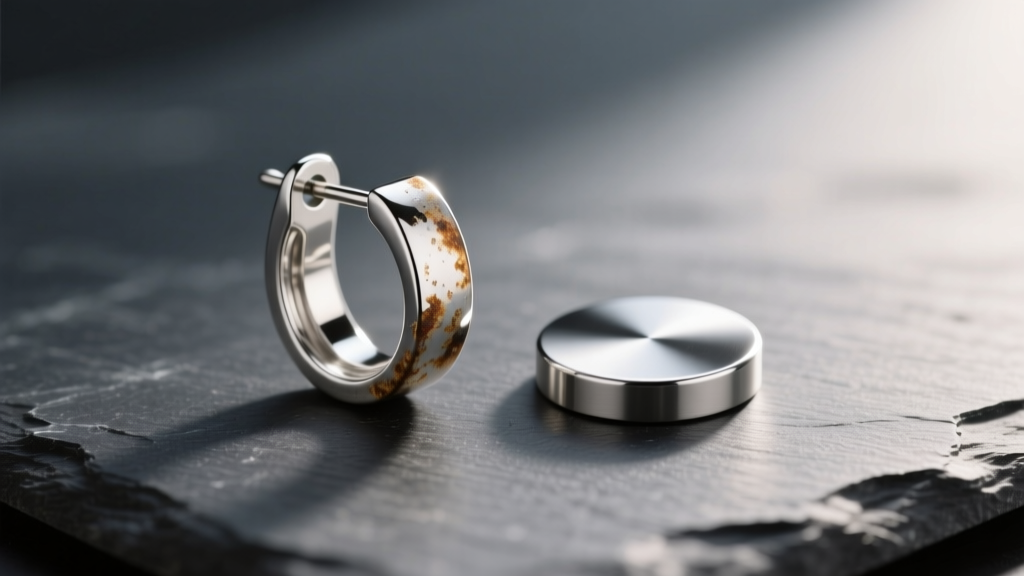
- Sterling Silver (925): Silver contains 7.5% copper. When exposed to the oxygen and moisture of a healing fistula, it oxidizes rapidly. This tarnish can permanently stain the healing tissue, a condition known as localized argyria, leaving a permanent grey or black ring around the piercing hole.
- Bioplast and PTFE: While flexible and seemingly gentle, these plastics are highly porous at a microscopic level. They act as sponges for bacteria and biofilm, virtually guaranteeing prolonged irritation and extending your earrings healing time significantly.
- Plated or Dipped Metals: Gold-plated or silver-plated brass relies on a microscopically thin layer of precious metal. The friction of a healing wound will quickly wear this layer away, exposing the highly reactive base metals underneath to raw tissue.
Expert Protocols for Optimizing Your Recovery
Selecting the right metal is only the first step. To truly optimize your earrings healing time, you must pair biocompatible materials with modern piercing mechanics and precise aftercare.
The Downsizing Protocol
When a cartilage piercing (like a helix or conch) is initially performed, the piercer will use a longer titanium post to accommodate for immediate swelling. However, if this long post is left in place after the swelling subsides (usually around the 4 to 6-week mark), it will catch on hair, clothing, and pillows. This constant micro-trauma is the primary cause of hypertrophic scarring, commonly known as 'irritation bumps.' Scheduling a downsizing appointment to swap to a snug-fitting post is non-negotiable for a smooth, fast recovery.
Threadless vs. Internally Threaded
Never wear externally threaded jewelry (where the screw is on the post that passes through the wound). The sharp threads act like a cheese grater on the delicate fistula every time the jewelry is inserted or removed. Opt for threadless (push-pin) titanium jewelry or internally threaded pieces, where the post is completely smooth, ensuring zero tissue disruption during adjustments.
'The transition from traditional surgical steel to verified implant-grade titanium has been the single most effective advancement in reducing chronic piercing inflammation and shortening overall healing timelines over the last decade.' — Modern Clinical Piercing Standards, 2025 Review
Targeted Saline Application
According to dermatological research published by the National Center for Biotechnology Information (NCBI), maintaining a clean, balanced wound environment is critical for preventing contact dermatitis. Spray a sterile, 0.9% sodium chloride solution (with no additives, preservatives, or fragrances) onto the piercing twice daily. Avoid harsh chemicals like tea tree oil, rubbing alcohol, or hydrogen peroxide, which destroy the fragile new cells trying to build your fistula.
Final Thoughts on Material Science and Healing
Ultimately, your earrings healing time is a direct reflection of how well your chosen jewelry cooperates with your body's biology. By investing in ASTM F-136 titanium, high-karat palladium-alloyed gold, or pure niobium, you eliminate the chemical friction that causes chronic inflammation. Treat your fresh piercing with the metallurgical respect it demands, and your body will reward you with a swift, seamless, and beautiful recovery.


