Choosing the Best Earring Blanks: A Metal Properties Guide
Compare metals for custom earring blanks. Explore titanium, niobium, and silver properties, gauge sizes, and hypoallergenic grades for jewelry making.

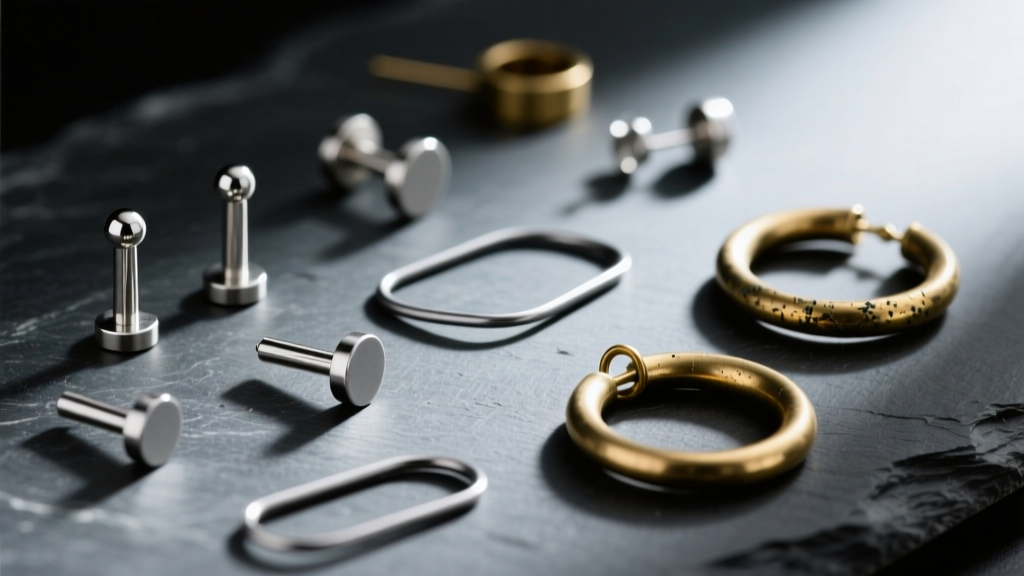
The Foundation of Custom Jewelry: Understanding Earring Blanks
In the world of custom jewelry design and DIY crafting, the focal point—a stunning gemstone, a delicate resin cast, or a hand-stamped metal charm—often steals the spotlight. However, the structural and dermatological success of any piece relies entirely on the earring blanks you choose. Earring blanks encompass the raw posts, French hooks, huggie hoops, and leverbacks that interface directly with the human body. Selecting the wrong metal blank doesn't just risk structural failure; it can trigger severe contact dermatitis, tarnish rapidly, or snap under the tension of daily wear.
As we navigate the 2026 jewelry making landscape, consumer awareness regarding metal sensitivities and material transparency is at an all-time high. Makers can no longer rely on generic 'hypoallergenic' labels. Today's discerning clientele demands verifiable metallurgical data. This comprehensive guide dissects the material properties, failure modes, and ideal applications for the most common earring blanks on the market, empowering you to make informed, professional-grade sourcing decisions.
The Hypoallergenic Tier: Titanium, Niobium, and Surgical Steel
When designing for freshly pierced lobes or hyper-sensitive cartilage, the metal blank must be biologically inert. The European Nickel Directive (EN 1811:2011+A1:2015) strictly limits nickel release from post assemblies to 0.2 µg/cm²/week, a standard that immediately disqualifies many cheap alloys.
Implant-Grade Titanium (ASTM F136)
Titanium is the undisputed king of sensitive-ear blanks, but not all titanium is created equal. Commercially pure titanium (ASTM F67) is acceptable, but Implant-Grade Titanium (ASTM F136)—specifically Ti-6Al-4V ELI (Extra Low Interstitial)—is the gold standard for body jewelry. This alloy contains virtually no nickel and boasts a passivation layer of titanium dioxide that forms instantly upon exposure to oxygen, rendering it completely impervious to bodily fluids. When sourcing titanium stud blanks, always request the mill certificate from your supplier to verify the F136 grade. Failure to do so often results in receiving commercial-grade titanium, which may contain trace nickel impurities from the smelting process.
Niobium: The Anodizer's Dream
Niobium (Element 41) is a highly unreactive, nickel-free transition metal. Unlike titanium, niobium earring blanks are exceptionally malleable, making them the premier choice for seamless ring blanks and French hook wires that require hand-bending. According to the European Centre for Allergy Research Foundation (ECARF), niobium is completely safe for severe nickel allergy sufferers. Furthermore, niobium is anodic; by applying varying voltages via an anodizer, makers can permanently alter the surface oxide layer to produce vibrant, non-toxic colors without using paints or platings that might chip off inside a piercing.
The 316L Surgical Steel Caveat
316L stainless steel is widely marketed as 'surgical' and 'hypoallergenic,' but this is a dangerous misnomer for earring blanks. 316L contains roughly 8-10% nickel. While the nickel is largely trapped within the steel's crystalline matrix, the friction of insertion and the acidic nature of sebum can cause microscopic nickel leaching over time. It is perfectly suitable for healed ears and outer-cartilage hoops, but it should never be used for fresh piercing blanks or marketed to consumers with known metal allergies.
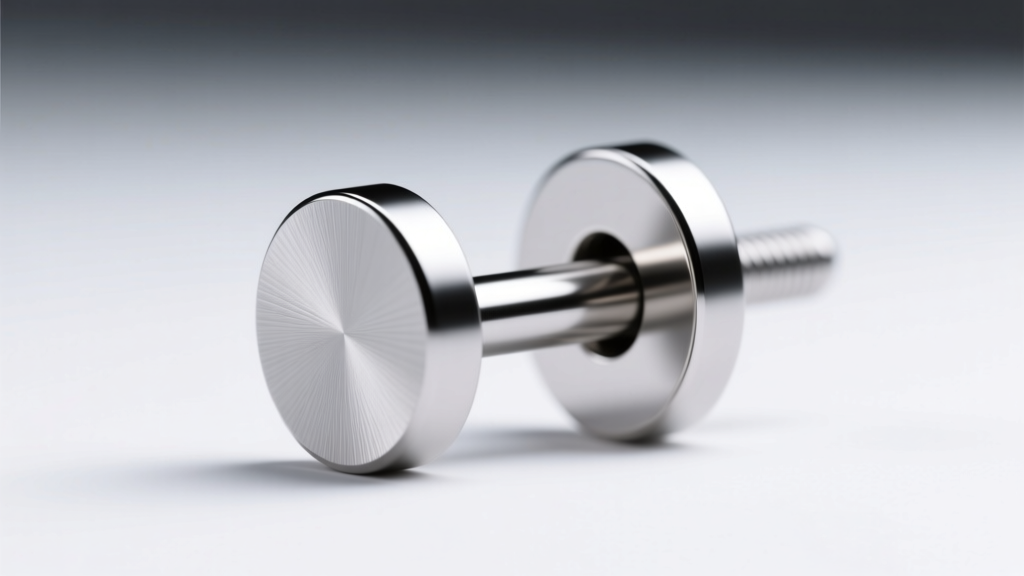
Precious Metals: Sterling Silver and Gold-Filled Blanks
For makers focusing on luxury aesthetics without the prohibitive cost of solid 14k or 18k gold blanks, precious metal alternatives dominate the market. However, their chemical properties dictate strict handling and storage requirements.
The Tarnish Reality of 925 Sterling Silver
Sterling silver is an alloy consisting of 92.5% pure silver and 7.5% copper. Pure silver is too soft to hold the shape of an earring wire or the tension of a clutch post. The copper addition provides necessary tensile strength but introduces a critical vulnerability: oxidation. When exposed to sulfur compounds in the air and human sweat, the copper reacts to form silver sulfide—the black tarnish familiar to all silversmiths. When using 925 silver earring blanks, always treat them with an anti-tarnish coating or store them in activated-carbon ziplock bags. Never use silver blanks for unhealed piercings, as the oxidation process can cause argyria (a permanent grey staining of the tissue).
Gold-Filled vs. Gold-Plated Wire and Posts
The Federal Trade Commission (FTC) Jewelry Guides strictly regulate the terminology surrounding gold alternatives. Gold-filled blanks (often stamped 14/20 GF or 1/20 14k GF) consist of a brass core that has been mechanically bonded to a karat gold shell using extreme heat and pressure. By law, the gold layer must constitute at least 1/20th (5%) of the total weight of the metal. This thick layer ensures that gold-filled French hooks and hoop blanks will not flake, peel, or expose the brass core under normal wear conditions, making them a highly durable, mid-tier luxury option.
Conversely, gold-plated blanks are created via electroplating, depositing a microscopic flash of gold (often less than 0.5 microns thick) over a base metal. The friction of a butterfly clutch or the natural oils of the earlobe will wear through gold plating in a matter of weeks, exposing the underlying brass or steel and leading to rapid discoloration and skin reactions.
| Material Grade | Alloy Composition | Nickel-Free? | Tarnish Resistance | Avg. Cost (per gross) | Best Application |
|---|---|---|---|---|---|
| Implant Titanium | Ti-6Al-4V ELI (F136) | Yes | Excellent | $18 - $35 | Fresh piercings, medical-grade studs |
| Niobium | Element 41 (Pure) | Yes | Excellent | $25 - $45 | Seamless hoops, anodized wires |
| 316L Steel | Fe, Cr, Ni, Mo | No (8-10%) | Good | $4 - $8 | Healed lobe hooks, heavy charms |
| 925 Silver | 92.5% Ag, 7.5% Cu | Yes | Poor (Tarnishes) | $60 - $110 | High-end soldered studs, leverbacks |
| 14k Gold-Filled | Brass core, 5% 14k Au | Usually* | Very Good | $40 - $80 | Everyday luxury hoops, French wires |
| Raw Brass | Cu, Zn | Yes | Poor (Oxidizes) | $3 - $6 | Prototyping, coated/enameled pieces |
*Note: While the gold layer in gold-filled blanks is nickel-free, some individuals with extreme brass sensitivities may react if the layer is compromised.
Base Metals: Brass, Copper, and Their Failure Modes
Base metals like raw brass (an alloy of copper and zinc) and copper are incredibly popular for indie makers due to their low cost, warm aesthetic, and ease of stamping. However, they possess high reactivity. The most common failure mode is the 'green ear' effect. This is not an allergic reaction, but rather a chemical one: the acids in human sweat react with the copper in the brass to form copper chloride, a green salt that transfers to the skin.
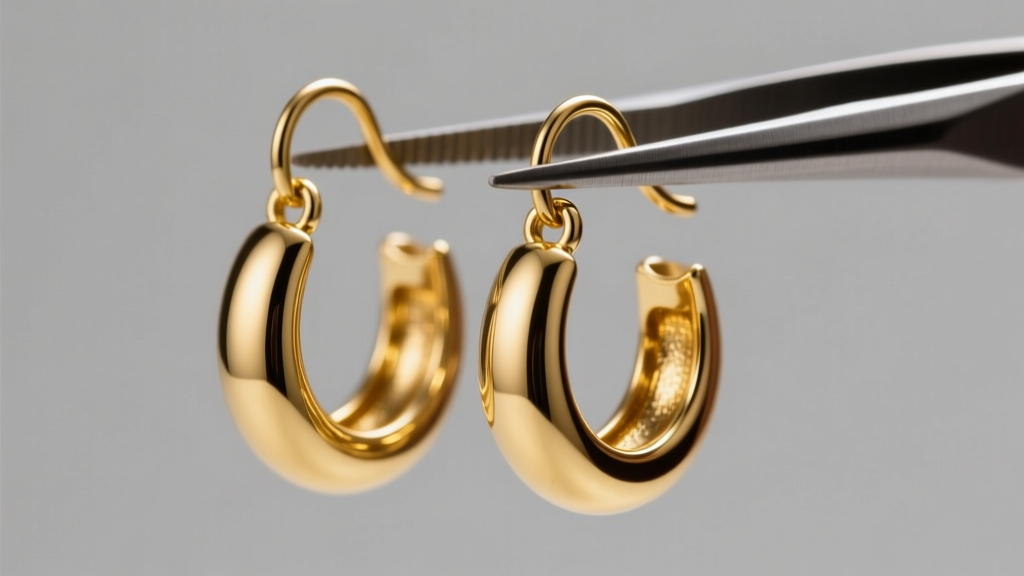
Preventing the Green Ear Effect
If your design requires the use of brass or copper earring blanks, you must implement a barrier. Clear nail polish is a common DIY myth; it chips rapidly and contains solvents that can degrade certain gemstones. Professional makers should use specialized jewelry sealants like EuroTool's ProtectaClear or a PVD (Physical Vapor Deposition) clear-coat applied by a professional plating service. Alternatively, restrict the use of raw brass to the decorative fronts of the earrings, soldering them onto 925 silver or titanium posts so that only the inert metal touches the skin.
Selecting the Right Gauge and Post Length
Material properties mean nothing if the physical dimensions of the blank are incorrect for the intended anatomy. The American Wire Gauge (AWG) system dictates the thickness of earring wires and posts. Understanding these metrics prevents tearing, migration, and discomfort.
- 22-Gauge (0.64mm): Extremely delicate. Used primarily for lightweight, dangling French hooks intended for fully healed, standard lobe piercings. Too thin for heavy charms; will easily bend out of shape.
- 20-Gauge (0.81mm): The industry standard for lobe earrings. Most butterfly clutches, standard stud posts, and lightweight hoop blanks are manufactured in 20g. It offers the perfect balance of structural rigidity and insertion comfort.
- 18-Gauge (1.02mm): The standard for cartilage piercings (helix, tragus, conch) and heavier hoops. The increased thickness prevents the 'cheese-cutter effect,' where a thin wire slowly migrates through the tissue under the weight of a heavy charm.
- 16-Gauge (1.29mm): Rarely used for standard earring blanks, but essential for industrial bars, scaffolds, and heavy-duty structural hoops.
Post length is equally critical. Standard lobe posts are 8mm to 10mm long. However, for thick cartilage or freshly pierced lobes experiencing swelling, makers must source 12mm to 14mm flat-back labret blanks to accommodate the tissue expansion without embedding the jewelry.
Sourcing and Quality Control for Makers
When ordering earring blanks in bulk, never skip the quality control phase. A common issue with overseas-manufactured sterling silver blanks is inconsistent alloying, where the copper content exceeds 7.5%, leading to rapid brittleness and snapping at the solder joint. Always perform a spot-test with silver testing acid on a random sample from each gross. For titanium blanks, use a strong rare-earth magnet; true titanium is entirely non-magnetic. If your 'titanium' posts exhibit even a slight magnetic pull, you have likely been sold nickel-plated steel, a liability waiting to happen.
Expert Maker Tip: 'Always invest in flat-pad titanium blanks rather than cup-pad blanks for resin and glass work. The flat surface provides a larger bonding area for UV resin and E6000 adhesive, reducing the sheer-stress failure rate by over 60% compared to the curved surface of a traditional cup pad.'
By prioritizing metallurgical integrity over upfront cost, jewelry makers can elevate their brand reputation, eliminate customer returns due to skin irritation, and ensure their custom creations stand the test of time.


