Best Metals for Three Stone Diamond Earrings Settings
Compare platinum, 18k gold, and palladium for three stone diamond earrings. Discover the best metal properties for secure, lasting earring settings.

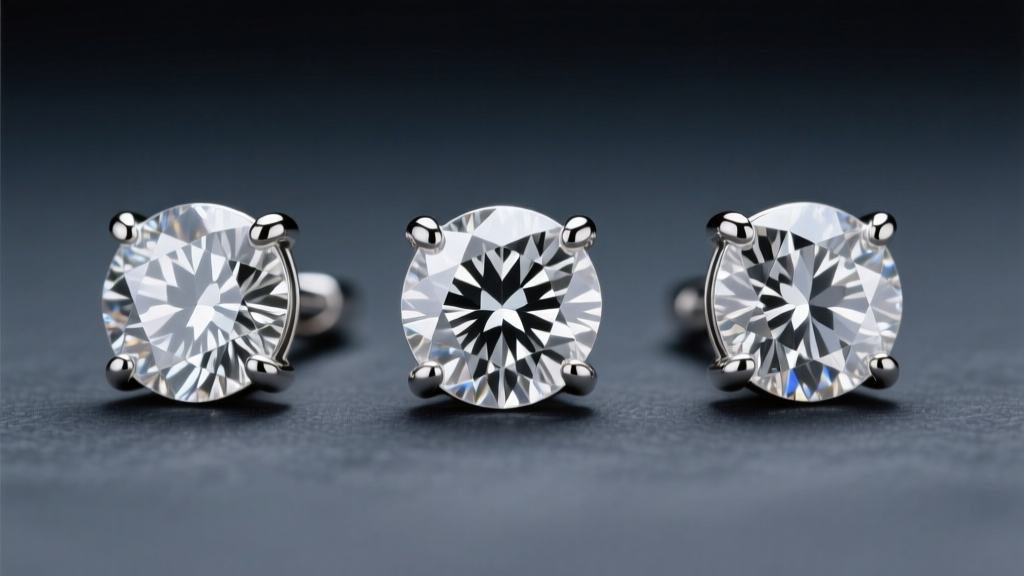
When selecting three stone diamond earrings, most buyers focus exclusively on the diamonds' carat weight, color, and clarity. However, the metallurgical properties of the setting dictate the longevity, security, and comfort of the piece. A linear three-stone design introduces unique structural challenges: the elongated basket creates a lever arm that places disproportionate stress on the earring post, the earlobe, and the prongs securing the outer stones. Choosing the correct metal alloy is not merely an aesthetic decision; it is an engineering necessity.
The Engineering Challenge of Linear Earring Baskets
Unlike a single solitaire stud where the weight and center of gravity are concentrated directly over the ear piercing, three stone diamond earrings distribute mass across a horizontal or vertical axis. This creates a fulcrum effect. If the metal alloy lacks adequate tensile strength or yield strength, the basket will warp over time, causing the earring to droop or the diamonds to fall out of alignment. Furthermore, the post must be thicker than standard solitaire posts—typically upgrading from a standard 0.8mm diameter to a 1.0mm or 1.2mm diameter—to resist bending under the dynamic loads of daily wear.
Metallurgical Comparison: Platinum vs. White Gold vs. Palladium
To understand which metal will best secure your three stone diamond earrings, we must examine the specific alloy compositions and their mechanical properties. Jewelry manufacturers utilize different alloys that drastically alter the metal's Vickers hardness (HV) and malleability.
| Metal Alloy | Composition | Vickers Hardness (HV) | Prong Durability | Casting & Repairability |
|---|---|---|---|---|
| 950 Platinum / 5% Ruthenium | 95% Pt, 5% Ru | 135 | Excellent (Bends, won't snap) | Superior cast detail, easy to laser weld |
| 18k Palladium White Gold | 75% Au, 25% Pd | 125 | Good (Requires rhodium plating) | Good, but prone to porosity if cast poorly |
| 14k Nickel White Gold | 58.5% Au, Ni/Cu/Zn | 145 | Poor (Brittle, prone to snapping) | Hard to resize or repair without cracking |
| 950 Palladium | 95% Pd, 5% Ru | 110 | Fair (Soft, wears down over time) | Difficult to cast, requires specialized torches |
According to metallurgical data from Hoover & Strong, a leading precious metal refiner, platinum's unique property is its malleability. When a platinum prong is struck or snagged, it displaces rather than fractures. In contrast, 14k white gold, while harder on the Vickers scale, is highly brittle. A snag on a three-stone linear basket made of 14k white gold can result in a prong snapping cleanly off, leading to immediate stone loss.
Prong Architecture and Tensile Requirements
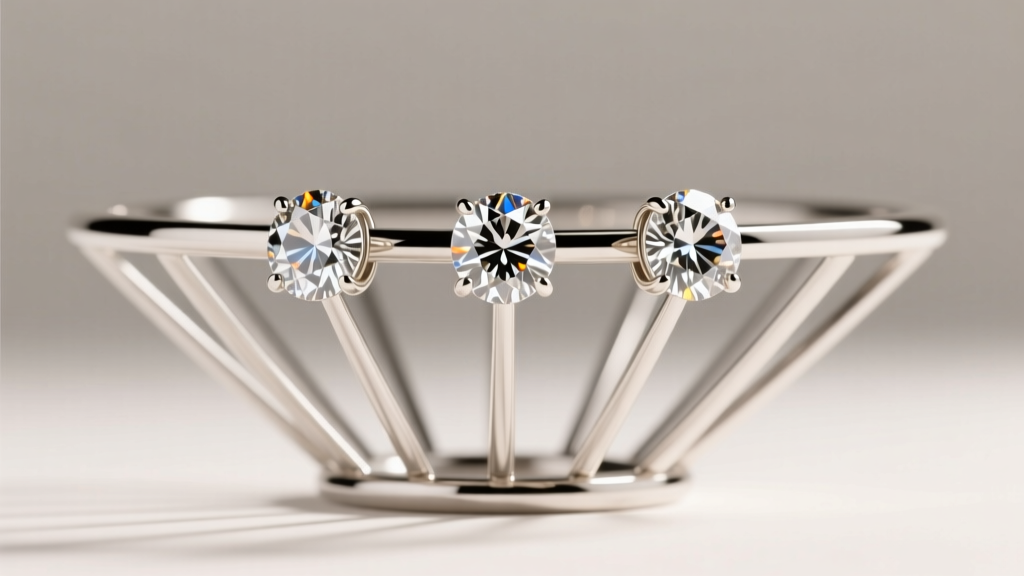
Three stone diamond earrings frequently utilize shared prongs to minimize metal visibility and maximize light return. In a shared prong configuration, a single metal bead or wire secures the girdles of two adjacent diamonds. This requires precise tension. If the metal is too rigid, the jeweler cannot properly burnish the prong over the diamond without risking damage to the stone.
Diamond Cleavage and Setting Stress
Diamonds rank a 10 on the Mohs scale of hardness, meaning they are highly resistant to scratching. However, as noted by the Gemological Institute of America (GIA), diamonds possess perfect octahedral cleavage. This means that if struck at the right angle, or subjected to uneven, localized pressure from a rigid metal prong, the diamond can cleave or chip.
When setting three stone diamond earrings, the jeweler must use a metal that allows for gradual, controlled pressure. 950 Platinum/Ruthenium allows the setter to push the prong smoothly over the girdle, whereas work-hardened 14k white gold can transfer sudden, brittle force that risks cleaving the diamond.
For three-stone settings, the outer prongs should be cast or fabricated at a minimum of 0.8mm in diameter, while shared inner prongs can be slightly thinner at 0.6mm, provided the metal is platinum or a high-palladium white gold alloy.
The Critical Role of Earring Backings
The material properties of the earring post and backing are just as vital as the basket holding the diamonds. Three stone diamond earrings of a 1.50 to 3.00 total carat weight typically weigh between 2.5 and 4.5 grams per earring. Standard friction backs (butterfly backs) rely on the tension of a thin stamped metal scroll. Under the weight of a three-stone drop or elongated stud, friction backs will gradually stretch and fail, leading to the loss of the earring.
Recommended Backing Mechanisms
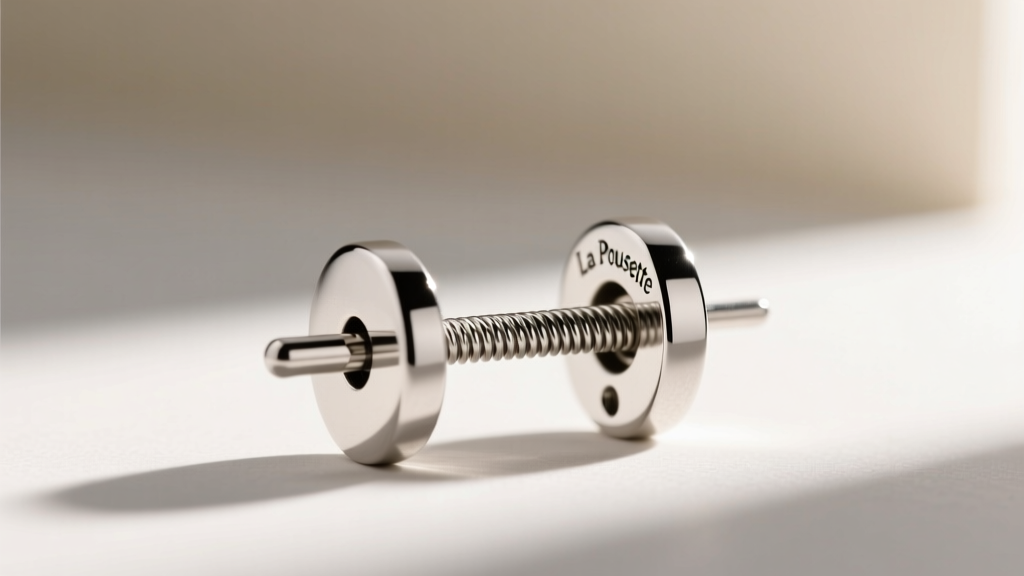
To counteract the leverage and weight of three stone diamond earrings, you must specify mechanical locking backings. These are typically crafted from 18k gold or platinum to match the tensile strength of the post.
- La Pousette Locking Backs: These operate like a miniature camera shutter. A mechanical spring inside the backing grips a precisely machined notch on the earring post. They are the gold standard for heavy diamond earrings.
- Screw Backs: The post is threaded, and the backing screws onto it. While highly secure, they require perfectly matched threading. If the threads are cut poorly, the backing will strip or cross-thread, rendering the earring unwearable.
- Omega Clips (for non-pierced or clip-on adaptations): If designing three stone diamond earrings for non-pierced ears, the metal must have high 'spring-back' memory. Platinum is generally too malleable for the omega clip hinge; 18k spring gold (a specialized alloy) is required to maintain the clamping force over thousands of articulation cycles.
Pricing Implications and Long-Term Value
Choosing the optimal metal for three stone diamond earrings impacts the initial investment and long-term maintenance. A platinum setting will typically cost 30% to 50% more than an 18k white gold equivalent due to the density of the metal and the higher melting temperatures required during the casting process. Furthermore, 18k white gold requires rhodium plating every 12 to 18 months to maintain its bright white appearance, as the underlying alloy has a faint yellowish-grey hue. Platinum, being naturally white, does not require rhodium plating, making it more cost-effective over a decade of wear.
Final Verdict: Selecting the Optimal Alloy
For heirloom-quality three stone diamond earrings, 950 Platinum alloyed with 5% Ruthenium is the undisputed superior choice. Its combination of high yield strength, malleability for secure prong setting, and natural white color ensures that the structural integrity of the linear basket is maintained without subjecting the diamonds to cleavage risks. If budget constraints necessitate the use of gold, opt for 18k Palladium White Gold over 14k Nickel White Gold, and ensure the earring posts are upgraded to a minimum 1.0mm diameter paired with La Pousette locking backs to mitigate the fulcrum effect of the three-stone design.


