The Most Popular Types of Stud Earrings for 2026 Trends
Discover the top types of stud earrings defining 2026 jewelry trends. Explore material grades, gauge sizes, and styling tips for every piercing.

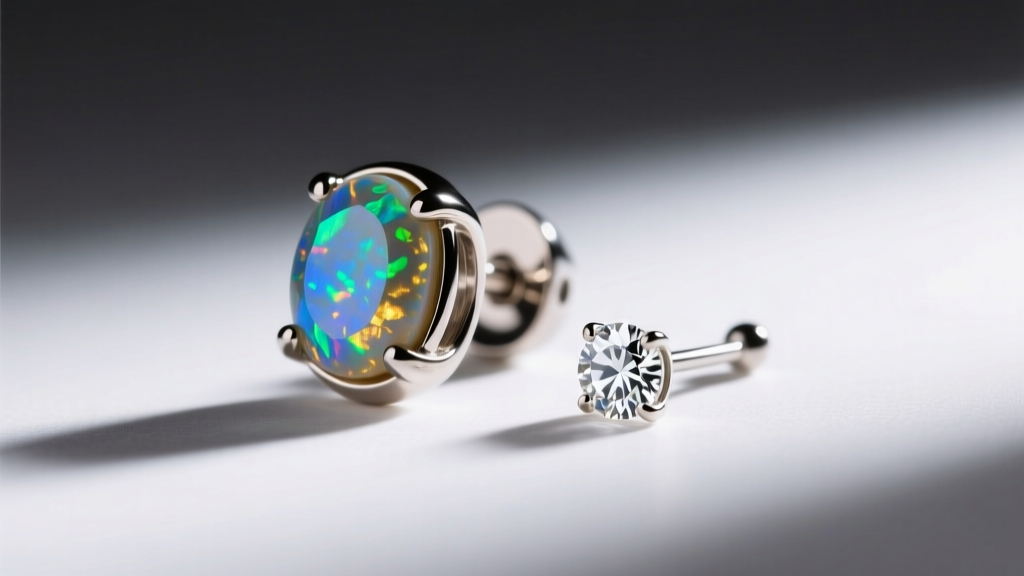
The Evolution of the Stud: From Classic to Avant-Garde
The humble stud earring has undergone a radical transformation. Once relegated to simple, solitary diamond posts meant for conservative office environments, studs are now the foundational architecture of modern ear curation. As we navigate the jewelry landscape of 2026, the demand for hyper-specific, anatomically correct, and aesthetically intentional stud earrings has never been higher. Consumers are no longer just buying 'a pair of studs'; they are investing in micro-aesthetics, mixing metal tones, and mapping out multi-pierce constellations that require a deep understanding of jewelry mechanics.
At Jewel Style Radar, we track these shifts closely. The transition from mass-produced, high-friction butterfly backs to precision-machined, internally threaded, and threadless body jewelry has completely redefined what qualifies as a premium stud. Understanding the different types of stud earrings is now essential for anyone looking to build a curated ear that is both visually striking and biologically safe for long-term wear.
Decoding the Main Types of Stud Earrings
To build a cohesive ear project, you must understand the structural variations of stud earrings. Each type serves a distinct visual and functional purpose, particularly when transitioning from standard lobe piercings to complex cartilage placements.
1. The Prong-Set Solitaire
The prong-set solitaire remains the undisputed benchmark for light return and brilliance. In 2026, we are seeing a distinct shift away from traditional 4-prong settings toward 3-prong and 6-prong configurations. A 3-prong setting minimizes metal obstruction, allowing maximum light to enter lab-grown diamonds and high-clarity moissanites. However, prong height is a critical failure point. For cartilage piercings like the helix or conch, high-profile prongs will snag on hair and clothing, leading to bent posts and lost gemstones. Premium brands now offer 'low-profile' prong settings where the culet of the gemstone sits closer to the post base, reducing the snag radius by up to 40%.
2. Bezel-Set and Low-Profile Studs
For active lifestyles and healing piercings, the bezel-set stud is the ultimate utilitarian choice. A bezel setting encircles the gemstone with a continuous metal rim. The trend in 2026 favors ultra-thin bezel walls (measuring between 0.2mm and 0.4mm) which provide the security of a bezel without sacrificing the visual footprint of the stone. Bezel studs are the undisputed champions of the 'flat' aesthetic, lying almost flush against the skin, making them the mandatory choice for forward helix and tragus piercings where clearance is minimal.
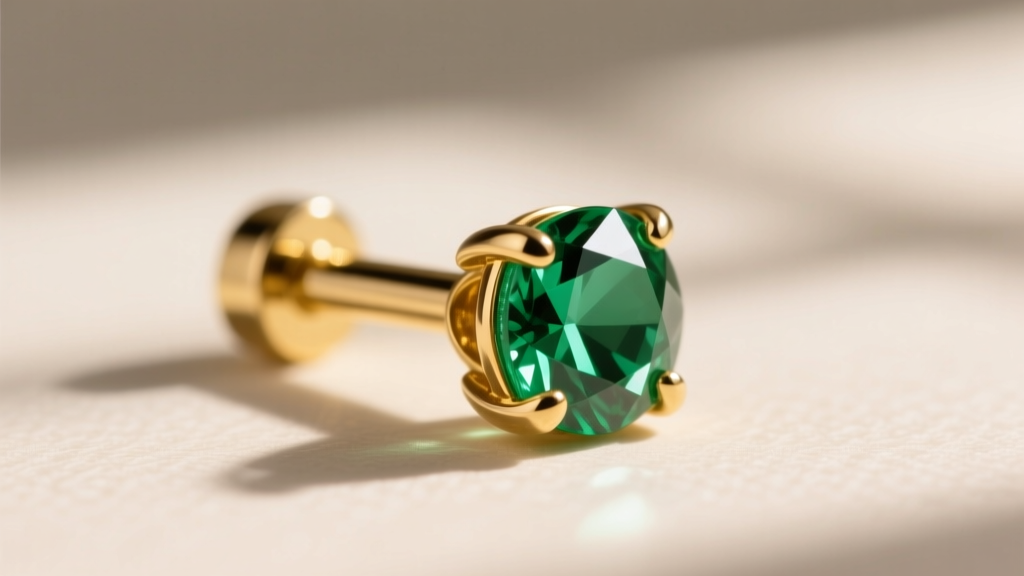
3. Threadless and Internally Threaded Cartilage Studs
If you are browsing high-end body jewelry boutiques, you will encounter threadless (push-pin) and internally threaded studs. According to the Association of Professional Piercers (APP), externally threaded jewelry (where the screw is on the post) is obsolete and damaging to fistulas. Threadless studs utilize a bent pin that creates tension against the inside of a hollow post, offering a secure, seamless look with no visible screw lines. Internally threaded studs feature the screw mechanism inside the decorative end, ensuring the post remains perfectly smooth during insertion. Both types are non-negotiable for fresh cartilage piercings.
4. Cluster and Multi-Gemstone 'Constellation' Studs
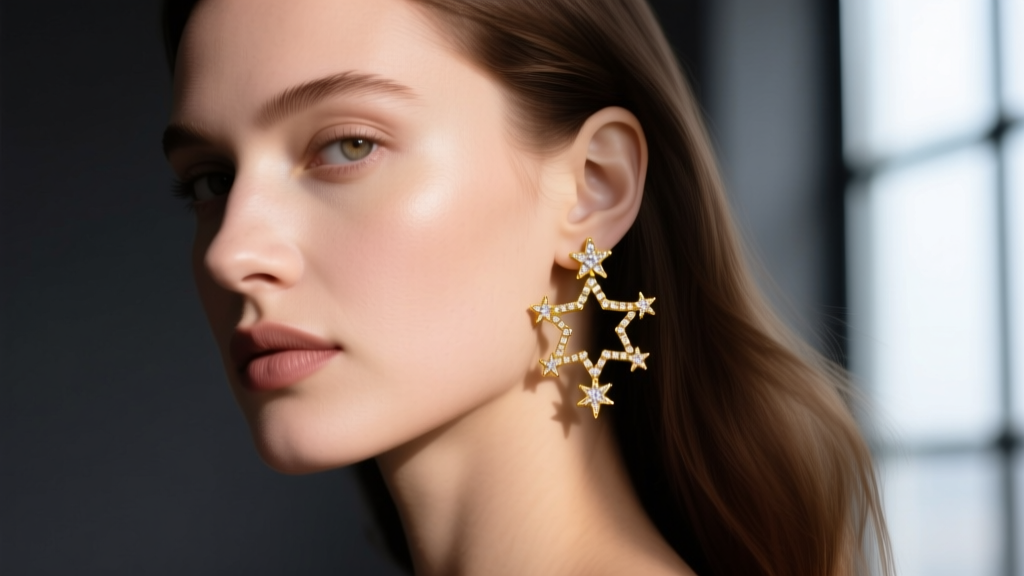
Cluster studs group multiple smaller gemstones into a single, cohesive shape (like a flower, star, or abstract geometric cluster). In the context of the 'curated ear' trend, cluster studs act as anchor pieces. Instead of piercing three separate holes for a floral arrangement, a single cluster stud placed in the conch or upper lobe provides maximum visual impact with only one piercing channel. The 2026 iteration of the cluster stud heavily features asymmetric, organic shapes rather than rigid, symmetrical layouts.
Material Grades and Gauge Specifications
Aesthetics mean nothing if the material triggers contact dermatitis or rejects the piercing. When selecting types of stud earrings, especially for cartilage, you must verify the exact alloy grade. 'Surgical steel' is a largely unregulated marketing term; you must look for specific ASTM certifications.
| Material | Specific Grade / Standard | Best Application | Avg. Price Range (Per Stud) | Standard Gauges |
|---|---|---|---|---|
| Implant-Grade Titanium | ASTM F-136 (Ti6Al4V ELI) | Fresh piercings, metal allergies, MRI safety | $40 - $120 | 16G (1.2mm), 14G (1.6mm) |
| Solid Yellow/White Gold | 14k or 18k (Nickel-Free Alloy) | Healed lobes, luxury cartilage stacks | $150 - $600+ | 18G (1.0mm), 16G (1.2mm) |
| Niobium | Unalloyed, commercially pure | Highly reactive skin, anodized color projects | $30 - $80 | 16G (1.2mm), 14G (1.6mm) |
| Platinum | 950 Platinum (95% Pt, 5% Ru) | Heirloom lobe studs, ultimate hypoallergenic | $800 - $2,500+ | 20G (0.8mm), 18G (1.0mm) |
Trend Forecast: What is Dominating in 2026?
The 2026 jewelry market is defined by 'Intentional Minimalism' and mixed-metal juxtapositions. Here are the specific stud trends dominating the current cycle:
- The 'Floating' Illusion Stud: Utilizing ultra-fine, flesh-toned or matte-black titanium posts that visually disappear, making the gemstone appear as though it is floating directly on the skin without a visible metal bezel or prong.
- Mixed-Metal Stacking: The rigid rule of matching all hardware to one metal color is dead. Stylists are intentionally pairing an 18k yellow gold helix stud with a white gold conch stud and a rose gold lobe cluster to create depth and texture.
- Lab-Grown Diamond Dominance: As noted by the Gemological Institute of America (GIA), lab-grown diamonds have captured the majority of the fashion-forward stud market. This allows consumers to purchase larger carat weights (e.g., 4mm to 6mm rounds) for cartilage studs at a fraction of the mined cost, prioritizing visual scale over traditional resale value.
Practical Buying Framework: Lobe vs. Cartilage
Buying a stud for an earlobe requires entirely different parameters than buying one for a flat or helix piercing. Use this framework to avoid costly purchasing mistakes:
For Standard Earlobes
Standard lobe piercings are typically done at 20G (0.8mm) or 18G (1.0mm). Because lobes are soft tissue, they can support heavier decorative ends. You can safely wear traditional push-pin studs with butterfly friction backs, though upgrading to locking la backs or threadless ends is recommended for security. Post length is generally standard at 6mm to 8mm, as lobe tissue thickness is relatively uniform.
For Cartilage (Helix, Conch, Tragus, Flat)
Cartilage is dense, avascular, and highly prone to irritation bumps if subjected to pressure or friction. Cartilage piercings are almost universally pierced at 16G (1.2mm) or 14G (1.6mm) to provide structural stability. You must purchase 'flat-back' labret studs. The post must be custom-fitted by a professional piercer to match the exact thickness of your cartilage ridge; a post that is too long will catch on hair, while a post that is too short will embed into the swelling tissue. Never use butterfly backs on cartilage piercings.
Maintenance and Failure Modes to Avoid
Even the highest quality types of stud earrings will fail if improperly maintained. Be aware of these common mechanical failure modes:
- Thread Stripping: If you use internally threaded jewelry, never force the decorative end into the post. Cross-threading will permanently ruin the micro-screws. Always back the screw out gently until you feel the threads align before tightening.
- Tension Loss in Threadless Pins: Over time, the bent pin on a threadless stud can lose its tension, causing the gemstone end to fall out. You can easily fix this by removing the end, placing the pin on a soft surface, and gently increasing the bend angle with your fingers before reinserting.
- Prong Wear and Tear: Gold is a relatively soft metal. If you wear prong-set studs daily, the prongs will slowly wear down from friction against pillows and clothing. Have a jeweler inspect the prongs of your expensive diamond or sapphire studs every 12 months to prevent catastrophic stone loss.
By understanding the intricate mechanics, material grades, and styling potential of these different stud variations, you can elevate your jewelry collection from basic accessories to a masterclass in personal styling.


