Moon Hoop Earrings: Material Guide for Sensitive Ears
Discover the best metals for moon hoop earrings. Compare titanium, sterling silver, and gold-filled properties for sensitive ears and cartilage.

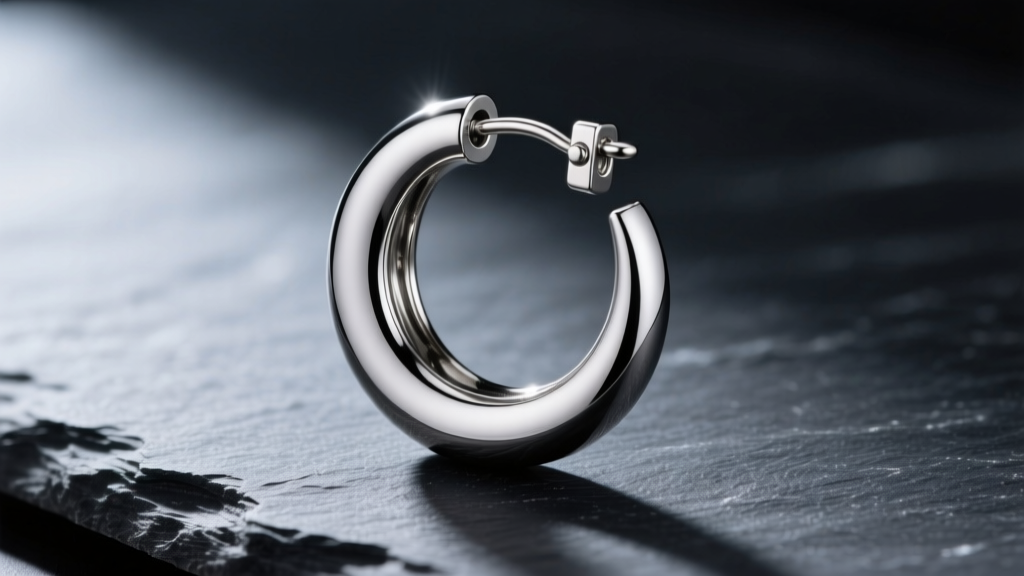
When curating a celestial-themed ear stack, moon hoop earrings are an undeniable staple. Their asymmetrical weight distribution and elegant crescent silhouettes make them visually striking in both standard lobe and upper cartilage piercings. However, the aesthetic appeal of a moon hoop is only as good as the metallurgy behind it. For individuals with sensitive ears, nickel allergies, or healing helix piercings, choosing the wrong alloy can lead to contact dermatitis, hypertrophic scarring, or rapid tarnishing. In this comprehensive material comparison, we break down the exact metallurgical properties, gauge requirements, and failure modes of the most common metals used in moon hoop earrings, ensuring your jewelry is as biocompatible as it is beautiful.
The Anatomy and Weight Distribution of Moon Hoops
Unlike standard circular continuous hoops, moon hoops feature a distinct center of gravity. The crescent shape or attached lunar charm causes the earring to hang slightly forward or rotate within the fistula (the piercing channel). This rotational movement means the metal is in constant, dynamic contact with the delicate tissue of the piercing. If the metal has microscopic porosity or contains reactive alloys like copper or nickel, this friction accelerates both tarnishing and allergic reactions. Therefore, the structural integrity and surface finish of the metal are paramount.
Material Breakdown: What Works Best for Your Piercings?
Implant-Grade Titanium (ASTM F136)
For fresh piercings, highly reactive skin, or cartilage placements like the helix and tragus, implant-grade titanium is the undisputed gold standard. Specifically, you want to look for ASTM F136 or Ti6Al4V ELI (Extra Low Interstitial) certified titanium. This alloy contains zero nickel and is highly resistant to electrochemical corrosion. Because moon hoops in cartilage are prone to being snagged on hair and clothing, titanium's exceptional strength-to-weight ratio ensures the hoop won't bend or warp out of its circular shape, maintaining the perfect closure tension required for a secure clicker or segment ring.
Sterling Silver (925) and the Tarnish Trap
Sterling silver is an alloy containing 92.5% pure silver and 7.5% copper. While it offers a brilliant, moon-like luster, that copper content is a major liability for sensitive ears. When exposed to the sulfur in human sweat and sebum, the copper oxidizes, creating silver sulfide (tarnish). In an unhealed or easily irritated cartilage piercing, this oxidation can cause a localized allergic response or leave a permanent dark stain in the tissue known as an argyria tattoo. If you must wear sterling silver moon hoops, restrict them to fully healed, non-sensitive lobe piercings, and ensure they feature a thick rhodium flash to delay tarnishing.
Gold-Filled vs. Gold Vermeil: The Durability Divide
Many shoppers confuse gold vermeil with gold-filled, but their manufacturing processes and lifespans are vastly different. Gold vermeil is sterling silver plated with a minimum of 2.5 microns of gold. Once that thin layer wears away from the friction of a moon hoop rotating in your ear, the reactive silver core is exposed. Gold-filled jewelry, regulated by the FTC, requires a solid brass core that is mechanically bonded with a thick layer of karat gold (usually 14k) comprising at least 1/20th of the total weight. For moon hoop earrings that experience daily friction, 14k gold-filled offers vastly superior longevity and is generally safe for sensitive ears, provided the brass core is never exposed at the cut ends of the wire.
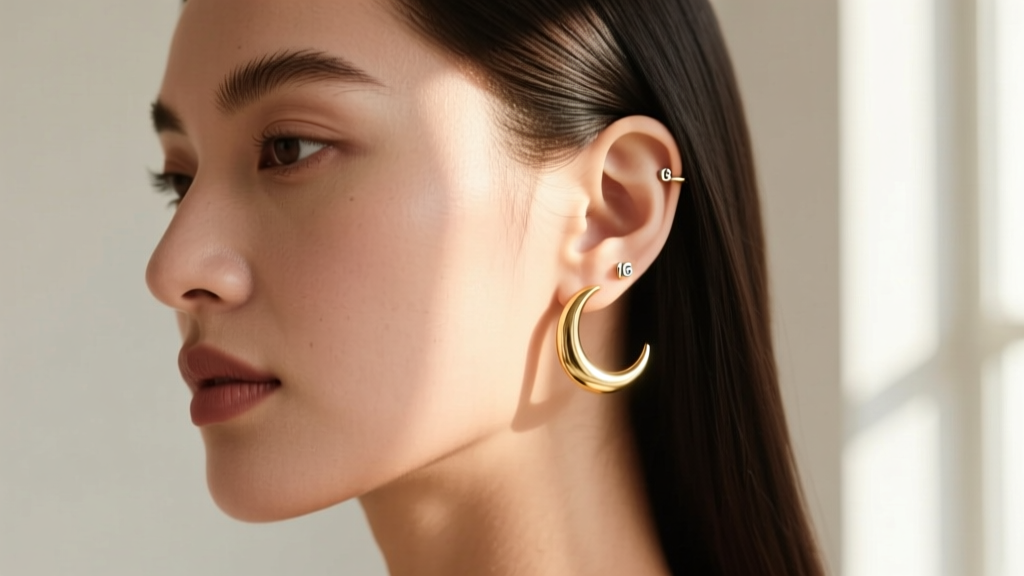
Comprehensive Material Properties Comparison
To make an informed purchasing decision, refer to this technical breakdown of how these materials perform in the specific context of moon-shaped hoops.
| Material | Nickel Content | Tarnish Resistance | Best Piercing Placement | Average Price Range |
|---|---|---|---|---|
| ASTM F136 Titanium | None | Excellent | Healing & Healed Cartilage/Lobe | $35 - $85 |
| 14k Solid Gold | Varies (Alloy dependent) | Excellent | All Placements | $150 - $400+ |
| 14k Gold-Filled | None (Surface) | Very Good | Healed Lobe & Cartilage | $25 - $60 |
| Sterling Silver (925) | None (Usually) | Poor (Oxidizes) | Fully Healed Lobes Only | $20 - $50 |
| Surgical Steel (316L) | Trace Amounts (8-10%) | Good | Healed Lobes (Avoid if allergic) | $15 - $30 |
Gauge and Sizing Specifics: Cartilage vs. Lobe
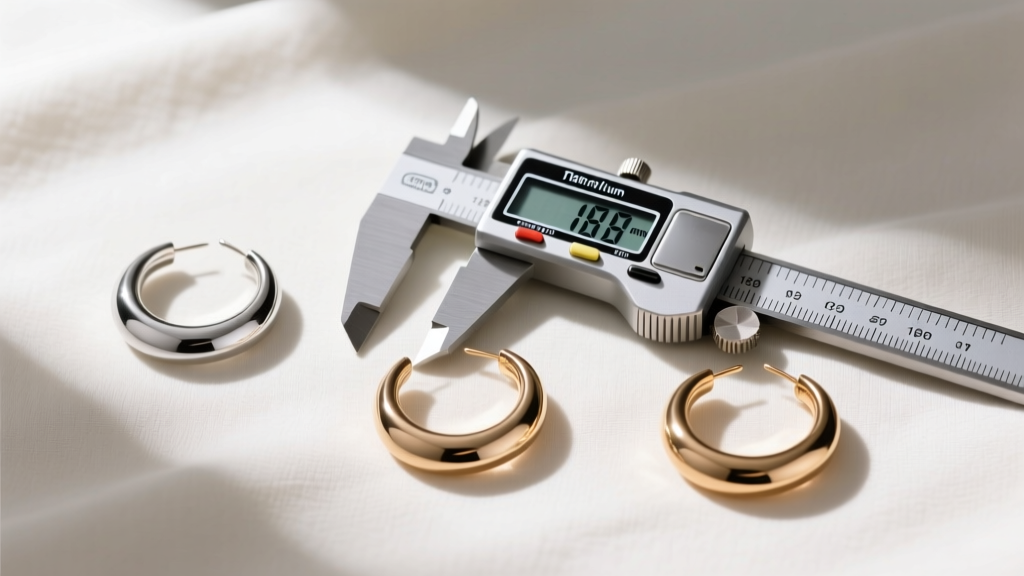
The material you choose must also align with the correct gauge (thickness) and inner diameter (ID) for your specific piercing. Moon hoops are frequently worn in the helix or forward helix, where tissue is dense and unforgiving.
- 18-Gauge (1.0mm): Common for standard lobe piercings and delicate, lightweight moon hoops. However, 18g wire is thin and prone to bending if the crescent charm is heavy, which can distort the closure mechanism.
- 16-Gauge (1.2mm): The industry standard for most cartilage piercings. A 16g titanium moon hoop provides the necessary rigidity to support a heavier lunar charm without warping, reducing the risk of the clicker hinge snapping under pressure.
- 14-Gauge (1.6mm): Typically reserved for daith or rook piercings. If you are threading a moon hoop through a daith, ensure the inner diameter is at least 10mm to accommodate the curvature of the inner ear ridge.
For inner diameter, an 8mm ID provides a snug, 'huggie' fit ideal for upper helix placements, while a 10mm to 12mm ID allows the moon charm to dangle freely in a standard lobe piercing without resting flush against the neck.
Troubleshooting Common Material Failures
Even high-quality moon hoops can fail if the metallurgy or construction is flawed. Here is how to diagnose and prevent common issues:
- The 'Green Ear' Effect: If your skin turns green or black beneath the hoop, you are likely wearing a brass-core earring with a compromised plating layer. The copper in the brass is reacting with your skin's acidity. Switch immediately to solid titanium or niobium.
- Clicker Hinge Snapping: Moon hoops with intricate cast charms often suffer from weak hinge points if made from low-grade cast metals. Always look for hoops where the hinge is machined from a solid piece of wire or tubing, rather than cast in a mold, which introduces microscopic air bubbles and structural weak points.
- Thread Stripping (for threaded ends): If your moon charm screws into the hoop, ensure it features internal threading or a threadless (press-fit) mechanism. External threads act like a file, tearing through the delicate fistula tissue every time you insert the earring.
Expert Care Protocols by Metal Type
Maintaining the structural integrity and biocompatibility of your earrings requires material-specific care. According to guidelines from the Association of Professional Piercers, harsh chemicals should never be used on body jewelry. For titanium and solid gold, a simple wash with mild, fragrance-free soap and warm water is sufficient. For gold-filled pieces, avoid ultrasonic cleaners, as the high-frequency vibrations can delaminate the gold layer from the brass core over time. Sterling silver moon hoops should be stored in anti-tarnish cloth pouches and polished only with a dedicated micro-abrasive silver cloth to remove sulfur buildup without stripping the metal.
Final Verdict: Choosing Your Metal
When investing in moon hoop earrings, the initial cost of the material is secondary to its long-term biocompatibility and structural resilience. For anyone navigating sensitive cartilage, healing piercings, or a known nickel allergy, ASTM F136 implant-grade titanium is the only logical choice. For those seeking the warm aesthetic of gold in healed piercings, 14k gold-filled offers the best balance of luxury and durability. By prioritizing precise gauge sizing, internal threading, and verified metal grades, you ensure your celestial ear stack remains comfortable, secure, and brilliantly polished for years to come.


