The Anatomy of Mosaic Earrings: Materials and Craftsmanship
Explore the technical anatomy of mosaic earrings. Learn about tesserae materials, setting methods, weight distribution, and how to evaluate craftsmanship.

The Engineering of Micro-Mosaic and Glass Inlay
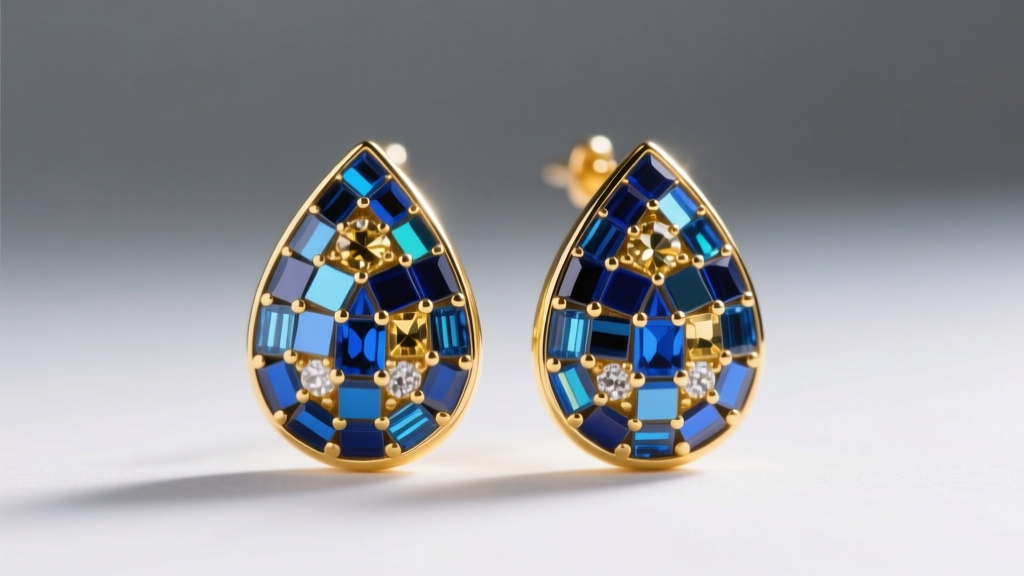
When evaluating high-end jewelry, the structural integrity of the piece is just as critical as its aesthetic appeal. Mosaic earrings represent a unique intersection of lapidary art and metallurgical engineering. Unlike solid gemstone studs, a mosaic earring relies on a composite structure: a metal chaton (tray), an adhesive matrix, and dozens to hundreds of individual tesserae (tiles). The depth of the metal tray is a critical specification. In master-crafted pieces, the tray depth is precisely calibrated to 1.5mm or 2.0mm. If the tesserae are 1.2mm thick, this leaves a 0.3mm to 0.8mm bed for the adhesive. This specific tolerance ensures mechanical bonding without allowing the adhesive to pool at the surface, which can lead to yellowing or structural weakness over time.
Material Science: Analyzing the Tesserae
The visual impact of mosaic earrings is dictated by the material composition of the tesserae. There are two primary disciplines in this craft: Roman micro-mosaic and Florentine pietra dura. Understanding the material science behind both is essential for any serious collector or jeweler.
Vitreous Smalti Glass
Traditional micro-mosaic utilizes smalti, an opaque vitreous glass. Smalti is composed of silica, soda, and lime, fused with metallic oxides to achieve intense, lightfast coloration. The gold standard in this category is smalti d'oro (gold smalti), which involves fusing a layer of 24-karat gold leaf between a thin sheet of clear glass and a colored glass base. According to the Victoria and Albert Museum's extensive archives on Grand Tour jewelry, the Vatican Mosaic Workshop (Studio del Mosaico Vaticano) historically produced smalti tesserae so minute that over 5,000 pieces could be set into a single square inch, creating photorealistic gradients on earring pendants.
Pietra Dura (Hard Stone)
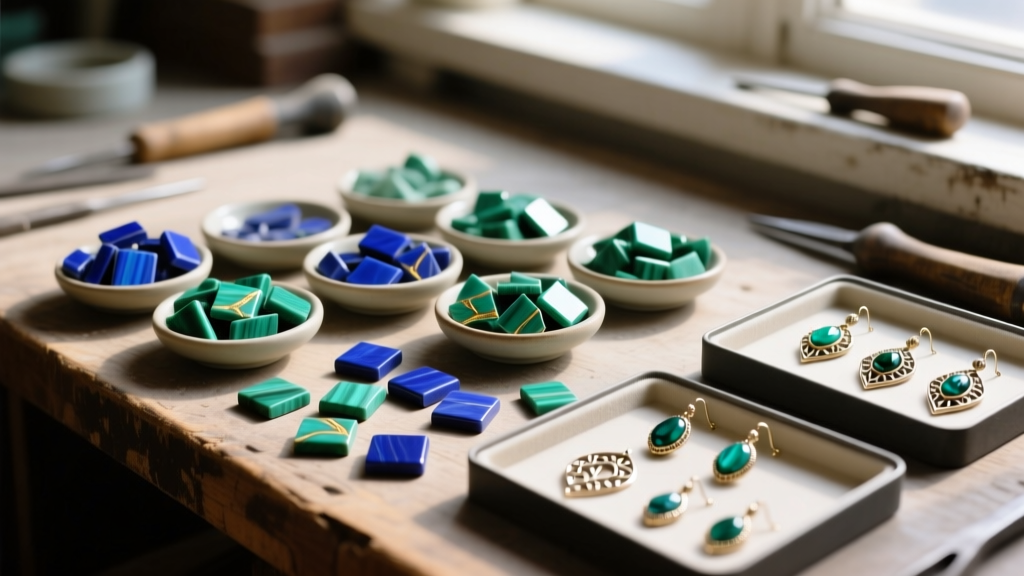
Conversely, pietra dura relies on the natural veining and opacity of semi-precious stones. Lapis lazuli, malachite, turquoise, and black onyx are cut into precise geometric shapes. The GIA Gem Encyclopedia notes that the porosity and cleavage planes of these stones dictate how thinly they can be sliced. Malachite, for instance, is relatively soft (Mohs 3.5-4.0) and brittle, requiring a thicker cut (minimum 1.5mm) to prevent fracturing during the final surface polishing of the earring.
Adhesives and Backing: What Holds the Pieces Together
The failure point of most commercial-grade mosaic earrings is the adhesive matrix. Because glass, stone, and metal all possess different coefficients of thermal expansion, temperature fluctuations can cause rigid adhesives to crack, resulting in 'popped' tesserae. Master jewelers select adhesives based on shear strength, flexibility, and archival longevity.
| Adhesive Type | Composition | Shear Strength | Archival Longevity | Best Application |
|---|---|---|---|---|
| Lapidary Epoxy (e.g., Hughes 330) | Two-part flexible resin | High | Excellent (50+ years) | High-end pietra dura & heavy glass |
| UV-Curing Resin | Photopolymer | Medium | Poor (Degrades in UV) | Mass-produced costume jewelry |
| Traditional Mastic / Hide Glue | Organic tree resin / collagen | Low-Medium | Good (Reversible) | Historical restoration pieces |
| Cyanoacrylate (Super Glue) | Acrylic resin | High (but brittle) | Poor (Shatters on impact) | Never recommended for fine jewelry |
Structural Settings: Bezel, Prong, and Channel
The metal framework that houses the mosaic tray dictates the earring's durability. Bezel settings are the undisputed standard for mosaic earrings. A fully rolled bezel applies uniform downward and inward pressure on the mosaic plate, protecting the fragile outer edges of the glass or stone from lateral impacts. Prong settings are highly discouraged for mosaic work; they leave the perimeter of the tesserae exposed, making the piece highly susceptible to chipping if dropped. Channel settings are occasionally used for linear, Art Deco-style mosaic baguettes, but they require exact lapidary tolerances to prevent the stones from rattling within the channel.
Weight Distribution and Lobe Ergonomics
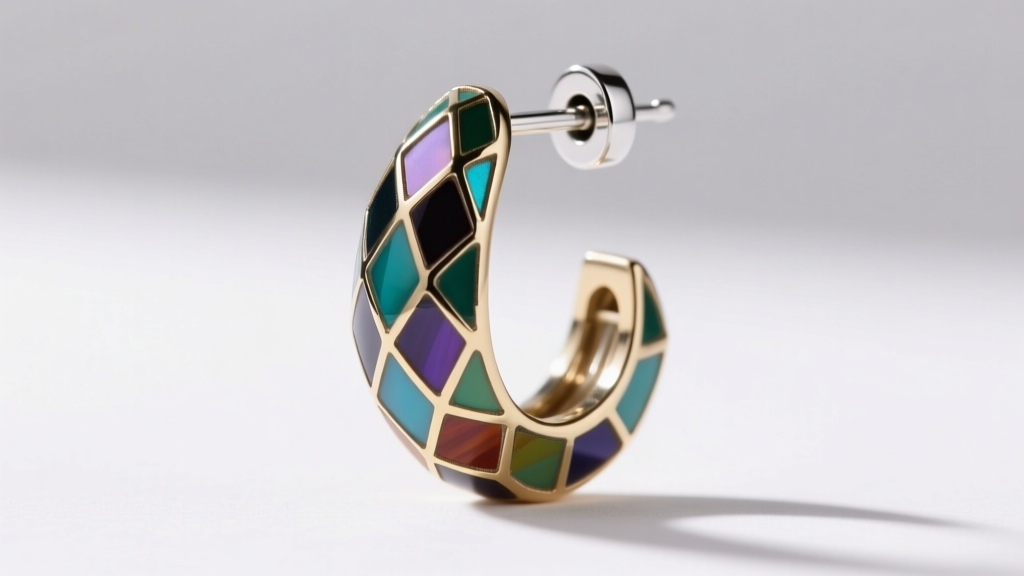
Mosaic earrings, particularly drop and dangle styles, suffer from anterior weight bias. The combination of a solid metal backing tray, dense stone/glass tesserae, and the adhesive matrix can easily push the weight of a single earring past 12 grams. This creates a pendulum effect that pulls the earlobe forward, leading to discomfort and eventual tissue stretching.
- Post Gauge Specifications: Standard 20-gauge (0.81mm) sterling silver posts will permanently bend under the dynamic load of a heavy mosaic drop. Expert manufacturers upgrade to 18-gauge (1.02mm) or 16-gauge (1.29mm) posts, often soldering a reinforced 'pad' at the base of the post to distribute the solder joint's stress across a wider area of the earring backplate.
- Friction and Locking Backs: Standard butterfly backs are insufficient for heavy mosaic pieces. To prevent loss and distribute pressure, jewelers pair these earrings with La Pousette locking backs, jumbo silicone O-rings, or screw-back mechanisms. The wider surface area of a silicone back prevents the 'cheese-cutter' effect on the earlobe.
- Omega Clips for Non-Pierced Options: For clip-on mosaic earrings, an omega-style clip with an adjustable tension screw is mandatory to support the weight without causing cartilage pinch.
Thermal Expansion and Failure Modes
A critical, often overlooked aspect of mosaic jewelry maintenance is environmental exposure. Metal trays (especially brass and silver) expand and contract at a significantly different rate than vitreous glass or malachite. If a wearer leaves their mosaic earrings on the dashboard of a hot car, or wears them in extreme freezing conditions, a rigid adhesive matrix will fail to absorb the differential expansion. This results in micro-fractures within the glue bed, eventually causing individual tiles to lift. To mitigate this, the Opificio delle Pietre Dure and modern conservationists advocate for flexible, thermally stable lapidary epoxies that can absorb minor kinetic and thermal shocks without compromising the bond.
Evaluating Quality: A Master Jeweler’s Checklist
When appraising or purchasing fine mosaic earrings, bypass the initial visual appeal and inspect the piece using these technical criteria:
- Grout Line Tolerances: In high-end micro-mosaic, the gaps between tesserae should be virtually invisible to the naked eye (less than 0.1mm). Wide, uneven grout lines indicate machine-stamped, mass-production rather than hand-cut lapidary work.
- Surface Planarity: Run a silk cloth gently over the surface of the mosaic. The tesserae must be perfectly flush with one another and the bezel wall. Any 'snags' indicate poor final polishing, which will trap skin oils and degrade the piece over time.
- Backing Finish: Inspect the reverse of the earring. High-quality mosaic earrings will feature a cleanly finished backplate, often with decorative engine-turning (guilloché) or a high-polish finish, complete with legible metal hallmarks and clean, oxidation-free solder joints where the post meets the plate.
By understanding the material science, structural engineering, and ergonomic requirements of mosaic earrings, collectors and enthusiasts can distinguish between fleeting costume accessories and enduring works of lapidary art.


