Are Multi-Pack Earrings Kits Worth It? 2026 Value Assessment
We break down the true cost, material safety, and longevity of multi-pack earrings kits in 2026 to help you decide if bulk buying is worth it.
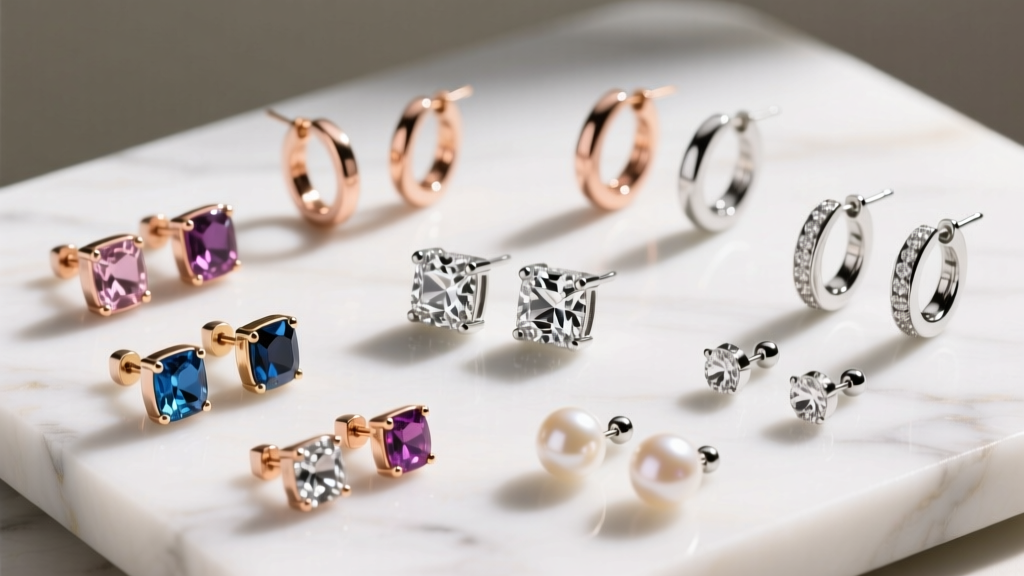
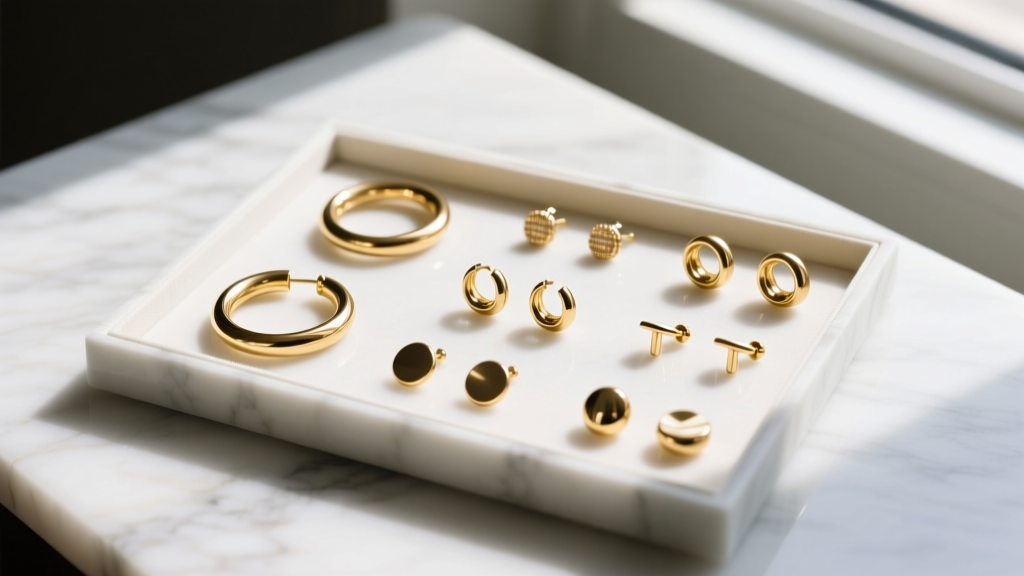
In 2026, the e-commerce landscape is saturated with the ultimate budget jewelry hack: the multi-pack earrings kit. Marketed heavily on social media as the ultimate 'capsule wardrobe' solution for your ears, these kits promise 50 to 100 pairs of studs, hoops, and huggies for the price of a single boutique dinner. For the budget-conscious consumer or the serial trend-hopper, the upfront savings are undeniably seductive. But as a senior jewelry stylist and trend analyst, I frequently get asked: what are you actually paying for when you buy a bulk earrings kit?
The reality of mass-produced jewelry sets is a complex intersection of metallurgy, dermatology, and cost-per-wear economics. While a $25 kit containing 60 pairs sounds like a steal, the hidden costs of allergic contact dermatitis, tarnished metals, and structural failures can quickly negate the initial savings. In this comprehensive budget and value assessment, we will dissect the anatomy of the modern earrings kit, evaluate the true material grades hidden in the fine print, and provide a data-driven framework to determine if bulk buying is a smart financial move for your specific lifestyle.
The Anatomy of a Mass-Market Earrings Kit
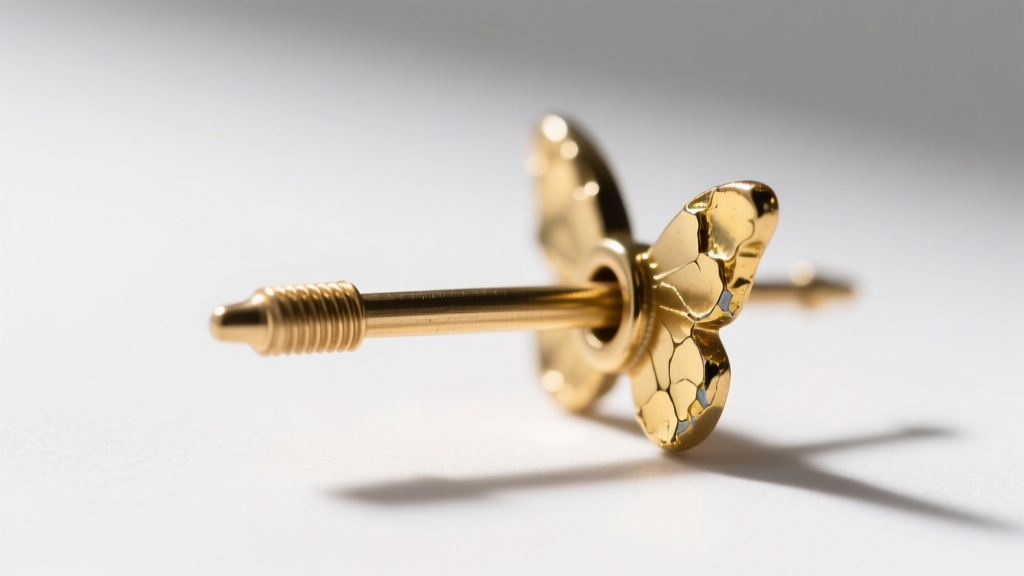
To assess value, we must first understand what physically constitutes a budget earrings kit. When you purchase a 50-piece set from a major online marketplace, you are rarely getting 50 unique, thoughtfully engineered designs. Instead, these kits rely on modular manufacturing. The base components—specifically the earring posts and the butterfly friction backs—are stamped out by the millions from low-cost alloy sheets.
Gauge Thickness and the 'Cheese Cutter' Effect
One of the most critical, yet overlooked, value metrics in an earrings kit is the wire gauge used for the posts. Standard lobe piercings typically heal at 18-gauge (1.02mm) or 20-gauge (0.81mm). However, to minimize metal costs in a 100-piece kit, manufacturers frequently use 22-gauge (0.64mm) or even 24-gauge (0.51mm) wire.
While a 22-gauge post will slide easily into your ear, it poses a structural risk. If you sleep in your earrings or catch a thin hoop on a sweater, the high pressure concentrated on such a thin wire can lead to the 'cheese cutter effect,' where the metal slowly migrates through the earlobe tissue, causing tearing and permanent fistula damage. A true value assessment must penalize kits that utilize wire thinner than 20-gauge for structural integrity reasons.
Material Reality Check: What 'Hypoallergenic' Really Means
The most pervasive marketing term in budget jewelry is 'hypoallergenic.' From a metallurgical and medical standpoint, this term is virtually meaningless and unregulated. When evaluating an earrings kit, you must look past the marketing buzzwords and identify the actual base metal and plating thickness.
Most budget kits are constructed from a brass or zinc-alloy base that is 'flash plated' with gold or silver. Flash plating involves an electrochemical bath that deposits a microscopic layer of gold—often less than 0.03 microns thick. For context, a human hair is roughly 70 microns thick. This plating will wear off within a few weeks of daily friction, exposing the reactive base metal to your skin's natural oils and sweat.
According to the American Academy of Dermatology, nickel allergy is the most common cause of allergic contact dermatitis, affecting up to 18% of adults in North America. Many budget 'surgical steel' kits are made from 300-series stainless steel, which contains significant amounts of nickel to provide corrosion resistance. If you have sensitive skin or unhealed piercings, wearing a nickel-heavy kit can result in weeping, swelling, and secondary infections, turning a $20 bargain into a costly dermatologist visit.
Expert Insight: If an earrings kit does not explicitly state 'ASTM F136 Implant-Grade Titanium' or 'Niobium,' assume the posts contain nickel or reactive brass alloys. True titanium is non-magnetic and entirely biocompatible, making it the only safe choice for fresh piercings or highly reactive ears.
Cost-Per-Wear Analysis: Bulk vs. Boutique
To determine the true financial value of an earrings kit, we must shift our perspective from 'upfront cost' to 'cost-per-wear' (CPW). A cheap earring that tarnishes after three wears is ultimately more expensive than a solid gold piece worn 300 times. Below is a comparative breakdown of the hidden economics of bulk jewelry versus curated, mid-tier investments.
| Jewelry Category | Average Upfront Cost | Material Composition | Estimated Lifespan | Cost-Per-Wear (CPW) |
|---|---|---|---|---|
| 100-Piece Fast Fashion Kit | $25.00 | Brass base, flash gold plate, nickel posts | 2-4 months (heavy tarnishing) | $0.42 (Assuming 60 total wears before disposal) |
| Curated 5-Piece Titanium Set | $65.00 | ASTM F136 Titanium, PVD Gold Coating | 3-5 Years (daily wear safe) | $0.03 (Assuming 1800+ total wears) |
| 14k Solid Gold Studs (Pair) | $120.00 | Solid 14k Gold (Nickel-free alloy) | Lifetime (Generational) | $0.01 (Effectively negligible over time) |
As the data illustrates, the initial savings of a bulk earrings kit are rapidly consumed by its short lifespan. Furthermore, the Association of Professional Piercers (APP) strongly advises against wearing any jewelry with unknown alloy compositions in healing piercings, meaning budget kits are strictly limited to fully healed, non-reactive lobes, further restricting their utility and value.
Common Failure Modes in Budget Earring Sets
Beyond skin reactions, mass-produced earrings kits suffer from predictable mechanical failures. When assessing a kit's value, inspect the product reviews for these specific structural breakdowns:
- Solder Joint Snapping: In cheap huggies and small hoops, the hinge and clasp are attached to the hoop body via a microscopic drop of low-temperature solder. Under minimal torsional stress (like taking off a tight shirt), the hoop will snap cleanly at the joint.
- Friction Back Tension Loss: The butterfly backs included in these kits are stamped from thin sheets of base metal. After being pushed onto a post three or four times, the metal fatigues, the grooves flatten, and the back loses its tension, leading to lost earrings.
- Galvanic Corrosion: When two dissimilar metals (like a steel post and a copper-alloy decorative face) are exposed to an electrolyte (human sweat), a micro-galvanic cell is created. This causes rapid oxidation, resulting in the infamous 'green skin' phenomenon and a foul metallic odor.
- CZ Stone Clouding: Cubic Zirconia stones in budget kits are often glued rather than prong-set. The adhesive degrades upon contact with lotions and oils, causing the stones to either fall out or become permanently cloudy from trapped sebum.
How to Vet an Earrings Kit Before Buying
If you are committed to buying a multi-pack kit for travel, trend-testing, or costume styling, you must vet the product listing with a critical eye. Do not rely on the primary marketing images. Instead, utilize these actionable assessment steps:
1. The Weight and Density Check
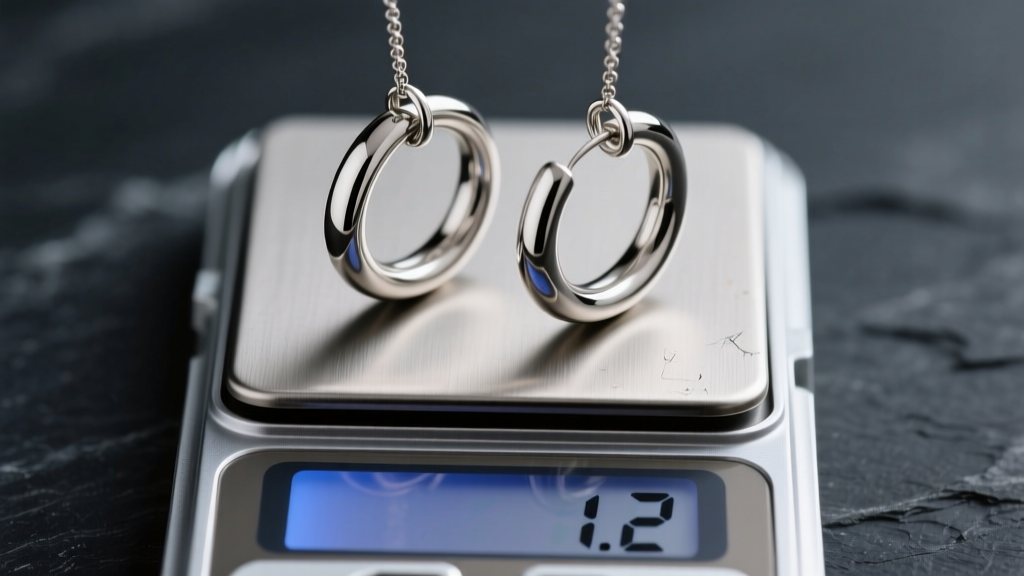
Look for user-submitted photos that show the earrings on a digital scale or next to a coin for scale. High-quality metals like surgical steel and titanium have a specific density. If a pair of 20mm huggie hoops looks incredibly thin and reviewers note they feel 'like air,' they are likely hollow-cast zinc alloy, which will dent irreparably if dropped.
2. Inspect the Clasp Mechanism
Avoid kits where every single hoop uses a basic friction post. Look for kits that feature threaded screw-backs or click-closure hinges for their hoops. Threaded backs, while slightly more expensive to manufacture, ensure the earring stays secure and prevent the loss of the decorative component, vastly improving the kit's overall value retention.
3. Verify the Plating Method
Search the product description for the term 'PVD' (Physical Vapor Deposition) or 'Gold Filled.' PVD coating is a vacuum-based process that bonds titanium nitride or real gold to the base metal at a molecular level. It is vastly superior to electroplating and can withstand years of friction and sweat without peeling. If the listing only says 'gold plated' without specifying the micron thickness, assume it is flash-plated and will fade quickly.
Final Verdict: When to Buy the Kit
So, is a multi-pack earrings kit worth your money in 2026? The answer depends entirely on your use case.
Do NOT buy a bulk kit if: You have a history of contact dermatitis, you are looking for everyday 'sleeper' earrings to wear 24/7, or you are shopping for fresh, unhealed piercings. The risk of infection, allergic reaction, and structural failure makes the upfront savings entirely counterproductive.
DO buy a bulk kit if: You are a fashion stylist needing a wide array of props for a single shoot, you are traveling to a high-risk environment where losing jewelry is likely, or you want to test out trendy silhouettes (like ear cuffs or oversized tragus shields) before committing to a $150 solid gold investment piece from a reputable jeweler.
Ultimately, true value in jewelry is not measured by the sheer volume of pieces in a velvet box, but by the safety, longevity, and joy each individual piece brings to your daily rotation. By understanding the metallurgy and mechanics behind the price tag, you can navigate the budget jewelry market without compromising your skin or your style.


