How to Choose and Style My Melody Earrings for Sensitive Ears
Discover how to choose, style, and care for My Melody earrings. Learn about safe metals, gauge sizes, and kawaii styling for sensitive ears.

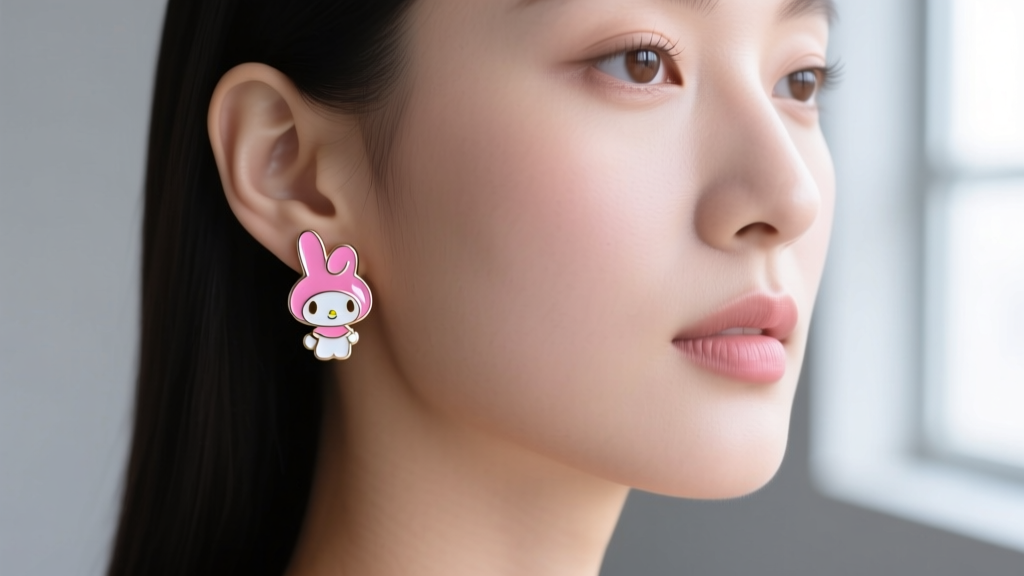
The Kawaii Jewelry Dilemma: Cute vs. Safe
Sanrio’s iconic pink-hooded bunny has transcended childhood nostalgia to become a staple in alternative, e-girl, and kawaii fashion aesthetics. For jewelry enthusiasts, My Melody earrings offer a playful way to express personality. However, the explosion in demand for character-themed jewelry has flooded the market with cheap, unlicensed novelty pieces that wreak havoc on sensitive earlobes and fresh cartilage piercings. If you have ever experienced itching, redness, or the dreaded 'green ear' effect after wearing character jewelry, the culprit is almost always the base metal alloy.
As a beginner navigating the intersection of pop-culture fashion and body safety, it is crucial to understand that not all My Melody earrings are created equal. This guide will walk you through the metallurgy of safe jewelry, proper gauge sizing, and expert styling techniques to ensure your ears stay as happy as your favorite Sanrio character.
Decoding Metals: Why Your Ears Turn Green
The primary reason budget-friendly character earrings cause contact dermatitis is the presence of nickel, copper, and brass in the base alloy. When these metals react with the natural salts and oils in your skin, they oxidize and leave a green or black residue. More importantly, nickel is a leading allergen. According to the Association of Professional Piercers (APP), implant-grade metals are the only safe choice for prolonged wear, especially in unhealed or easily irritated piercings.
When shopping for My Melody earrings, you will typically encounter three main material categories. Here is how they stack up regarding biocompatibility and longevity:
| Metal Type | Biocompatibility | Nickel Content | Best Use Case | Average Price Range |
|---|---|---|---|---|
| ASTM F136 Titanium | Excellent (Implant-Grade) | 0% (Nickel-Free) | Fresh piercings, 24/7 wear, severe allergies | $35 - $65 |
| 316L Surgical Steel | Good (Contains trace nickel) | Low (8-10%) | Fully healed lobes, occasional wear | $20 - $40 |
| Zamak / Zinc Alloy | Poor (Highly reactive) | High / Unregulated | Photoshoots only, clip-ons, non-pierced | $3 - $12 |
For the charm itself, high-quality licensed pieces use vitreous enamel (which is baked onto the metal and won't peel) or hypoallergenic acrylic. Avoid pieces where the pink color is simply painted on, as the paint will chip into your piercing channel over time.
Gauge Sizes and Earring Backs: A Beginner’s Blueprint
One of the most common mistakes beginners make is ignoring the thickness of the earring post, known as the gauge. Standard earlobe piercings done with a gun are usually 20G (0.81mm) or 18G (1.02mm), while professional needle piercings and cartilage placements are typically 16G (1.29mm) or 14G (1.60mm).
If you buy a My Melody stud with a thick 14G post and try to force it into a delicate 20G lobe piercing, you risk micro-tearing the fistula (the piercing channel). Conversely, wearing a thin 20G post in a 16G cartilage piercing can cause the 'cheese-cutter effect,' where the thin wire slowly migrates and slices through the tissue. Always verify the gauge size before purchasing. Most reputable Sanrio jewelers will list this in the product specifications.
The Problem with Butterfly Backs
Traditional push-on butterfly backs are notorious for trapping dead skin cells, sebum, and hair products against the back of the earlobe. For character earrings, which often feature slightly heavier enamel charms, the pressure of a butterfly back can cause localized swelling. Upgrade to flat-back labret posts (often called threadless or internally threaded posts). These sit flush against the back of the ear, distributing the weight of the My Melody charm evenly and eliminating the breeding ground for bacteria.
Styling My Melody: Lobe, Cartilage, and Ear Cuffs
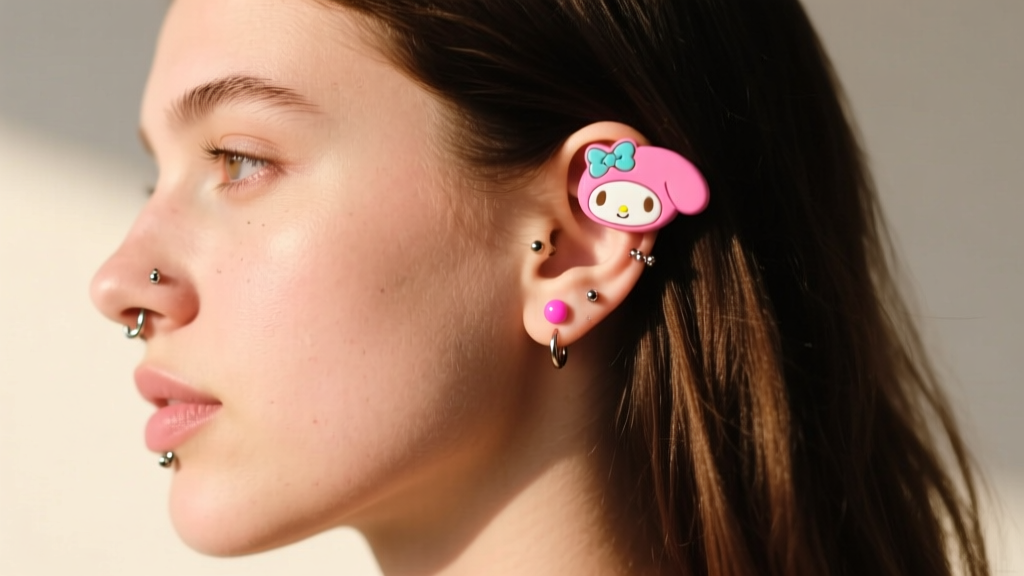
Integrating kawaii elements into a mature or curated ear constellation requires balance. You do not need to sacrifice sophistication to showcase your love for Sanrio. Here are three structural approaches to styling My Melody earrings based on your piercing anatomy:
- The Focal Lobe Stud: Use a medium-sized (8mm to 10mm) My Melody enamel stud as your primary lobe piece. Pair it with minimalist, unadorned titanium hoops or tiny pearl studs in your secondary and tertiary lobe piercings. This allows the character charm to act as a statement piece without overwhelming the ear.
- The Helix Cuff: If you lack cartilage piercings, opt for a My Melody ear cuff. These wrap around the outer helix ridge without requiring a needle. Look for cuffs with a silicone grip pad on the inside to prevent slipping and minimize pressure necrosis on the cartilage edge.
- The Flat Dangle: For flat piercings (the inner conch area), a small, lightweight My Melody charm suspended from a flat-back barbell adds a hidden, playful detail that is only visible when you tuck your hair behind your ear.
When mixing metals, remember that the metal of the earring post must match your body's tolerance, but the visible charm can be gold-plated or rose-gold-plated over a titanium base to match your other jewelry.
Spotting Authentic Sanrio Merchandise
The market is saturated with bootleg character jewelry. While fan-made art is wonderful to support, unlicensed dropshipped items often bypass basic safety regulations regarding lead and cadmium content in metal alloys. When purchasing from the official Sanrio website or authorized boutique partners, look for specific hallmarks of authenticity.
First, check for the engraved copyright mark. Authentic metal pieces will typically feature a microscopic '© Sanrio Co., Ltd.' stamp on the back of the charm or the earring post base. Second, genuine enamel work is smooth to the touch, with metal lines (cloisons) perfectly separating the colors. Bootleg versions often have colors bleeding over the metal lines, and the pink hood may appear washed out or neon rather than My Melody’s signature soft pastel pink. Finally, authentic packaging will include a holographic security sticker and proper material disclosures.
The 60-Second Daily Cleaning Protocol
Because character earrings feature intricate crevices where the bunny's hood meets the face, they are magnets for shampoo residue and environmental dust. Neglecting to clean these crevices can lead to localized irritation bumps, even if you are wearing implant-grade titanium.
Implement this simple 60-second routine to maintain your jewelry:
- Remove and Spray: Take the earrings out before showering. Spray the front and back of the charm with sterile 0.9% sodium chloride wound wash (saline).
- Brush the Crevices: Use a brand-new, ultra-soft baby toothbrush to gently dislodge any sebum or soap scum trapped in the enamel grooves.
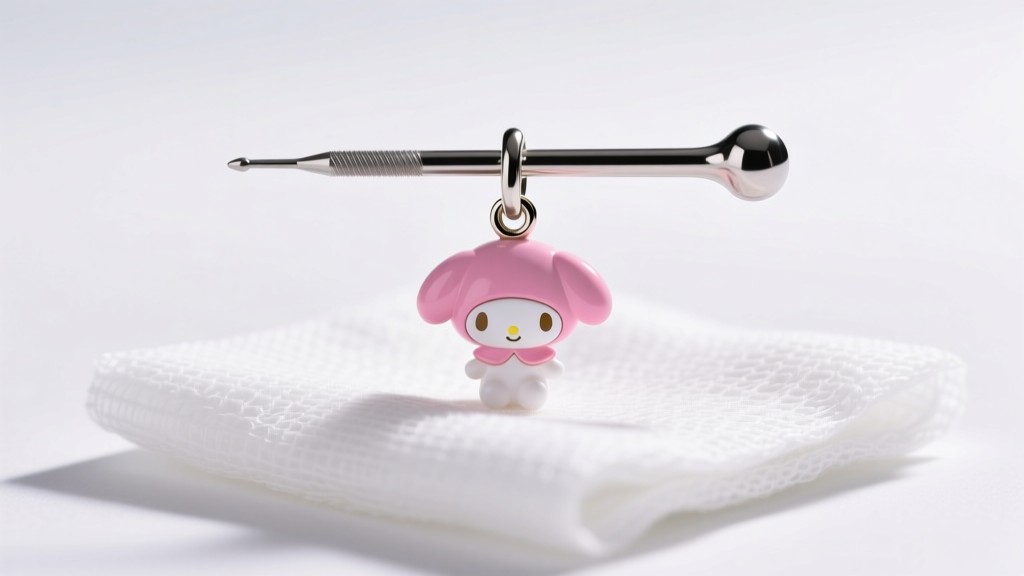
- Dry Thoroughly: Pat dry with a non-woven gauze pad. Avoid paper towels or cotton swabs, as they leave microscopic fibers that can irritate the piercing channel upon reinsertion.
- Sanitize the Post: Wipe the titanium or steel post with a 70% isopropyl alcohol pad before storing it in a dry, airtight container.
By treating your My Melody earrings as precision body jewelry rather than disposable toys, you ensure that your piercings remain healthy, allowing you to rock your favorite kawaii aesthetic safely and confidently for years to come.


