Beading Earrings Native American Value & Budget Guide
Discover how to assess the true value of native beading earrings. Compare authentic artisan pricing, materials, and mass-market alternatives.

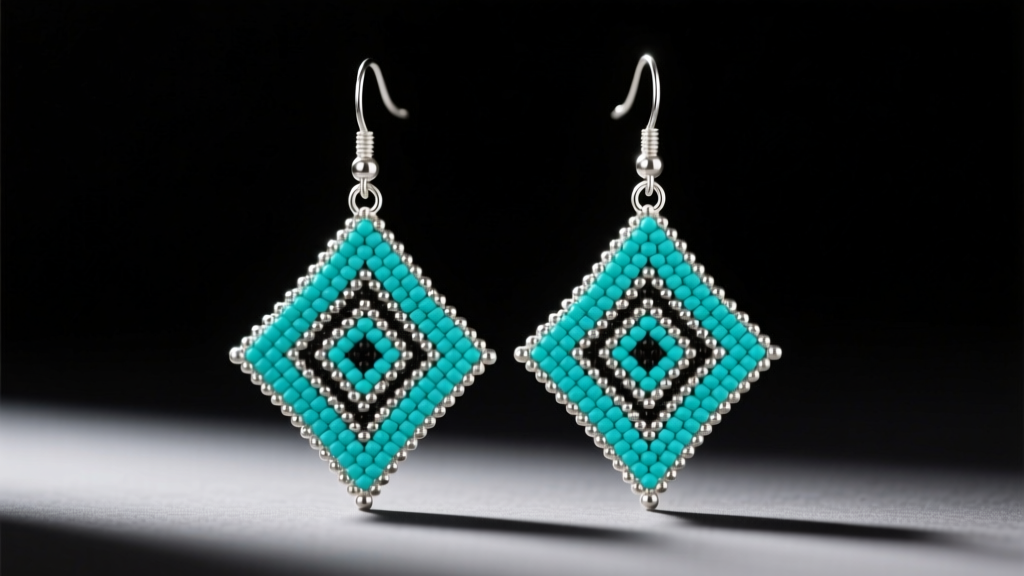
The market for beading earrings native to indigenous North American cultures has expanded dramatically as of 2026, driven by a growing appreciation for slow fashion and wearable art. However, this surge in demand has also flooded the market with mass-produced, overseas knockoffs that mimic traditional patterns without supporting the communities that originated them. For the discerning jewelry buyer, distinguishing between a $15 factory-made imitation and a $120 authentic artisan piece requires a deep understanding of materials, construction techniques, and legal protections.
This comprehensive budget and value assessment will break down exactly what you are paying for when investing in indigenous beadwork. We will examine the technical specifications of high-end seed beads, the structural integrity of different beading threads, and the pricing frameworks that define the modern Native American jewelry market.
The Economics of Indigenous Beadwork
Authentic Native American beadwork is an extraordinarily time-intensive art form. Techniques like two-needle peyote stitch, brick stitch, and loom weaving require immense precision. A single pair of intricate, 3-inch drop earrings featuring a complex geometric or floral pattern can take an experienced artisan anywhere from 8 to 20 hours to complete. When you factor in the time required to design the pattern, source high-quality materials, and hand-stitch every single bead, the true hourly wage of many indigenous artists remains surprisingly modest.
Conversely, mass-market 'native-style' earrings are typically produced on automated multi-needle embroidery machines or assembled by overseas labor forces using cheap, pre-strung bead loops. These pieces lack the structural tension, cultural authenticity, and material longevity of genuine handcrafted work. Understanding this labor disparity is the first step in accurately assessing the value of beaded earrings.
Material Anatomy: Where Your Budget Actually Goes
The most significant indicator of value in beaded earrings lies in the raw materials. Authentic artisans invest heavily in premium components that ensure colorfastness, structural integrity, and skin safety. Below is a direct comparison of the materials used in authentic artisan pieces versus mass-market alternatives.
| Component | Authentic Native Artisan (High Value) | Mass-Market Knockoff (Low Value) |
|---|---|---|
| Seed Beads | Japanese Miyuki Delica or Toho (Size 11/0 or 15/0). Uniform cylindrical shape ensures flat, even tension. | Cheap acrylic or inconsistent Czech glass. Irregular shapes cause puckering and uneven light reflection. |
| Thread | WildFire or Fireline (6lb test). Thermally fused or gel-spun polyethylene that resists stretching and skin oils. | Basic cotton or cheap nylon (Nymo). Degrades quickly when exposed to sweat, UV light, and humidity. |
| Backing Material | Brain-tanned deer hide, high-quality garment leather, or stiffened Lacy's Stiff Stuff. | Pleather (polyurethane) or stiffened craft felt that peels, warps, or frays within months. |
| Ear Wires | 20-gauge or 22-gauge sterling silver (925), fine silver, or anodized niobium for sensitive ears. | 24-gauge nickel-plated brass. Prone to bending, tarnishing, and causing severe contact dermatitis. |
The Indian Arts and Crafts Act: Legal & Ethical Value
When assessing the budget for Native American jewelry, you must also consider the legal frameworks that protect indigenous creators. In the United States, the Indian Arts and Crafts Act (IACA) of 1990 is a truth-in-advertising law that prohibits misrepresentation in the marketing of Indian arts and crafts products. It is illegal to offer or display for sale any art or craft product in a manner that falsely suggests it is Indian-produced, an Indian product, or the product of a particular Indian or Indian Tribe or Indian arts and crafts organization.
If you see 'native-style' beaded earrings sold by a non-Native corporation or an anonymous overseas dropshipper, they are legally prohibited from marketing them as 'Native American.' However, many sellers use deceptive keywords like 'tribal,' 'indigenous-inspired,' or 'reservation style' to skirt the law. Paying a premium for authentic, IACA-compliant jewelry ensures your budget directly supports indigenous economies and preserves traditional artistic lineages.
Red Flags in 'Native-Style' Jewelry
- Vague Origin Statements: Phrases like 'inspired by Native culture' or 'southwestern tribal design' usually indicate mass production.
- Unrealistic Pricing: A complex, 4-inch peyote-stitch drop earring priced under $30 is mathematically incompatible with authentic handcrafted labor.
- Uniformity Across Batches: Handcrafted beadwork will always have microscopic variations in tension and thread placement. Perfect, machine-like uniformity across dozens of identical pairs is a hallmark of automated manufacturing.
Pricing Tiers & Value Assessment Framework
To help you budget effectively, we have categorized the 2026 market for authentic Native American beaded earrings into three distinct pricing tiers. This framework assumes you are purchasing directly from verified indigenous artists, tribal cooperatives, or reputable FTC-compliant galleries.
- Tier 1: Entry-Level & Minimalist ($35 - $65)
These pieces typically feature simpler designs, such as small brick-stitch medallions, single-color loom bands, or basic fringe earrings. They use high-quality Japanese seed beads and sterling silver wire but require less than 4 hours of labor per pair. - Tier 2: Mid-Range & Traditional ($70 - $150)
This is the sweet spot for most collectors. Expect intricate geometric patterns, multi-color floral motifs, and elaborate fringe work. Artisans in this tier often incorporate premium backing materials like smoked deer hide and use complex edge-finishing techniques to protect the thread from fraying. - Tier 3: Master Artisan & Haute ($180 - $400+)
Reserved for award-winning artists, these earrings feature micro-beadwork (using size 15/0 or 22/0 Charlotte seed beads), 3D sculptural elements, and the integration of precious metals or genuine gemstones like lapis lazuli, turquoise, and coral. These are wearable investments that often appreciate in value.
Technical Failure Modes & Longevity
Even expensive beaded earrings can fail if constructed poorly or maintained improperly. As a value-conscious buyer, you should inspect the structural integrity of the piece before purchasing. The most common failure mode in seed bead jewelry is thread degradation. Cheap glass beads often have sharp, unpolished holes that act like tiny saws, slowly cutting through the nylon or cotton thread over time. Authentic artisans use Japanese beads with smooth, rounded holes and double-pass their thread through critical stress points.
Another critical failure point is the ear wire loop. Mass-market earrings often use thin, 24-gauge base metal wires that work-harden and snap at the bend where the jump ring attaches. High-value artisan earrings use thicker 20-gauge sterling silver or niobium, which retain their malleability and resist snapping under the dynamic weight of swinging fringe beads.
Proper Storage and Humidity Control
To protect your investment, beaded earrings must be stored flat or hung vertically in a climate-controlled environment. High humidity can cause natural leather backings to warp or curl, which in turn pulls the beadwork out of alignment and creates excessive tension on the thread. Furthermore, prolonged exposure to direct UV light will cause dyed seed beads (particularly bright pinks, reds, and purples) to fade rapidly. Storing your earrings in a dark, dry jewelry box with a silica gel packet will extend the lifespan of both the beads and the backing materials by decades.
Ultimately, assessing the value of beaded earrings requires looking past the initial price tag. By prioritizing premium materials, structural integrity, and ethical sourcing, you ensure that your jewelry budget supports authentic artistry while acquiring pieces that will endure for generations.


