Complete Nephrite Earrings Buying Guide: What to Look For
Discover how to choose authentic nephrite earrings. Learn about color grades, jadeite differences, setting styles, and pricing in our expert guide.

The Enduring Appeal of Nephrite in Modern Jewelry
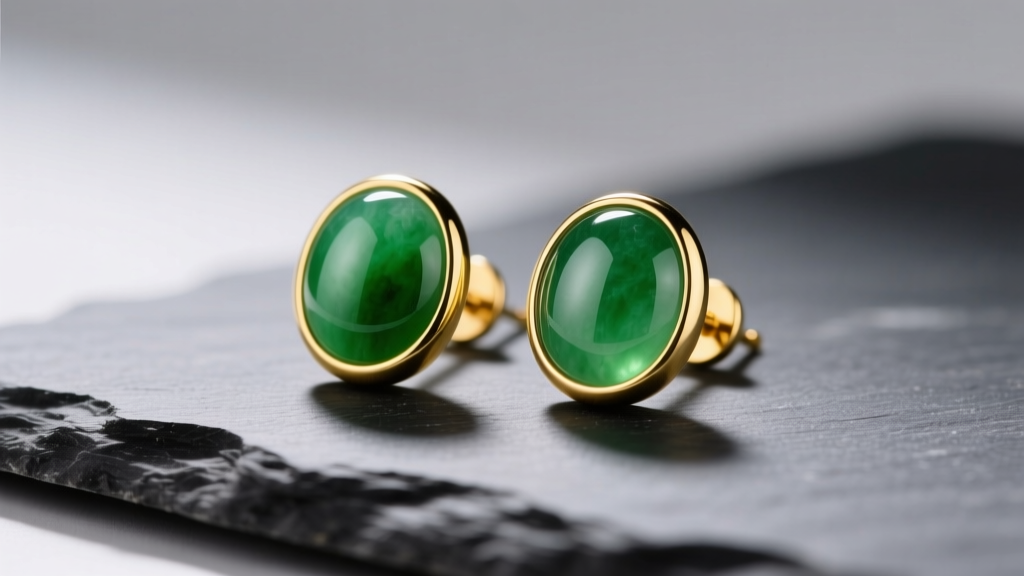
When collectors and jewelry enthusiasts hear the word "jade," they often default to thinking of jadeite. However, nephrite earrings hold a distinct, historically rich, and increasingly coveted space in the 2026 fine jewelry market. Nephrite, a calcium and magnesium-rich amphibole mineral, is celebrated for its exceptional toughness, deep fibrous matrix, and soothing, earthy color palette. Whether you are seeking minimalist cabochon studs or intricately carved drop earrings, understanding the nuances of nephrite is essential for making a sound investment.
This comprehensive buying guide will walk you through the mineralogical differences, quality grading, optimal earring hardware, and current market pricing for nephrite, ensuring you purchase pieces that are both authentic and structurally sound.
Nephrite vs. Jadeite: Understanding the Mineralogy
Before evaluating quality, it is crucial to distinguish nephrite from its cousin, jadeite. While both are commercially sold as "jade," their physical properties dictate how they should be cut, set, and worn as earrings.
- Mineral Composition: Nephrite is an amphibole (actinolite/tremolite series), whereas jadeite is a pyroxene. According to the Mindat mineralogy database, nephrite's interlocking fibrous crystal structure makes it incredibly resistant to shattering, even though it is slightly softer than jadeite.
- Hardness & Toughness: On the Mohs scale, nephrite ranks between 6.0 and 6.5, compared to jadeite's 6.5 to 7.0. However, nephrite's toughness (resistance to breaking or chipping) is actually higher due to its felted, fibrous internal matrix.
- Visual Optics: Nephrite tends to have a more muted, waxy, or greasy luster compared to the glassy, highly translucent brilliance of fine jadeite.
Evaluating Nephrite Quality: The 3 Pillars
Unlike diamonds, nephrite is not graded under 10x magnification for clarity. Instead, gemologists and master carvers evaluate nephrite based on color, texture, and translucency. The Gemological Institute of America (GIA) notes that the most valuable nephrite exhibits a fine, uniform texture without visible grain boundaries.
1. Color Varieties and Market Value
Nephrite's color is dictated by trace elements, primarily iron (green) and the absence of iron (white). Below is a breakdown of the most common nephrite colors used in earring production and their relative market positioning.
| Color Grade | Description | Best Earring Style | Relative Value |
|---|---|---|---|
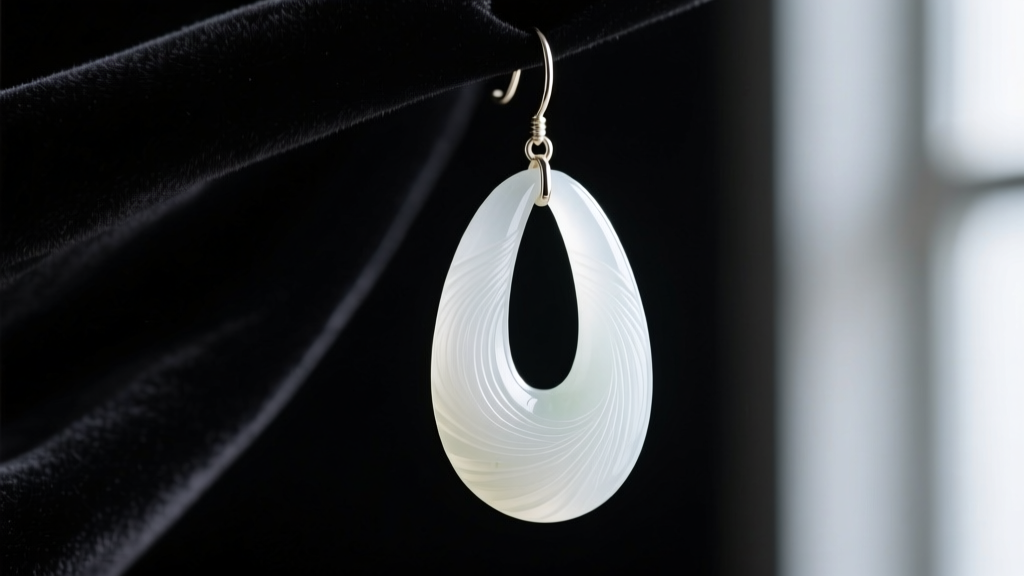
| Mutton Fat White | Creamy, semi-translucent white with a greasy luster. Highly prized Hetian jade. | Carved drops, minimalist bezel studs | Premium / Investment |
| Spinach Green | Deep, saturated green, often with minor black chromite inclusions. | Cabochon studs, statement hoops | High |
| Celadon / Apple Green | Lighter, yellowish-green tones. Often sourced from British Columbia or Siberia. | Delicate huggies, inlay work | Mid-Range |
| Black Nephrite | Opaque, deeply saturated due to high iron/graphite content. Very striking in modern designs. | Geometric studs, masculine jewelry | Mid-Range to High |
2. Texture and "The Greasy Luster"
High-quality nephrite should never look dry or chalky. When polished, fine nephrite exhibits a distinct "greasy" or "mutton fat" luster. If the surface of the earring looks overly glassy or highly reflective, it may be heavily waxed, polymer-coated, or potentially a different green stone like serpentine or aventurine.
3. Translucency vs. Opacity
While jadeite is prized for high transparency, nephrite is inherently more opaque. The finest white Hetian nephrite will glow with a soft, semi-translucent halo around the edges when held to a light source, but the center will remain largely opaque. Completely transparent "jade" earrings are almost certainly not nephrite.
Optimal Earring Settings and Hardware Specifications
Because nephrite is tough but can still cleave or chip if struck directly on a sharp edge, the setting style is paramount for longevity. Furthermore, the weight of carved nephrite requires specific hardware considerations.
Why Bezel Settings are Mandatory
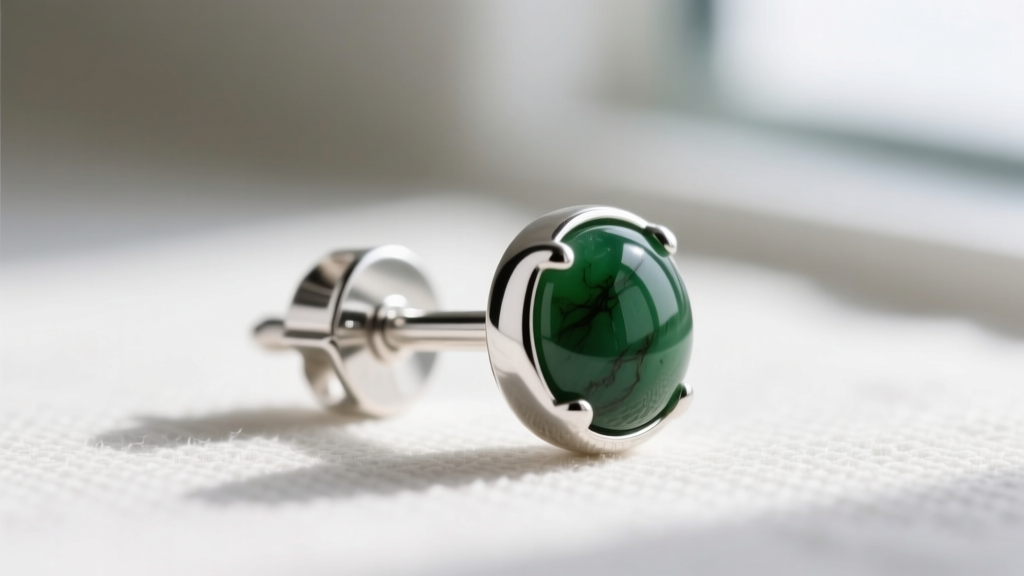
Prong settings expose the girdle and edges of the stone, leaving them vulnerable to impact against desks, doors, or hairbrushes. A full bezel setting in 14k or 18k gold, or heavy-gauge sterling silver, wraps the metal securely around the perimeter of the nephrite cabochon or carving. This absorbs shock and prevents edge chipping.
Post Gauge and Earring Backs
Nephrite is a dense stone (specific gravity of roughly 2.90 to 3.03). Carved drop earrings can easily exceed 8 to 12 grams per ear. Standard, thin wire posts will bend under this weight, causing the earring to droop uncomfortably.
- Standard Studs (Under 4g): A 20-gauge (0.81mm) or 18-gauge (1.02mm) post is sufficient. Standard friction backs work well.
- Heavy Drops & Carvings (5g+): Require an 18-gauge or even 16-gauge (1.29mm) post. You must use jumbo friction backs, screw-backs, or secure locking ear wires (like leverbacks or French wires with silicone stoppers) to prevent the heavy stone from pulling the earlobe or falling out.
Pricing Guide: What Should You Expect to Pay?
The pricing of nephrite earrings in 2026 varies wildly based on origin, color, and craftsmanship. Canadian (British Columbia) and Siberian nephrite dominate the commercial green market, while Chinese Xinjiang (Hetian) white nephrite commands auction-level premiums.
| Nephrite Type & Origin | Earring Style | Estimated Price Range (USD) |
|---|---|---|
| Commercial Green (BC/Siberia) | Simple 6mm Cabochon Studs (Sterling Silver) | $45 - $120 |
| Fine Spinach Green (Siberian) | 18k Gold Bezel Drops with Diamond Accents | $800 - $2,500 |
| White Hetian (Xinjiang, China) | Hand-Carved Artisan Drops (18k Gold) | $3,000 - $15,000+ |
| Black Nephrite (Various Origins) | Geometric Men's/Unisex Studs | $150 - $400 |
Treatments, Imitations, and Red Flags
While the aggressive acid-bleaching and polymer-impregnation treatments (Type B and C jade) are more commonly associated with jadeite, nephrite is not immune to enhancement.
- Traditional Waxing (Acceptable): Light surface waxing is a centuries-old, universally accepted practice to enhance the luster and protect the surface of polished nephrite.
- Dyeing (Unacceptable): Lower-quality, pale nephrite is sometimes dyed to mimic Spinach Green. Dye concentrates in the microscopic surface fractures. Use a jeweler's loupe to inspect the stone; if you see green web-like lines in the cracks, it is dyed.
- Imitations: Serpentine (often sold as "new jade"), aventurine, and dyed chalcedony are frequently passed off as nephrite. Always request a gemological certificate from a reputable lab (like GIA, AGL, or Gubelin) for any nephrite earrings priced over $1,000.
Care and Maintenance for Nephrite Earrings
Nephrite is highly durable for daily wear, but its porous nature requires mindful care. Never use ultrasonic or steam cleaners, as the high-frequency vibrations can exploit internal fissures, and the heat can melt traditional wax coatings, leaving the stone looking dry and dull.
To clean your nephrite earrings, simply use a soft, lint-free microfiber cloth dampened with lukewarm water and a drop of mild, non-detergent soap. Gently wipe the stone and the metal setting, then dry immediately. Store them in a soft pouch separate from diamonds or sapphires, which can easily scratch nephrite's 6.0 Mohs surface.
Final Thoughts on Sourcing
Buying nephrite earrings is an exercise in appreciating subtlety. Unlike the flashy brilliance of faceted gems, nephrite offers a quiet, grounding elegance. By prioritizing bezel settings, demanding appropriate post gauges for heavier carvings, and understanding the distinct value of white Hetian versus green Siberian stones, you can curate a collection of jade earrings that will endure both structurally and stylistically for generations.


