The 2026 Gift Guide: Best Nickel Allergy Earrings for Sensitive Ears
Discover the 2026 gift guide for nickel allergy earrings. Learn which metals, gauges, and brands are truly safe for sensitive ears and contact dermatitis.

Why Gifting Nickel Allergy Earrings Requires Precision
Gifting jewelry is a timeless gesture, but for the estimated 20% of the population suffering from contact dermatitis, a well-intentioned present can quickly turn into an itchy, inflamed nightmare. When shopping for nickel allergy earrings, the stakes are incredibly high. The term 'hypoallergenic' is largely an unregulated marketing buzzword in the United States, meaning a piece labeled as such might still contain enough nickel to trigger a severe allergic reaction.
Unlike the European Union, which enforces the strict REACH Nickel Directive limiting nickel release to 0.5 µg/cm²/week, the US market relies heavily on consumer vigilance. According to the American Academy of Dermatology, nickel allergy is the most common contact allergy worldwide, and repeated exposure only worsens the immune system's sensitivity. As we move through 2026, discerning gift-givers must look beyond the display card and scrutinize the exact metallurgical composition, gauge sizing, and structural integrity of the earrings they choose. This guide cuts through the marketing fluff to help you select genuinely safe, luxurious earrings for the sensitive-eared recipient in your life.
The 2026 Occasion Matching Matrix for Sensitive Ears
Matching the metal to the occasion is just as important as matching the style. Different events call for varying levels of formality, durability, and budget. Use this matrix to pinpoint the perfect nickel-free gift.
| Occasion | Metal Recommendation | Style & Gauge | Estimated Price Range |
|---|---|---|---|
| Milestone Anniversary | Platinum 950 or 18k Yellow Gold | Diamond Studs (18g / 1.0mm) | $800 - $3,500+ |
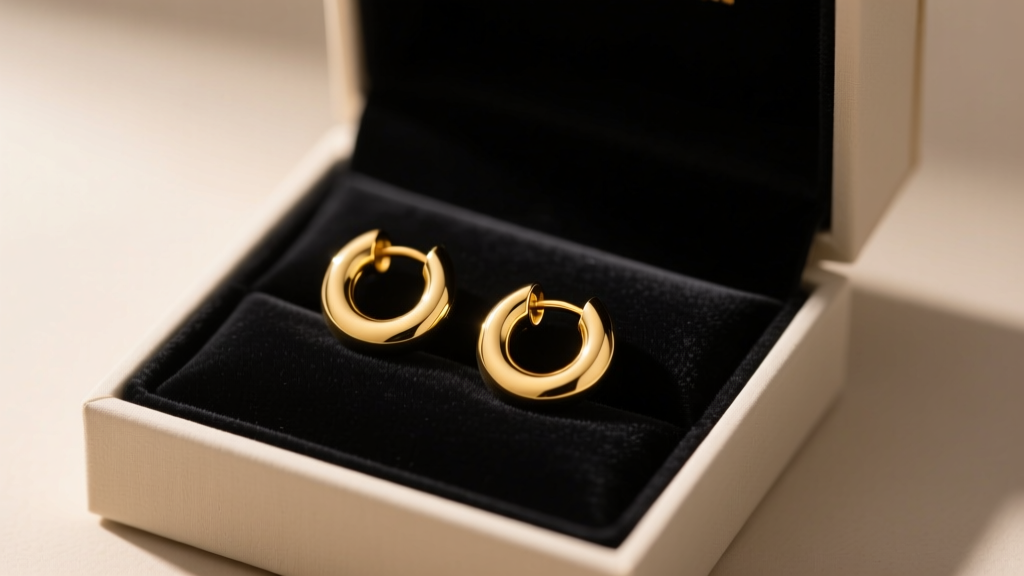
| College Graduation | ASTM F136 Titanium | Minimalist Clickers (16g / 1.2mm) | $65 - $150 |
| First Piercing (Child/Teen) | Niobium or 14k Yellow Gold | Flat-Back Studs (20g / 0.8mm) | $35 - $95 |
| Holiday / Stocking Stuffer | Anodized Titanium | Seamless Hoops (18g / 1.0mm) | $25 - $60 |
Milestone Anniversaries: Platinum and Palladium-Based Gold
For major milestones, you want a metal that screams luxury but guarantees safety. Platinum 950 (alloyed with 5% ruthenium or iridium) is entirely nickel-free and incredibly dense, making it perfect for securing high-value diamonds. If your recipient prefers gold, 14k or 18k yellow gold is generally safe, as it is alloyed with copper, silver, and zinc. However, beware of white gold. Standard white gold is alloyed with nickel to achieve its silver hue and then plated with rhodium. Once that rhodium plating wears off in 6 to 18 months, the nickel is exposed directly to the earlobe. If you must gift white gold, explicitly seek out 'palladium-based white gold,' which uses palladium instead of nickel for its white color.
Graduation & Professional Milestones: Implant-Grade Titanium
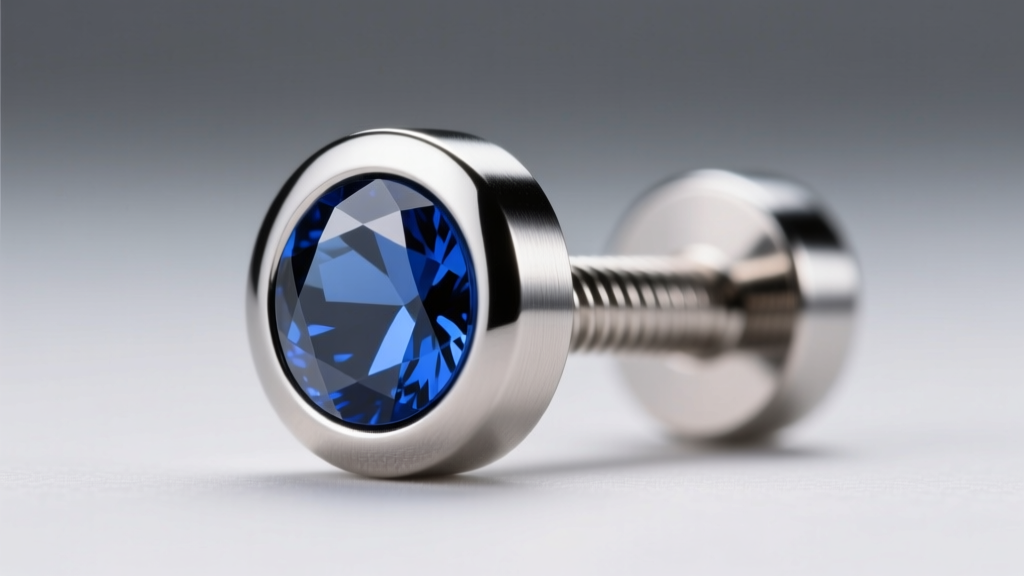
For the recent graduate building a professional wardrobe, minimalist titanium clickers or huggies are ideal. However, you must avoid 'surgical steel' (often 316L stainless steel). Despite its medical-sounding name, 316L steel contains 8-12% nickel. Sweat and friction can cause the nickel to leach out, triggering a reaction. Instead, look specifically for ASTM F136 implant-grade titanium. As noted in NIH literature on contact dermatitis, ASTM F136 (Ti-6Al-4V ELI) is the gold standard for biomedical implants because it is virtually inert and entirely biocompatible.
Material Deep-Dive: Decoding the Alloys
To truly master the art of gifting nickel allergy earrings, you need to understand the elemental metals that bypass the alloy trap entirely.
- Niobium: Unlike titanium or gold, niobium is an elemental metal, meaning it is not an alloy and cannot physically contain nickel. It is highly malleable, making it the premier choice for seamless hoops and captive bead rings that need to be gently bent open and closed. While it cannot be threaded like titanium, it can be anodized using electricity to create vibrant, permanent colors without using chemical dyes or plating.
- ASTM F67 vs. F136 Titanium: You will often see 'commercially pure' titanium (ASTM F67) and 'implant-grade' titanium (ASTM F136). While both are nickel-free, F136 is superior for sensitive ears because the ELI (Extra Low Interstitial) process removes microscopic oxygen and iron impurities that can occasionally cause localized irritation in hyper-sensitive individuals.
- The Solder Point Vulnerability: Even if an earring is stamped 14k gold, the solder used to attach the decorative head to the post often contains nickel to lower the melting point during manufacturing. When shopping for high-end gifts, look for brands that use laser welding or cast the post and head as a single, continuous piece to eliminate the solder joint entirely.
Curated Brand Picks for the Sensitive-Eared Recipient
Finding reputable brands that prioritize metallurgical transparency is half the battle. Here are three standout options for 2026 that cater to different aesthetics and budgets:
1. NeoMetal (Best for Cartilage & Edgy Styles)
NeoMetal is the darling of the professional piercing community. They use exclusively ASTM F136 titanium and solid 14k/18k gold. Their patented 'snap-together' threadless design means there are no delicate screw threads to strip, and the entire piece—from the decorative gem to the post—is guaranteed nickel-free. Price range: $30 - $120 per piece.
2. Catbird (Best for Delicate, Romantic Aesthetics)
Based in Brooklyn, Catbird crafts incredibly delicate threaders, chains, and studs using recycled 14k yellow gold and ethically sourced stones. Their pieces are cast in-house, giving them strict control over their alloy compositions. Their 'Swell' threader earrings are a massive hit for holiday gifting. Price range: $45 - $350.
3. Maria Tasha (Best for Zodiac & Celestial Themes)

Gifting Checklist: Verifying Claims Before Checkout
Before you finalize your purchase, run the earrings through this strict verification checklist to ensure you aren't accidentally gifting a reaction.
- Ignore 'Hypoallergenic': Cross out this word from your vocabulary. Only accept explicit claims like 'Nickel-Free,' 'ASTM F136 Titanium,' 'Niobium,' or 'Platinum 950.' The European Chemicals Agency (ECHA) provides extensive documentation on how easily nickel slips into unregulated supply chains.
- Inspect the Clutch (Butterfly Back): This is the most common gifting trap. A jeweler might sell you a 14k gold post, but the friction back (the 'butterfly' clutch) is often made of nickel-containing base metal to save costs. Ensure the listing explicitly states the backings are also solid gold, titanium, or medical-grade silicone.
- Check the Gauge Size: A gift is useless if it doesn't fit the piercing. Standard lobe piercings are usually 20g (0.81mm) or 18g (1.02mm). Cartilage piercings (like the helix or conch) are typically 16g (1.29mm) or 14g (1.6mm). If you are gifting a clicker hoop for a cartilage piercing, verify the diameter (usually 8mm to 10mm) as well.
- Avoid Plated Metals: Gold-plated or vermeil earrings have a brass or sterling silver core. While sterling silver doesn't inherently contain nickel, brass alloys frequently do. Furthermore, once the thin gold plating wears away, the core metal is exposed. Stick to solid metals for a lifetime gift.
Conclusion
Gifting nickel allergy earrings doesn't mean you have to compromise on style, luxury, or sentiment. By understanding the metallurgical realities of white gold, the dangers of surgical steel, and the unmatched safety of ASTM F136 titanium and platinum, you can select a piece that your recipient can wear comfortably every single day. In 2026, the most thoughtful gift you can give someone with sensitive ears is the peace of mind that comes with true, verified biocompatibility.