The Ultimate Guide to Nickel Free Stud Earrings for Sensitive Ears
Discover the best nickel free stud earrings for sensitive ears. Compare titanium, niobium, and 14k gold properties, grades, and gauge sizes.

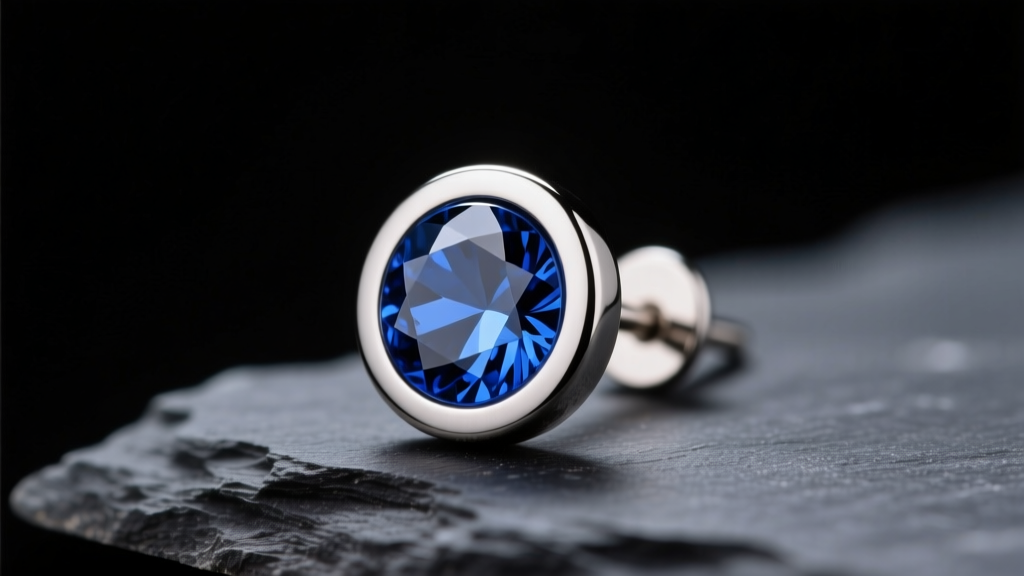
The Hidden Reality of 'Hypoallergenic' Jewelry
For millions of jewelry enthusiasts, the quest for the perfect pair of studs ends in frustration, redness, and contact dermatitis. The culprit is almost always nickel, a cheap, hardening alloy metal found in a surprising amount of commercial jewelry. While many brands slap the term 'hypoallergenic' on their packaging, this is largely a marketing buzzword with no strict medical or legal definition in the United States. According to the Mayo Clinic, nickel allergy is one of the most common causes of allergic contact dermatitis, affecting up to 10% of the population. To truly protect your earlobes and cartilage, you must bypass marketing jargon and understand the exact metallurgical properties of the metals touching your skin.
In 2026, the standard for sensitive ears has shifted dramatically away from traditional 'surgical steel' and toward verifiable, elemental, or strictly regulated implant-grade materials. This guide breaks down the exact material science, gauge specifications, and structural mechanics you need to choose the ultimate nickel free stud earrings.
Decoding the Best Metals for Nickel Free Stud Earrings
Not all metals are created equal. When sourcing nickel free stud earrings, you must look for specific material grades and alloy compositions. Here is the deep dive into the top three biocompatible metals.
Implant-Grade Titanium (ASTM F136)
Titanium is the undisputed king of sensitive-ear jewelry, but not all titanium is safe. You will often see 'Commercially Pure Titanium' (ASTM F67) and 'Implant-Grade Titanium' (ASTM F136). For the best nickel free stud earrings, you must demand ASTM F136 (Ti6Al4V ELI). This specific alloy contains titanium, aluminum, and vanadium, with Extra Low Interstitial (ELI) elements, meaning it has virtually no iron or nickel impurities. According to the ASTM F136 Standard, this metal is specifically cleared for long-term surgical implants. It is completely non-magnetic, highly resistant to corrosion from sweat and sebum, and possesses a tensile strength that allows for incredibly thin, yet durable, earring posts.
Niobium: The Unsung Hero of Sensitivity
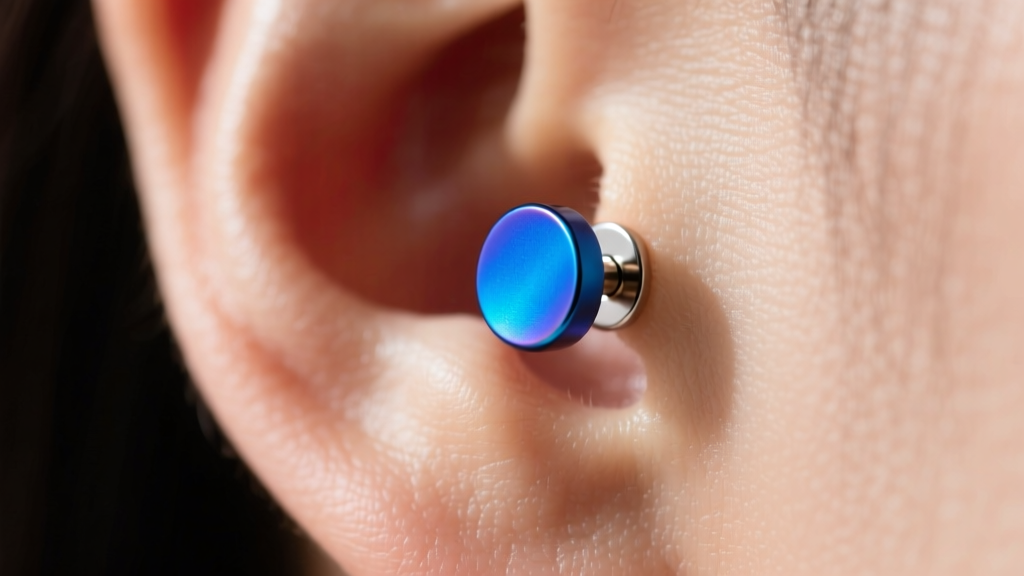
Niobium is a pure elemental metal (atomic number 41) rather than an alloy, meaning it contains absolutely zero nickel or other reactive metals. It is highly malleable and slightly heavier than titanium. The most fascinating property of niobium for jewelry makers is its ability to be anodized. By applying specific voltages of electricity, the surface oxide layer thickens, refracting light to create vibrant, permanent colors—like deep blues, purples, and golds—without using any dyes, paints, or chemical platings that could flake off into a healing piercing.
Solid 14k and 18k Gold: Purity vs. Alloy Risks
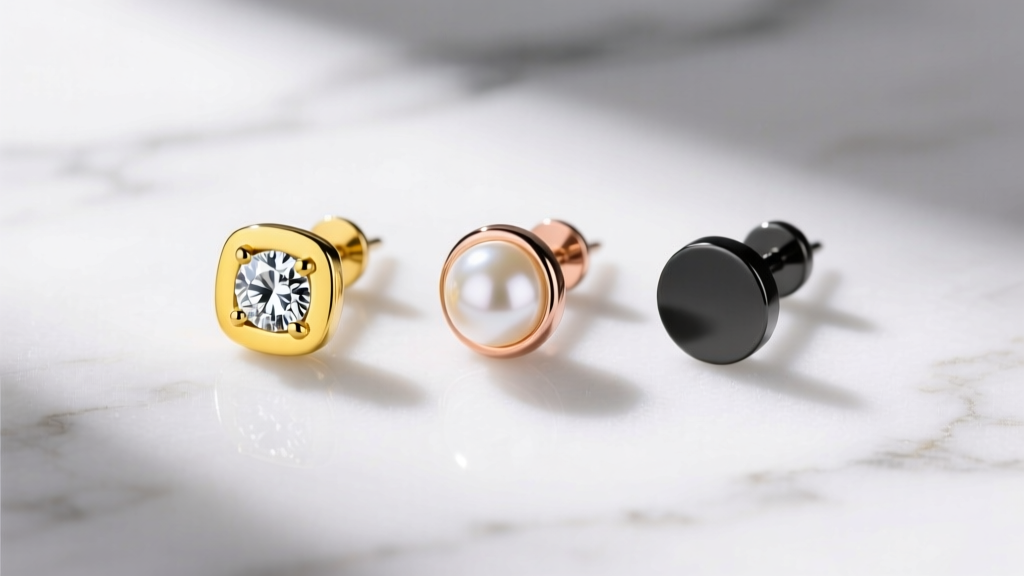
Gold in its pure 24k form is too soft for earring posts, so it must be alloyed. 14k gold is 58.5% pure gold, while 18k is 75% pure. The remaining percentage is where the nickel danger hides. Yellow gold and rose gold are typically alloyed with copper, silver, and zinc, making them generally safe. White gold, however, is a massive red flag. Traditional white gold is alloyed with nickel to achieve its silvery color and hardness. If you want white gold nickel free stud earrings, you must specifically seek out palladium-alloyed white gold, which uses palladium instead of nickel for the bleaching effect. Always verify the alloy breakdown with the jeweler before purchasing.
Material Comparison Matrix: Weight, Cost, and Durability
When selecting your nickel free stud earrings, consider how the physical properties of the metal will affect your daily wear. The table below compares the top biocompatible options based on real-world metrics.
| Material | Specific Gravity (Weight) | Vickers Hardness | Average Price Range (Studs) | Best Use Case |
|---|---|---|---|---|
| ASTM F136 Titanium | 4.43 g/cm³ (Very Light) | 334 HV | $25 - $60 | Daily wear, fresh piercings, active lifestyles |
| Pure Niobium | 8.57 g/cm³ (Medium) | 140 HV | $20 - $45 | Color-anodized styles, highly reactive skin |
| 14k Yellow Gold | 12.9 g/cm³ (Heavy) | 135 HV | $80 - $200+ | Luxury daily wear, heirloom pieces |
| 18k Yellow Gold | 15.6 g/cm³ (Heavier) | 115 HV | $120 - $300+ | Special occasions, low-impact wear (softer metal) |
Sizing, Gauges, and Backing Mechanics
The material is only half the battle. The structural mechanics of the earring post and backing dictate how your earlobe heals and breathes. The Association of Professional Piercers strongly advocates for specific sizing and backing styles to prevent tissue damage and bacterial trapping.
Post Thickness (Gauge) and Length
Most commercial mall-kiosk earrings use a 20-gauge (0.81mm) or 22-gauge (0.64mm) post. While thin posts seem delicate, they are actually detrimental to ear health. A thin post under the weight of a heavy earring head creates a 'cheese-cutter effect,' applying immense pressure per square inch that can slowly slice through the earlobe tissue. For optimal nickel free stud earrings, stick to 18-gauge (1.02mm) or 16-gauge (1.29mm) posts. These provide structural stability and distribute weight evenly. Standard post lengths are 6mm (1/4 inch) for healed lobes and 8mm (5/16 inch) for thicker lobes or cartilage.
Friction vs. Threaded vs. Push-Pin Backs
The traditional 'butterfly' friction back is a biomechanical nightmare. The grooves trap dead skin, sebum, and bacteria (including Staphylococcus aureus), while the tight clasp restricts blood flow and causes pressure necrosis. Furthermore, the sharp post end often pokes the neck during sleep. Modern, high-quality nickel free stud earrings utilize flat back discs. These come in two superior formats:
- Internally Threaded: The screw mechanism is inside the post, meaning the smooth post passes through your piercing without tearing the fistula. The flat disc sits flush against the back of the ear.
- Threadless (Push-Pin): The post features a tiny bend that creates tension-fit inside the hollow backing. This is currently the gold standard for secure, seamless, and comfortable 24/7 wear.
Red Flags: Marketing Traps to Avoid
When shopping for nickel free stud earrings, be highly skeptical of the following materials, which are frequently mislabeled or misunderstood by consumers:
- 'Surgical Steel' or 'Stainless Steel': Even high-grade 316L surgical steel contains 8-12% nickel. The polishing process creates a temporary chromium oxide barrier, but once micro-scratches occur from daily wear, nickel ions leach into the skin.
- Sterling Silver (925): While pure silver is safe, sterling silver is alloyed with 7.5% other metals, usually copper, which can cause green discoloration and reactions. Worse, some cheap manufacturers use nickel in the alloy mix.
- Gold-Plated or Vermeil: Plating is a microscopic surface layer. Once it wears off from friction and sweat, the base metal (often brass or nickel-silver) is exposed directly to the piercing channel.
Expert Care and Maintenance Protocols
Even the highest quality ASTM F136 titanium or 14k gold requires proper maintenance to prevent localized irritation. Avoid cleaning your nickel free stud earrings with harsh chemicals, alcohol, or hydrogen peroxide, which can degrade gemstone settings and dry out the skin barrier. Instead, use a sterile 0.9% sodium chloride saline solution on a non-woven gauze pad to gently wipe the post and backing weekly. For threadless push-pin backs, ensure you pull the front and back perfectly straight apart to avoid bending the tension pin, and periodically check the internal threading of screw-backs for stripped grooves. By combining verified implant-grade materials with proper structural mechanics, you can finally build a collection of studs that are as comfortable as they are beautiful.


