What Is the Gauge of a Normal Earring? A Beginner's Guide
Discover the exact gauge of a normal earring for standard lobes and cartilage. Learn sizing, materials, and how to measure your jewelry safely.

If you have recently decided to curate your ear stack or buy a gift for a loved one, you have likely stumbled upon a confusing metric: jewelry gauge. Unlike standard clothing sizes or millimeter measurements used for gemstones, earring gauge operates on a system that feels entirely backward to the uninitiated. Understanding the exact dimensions of your jewelry is not just a matter of aesthetics; it is critical for tissue health, piercing longevity, and avoiding painful tearing.
In this comprehensive beginner-friendly explainer, we will decode the jewelry sizing system, answer the most common question in the industry, and provide you with the exact data points you need to shop with confidence in 2026.
The Direct Answer: What Is the Gauge of a Normal Earring?
When people ask about the 'normal' earring size, they are usually referring to standard, healed earlobe piercings. The direct answer is that a standard commercial earring is typically 20-gauge (20G) or 18-gauge (18G).
However, 'normal' changes depending on how the ear was originally pierced and where the piercing is located on the ear:
- Retail Piercings (Mall Kiosks): Usually performed with a piercing gun using 20G (0.81mm) or 18G (1.02mm) studs. According to the Association of Professional Piercers (APP), these thinner gauges are standard for gun piercings, though professionals strongly advise against this method due to tissue trauma.
- Professional Studio Lobe Piercings: A professional piercer using a hollow needle will typically pierce standard lobes at 16-gauge (16G) or 14-gauge (14G). This thicker wire accommodates natural swelling and provides a more stable healing environment.
- Cartilage Piercings (Helix, Tragus, Conch): The universally accepted 'normal' gauge for cartilage is 16-gauge (1.29mm). Some specialized placements, like the daith or rook, may require 14G.
The Inverse Logic: Why Higher Numbers Mean Thinner Wire
The most frustrating aspect for beginners is the inverse numbering system. A 22-gauge wire is paper-thin, while a 0-gauge wire is thick enough to stretch a piercing. Why does the system work this way?
The jewelry industry uses the Birmingham Gauge (BWG), also known as the Standard Wire Gauge. This system originated in the British wire-drawing industry in the 19th century. The 'gauge' number originally referred to the number of times a piece of metal was pulled through progressively smaller drawing dies. Therefore, a wire that was pulled 20 times (20G) was much thinner than a wire pulled only 14 times (14G). While modern manufacturing uses lasers and precision extrusion, the historical naming convention remains the global standard for body jewelry.
Standard Earring Gauge and Millimeter Conversion Chart
To bridge the gap between the confusing gauge numbers and precise metric measurements, refer to this conversion table. Keep this chart handy when shopping for custom or handmade jewelry online.
| Gauge (AWG/BWG) | Millimeters (mm) | Inches (Fraction) | Common Piercing Placements |
|---|---|---|---|
| 22G | 0.64mm | ~1/40" | Nose screws, ultra-thin vintage clips |
| 20G | 0.81mm | ~1/32" | Standard mall-kiosk lobes, nose studs |
| 18G | 1.02mm | ~3/64" | Standard lobes, some helixes |
| 16G | 1.29mm | ~3/64" - 1/16" | Professional lobes, cartilage, labrets |
| 14G | 1.63mm | ~1/16" | Industrial bars, daith, rook, navel |
| 12G | 2.05mm | ~5/64" | Stretched lobes, heavy tribal wear |
Avoiding the 'Cheese Cutter' Effect: Physics and Tissue Health
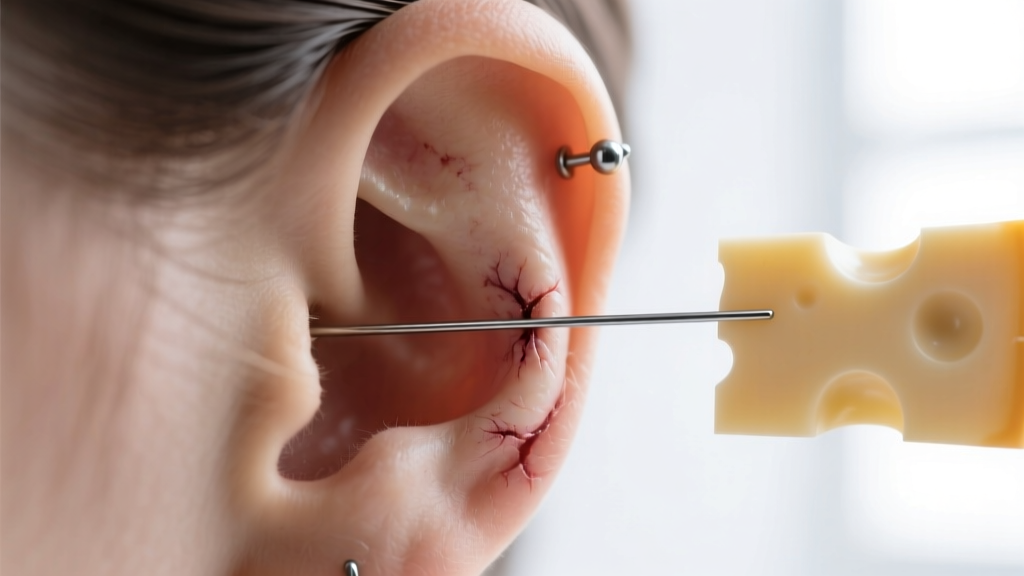
One of the most common failure modes in ear styling is the 'cheese cutter effect.' This occurs when a heavy or large-facing earring is suspended on a very thin wire (like 20G or 22G).
Physics dictates that pressure equals force divided by area. A heavy brass dangle earring weighing 8 grams exerts a massive amount of localized pressure on the tiny surface area of a 0.81mm (20G) wire resting against the bottom of your fistula (the piercing hole). Over time, gravity and the weight of the jewelry will slowly slice through the earlobe tissue, exactly like a wire cheese cutter slices through a block of cheddar.
The Weight-to-Gauge Rule of Thumb
To prevent irreversible lobe tearing and migration, follow these strict weight-to-gauge guidelines:
- Under 4 grams: Safe for 20G and 18G standard studs and small hoops.
- 4 to 8 grams: Step up to 16G or 14G wire to distribute the weight safely.
- Over 8 grams: Requires 12G or 10G wire, or specialized silicone O-rings to distribute tension across the lobe.
Material Grades: What Touches Your Skin Matters
Gauge size is only half the battle; the material composition of that wire dictates whether your piercing heals cleanly or develops a chronic contact dermatitis allergy. When shopping for 'normal' earrings, ignore vague marketing terms like 'hypoallergenic' or 'surgical steel.' Instead, look for specific metallurgical grades.
The Association of Professional Piercers strongly recommends Implant-Grade Titanium (ASTM F136) for anyone with sensitive skin or fresh piercings. Titanium is entirely nickel-free and biocompatible. If you prefer the look of silver or steel, ensure the product description specifically states 316L Surgical Steel, which has a lower nickel release rate than cheap pot metals. For luxury fine jewelry, always verify that gold is 14k or 18k solid and nickel-free; avoid gold-plated brass, as the plating will eventually wear off, exposing the reactive base metal to your piercing channel.
How to Measure Your Existing Earring Gauge at Home
If you have inherited jewelry or bought a vintage lot online, you need to verify the gauge before forcing it into your ear. Forcing a 14G post into an 18G hole will cause micro-tears, swelling, and potential infection.
Method 1: Digital Calipers (Most Accurate)
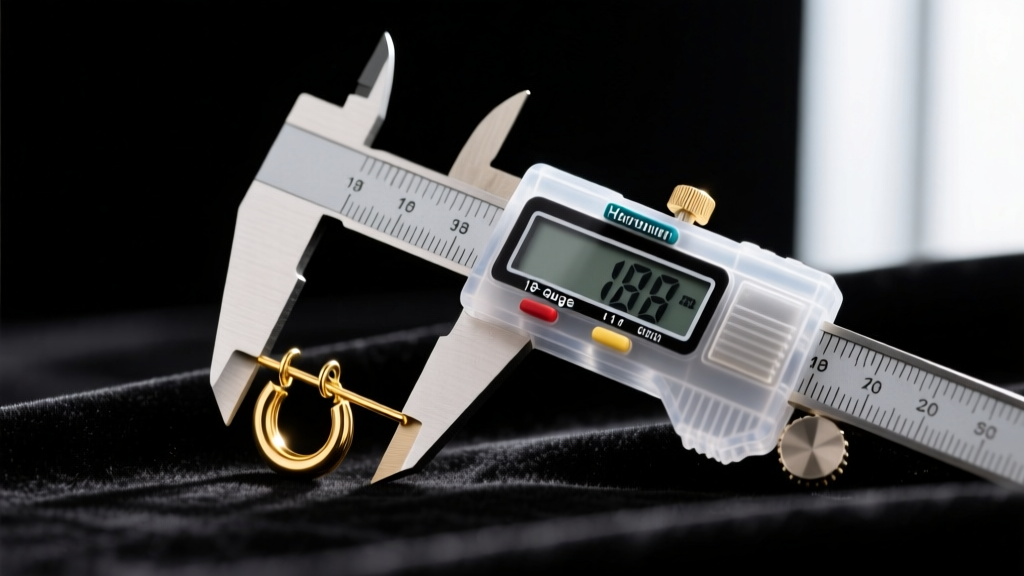
Invest in a basic pair of digital calipers (available for under $15 online). Turn the calipers on, zero them out, and gently clamp the jaws around the thickest part of the earring post or wire. Read the millimeter display and cross-reference it with the chart above. For example, if the caliper reads 1.28mm, you are holding a 16-gauge earring.
Method 2: The Gauge Wheel
A gauge wheel is a flat, circular metal or plastic tool with precision-cut notches around the edge, labeled with gauge numbers. Simply slide the wire of your earring into the notches. When the wire fits snugly into a slot without forcing or wobbling, the number printed next to that slot is your gauge.
Troubleshooting Common Beginner Mistakes
Even with the right knowledge, beginners frequently make avoidable errors when building their jewelry collection. Here is how to troubleshoot the most common issues:
- The 'Stuck' Earring: If a new earring won't slide in, you are likely dealing with a gauge mismatch or a 'bur' on the metal. Never force it. Check the gauge with calipers. If the size is correct, inspect the threading or the end of the post under a magnifying glass for microscopic metal snags that can tear the fistula.
- The Loose, Spinning Hoop: If your 18G hoop constantly spins and irritates the hole, the gauge might be too thin for your specific anatomy. Upsizing to a 16G hoop will provide a snugger fit, reducing movement and the introduction of external bacteria into the piercing channel.
- Buying 'One Size Fits All' Ear Cuffs: Ear cuffs (which do not require a piercing) rely on tension. If a cuff is made from rigid 18G wire, it may snap or lose its tension over time. Look for cuffs made from 16G or 14G wire that can be gently squeezed to adjust the tension to your specific cartilage thickness.
Final Thoughts on Sizing Your Ear Stack
Understanding the gauge of a normal earring transforms you from a passive consumer into an informed collector. Whether you are sticking to the classic 20G and 18G sizes for your standard lobe studs, or upgrading to a robust 16G for your heavy artisan drops, respecting the physics of jewelry sizing will ensure your piercings remain healthy, comfortable, and beautiful for a lifetime. Always prioritize precise measurements, high-quality implant-grade materials, and the structural integrity of your tissue over fleeting fast-fashion trends.


