What Size Gauge Is a Normal Earring? The Expert Piercing Guide
Discover what size gauge is a normal earring with our expert technical guide. Learn standard lobe and cartilage thicknesses, metrics, and fit troubleshooting.

The Short Answer: Standard Gauge Sizes
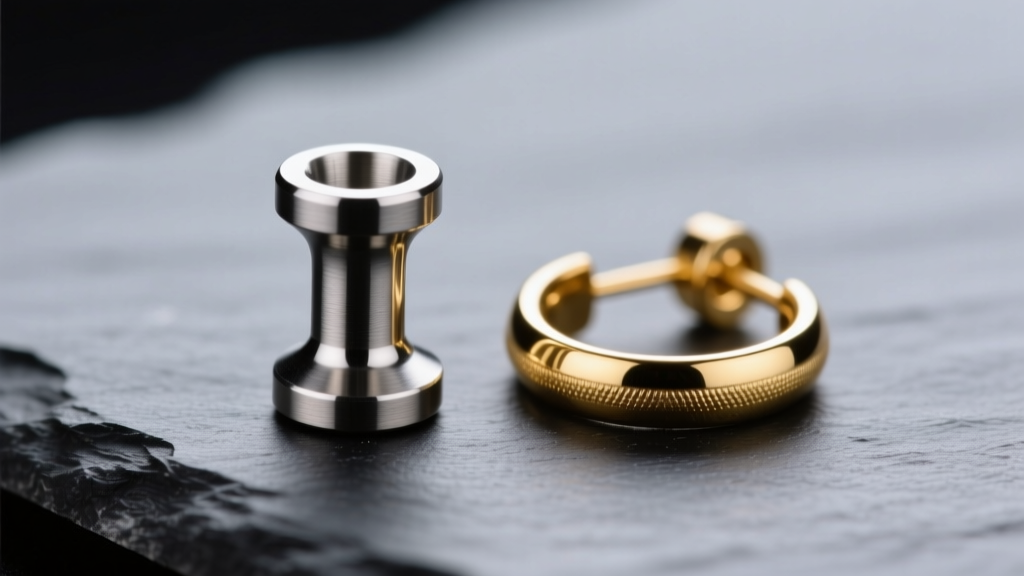
If you have ever found yourself asking, 'what size gauge is a normal earring?', the answer is not a single number, but rather a spectrum dictated by human anatomy and the physics of tissue displacement. In the professional body modification industry, gauge refers to the thickness of the earring post or wire that passes through the fistula (the piercing hole). The system most commonly used in North America is the American Wire Gauge (AWG) standard, which operates on a reverse scale: the higher the gauge number, the thinner the metal.
For standard, healed earlobe piercings, a 'normal' earring is typically 20-gauge (0.81mm) or 18-gauge (1.02mm). However, for cartilage piercings such as the helix, tragus, or conch, the standard shifts to a thicker 16-gauge (1.29mm) or 14-gauge (1.63mm). Understanding these baseline metrics is critical for preventing tissue damage, migration, and the dreaded 'cheese-cutter effect'.
| Gauge (AWG) | Inches | Millimeters | Standard Anatomical Placement |
|---|---|---|---|
| 22g | 0.025' | 0.64mm | Ultra-thin fashion earlobes (high risk of tearing) |
| 20g | 0.032' | 0.81mm | Standard commercial earlobe studs |
| 18g | 0.040' | 1.02mm | High-quality earlobe wires, some delicate nostril screws |
| 16g | 0.051' | 1.29mm | Standard cartilage (helix, tragus, conch, flat) |
| 14g | 0.064' | 1.63mm | Industrial bars, daith, rook, heavy-duty lobes |
Lobe vs. Cartilage: Anatomical Gauge Differences
The reason cartilage requires a thicker gauge than the earlobe comes down to tissue density and structural integrity. The earlobe is composed of dense, fibrofatty connective tissue that is highly elastic and vascular. It can comfortably support the localized pressure of a thin 20-gauge wire without rejecting the jewelry. Cartilage, conversely, is an avascular, rigid connective tissue. When a thin wire is placed through a cartilage piercing, the rigid tissue cannot absorb the mechanical stress, leading to micro-tears, hypertrophic scarring, and eventual migration.
Helix, Tragus, and Flat Specifications
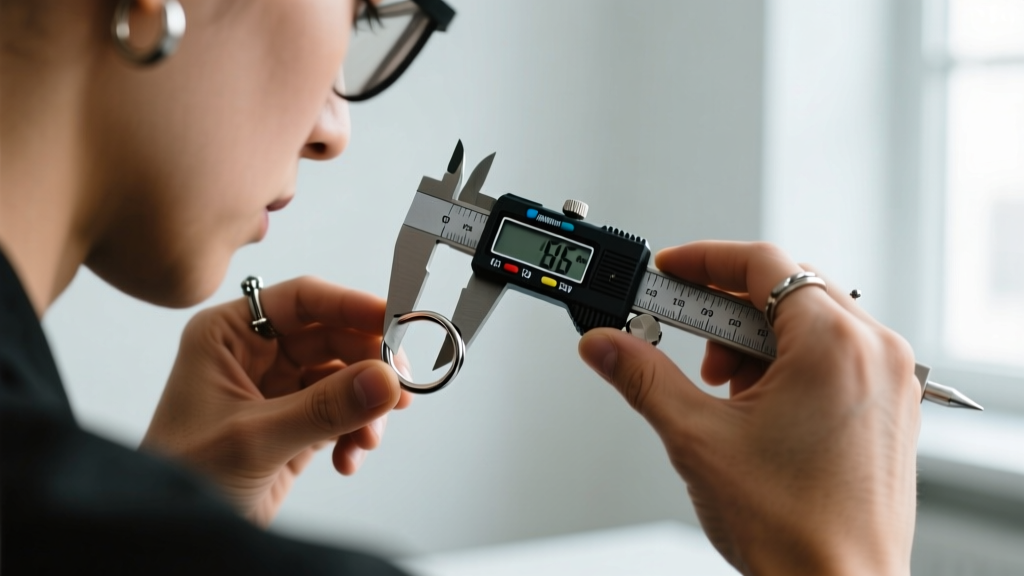
For the majority of outer ear cartilage piercings, 16-gauge (1.29mm) is the undisputed industry standard. This thickness provides enough surface area to distribute the weight of the jewelry evenly across the fistula. According to the Association of Professional Piercers (APP), utilizing 16-gauge implant-grade titanium for initial cartilage piercings drastically reduces the incidence of irritation bumps and promotes a more stable healing environment.
Conch, Daith, and Rook Considerations
Deeper, more complex cartilage folds like the conch, daith, and rook often require a step up in thickness to 14-gauge (1.63mm). The daith, for instance, passes through the crus of the helix, a particularly thick and dense fold of cartilage. A 14-gauge curved barbell not only accommodates the swelling typical of this piercing but also provides the structural rigidity needed to prevent the jewelry from warping or bending under the pressure of the healing tissue.
The Physics of Earring Posts: Thickness and Healing
To truly understand why gauge size matters, we must look at the physics of pressure, defined as Force divided by Area (P = F/A). When you wear an earring, gravity and incidental snagging apply a downward force on the post. If the post is exceptionally thin (e.g., 22-gauge or 0.64mm), the surface area in contact with the inside of the fistula is minuscule. This results in an incredibly high localized pressure.
'The cheese-cutter effect occurs when a thin wire under tension cuts through tissue, much like a wire cheese slicer. In body piercing, this mechanical stress triggers an immune response, causing the body to slowly push the jewelry toward the surface of the skin, ultimately resulting in rejection.' — Principles of Professional Piercing Theory
This is why wearing a thin, lightweight 20-gauge hoop in a fresh or even healed daith piercing is a technical error. The thin wire will inevitably migrate downward, thinning the tissue shelf until the jewelry falls out entirely. Upgrading to a 14-gauge or 12-gauge ring increases the surface area, dispersing the mechanical force and preserving the integrity of the fistula.
Material Grades and Gauge Tolerances
When evaluating gauge sizes, the material composition of the earring is just as critical as the physical measurement. High-end body jewelry manufacturers like BVLA (Body Vision Los Angeles) and Anatometal machine their posts from ASTM F136 implant-grade titanium. This specific alloy is nickel-free, highly biocompatible, and capable of holding a mirror polish that prevents biofilm accumulation.
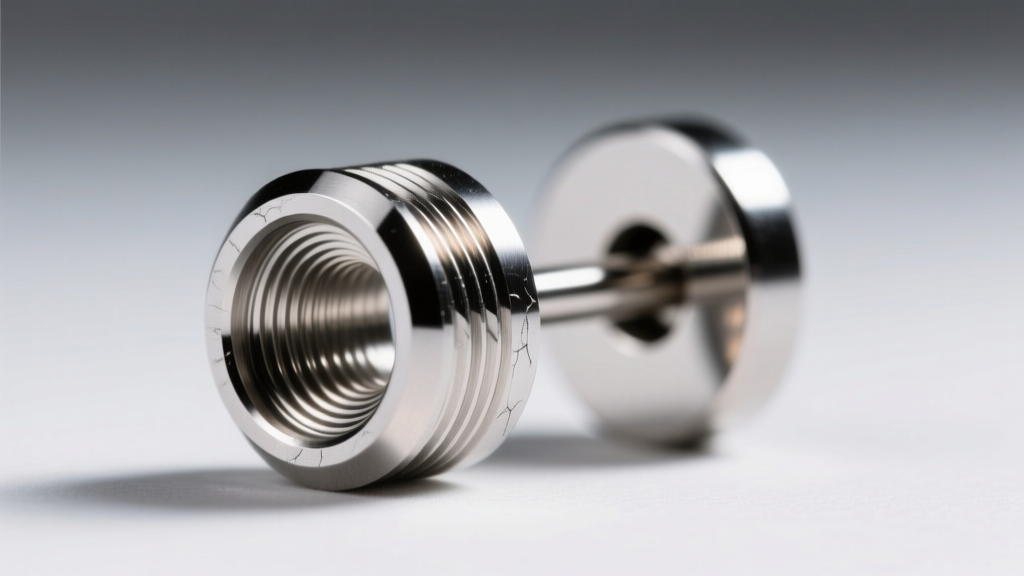
However, technical tolerances play a hidden role in gauge sizing. A post labeled as 16-gauge (1.29mm) from a premium manufacturer might actually measure 1.20mm to 1.25mm on digital calipers. Why? Because the jewelry is designed to be anodized. Anodizing is an electrochemical process that converts the surface of the titanium into a decorative oxide layer. By machining the post slightly under the nominal AWG standard, the manufacturer ensures that the final product, post-anodization, fits perfectly into a standard 16-gauge needle track without causing excessive friction or tissue trauma during insertion.
Furthermore, the threading mechanism alters the effective gauge of the jewelry. External threading (where the screw threads are cut directly into the post) creates sharp, jagged edges that act like a file against the delicate mucosal lining of the fistula. Internal threading, where the post is completely smooth and the threads are housed inside the decorative end, is the only acceptable standard for high-quality body jewelry, ensuring the post's gauge remains uniform and atraumatic.
Troubleshooting Fit Issues and Sizing Errors
Mismatching your jewelry gauge to your piercing's fistula size is one of the most common causes of chronic irritation. Here is how to identify and troubleshoot specific sizing errors:
- Forcing a 14g into a 16g fistula: Attempting to insert a thicker post without the use of a professional taper will cause micro-lacerations inside the piercing channel. This leads to immediate swelling, bleeding, and the formation of granulomas. Always use a sterile, single-use insertion taper lubricated with sterile saline.
- Wearing a 20g in a 14g hole: If you place a thin commercial earring into a stretched or naturally thick cartilage piercing, the jewelry will move excessively. This 'pistoning' effect introduces bacteria deep into the channel and prevents the tissue from maintaining a tight, healthy seal around the post.
- The 'Stuck' Post Phenomenon: If a correctly sized 16-gauge titanium post feels stuck upon removal, do not use pliers. Swelling or dried lymphatic fluid may have temporarily reduced the fistula's diameter. Apply a warm saline compress for five minutes to soften the tissue and dissolve the crusting before attempting to unscrew the end.
Final Calibrations for Your Collection
Understanding what size gauge is a normal earring transforms the way you curate your jewelry collection. By respecting the anatomical requirements of your specific piercings and investing in precision-machined, internally threaded jewelry, you ensure the longevity and health of your modifications. Whether you are selecting a delicate 18-gauge gold seam ring for a healed lobe or a robust 14-gauge titanium clicker for a daith, always verify the exact millimeter specifications and material grades before making a purchase. Your tissue will reward your technical diligence with a lifetime of comfortable, irritation-free wear.


