What Gauge Are Normal Earrings? The Ultimate Lobe & Cartilage Guide
Discover what gauge are normal earrings for lobes and cartilage. Our buying guide covers exact sizes, materials, and how to measure for a perfect fit.

Walking into a jewelry boutique or browsing online can quickly become overwhelming when you are confronted with terms like 20G, 16G, and 14G. If you have ever found yourself asking, "what gauge are normal earrings?", you are not alone. The jewelry industry relies on a centuries-old wire measurement system that is notoriously counterintuitive for modern consumers. Whether you are buying a simple pair of diamond studs, a heavy statement dangle, or a delicate cartilage hoop, understanding gauge thickness is critical for both comfort and the long-term health of your piercings.
In this comprehensive buying guide, we break down the exact mathematics of earring gauges, explain why lobe and cartilage piercings require different thicknesses, and provide actionable frameworks to ensure you never buy an ill-fitting post again.
The Short Answer: Standard Earring Gauges
If you need a quick reference before making a purchase, here is the industry standard for "normal" earring gauges based on piercing placement:
- Standard Earlobe Piercings: 20G (0.81mm) or 18G (1.02mm). Most commercial fashion jewelry and mall-kiosk piercings use 20G, while professional piercing studios typically use 18G or 16G for initial lobe piercings to ensure better healing.
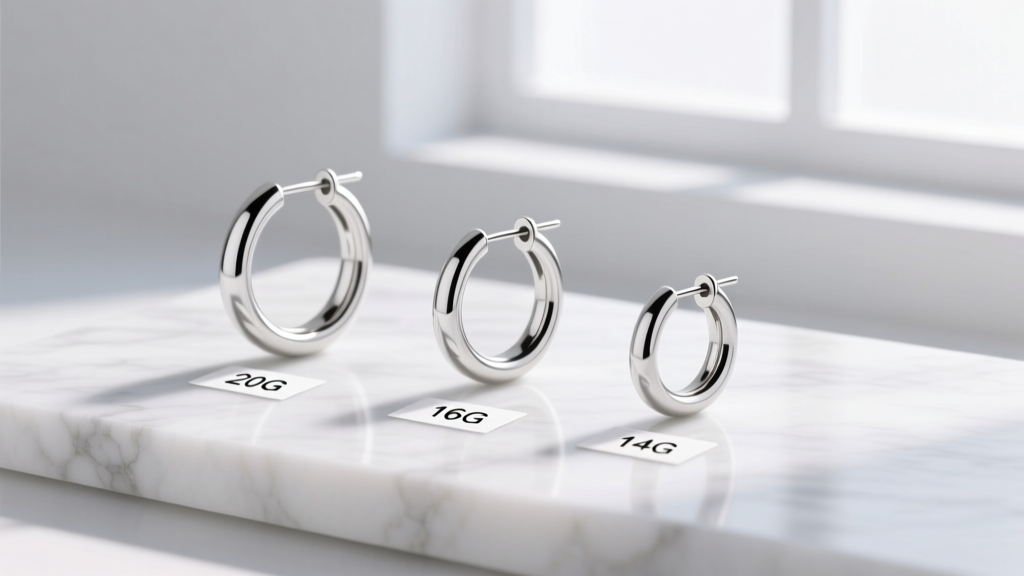
- Cartilage Piercings (Helix, Tragus, Conch): 16G (1.29mm) or 14G (1.63mm). Cartilage requires thicker jewelry to prevent migration and the dreaded "cheese-cutter effect."
- Daith, Rook, and Industrial Piercings: 14G (1.63mm) is the universal standard due to the density of the tissue and the structural demands of the jewelry.
The Counterintuitive Math of the Gauge System
To understand what gauge are normal earrings, you must first understand the Birmingham Gauge (also known as the Standard Wire Gauge) system. Originating in the British wire-drawing industry, the system dictates that the higher the gauge number, the thinner the wire.
This means a 22-gauge earring is significantly thinner than a 14-gauge earring. When shopping for body jewelry, always remember this inverse relationship. A 20G post will easily slip through a standard lobe piercing, but attempting to force a 14G post into an unstretched lobe will cause micro-tearing and severe inflammation.
Comprehensive Earring Gauge and Millimeter Chart
Because gauge numbers can be confusing, professional jewelers and piercers rely on millimeter (mm) conversions. Use this chart when verifying product specifications online:
| Gauge (G) | Millimeters (mm) | Inches (approx) | Common Jewelry Applications |
|---|---|---|---|
| 22G | 0.64mm | 0.025" | Ultra-thin fashion earrings, nose screws (avoid for heavy drops) |
| 20G | 0.81mm | 0.032" | Standard commercial lobe studs, lightweight huggies |
| 18G | 1.02mm | 0.040" | Professional lobe piercings, standard cartilage hoops, nose rings |
| 16G | 1.29mm | 0.051" | Standard cartilage studs, tragus, helix, conch, daith |
| 14G | 1.63mm | 0.064" | Industrials, rooks, snug, heavy statement lobe dangles |
Lobe vs. Cartilage: Why Tissue Density Dictates Gauge
When determining what gauge are normal earrings for your specific anatomy, tissue density is the primary variable. Earlobes are composed of soft, vascularized tissue. Because they have excellent blood flow, they heal quickly and can accommodate thinner posts (20G or 18G) without rejecting the jewelry.
Cartilage, on the other hand, is dense, avascular connective tissue. According to the Association of Professional Piercers (APP), cartilage piercings require thicker jewelry (16G or 14G) for structural stability. A thin 20G post in a helix piercing acts like a wire cheese-cutter; the pressure of the thin metal against the dense cartilage can cause the jewelry to slowly migrate and slice through the tissue over time.
The "Cheese-Cutter Effect" and Heavy Earrings
One of the most critical buying considerations often overlooked by consumers is the relationship between earring weight and gauge thickness. If you are purchasing heavy gemstone drops or large solid gold hoops, you must opt for a thicker gauge.
Expert Rule of Thumb: If a dangle earring weighs more than 8 grams, the post or wire should be no thinner than 18G (1.02mm). For pieces exceeding 15 grams, a 16G (1.29mm) French wire or custom thicker post is mandatory to prevent permanent lobe stretching and tearing.
Many mass-market fashion brands use 22G or 20G wires for heavy dangles to save on precious metal costs. Always check the wire thickness before purchasing heavy statement pieces. Over time, gravity pulling on a thin wire will permanently elongate your piercing channel, leading to the "stretched lobe" look that requires surgical correction.
Threading Types and How They Affect Effective Gauge
When shopping for high-end body jewelry, the gauge of the post is only half the equation. The threading mechanism drastically affects how the jewelry interacts with your piercing channel.
External Threading (Avoid)
Externally threaded jewelry has the screw pattern cut into the post itself. This means the threaded section is slightly wider and rougher than the stated gauge. Pushing an externally threaded 16G post through a piercing causes micro-trauma, as the sharp threads scrape the fistula (the healed skin tube). Furthermore, the structural integrity of the post is weakened by the carving.
Internal Threading (Recommended)
Internally threaded jewelry features a smooth post with the screw hole located inside the decorative end. The post remains a perfect, smooth cylinder at the exact stated gauge, allowing for seamless insertion. This is the minimum standard recommended by professional piercers.
Threadless / Push-Pin (The Modern Gold Standard)
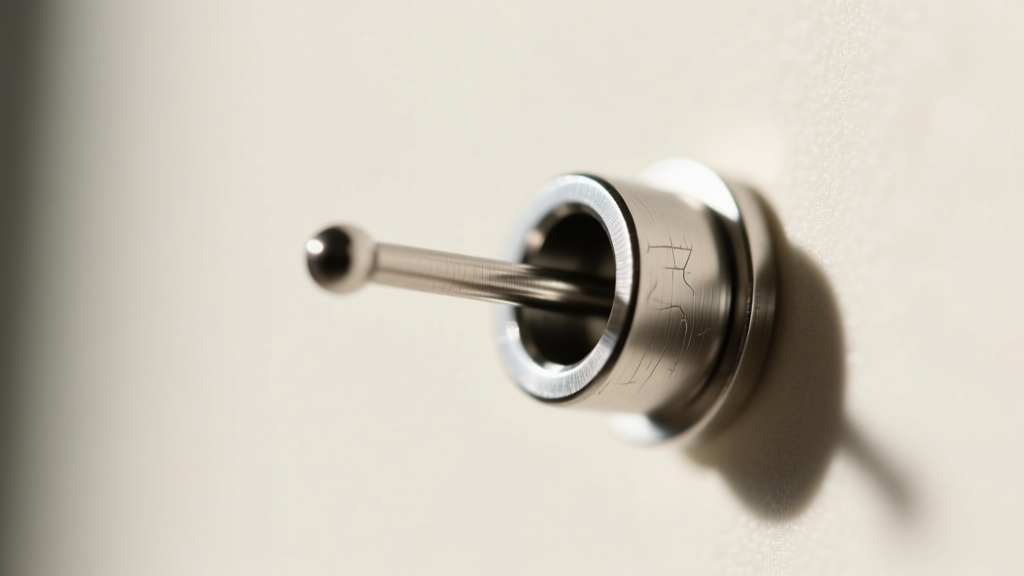
Threadless jewelry uses tension to stay together. A bendable pin on the decorative end is inserted into a hollow receiving tube. This allows the post to remain completely smooth and perfectly uniform in gauge. It is currently the preferred choice for high-end cartilage and lobe studs.
Material Matters: Gauge Integrity and Allergies
The material of your earring directly impacts how well it holds its gauge shape and how your body reacts to it. When evaluating what gauge are normal earrings, you must pair the size with the correct metallurgical grade.
- Implant-Grade Titanium (ASTM F-136): The absolute best choice for sensitive ears and fresh piercings. Titanium is incredibly strong, meaning a 16G titanium post will not bend or warp under pressure, unlike softer metals. It is also entirely nickel-free.
- 14K and 18K Gold: While beautiful, gold is a soft alloy. A 20G gold post can easily bend if snagged on a sweater. When buying gold, ensure it is alloyed without nickel. The Gemological Institute of America (GIA) notes that gold purity and alloy mixtures drastically affect both the color and the structural hardness of the final piece. 14K gold is slightly harder and more durable for thin gauge posts than 18K gold.
- Surgical Steel (316L): A common, budget-friendly option. However, it contains trace amounts of nickel. If you have a contact allergy, avoid steel regardless of the gauge size.
How to Measure Your Current Earring Gauge
If you have a favorite earring but do not know its gauge, do not guess. Buying a replacement post or a new hoop in the wrong size will result in a frustrating return process. Here is how to measure accurately:
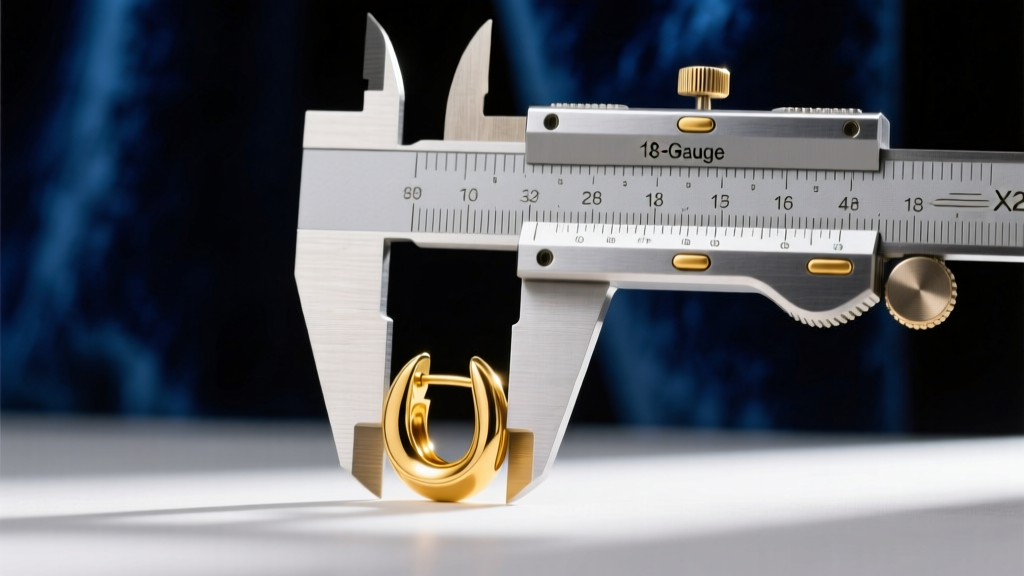
- Use Digital Calipers: A standard jewelry digital caliper (available for under $20 online) is the only truly accurate way to measure gauge. Clamp the jaws gently around the post or wire and read the millimeter display. Cross-reference the mm reading with the chart provided above.
- Avoid Rulers: Standard rulers cannot accurately measure sub-millimeter differences between 18G (1.02mm) and 16G (1.29mm).
- Visit a Piercer: If you lack calipers, take the jewelry to a reputable APP-certified piercing studio. They possess precision gauge wheels that can instantly identify the thickness of your jewelry.
Expert Verdict: Which Gauge Should You Buy?
Ultimately, answering "what gauge are normal earrings" requires looking at your specific piercing history and the style of jewelry you wish to wear. For standard, lightweight lobe studs, 20G or 18G is perfectly normal and widely available. However, if you are investing in fine jewelry, heavy drops, or cartilage pieces, actively seek out 16G or 14G options. Prioritizing a thicker gauge in high-quality, implant-grade materials will ensure your piercings remain healthy, comfortable, and beautifully adorned for decades to come.


