How to Clean a Nose Earring: Expert Care and Maintenance
Learn how to safely clean and maintain your nose earring. Discover expert tips on sterile solutions, metal grades, and preventing irritation bumps.

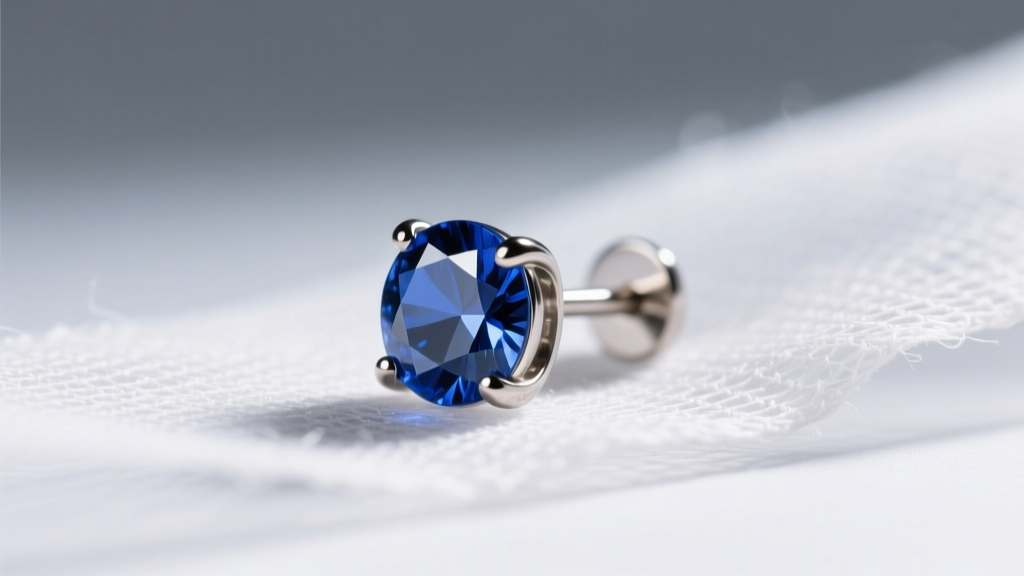
Whether you wear a delicate 20-gauge nostril stud, an 18-gauge seamless hoop, or a threadless press-fit gem, proper maintenance is non-negotiable. The nasal tissue is highly vascular and sits close to mucous membranes, making it uniquely susceptible to bacterial buildup, sebum accumulation, and irritation. Learning how to clean a nose earring correctly goes far beyond a quick wipe with a cotton swab; it requires an understanding of tissue biology, metallurgy, and sterile technique. In this comprehensive guide, we break down the exact protocols recommended by professional piercers and dermatologists to keep your fistula (the piercing channel) healthy and your jewelry pristine.
The Science of Nostril Tissue and Metal Degradation
The interior of a healed nostril piercing is lined with epithelial cells that naturally shed. Combined with the skin's natural sebum production and environmental dust, this creates a biofilm that can adhere tightly to the post of your nose earring. If left unmanaged, this buildup calcifies into what is colloquially known as 'crusties.' More importantly, low-quality metals can degrade in this environment. Jewelry made from 316L 'surgical steel' contains up to 10% nickel. When exposed to the slightly acidic pH of human sweat and sebum, nickel ions can leach into the tissue, triggering allergic contact dermatitis and localized swelling.
According to the Association of Professional Piercers (APP), the cornerstone of piercing aftercare and long-term maintenance is minimizing chemical trauma while mechanically removing debris. This means abandoning harsh astringents in favor of isotonic solutions that respect the skin's natural acid mantle.
The Cleaning Arsenal: Safe vs. Unsafe Solutions
One of the most common mistakes people make when caring for facial jewelry is reaching for the medicine cabinet's strongest disinfectants. These chemicals destroy healthy fibroblasts (the cells responsible for tissue repair) and dry out the delicate fistula, leading to micro-tears and hypertrophic scarring (irritation bumps).
| Cleaning Agent | Verdict | Scientific Rationale |
|---|---|---|
| Sterile Saline (0.9% NaCl) | Safe & Recommended | Isotonic to human tissue; gently flushes debris without disrupting the cellular healing environment or stripping natural oils. |
| Mild Liquid Castile Soap | Safe (Jewelry Only) | Excellent for deep-cleaning removed jewelry. Must be thoroughly rinsed to prevent alkaline residue from irritating the skin. |
| Rubbing Alcohol (Isopropyl) | Unsafe | Causes severe cellular dehydration, delays tissue repair, and can degrade porous gemstones like opals or turquoise. |
| Hydrogen Peroxide | Unsafe | Oxidizes healthy tissue and destroys new cell growth. It also causes rapid tarnishing of sterling silver and lower-karat gold. |
| Tea Tree Oil | Unsafe | Highly concentrated essential oils cause chemical burns and contact dermatitis when applied to the confined space of a piercing channel. |
Step-by-Step Daily Maintenance Routine
For a fully healed piercing (typically 6 to 12 months post-piercing), daily maintenance should be gentle and consistent. The Cleveland Clinic advises against over-cleaning, which can be just as damaging as neglect. Once a day, or after heavy sweating, follow this protocol:
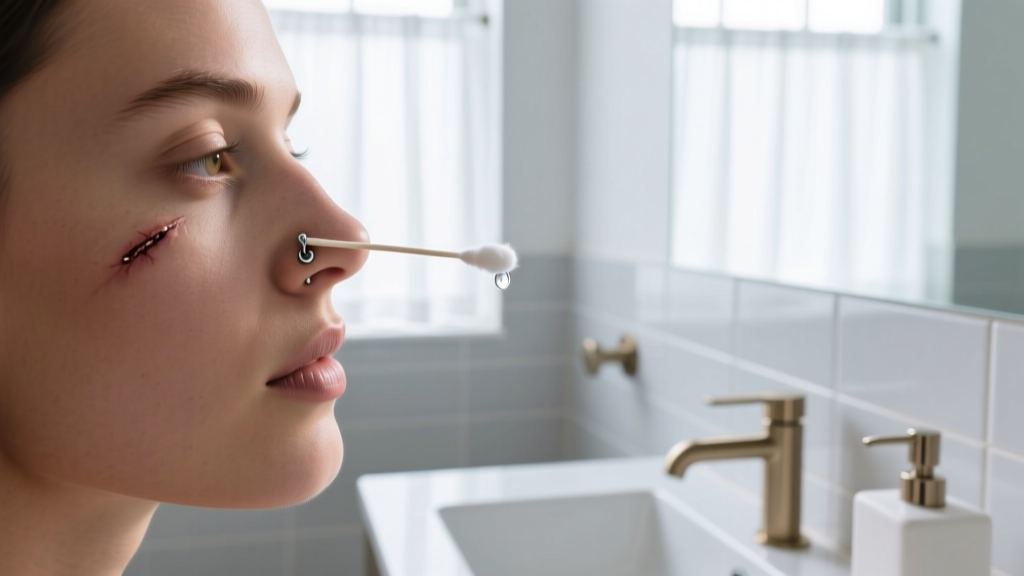
- Prep the Area: Wash your hands thoroughly with antibacterial soap. Never touch your nose earring with unwashed hands.
- Apply Sterile Saline: Spray a sterile, preservative-free 0.9% sodium chloride wound wash directly onto the entry and exit points of the piercing. Allow it to sit for 30 seconds to soften any sebum buildup.
- Mechanical Removal: Take a non-woven sterile gauze pad (avoid standard cotton balls, which shed micro-fibers that can wrap around the jewelry post and cause snagging) and gently wipe away the softened debris.
- Dry Thoroughly: Moisture trapped around the jewelry post can lead to maceration of the skin. Gently pat the area dry with a fresh piece of non-woven gauze or use a hairdryer on the 'cool' setting held at a safe distance.
Deep Cleaning and Sterilizing Your Jewelry
When you decide to change your nose earring, or if you are rotating between different styles like L-shapes, corkscrews, or threadless labret studs, the jewelry itself requires a deep clean before reinsertion or storage.
The Ultrasonic Method
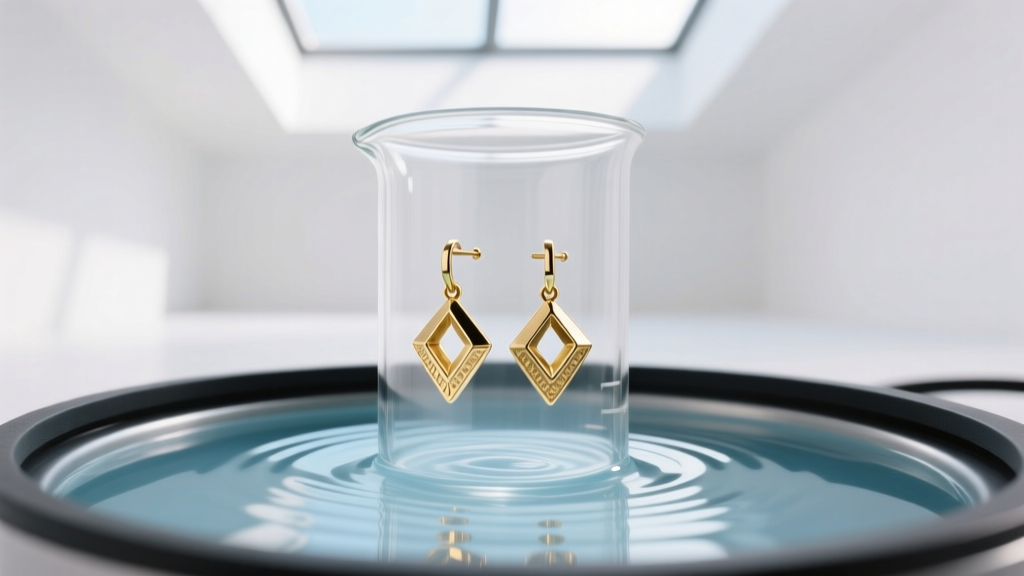
For solid metals like ASTM F136 implant-grade titanium, niobium, and 14k or 18k solid gold, an ultrasonic jewelry cleaner is the gold standard. These devices use high-frequency sound waves to create microscopic cavitation bubbles in a warm water and mild dish soap solution, blasting away biofilm from the crevices of prong settings and threading.
The Boiling Water Method
If you do not have an ultrasonic cleaner, you can sterilize solid titanium and solid gold jewelry by submerging it in boiling water for 5 to 10 minutes. Warning: Never boil jewelry containing opals, pearls, acrylics, or glass, as the thermal shock will shatter or melt the decorative elements. Furthermore, never boil internally threaded or externally threaded jewelry if the threads are coated, as this can strip the anodized layers.
Troubleshooting Common Nose Earring Issues
Even with meticulous care, mechanical and biological issues can arise. Here is how to troubleshoot the most frequent problems without causing tissue trauma.
1. The Jewelry Will Not Unscrew
Sebum and dead skin cells can act like biological cement, fusing the decorative end to the post of a threaded nose earring. Do not use pliers, which will mar the metal and crush the gemstone setting. Instead, put on a pair of clean, textured nitrile or rubber gloves. The rubber provides immense grip. Soak the jewelry in warm water for two minutes to dissolve the biofilm, then twist the gem counter-clockwise while holding the back post steady with a second gloved hand.
2. Irritation Bumps (Granulomas)
If you notice a small, fleshy bump adjacent to your nose earring, it is likely a granuloma caused by friction, moisture, or chemical irritation. Stop using all soaps and essential oils immediately. Switch to a strict twice-daily sterile saline rinse. Evaluate your jewelry: if you are wearing a 'nose bone' (a stud with a small bulb on the end), discard it. Nose bones cause micro-tearing upon insertion and removal, which is a primary trigger for irritation bumps. Upgrade to a threadless (press-fit) or internally threaded flat-back labret stud for superior stability.
3. Metal Tarnish and Discoloration
If your gold nose earring appears dull or slightly reddish, it may be experiencing surface tarnish due to exposure to cosmetics, hairspray, or sulfur in the environment. Use a specialized, untreated microfiber jewelry polishing cloth to gently buff the metal. Never use liquid silver dip or abrasive pastes on gold, as these will strip the alloyed metals and ruin the finish.
Material Matters: Choosing Low-Maintenance Metals
The easiest way to reduce your cleaning burden is to start with biocompatible materials that resist corrosion and biofilm adhesion. When shopping for a new nose earring, look for these specific material grades:
- ASTM F136 Implant-Grade Titanium: The absolute best choice for sensitive skin. It contains zero nickel, is highly resistant to corrosion, and can be anodized to create vibrant, safe colors without the use of toxic dyes or paints.
- 14k or 18k Solid Gold (Nickel-Free): Ensure the gold is alloyed for biocompatibility (often using palladium or silver instead of nickel). Avoid gold-plated or gold-filled jewelry, as the microscopic pores in the plating trap bacteria and eventually wear away, exposing the reactive base metal underneath.
- Niobium: A highly inert, hypoallergenic elemental metal that is an excellent alternative to titanium, particularly for seamless hoops and clickers.
By pairing high-quality, biocompatible metals with a gentle, science-backed cleaning routine, your nose earring will remain a comfortable, sparkling staple in your jewelry collection for years to come.


